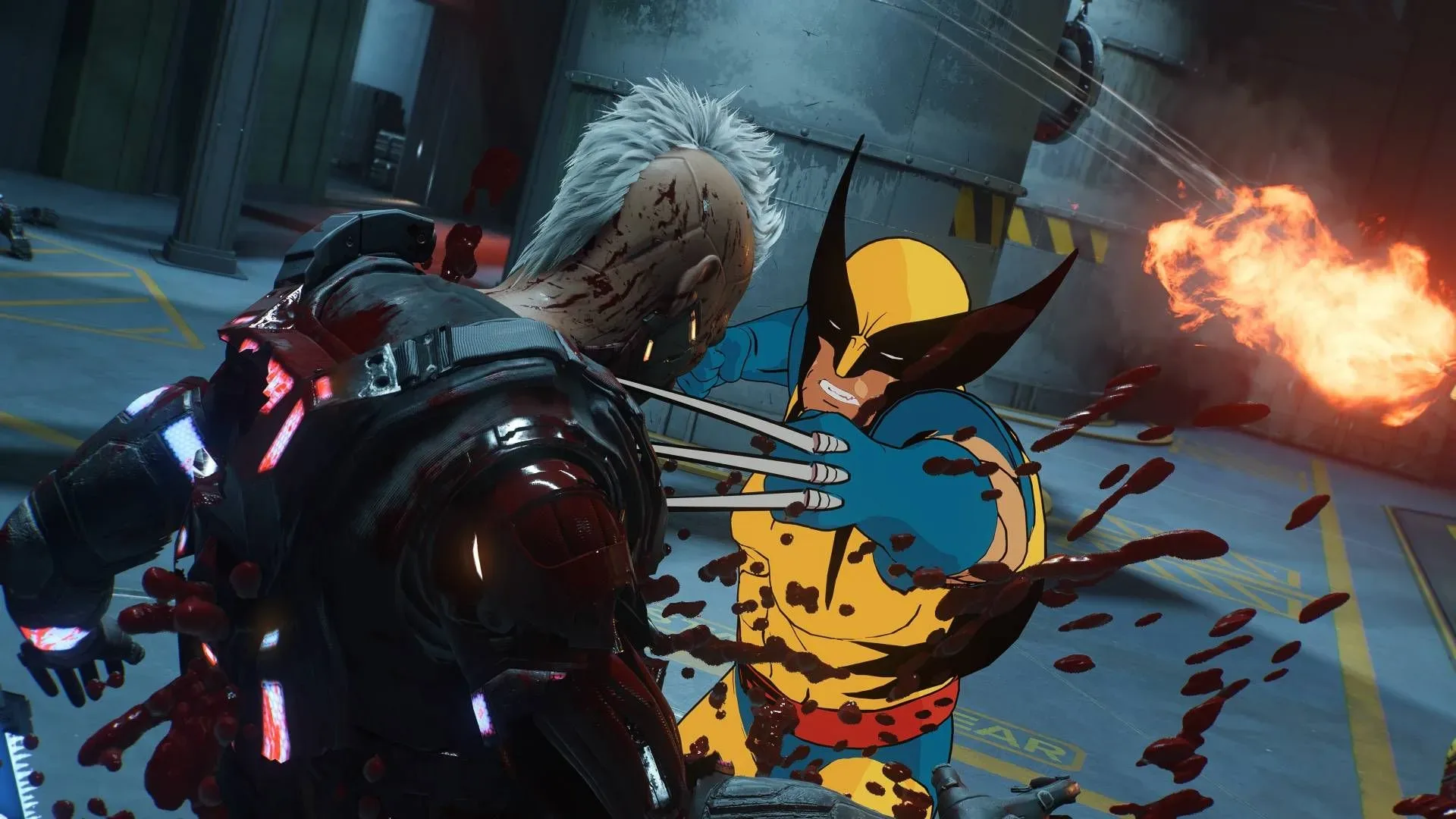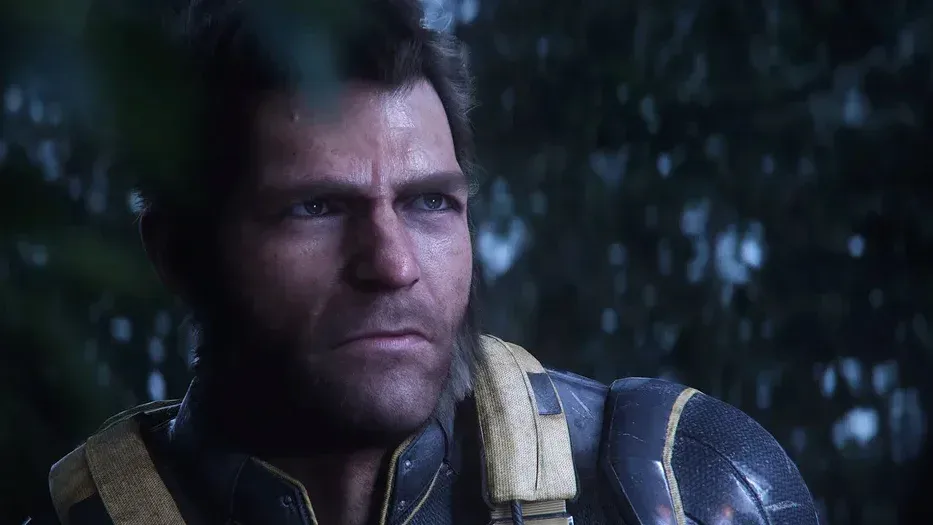
A newly shared out-of-bounds glitch is giving Marvel’s Wolverine players an unintended look at the space beyond the game’s mission routes. Videos from player Turned show Logan leaving the playable path during the mission “One That Got Away”, reaching woods, portions of a small town, and areas that appear to sit outside the finished gameplay space.
It is not evidence that Wolverine was designed as a conventional open-world game, nor does it turn those areas into secret free-roam zones. The footage instead appears to show why games keep players inside carefully managed boundaries: beyond them are incomplete surfaces, missing ground collision, inactive events, and environmental systems built to look convincing from the path rather than to withstand close inspection.
An escape route through the level geometry
The reported break occurs around a building in “One That Got Away.” With precisely timed jumps, Logan can apparently climb over part of the structure and cross the boundary of the intended route. From there, the player can move into a considerably broader unfinished area rather than being immediately pushed back into the mission.
That distinction matters. Many games use an obvious invisible wall, a warning prompt, or a hard mission failure state to stop exploration. In this case, the player seems able to get past the physical level geometry—the collision-enabled shapes that define where a character can stand, climb, or pass. Once that geometry is breached, the game exposes scenery and adjacent areas that normally function as background, future-stage dressing, or inaccessible parts of a larger mission layout.
The visible space includes woodland and other parts of the town Logan is traveling through. Some locations later associated with the level can also be approached early. But reaching a place is not the same as accessing its designed content. The encounters and objectives seen when progressing normally do not appear to activate after arriving through the glitch.
Why the missions do not simply continue
Mission-driven action games commonly rely on triggers: invisible conditions that tell the game when to begin a fight, play dialogue, spawn enemies, update an objective, or change the world state. A trigger may require the player to cross a specific point, arrive in a particular direction, finish a preceding encounter, or satisfy several of those conditions at once.
Approaching a combat space from outside the expected route can therefore leave it inert. The location may be visibly present, but the required sequence has not occurred. That appears to be what Turned encountered in Wolverine: spaces intended for later progression can be reached, while their combat and mission activity remains absent.
This is a useful reminder that a game level is more than the terrain a player can see. It is also scripting, collision, streaming boundaries, enemy logic, checkpoints, animations, audio, and the order in which each system is allowed to run. An out-of-bounds excursion can reveal the shell of a scene without revealing a usable alternative version of the level.
Related coverage includes Marvel's Wolverine Glitch Lets Players Roam Beyond Its Intended Mission Boundaries.
Unfinished ground is a feature of the unintended view
The footage reportedly includes poorly rendered sections and places where Logan can fall through the ground. Those rough edges reinforce that these are not polished exploratory areas held back as a hidden bonus. They are sections players were not expected to traverse.
“Unfinished” in this context does not necessarily mean abandoned development work. It can mean that a surface was only created to read properly at a distance, that collision was not needed because the normal route cannot reach it, or that a scene’s assets load and function only under the conditions used by the mission. Game environments are often optimized around what the camera and player are supposed to encounter, not around every conceivable angle made possible by a glitch.
That approach is especially sensible in a game with a more linear structure. Wolverine is framed around directed levels rather than the city-scale sandbox design associated with Insomniac’s Spider-Man games. A focused route allows developers to control pacing and place set pieces with greater precision, but it also means the scenery outside that route may have little reason to support sustained exploration.
Players looking for a broader explorable map should temper expectations. The break does expose a larger physical footprint than the standard route suggests, but the reported behavior—fall-through terrain, incomplete visuals, and missing encounter triggers—indicates a behind-the-scenes space, not a functioning open world.
Tokyo footage exposes the traffic illusion
Turned has also shown a similar excursion in Wolverine’s Tokyo section. That video illustrates another familiar production technique: traffic can appear to move naturally through a city from the player’s intended viewpoint, while behaving in far less realistic ways beyond accessible areas.
Cars visible from the playable street reportedly continue into walls and then disappear once they reach parts of the environment players are not meant to visit. That may look strange when viewed from outside the level boundary, but it is a practical illusion rather than a meaningful simulation failure in normal play.
Traffic systems often exist to provide motion, atmosphere, and scale. If the player cannot reach a distant junction or follow a vehicle into a sealed-off side street, the game does not necessarily need to simulate every turn, destination, or parking decision. A vehicle can travel along a short controlled path, vanish after leaving the player-facing sightline, and be reused elsewhere. The result preserves the impression of a living city while limiting the work required from the game’s systems.
This is the kind of technical sleight of hand players rarely see because the designed camera angles, routes, and barriers conceal it. Once someone clips beyond the boundaries, the presentation layer and the functional layer no longer line up. The city still has cars, streets, and movement—but the illusion was built for observation, not investigation.
What the glitch says—and does not say—about Wolverine’s structure
The clips offer an appealing glimpse at the environmental work surrounding Wolverine’s missions. Background forests, town sections, Tokyo traffic routes, and later areas help make a directed journey feel larger than a sequence of narrow corridors. Seeing them from an impossible angle can be fascinating precisely because it exposes how much scenery supports the player’s intended path without becoming playable space itself.
Still, it would be a leap to treat the out-of-bounds terrain as proof of cut side quests, a removed sandbox, or a larger map that players were meant to explore. The available footage supports a narrower conclusion: there are accessible-by-glitch areas outside the prescribed route, and they are visibly not prepared for ordinary play.
For players, the practical implications are also clear. An escape may lead to broken terrain, missing objectives, and no combat progression. Anyone experimenting should expect instability rather than a reliable route through the campaign. The more useful value is curiosity: it is an accidental tour through the scaffolding that helps a linear level feel like part of a bigger place.
That tension between carefully directed design and the player’s desire to look behind every locked door is part of the appeal here. Wolverine’s standard experience keeps Logan on a defined course. Turned’s videos briefly show what lies beyond it: not a second game hiding in plain sight, but a convincing world’s support beams.
For more on a separate challenge facing PC game discovery, see our look at how copycats can crowd an original game out of Steam search results.