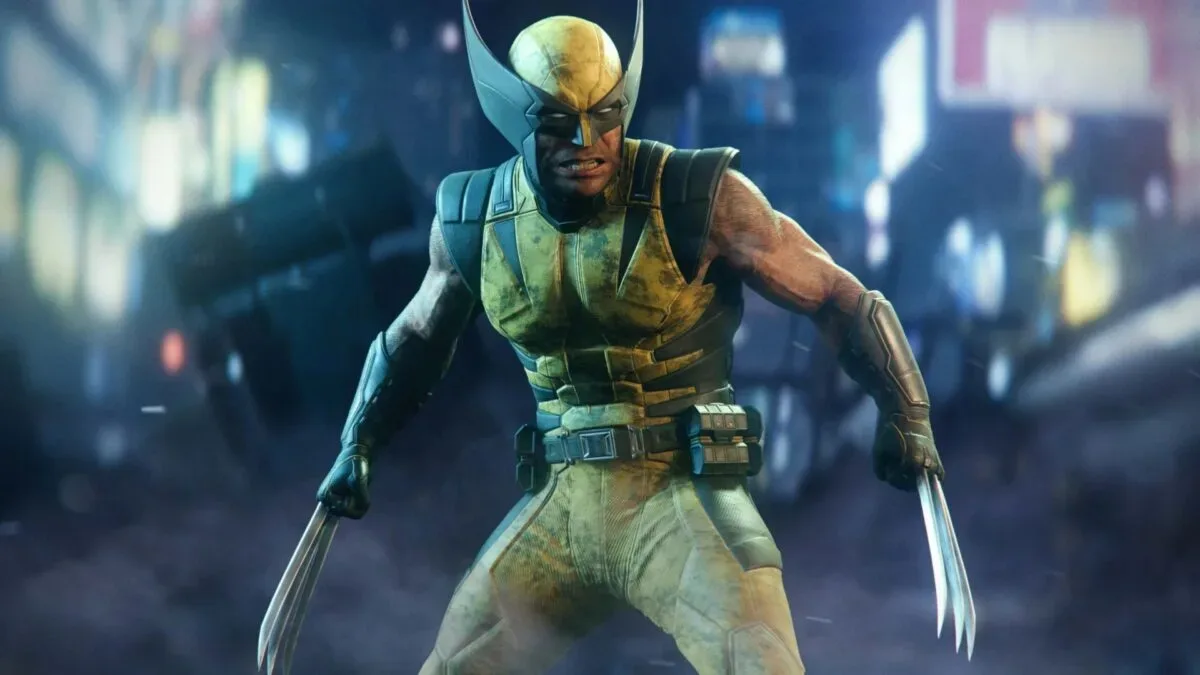
Marvel’s Wolverine has reportedly opened with substantial commercial momentum on PlayStation 5. Market-research estimates from Alinea Analytics place the Insomniac Games release at approximately $130 million in revenue over its first three days, corresponding to around 1.9 million sales. If those estimates are accurate, the game is already the sixth highest-grossing PS5 release of 2026 to date.
That is an important early result, particularly for a PS5-only game. It also presents a useful corrective to the noisier conversation around the release: online criticism and an aggregate review score can influence awareness and purchasing, but neither automatically tells the whole story of launch demand. The crucial caveat is that these are third-party estimates rather than confirmed sales or revenue figures from PlayStation or Insomniac. They offer a snapshot of the opening window, not a final accounting of the game’s performance.
Where Wolverine sits in the 2026 PS5 revenue rankings
Alinea Analytics’ estimated three-day revenue table places Wolverine between Assassin’s Creed Black Flag Resynced and EA Collect Football 27. The games ahead of it, along with the stated estimates, are:
- Resident Evil Requiem — $231 million
- 007 First Light — $199 million
- 2K27 — $164 million
- Crimson Desert — $160 million
- Assassin’s Creed Black Flag Resynced — $133 million
- Marvel’s Wolverine — $130 million
- EA Collect Football 27 — $116 million
Being sixth in that group means Wolverine is close to the fifth-place title: the difference between its estimated $130 million and Assassin’s Creed Black Flag Resynced at $133 million is just $3 million. At the same time, it remains $101 million behind Resident Evil Requiem, illustrating how sharply first-weekend revenue can vary between major releases.
It is worth being precise about what “top-grossing” means here. Revenue refers to money generated by sales, while unit sales are the number of copies sold. The two are connected, but they are not interchangeable. A revenue estimate of $130 million does not by itself reveal every factor behind the total, and the roughly 1.9 million sales figure is likewise an estimate. Neither number tells us how many people will ultimately play the game, whether they finish it, or whether they consider it worth recommending.
A strong comparison with recent PlayStation launches
The estimate looks especially notable beside Alinea Analytics’ reported launch revenue figures for several recent PlayStation Studios games. Wolverine’s $130 million is estimated to be ahead of Ghost of Yōtei at $121.9 million, a gap of 6.3%. The distance becomes considerably larger against several other releases:
- Death Stranding 2 — $51.7 million, 60.3% below Wolverine’s estimate
- Astro Bot — $34.6 million, 73.3% below
- Stellar Blade — $32.7 million, 74.9% below
- Rise of the Ronin — $25.7 million, 80.3% below
- Helldivers 2 — $18.9 million, 85.5% below
Those comparisons are useful as a measure of launch speed, not as a simple quality ranking. Different games can reach audiences through different platforms, pricing structures, genres, release circumstances, and word-of-mouth paths. A three-day revenue comparison is therefore best read as evidence that Wolverine attracted a great deal of immediate demand, not proof that it will finish ahead of every title listed over its full lifespan.
The reported analysis puts Wolverine’s early momentum behind only Spider-Man 2 among comparable PlayStation launches. That framing makes intuitive commercial sense without requiring the two heroes to have identical appeal. Spider-Man and Wolverine are both prominent comic-book characters, but their individual popularity and the expectations audiences bring to their games are not the same. Wolverine’s estimated performance is impressive precisely because it is being measured against a very successful recent benchmark rather than a low bar.
Criticism, QTE debate and the limits of launch-week discourse
The release has arrived amid critical pushback and social-media debate. Discussion has focused in part on QTEs, objective markers, and more guided or “on-rails” elements. A QTE, short for quick-time event, is a moment where players must press a prompted button or perform a specific input within a limited time. Objective markers are interface cues that point players toward a destination or goal. “On-rails” is usually used to describe sequences with a more directed route or restricted player control than an open-ended section.
Each of those design choices can be divisive because they concern how much direction a game gives the player. Some players appreciate clear signposting and cinematic pacing; others prefer fewer prompts, broader navigation freedom, or a greater ability to approach encounters in their own way. None of these terms is automatically a verdict on a game. They describe design approaches, and their effectiveness depends on execution and on what a particular player wants from the experience.
Online complaints can be genuine, widespread, narrowly held, or boosted beyond their normal reach. The early revenue estimates suggest that the criticism circulating around Wolverine did not prevent a large opening on PS5. That does not settle whether players will share those criticisms once they spend more time with the game. It simply means that negative discussion and launch sales are not moving as one single, perfectly synchronized measure.
Early sales answer whether many people bought a game quickly. They do not answer whether interest will persist, whether players will be satisfied, or how the release will be remembered.
This distinction matters for readers deciding whether to buy the game. Revenue rankings can establish that a release has made a big commercial impression, but they cannot substitute for individual preferences about combat pacing, accessibility options, story, guidance systems, or tolerance for QTEs. A player who dislikes prominent objective markers may weigh the conversation differently from someone who finds them helpful. Commercial success and personal enjoyment are separate questions.
The long tail is still unknown
The next question is Wolverine’s long tail: its capacity to continue selling after the intense opening period. A launch window captures anticipation, pre-release interest, and day-one purchases. Longer-term performance depends on a changing mix of player impressions, critical reassessment, the durability of online discussion, and whether interest reaches people who did not buy immediately.
There is not enough in the available data to declare how that will develop. The $130 million and 1.9 million-unit estimates indicate a forceful start, but they cannot predict a final total on their own. Nor should a game’s long-tail prospects become a proxy battle over whether any one review score or viral criticism was “right.” Sales momentum is one measure; criticism is another; individual enjoyment remains personal.
What can be said is that Wolverine will be watched closely as a major first-party PS5 exclusive. PlayStation’s blockbuster approach depends on releases that can draw attention, sell games, and contribute to the perceived value of the hardware ecosystem. The reported result gives that model an encouraging early data point, though not a complete answer about its sustainability.
Why the result matters beyond one release
Big-budget, first-party console games carry unusually high expectations. They are expected not only to stand on their own but also to help persuade audiences to enter or remain in a hardware generation. That makes Wolverine’s opening relevant to the broader discussion of the cost and risk of premium game development.
There is a related industry question around whether large projects need to make increasingly large opening impacts to justify their investment. The reported early figures for Wolverine show the pull of a recognizable character and a high-profile exclusive release, but they do not disclose the game’s development costs, marketing costs, profitability, or break-even point. Revenue is an important number, yet it is not the same as profit. Readers weighing the economics of high-budget games may also want to consider the broader discussion around reported game budgets and focused RPG design.
The impending transition to another hardware generation adds more pressure to the conversation. If future console hardware becomes more expensive, exclusives may face an even larger task: demonstrate value to existing players while helping make the case for an upgrade. Wolverine’s start does not resolve those issues, but it does show that, at least in its first three days, demand for a marquee PS5 release remained strong despite a complicated reception online.
What to watch next
The most useful follow-up signals will be those that illuminate the gap between the opening burst and longer-term demand. Does discussion settle into a clearer consensus as more people play? Do the concerns about QTEs, markers, and guided sequences remain central to player reactions? Does the game retain momentum after its first few days? And do later figures support or revise the initial third-party estimates?
For now, the available estimates point to a significant commercial opening: approximately $130 million in three days, roughly 1.9 million units, and sixth place among PS5 releases in 2026 by estimated revenue. That is a strong starting position. It is also only the beginning of the story for Marvel’s Wolverine.