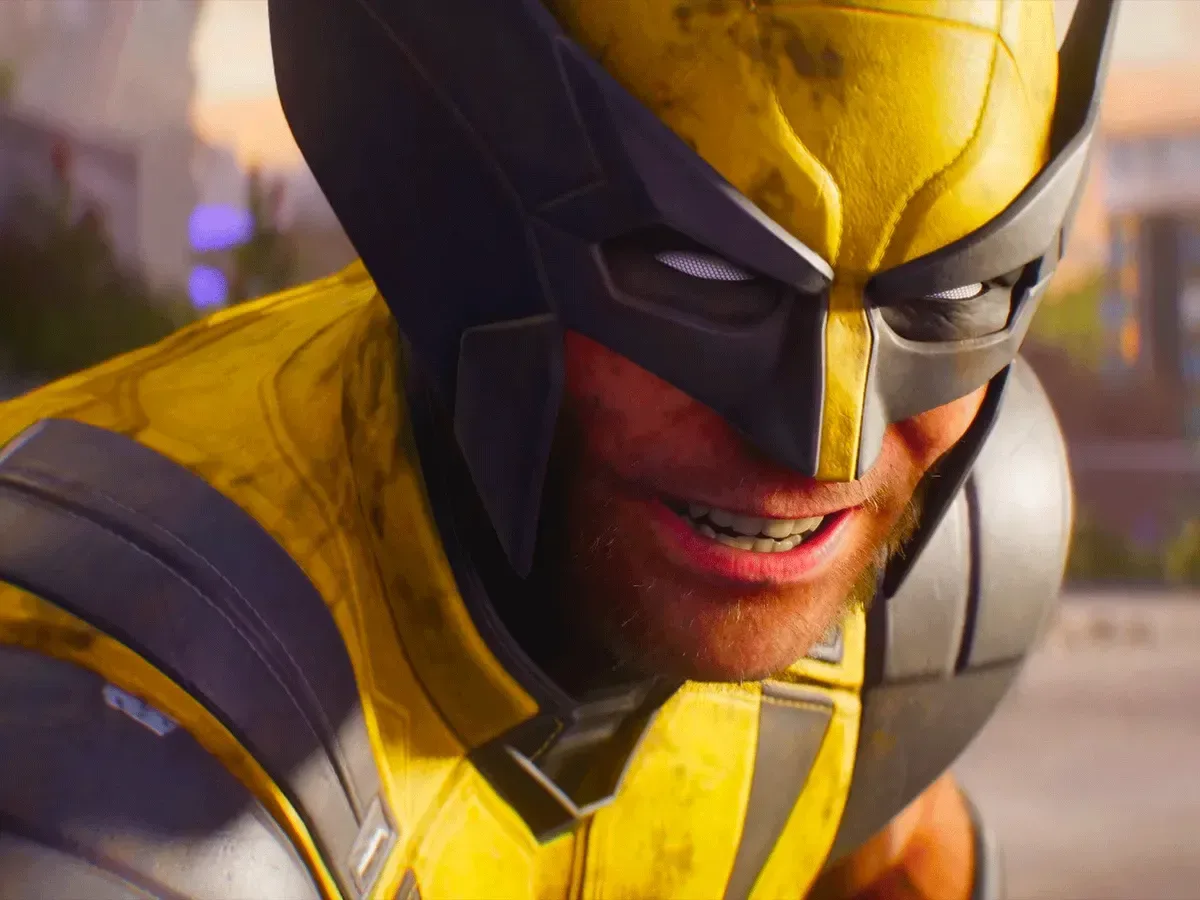
Marvel’s Wolverine may be approaching the end of an era for first-party PlayStation releases on disc, but an estimated sales split suggests that boxed games are not yet a decorative relic to be placed beside the old strategy guides and emergency controller cables.
Data attributed to Ampere Analysis estimates that physical copies made up roughly 35% of Marvel’s Wolverine sales. That is an estimate rather than a publisher-confirmed total, and the available figure does not reveal the game’s overall unit sales. Still, the proportion is meaningful: more than one out of every three estimated purchases being a disc is difficult to dismiss as a tiny enthusiast niche.
The number also arrives during a broader transition toward digital distribution. PlayStation’s direction has been described as moving toward an all-digital future, with Wolverine expected to be among the last first-party PlayStation titles released physically. The obvious reading would be that a fading format no longer materially changes the commercial conversation. The estimate for Wolverine, alongside similarly substantial physical shares for other games, complicates that assumption.
What the Wolverine estimate does—and does not—tell us
A 35% physical share is not the same thing as saying physical games are winning over digital purchases. Digital copies would still represent the larger portion of Wolverine sales under this estimate. Nor does the percentage tell us whether the buyers chose disc because of collecting, retail access, gift buying, storage preferences, resale potential, or a mix of those reasons.
It does tell us that physical purchasing remains a major behavior within the game’s sales mix. For a platform holder weighing whether boxed editions are worth manufacturing, distributing and supporting, a third of sales is a very different proposition from a marginal single-digit remainder.
There is another important caveat. Sales proportions vary by territory, platform, genre, release timing and audience. A 35% share for one highly visible PS5 release cannot predict the exact split for every PlayStation game that follows. It is better understood as evidence of a still-active physical market than as a universal template.
That distinction matters because this is not simply a sentimental argument about plastic cases. A physical game is a retail product, a giftable object, something that can be loaned or traded where permitted, and an item people may choose to display or retain. A digital purchase is usually designed around immediate access and convenience. Both serve real player needs, but they are not interchangeable experiences for every customer.
Other releases point to the same pattern
Wolverine was not the only title with a notable estimated physical share. The Blood of Dawnwalker was estimated at 36% physical sales, narrowly above Wolverine’s reported split. Silent Hill Townfall was estimated at an even higher 45% physical share.
These figures again should be handled carefully. They are estimates, and percentage share without total sales does not establish which game sold more copies overall. A smaller title can produce a higher physical percentage without matching the raw physical-unit count of a larger release. The useful takeaway is narrower: across several games, physical formats appear to be accounting for a consequential portion of purchases rather than merely an afterthought.
Physical sales were said to be particularly strong in parts of Europe, where PlayStation remains the leading platform. Regional context could therefore be central to interpreting these results. A worldwide shift in platform strategy may have uneven consequences when some territories still show stronger demand for discs than others.
For players, the practical implication is straightforward. Hardware and publishing decisions made around aggregate digital trends may not match the habits of every PlayStation market. For retailers, it reinforces that the boxed-game aisle can still matter when the audience and platform fit are right. For publishers, it suggests that abandoning physical editions is not merely a question of whether digital is larger—it is a question of whether the remaining physical share is valuable enough to serve.
Collecting is part of the equation, but not the whole answer
NYU business professor and gaming analyst Joost van Dreunen identified collecting as a continuing reason physical games matter to consumers. That observation makes sense in the context of boxed releases: a disc copy has a tangible presence that a library tile does not. The case, cover art and disc turn a purchase into an object that can be kept on a shelf.
But “collecting” should not become a catch-all explanation. A buyer may prefer a physical copy without approaching games as collectibles in the formal sense. They may simply want a copy they can hand to a friend, place in a gift bag, find at a local store, or potentially trade after finishing it. Some will care about packaging; others will care only that the game came in a box.
This difference is useful when discussing the future of discs. The market is not necessarily sustained only by people who want sealed items or elaborate collector’s editions. It may also be sustained by ordinary players who see a physical purchase as a more flexible consumer product.
There is clear evidence that publishers still recognize that appeal. Dave the Diver’s physical Complete and Collector’s Editions, for example, illustrate how boxed releases can serve both players seeking a standard tangible copy and buyers looking for a more curated package. That does not prove every game needs a premium edition, but it shows that physical formats can accommodate multiple kinds of demand.
Why the digital-versus-disc debate is more complicated than it sounds
“Digital” is often used as a single category, but it can describe different buying situations. A fully downloadable purchase typically provides immediate access through a platform account. A disc version provides a packaged retail item, though modern games may still depend on patches, online services or additional downloads. The presence of a disc does not automatically resolve every preservation or ownership concern, just as a digital library is not automatically inconvenient for every player.
Likewise, “physical” is not always synonymous with a full game stored on a cartridge or disc. The reported U.S. increase in physical gaming spending during August was linked to Switch 2 game-key card sales, along with new releases and ports including Elden Ring. A game-key card is relevant here because it can be sold and displayed as a physical product while functioning differently from traditional media that contains the complete game data.
That nuance is vital. Strong spending on a physical retail format demonstrates continuing demand for buying games in stores and having a tangible item. It does not necessarily answer separate questions about offline access, long-term functionality or how much data is actually included on the media.
In other words, the business case for physical retail and the preservation case for self-contained physical media overlap, but they are not identical debates. Wolverine’s estimated 35% disc share speaks most directly to the first question: a substantial group of customers reportedly still chooses boxed editions when they are offered.
Is this a final rush, or a durable customer preference?
There are two plausible interpretations of the reported figures, and the evidence available does not settle the matter. One is that consumers are making a last push to buy physical PlayStation releases while that option remains available. If people believe discs are becoming scarce, some may be especially motivated to purchase them now.
The other interpretation is more durable: physical sales may still represent a stable enough preference that a rapid move away from discs leaves money and goodwill on the table. The physical estimates for Wolverine, The Blood of Dawnwalker and Silent Hill Townfall give this possibility more weight than it would have if boxed versions had represented only a sliver of sales.
Neither reading should be overstated. A period of transition can produce both effects at once. Some people may be buying discs because the format feels endangered, while others may simply be continuing a longstanding preference. Without longer-term, title-by-title data and official sales detail, it is not possible to cleanly divide the two groups.
Still, the numbers make one point hard to avoid: the remaining physical audience is visible. Treating it as though it has already disappeared risks confusing the direction of the market with its current reality.
What this could mean for PlayStation—and for competitors
For PlayStation, the central decision is not whether digital distribution has become dominant. The estimates strongly imply that it has, at least for these titles, since physical does not constitute the majority. The harder strategic question is whether a large minority of buyers should continue to receive a physical option.
That choice has consequences beyond a single release. A physical edition can support retail partners, give customers a preferred way to buy, and preserve a form of purchasing that remains culturally important to part of the PlayStation audience. Removing it can simplify distribution, but it also removes a choice that estimated sales data suggests many customers still make.
The competitive picture could matter as well. The possibility that Xbox might retain some form of physical gaming for its next-generation Project Helix devices has been raised as a factor that could sharpen the discussion. Nothing in the available information establishes what those devices will ultimately support. But if a major rival presents a physical option where another platform does not, format preference could become one more point of comparison for consumers.
The Wolverine estimate is therefore not a declaration that discs have defeated digital, nor proof that every future PlayStation release must have a boxed edition. It is a reminder that market transitions do not happen all at once. Even as platform holders lean toward downloads, accounts and digital storefronts, a sizable group of buyers may still want the game they purchased to arrive in something they can hold.
For now, that preference appears significant enough to count—not as nostalgia in a display case, but as a real part of how games are still being bought.