Kena: Scars of Kosmora will now arrive in 2027 for PlayStation 5 and PC. Ember Lab has delayed the direct follow-up to 2021’s Kena: Bridge of Spirits, which had previously been planned for a 2026 launch. The studio says the extra time is intended to polish a sequel built on a considerably broader scale than Kena’s first adventure.
The announcement brings a clear, if still wide, new release window: 2027. No more specific date has been provided. It also confirms the platforms currently attached to the game remain PS5 and PC.
A sequel with a larger destination in mind
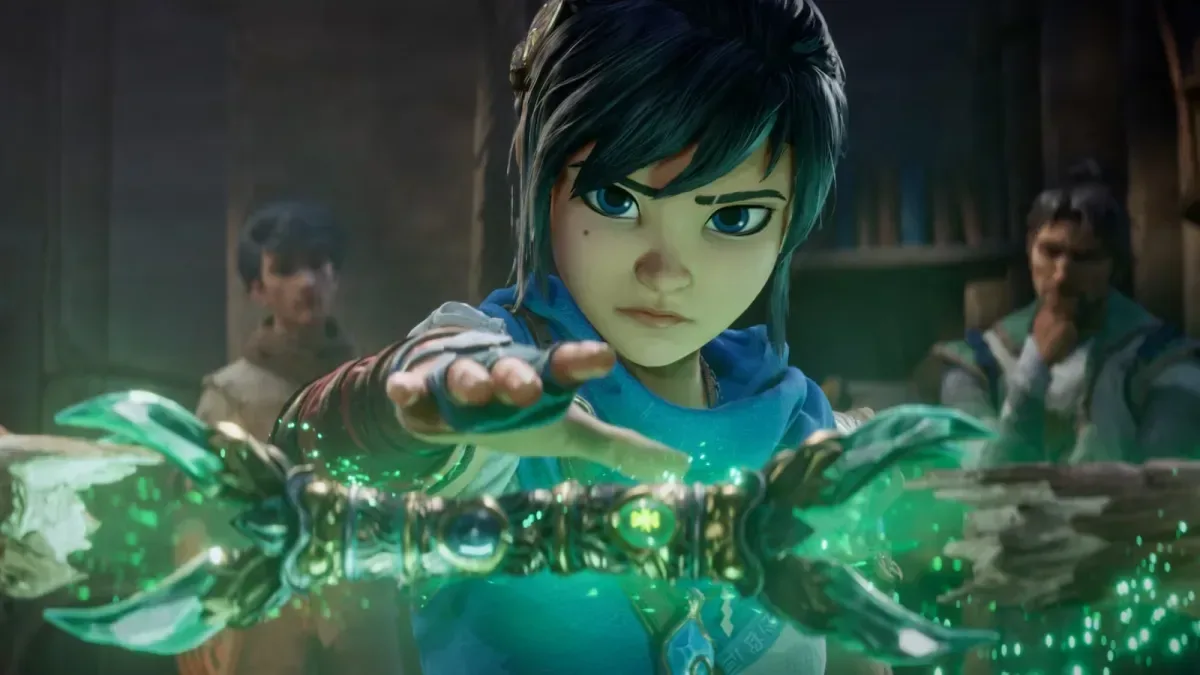
Scars of Kosmora takes place some time after the events of Bridge of Spirits. Kena is older and travels to the island of Kosmora in search of a cure for a mysterious condition threatening her life. That personal objective is complicated almost immediately when her spirit guide staff is shattered.
Rather than simply replacing the familiar tool, the sequel’s premise has Kena learning a forgotten local style of spirit guiding. This tradition is connected to alchemy-based elemental powers, a phrase that points to magic or abilities organized around elements and transformed through an alchemical system. Exactly how players will access, combine, upgrade, or use those powers has not yet been detailed, so it would be premature to read a specific combat or progression structure into the description.
The story’s stakes extend beyond Kena’s own cure. She must also confront a corruption spreading across Kosmora. That setup preserves the series’ established interest in spiritual imbalance and restoration while giving the new journey a more immediate threat to its protagonist.
What the four elements mean for Kosmora
Ember Lab has described Kosmora’s ancient Spirit Guides as practitioners of a distinct approach based around four elements and Alchemystic Temples. The island was once home to four connected cultures, with each society shaped by a particular guiding element. A mysterious cataclysm destroyed one of those cultures.
That is useful context for the sequel’s worldbuilding, but it also frames the elemental premise as more than a list of combat effects. The elements appear to be foundational to Kosmora’s history, its societies, and its temple spaces. “Alchemystic” is the game’s term for this elemental-and-alchemical tradition; based on what has been shared, it is tied to both the ancient guides and environmental challenges Kena will face.
In practical terms, this could give the game a common language between story, traversal, puzzles, and fighting. The confirmed detail is that Kena will use new elemental powers and solve Alchemystic puzzles. The unconfirmed part is the exact form those puzzles take, whether an element will correspond to a dedicated culture or region, and how much freedom players will have in choosing solutions.
Related coverage includes Kena: Scars of Kosmora Delayed as Ember Lab Targets 2027.
Keeping that distinction in view matters. A broad setting description can establish the ideas a game is pursuing without revealing its final mission structure, ability tree, or puzzle rules. For now, Kosmora’s four-element history is best understood as the sequel’s central creative framework rather than a complete gameplay breakdown.
A wolf companion changes the scale of travel
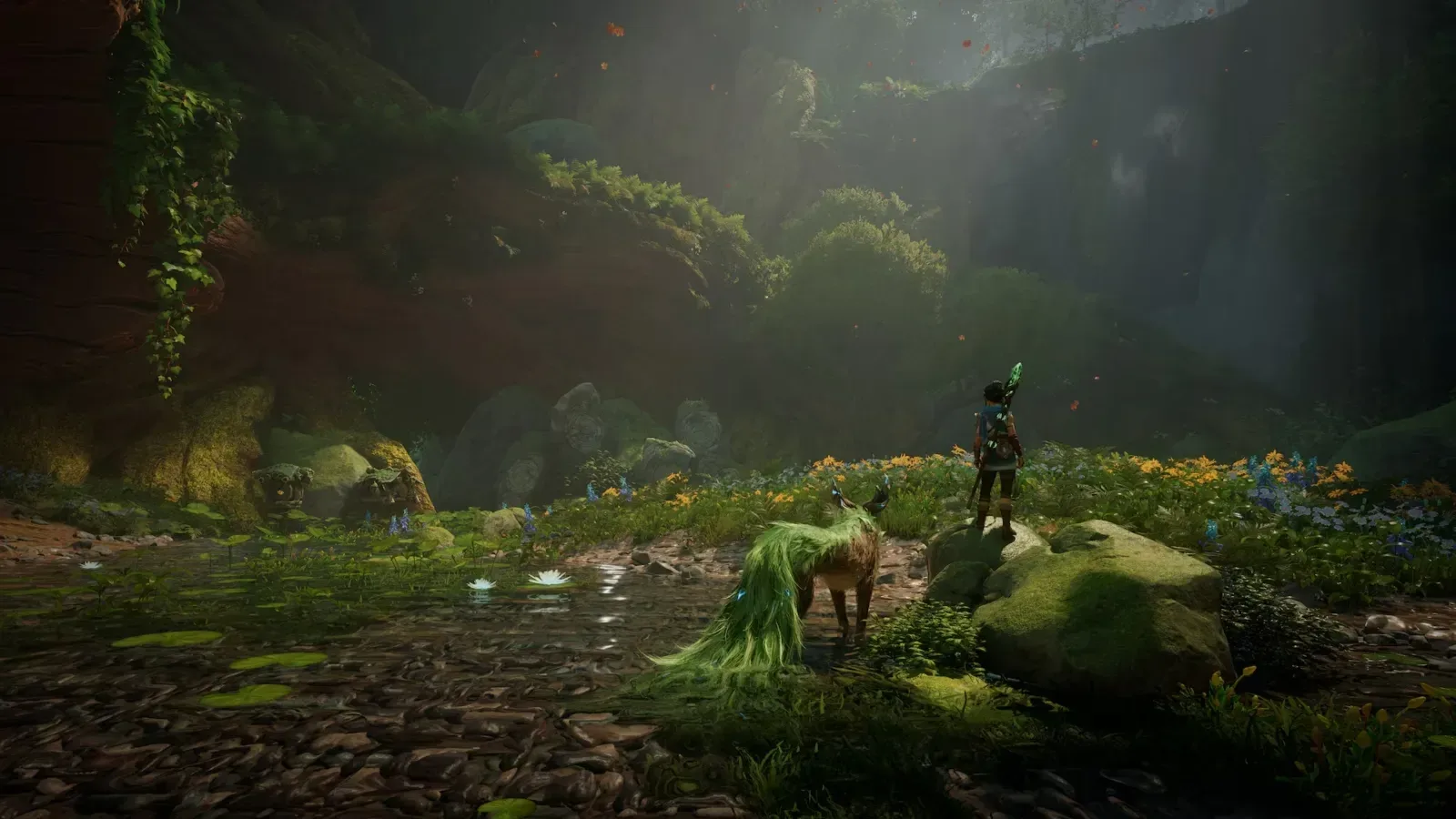
Kosmora is described as a large, multi-region map that would take a significant amount of time to cross on foot. To make that wider landscape workable, Kena will have a giant wolf companion that she can ride.
A mount is not being positioned solely as a way to move faster between distant areas. Ember Lab says the wolf can help in combat while Kena is riding it and while she is on foot, and can also assist with Alchemystic puzzles. That makes the companion a cross-system mechanic: one designed to connect travel, encounters, and environmental problem-solving.
This is one of the most meaningful confirmed differences between the two games. “Multi-region” suggests Kosmora is divided into several distinct areas rather than being a single uninterrupted space, though the degree of openness between those areas has not been specified. The wolf indicates the game has been designed around longer-distance movement in a way its predecessor was not.
There are still important unknowns. The studio has not described whether the wolf can be summoned freely, whether it can be improved, how mounted combat is controlled, or what specific puzzle actions it performs. It has also not said whether the mount is available early in the adventure. Those details will shape how transformational the companion feels, but the core intention is already clear: Kosmora is large enough that walking alone is not meant to be Kena’s only way through it.
Why Ember Lab is taking more time
The studio says it wants Scars of Kosmora to exceed the quality of its 2021 debut while operating at a much bigger scale. The move to 2027 is intended to give the team time to finish and polish that expanded experience.
Polish is a broad development term. In this context, Ember Lab has not identified a single issue or feature that prompted the delay. It has not announced cuts, a change in platforms, or a redesign. The stated reason is time: time to bring the game to the finish line while maintaining the standard the team wants for a more ambitious follow-up.
For players, the direct implication is straightforward. The previous 2026 target should no longer be used for release planning, and there is no announced month or season within 2027 to replace it. The delay does not add a new playable demo, pre-order program, pricing detail, or additional platform to the public picture. It simply moves the launch window and explains why.
There is also a useful lesson in the language of scope. Bigger maps, multiple regions, new power systems, a rideable companion, mounted fighting, on-foot companion support, and puzzle interactions all have to work together. A sequel can add each feature individually, but the difficult part is ensuring they support one another rather than feeling like disconnected additions. Ember Lab’s explanation emphasizes that cohesion and finish are the reasons for the extra development period.
What is confirmed—and what remains open
- Release window: 2027, following a delay from 2026.
- Platforms: PlayStation 5 and PC.
- Setting: The island of Kosmora, visited some time after Kena: Bridge of Spirits.
- Premise: Kena seeks a cure for an affliction while trying to stop corruption overtaking the island.
- New mechanics: Alchemy-based elemental powers, Alchemystic puzzles, and a giant wolf that supports travel, combat, and puzzles.
- World scale: A large map spanning multiple regions.
Still unknown are the exact 2027 release date, the game’s price, editions, hardware requirements on PC, and further platform plans. The developer also has not outlined the full range of elemental abilities, the structure of Kosmora’s regions, or the specific role of the lost culture in the story.
For now, the delay shifts the focus from an approaching release to the sequel’s emerging identity: a larger Kena adventure centered on a damaged island, lost elemental traditions, and a spirit-wolf companion built to carry the journey across a wider world. Readers looking for another PlayStation-focused project can also see how a classic console build is being reimagined in this report on the BrickStation Raspberry Pi PS1 emulator kit.