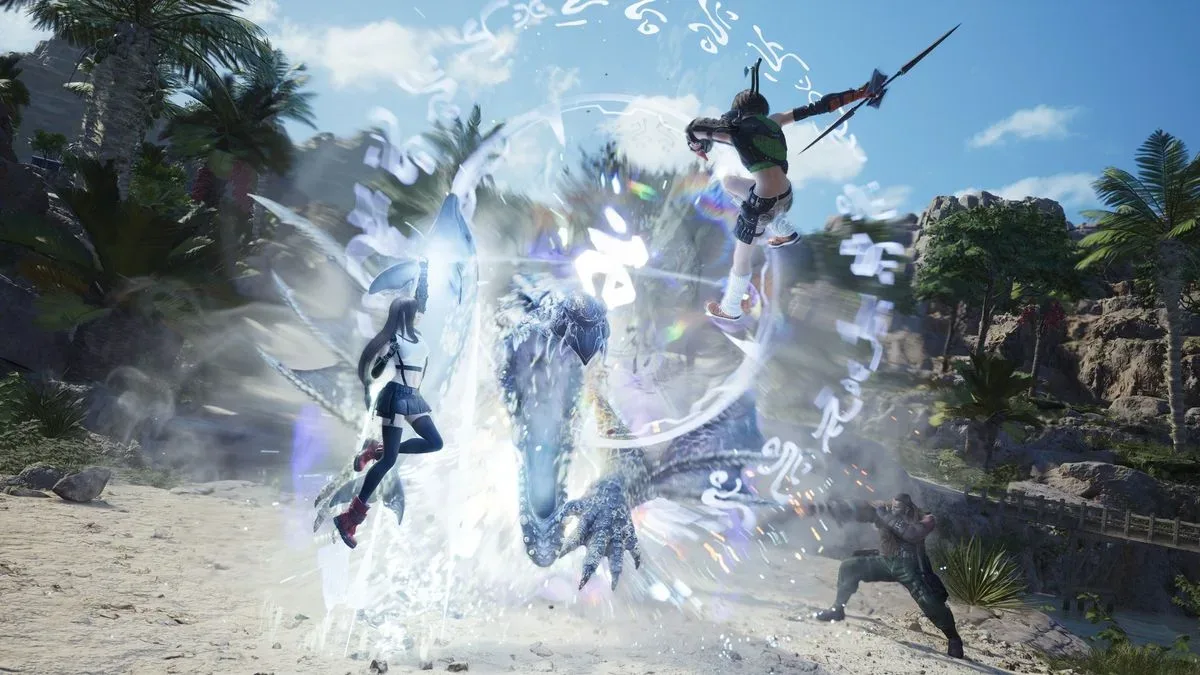
Final Fantasy 7 Revelation will have a boxed disc edition when it launches on April 8, but it is not a wholly self-contained copy of the game. The single disc includes the opening portion, while the remainder must be downloaded through an internet connection before it can be played.
That distinction is at the heart of the backlash surrounding the final entry in Square Enix’s remake trilogy. A disc is present, and the game begins from it, but the product still depends on a network download for most of its playable content. For players who buy boxed games because they expect the storage medium to contain the complete work, that is a meaningful limitation rather than a mere installation inconvenience.
Director Naoki Hamaguchi has acknowledged the concern while explaining that he pushed for a disc release within the limits of his role. He said he values physical games personally, remembers collecting them as a child, and still buys discs for games to which he feels especially attached. At the same time, he expects physical game products to become increasingly detached from a disc actually holding the game data.
“You can’t play the entire game on that disc, but it’s got the opening – a sort of key disc – and then after that, it will ask you to download the rest.”
A physical edition with a substantial condition attached
The practical facts are straightforward. Revelation’s physical package contains one disc, not the two-disc arrangement used for Final Fantasy 7 Rebirth. That disc holds the opening sections only. An internet connection is required to obtain the remaining content and continue through the game.
This makes the term physical edition more complicated than it once was. In its traditional sense, a physical game meant that the purchaser received software stored on a cartridge, disc, or another local format. A console might still need updates, patches, or optional downloads, but the base game was materially present in the box.
Revelation appears to offer something different: a physical component that begins the experience, paired with a digital delivery requirement for the larger portion. Hamaguchi described it as a “key disc,” which is a useful plain-language way to understand the compromise. The disc is neither simply an empty entitlement nor a complete offline copy. It has game content, but it also functions as a gateway to content that must be retrieved elsewhere.
For a buyer with dependable broadband, the result may be mostly a matter of download time and storage management. For someone with a slow, unreliable, capped, or unavailable connection, the requirement can determine whether the purchase is usable at all. The issue is also relevant to people who want a game to remain installable years later without relying on an online service being available.
Related coverage includes Final Fantasy 7 Revelation Director Defends Limited Disc Release as Digital Pressure Grows.
That does not mean a disc containing only part of a game has no value. It may offer a tangible package, a disc for a shelf, and at least an opening segment stored locally. But it is important for buyers to understand exactly what is—and is not—preserved on it. A box and disc do not automatically mean that the full game can be played directly from the contents of that box.
Why fans are challenging the label
Much of the frustration comes from a collision between two reasonable interpretations of ownership. Publishers can describe a boxed product as physical because it includes manufactured media. Players who support the “no disc, no purchase” position often use a stricter test: the disc should contain the full playable game, not simply launch an initial section before requiring a download.
The disagreement is not semantic nitpicking. It changes what a purchaser receives. A fully stocked disc can be installed and played without first obtaining the rest of the game online. Revelation’s disc cannot do that for the entire adventure. If the needed download is unavailable at some future point, the product’s physical component alone would not provide the full experience described here.
There is also a collecting dimension, though this is not merely a question of whether a case looks good on a shelf. Collectors and preservation-minded players tend to care about the disc as an archival object: does it hold a working version of the game? Can it be used independently? Does the package preserve the software itself, or primarily an access path to software hosted elsewhere?
Hamaguchi said he understands the social-media calls for a complete disc version and understands that many people will not approve of the final arrangement. His comments do not present the release as an ideal solution for every player. Instead, they frame it as the physical option that survived internal and platform-holder negotiations in an environment that is moving toward digital distribution.
The director’s role is not the product line-up
Hamaguchi drew a clear boundary between creative leadership and commercial-release decisions. As director, he said his central responsibility is ensuring the game content is enjoyable and exciting. Decisions around the product line-up and SKUs sit with the publishing side.
An SKU, short for stock keeping unit, is a retail and inventory term used to distinguish products or versions of a product. In games, different SKUs can include a standard boxed edition, a digital edition, a collector-oriented package, or releases for different platforms and regions. The term may sound like warehouse jargon—and it is—but it matters because it identifies who decides what configurations go on sale.
Hamaguchi’s point is that a director can advocate for a physical format without having final authority over whether a complete game fits on disc, how many discs are manufactured, or which versions reach stores. He said his authority over that side is limited. He nevertheless said he used his position to argue for a physical version as strongly as possible.
“There’s a lot of pressure for disc-less editions, digital editions, and I used my position to put forth an argument for the physical version as much as possible.”
That explanation will not erase disappointment among players seeking an entirely on-disc version. It does, however, identify the larger commercial framework behind the decision. The release format was shaped by discussions inside the company and with first parties—the companies responsible for the relevant hardware platforms and associated publishing arrangements—not by the director alone.
“Disc-less physical” is no longer a contradiction in the market
Hamaguchi believes the near future may include physical game packages that are “essentially disc-less,” potentially using a code on paper inside a box. That format already has parallels in game-key cards and certain special editions: a buyer receives a tangible retail item, but the actual software is acquired digitally.
It is useful to separate three models that can all be sold in stores:
- Complete physical media: the full playable base game is on the disc or cartridge.
- Partial physical media: some game data is local, but a download is necessary for the full experience.
- Code-in-a-box products: the packaging is physical, while the game itself is delivered digitally through a code or entitlement.
Revelation belongs in the middle category based on the details available: it includes playable opening content on a disc, but not the rest of the game. The distinction matters because the three models offer very different levels of independence from online infrastructure.
Hamaguchi’s forecast suggests that the third model could become much more common. For publishers, this can simplify some elements of distribution. For buyers, it makes careful reading of package descriptions increasingly important. The words “physical,” “boxed,” or “disc edition” may describe the object being sold, but they do not by themselves answer whether all game content is included locally.
Players interested in RPG history and how different hardware eras framed game ownership may also find value in this look at Nintendo DS RPG games, a reminder that format and hardware design have long influenced how games are experienced and kept.
The preservation question remains unresolved
The concern around Revelation is part of a broader resistance to digital-only and download-dependent releases. Physical-media fans and game preservation advocates are not necessarily making the same argument, but their interests overlap here. One group may want a reliable, displayable object that represents a purchase. The other may focus on whether playable software remains accessible without a continuing dependency on downloads or platform services.
Information surrounding this debate also places the release against an expected end to PlayStation physical-game production in 2028. Whether that broader transition unfolds exactly as anticipated or changes over time, it provides context for why a partial disc release can be portrayed both as a compromise and as a warning sign.
For now, the clearest consumer takeaway is not that Revelation lacks a physical edition. It has one. The key point is that it is a limited-data physical edition. Anyone choosing it specifically for offline completeness should know that the single disc carries only the beginning of the game and that the rest requires an online download.
Hamaguchi’s comments show a developer who appreciates discs and believes he helped keep a boxed version alive, while also accepting that the industry’s distribution decisions are moving in a different direction. For fans, the debate is likely to continue well beyond this one release: if a disc starts a game but cannot preserve or play all of it by itself, what, exactly, should “physical” promise?