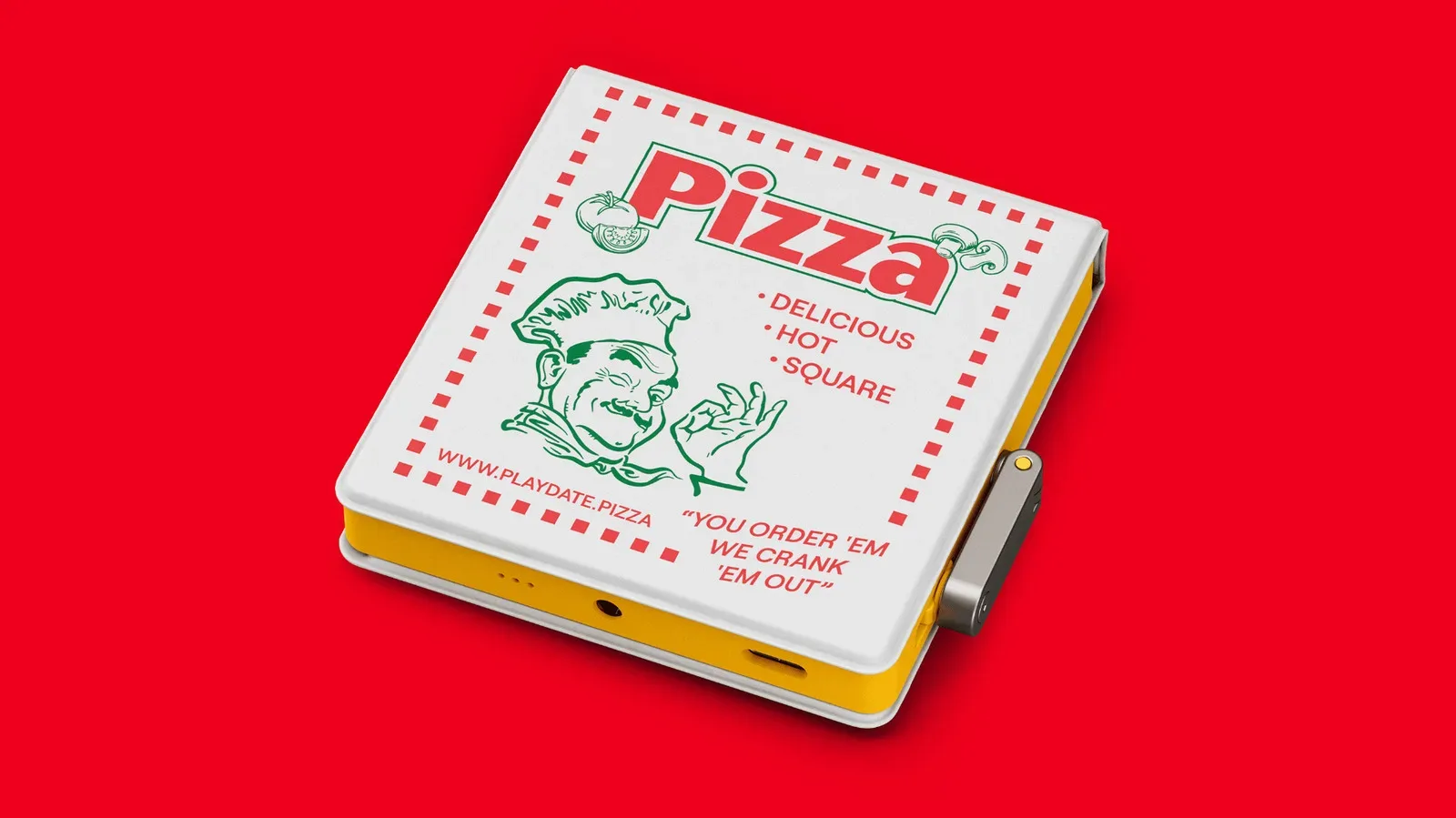
Playdate owners can start limbering up the thumb and preparing the crank: Playdate Season 3 launches October 8. The new collection will unfold over four weeks, with two games delivered each week for a total of eight. It costs $39, and pre-orders are currently available.
That structure remains a big part of the charm. Rather than placing an entire compilation in front of players at once, Playdate seasons parcel out their software in scheduled drops. It gives the tiny yellow handheld a rhythm closer to receiving a peculiar new game night twice a week than browsing a conventional store shelf. Panic curates the seasons, and the games are made specifically for the black-and-white portable and its defining physical control: the side-mounted crank.
All eight Season 3 games have now been identified, removing some of the mystery surrounding the weekly arrivals while preserving the fun of finally getting to turn a new oddball idea over in one’s hands. The lineup ranges from dungeon crawling and adventure-game unease to a frog bath that apparently demands precise thermal management. This is, in other words, a very Playdate assortment.
Every game in Playdate Season 3
The complete Season 3 roster is as follows:
- Soggy Froggy, from team root, the group behind Root Bear
- Gloom Gate, from LuBu, creator of satOlite
- Houm, from BuuuuBunnyGames of fissh studio
- Sound Mind, from Chuck Jordan, developer of Sasquatchers
- HELLEVATOR, from DRD of ICY DUNGEON
- Bonkhope, from indiana-jonas, creator of Long Puppy
- Chance’s Lucky Escape 2, from Goloso Games and Julia Minamata
- Cross Words, from Shaun Inman, developer of Ratcheteer
Names alone tell only part of the story, but they already communicate the season’s appetite for projects that do not sound like they emerged from a quarterly planning meeting. A game called HELLEVATOR is immediately setting expectations at a pleasingly infernal altitude. Bonkhope is a title with the energy of a cartoon anvil falling through a stained-glass window. And Cross Words, especially from the maker of Ratcheteer, suggests that even a familiar phrase may be about to take a left turn through the Playdate’s compact screen.
Three very different early spotlights
Three games received a closer look: Soggy Froggy, Gloom Gate, and Houm. Taken together, they make a persuasive case for why a season format can suit this handheld so well. They are not variations on one established formula. They are strikingly different ideas, connected chiefly by their use of a deliberately unusual device.
Soggy Froggy puts the crank to work
Soggy Froggy is the most cheerfully strange concept of the trio. Its cartoon presentation centers on stirring a pot and maintaining the correct liquid temperature for a frog having a bath. The crank is not decorative hardware here; it is central to the activity. The player’s physical motion becomes part of tending the pot, creating the sort of focused, tactile loop that the Playdate’s design invites.
It is also a reminder that the platform can find comedy in specificity. Plenty of games ask players to save worlds, win races, or conquer armies. A game that asks them to make sure an amphibian’s bath is neither too hot nor too cold has a more intimate kind of pressure. The stakes may be small, but the frog has standards. That is enough.
Gloom Gate brings a dungeon-crawling mood
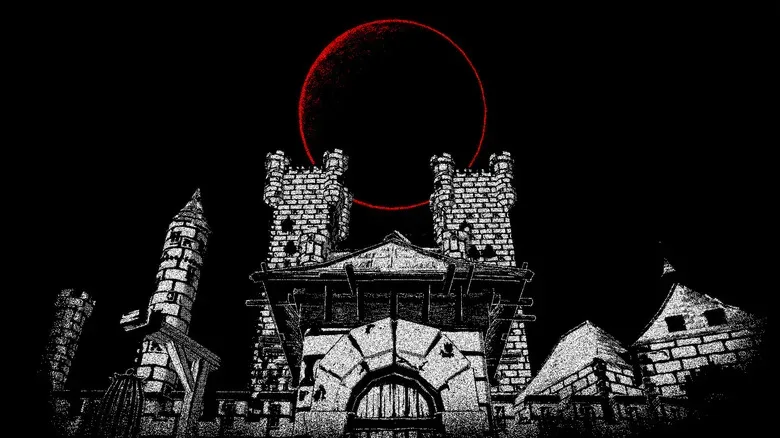
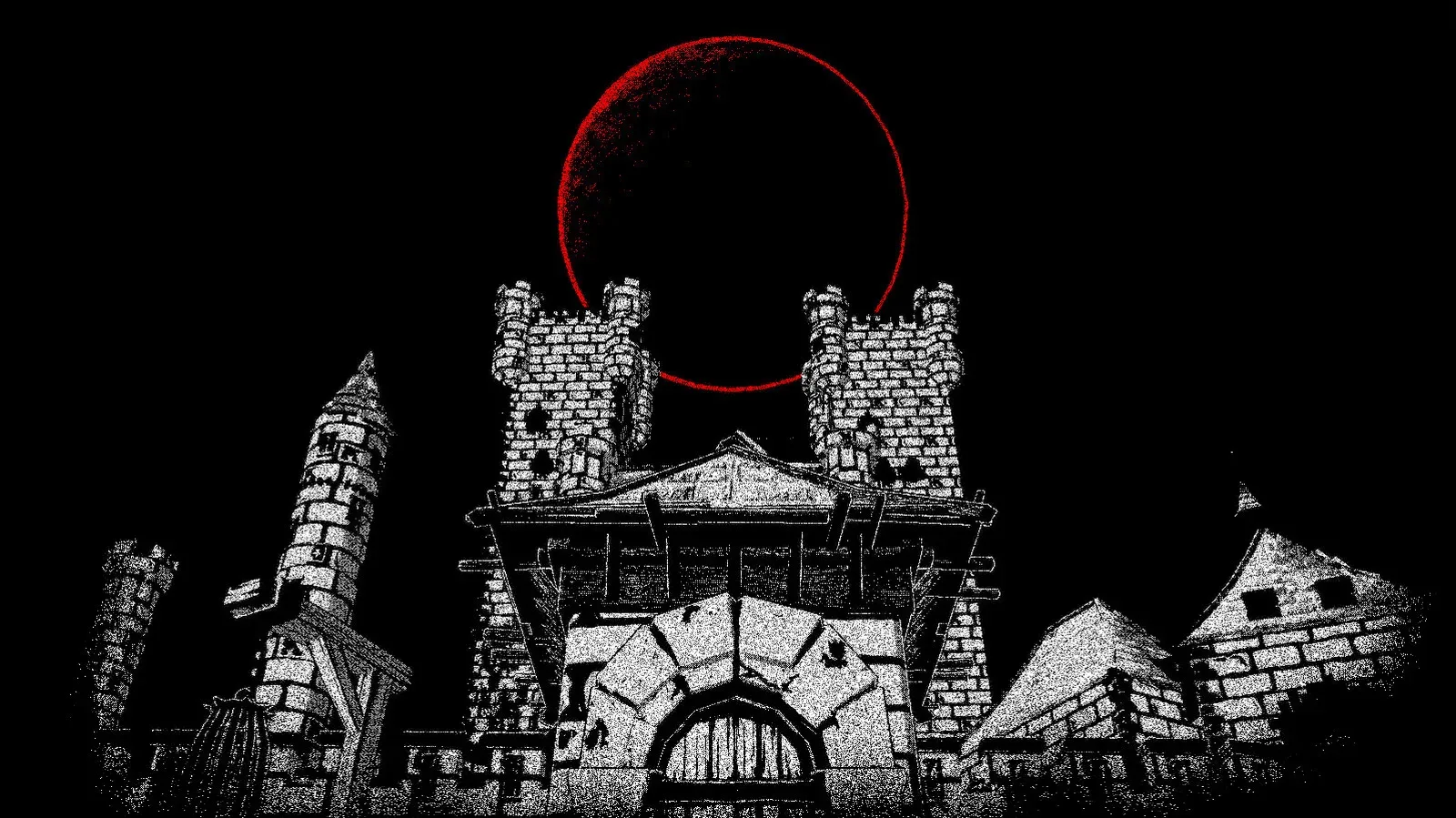
Gloom Gate heads in almost the opposite direction. It is an old-school dungeon-crawling RPG with soulslike elements and richly animated visuals. That combination points toward a more methodical experience: dangerous spaces, careful progress, and an atmosphere that values tension as much as action.
Its presence is especially notable because it illustrates the range developers continue to pursue on hardware that could easily be dismissed as a novelty. The Playdate’s black-and-white display and compact inputs create obvious constraints, yet those constraints can produce distinctive design decisions rather than merely reduced versions of larger-screen games. A dungeon crawler with elaborate animation and soulslike influence is not the same thing as a blockbuster action RPG squeezed into a pocket. It has the opportunity to become its own strange, focused object.
Houm explores a mansion full of value and dread
Then there is Houm, an unsettling point-and-click adventure set inside a mysterious mansion. The setting contains valuables and existential trauma, a combination that gives the game a haunted, psychologically charged premise before a single puzzle is solved. The description suggests an adventure more concerned with tension, observation, and uncomfortable discoveries than reflexes.
Point-and-click adventures have always depended on the pleasures of attention: scanning a room, wondering why an object is there, trying to understand what a character is not saying. On Playdate, that format has room to feel especially intimate. The player is leaning toward a small screen, manipulating a handheld object, and moving through a contained environment one interaction at a time. For a mansion that is meant to be disquieting, small-scale closeness may be an advantage rather than a limitation.
What $39 means for this season
Season 3 has fewer games than Playdate Season 2 while carrying the same $39 price. Season 2 included 12 games as well as Blippo+, the deliberately campy cable-TV simulator. By comparison, Season 3 contains eight games, which works out to $4.875 per title when divided evenly. In ordinary conversation, that is roughly five dollars per game.
That math does not automatically settle the value question; game length, replayability, and individual taste all matter. Still, it provides a useful way to frame the package. The Playdate’s broader catalog has games that reach roughly $10 at the high end, and a curated run of eight bespoke releases for $39 is positioned as an accessible route into a varied collection rather than an expensive gamble on one lengthy production.
Season 1 established a much larger baseline: it is included with every Playdate and contains 24 games. The contrast among the three seasons also shows that a Playdate season is not simply a standardized box with a fixed game count. The recurring idea is the delivery cadence and hand-curated identity, not an unchanging number of releases.
In the wider consumer-tech world, shifts in hardware and device pricing are hardly unusual; for a separate example, see our coverage of Apple raising prices on older iPhones while Watch and AirPods pricing held steady. Against that backdrop, Playdate Season 3’s unchanged $39 entry price, despite its smaller game count than Season 2, will be judged less by spreadsheet symmetry than by how compelling its individual games prove to be.
A platform still built around unusual ideas
The Season 3 reveal underlines a point that has become central to Playdate’s identity: its most interesting software often treats the hardware’s restrictions as material to work with. The crank can represent stirring, aiming, timing, scanning, or any other motion a developer can make readable and satisfying. The monochrome display encourages sharp visual decisions. The platform’s small scale makes room for genres and premises that might get lost amid larger commercial releases.
That does not mean every game needs to be a crank showcase, nor that every strange title will appeal to every player. It does mean the season has a coherent reason to exist. A frog bath simulator, a dungeon RPG, and an anxiety-soaked mansion adventure can share a four-week schedule because Playdate is built to make room for offbeat interactions.
Catalog Fall Sale dates
Players looking beyond the season itself also have a Playdate Catalog sale to mark down. The Catalog Fall Sale runs from November 5 through November 19 and will include discounts on more than 200 games. That is a sizable pool for anyone whose curiosity extends past the scheduled season format and toward the platform’s wider collection.
For now, October 8 is the date to circle. Season 3 is bringing eight games in four weekly drops, beginning with a lineup that has already demonstrated a welcome lack of interest in being predictable. Whether the task is stirring for a frog, surviving a gloomy dungeon, or poking through a mansion’s emotional wreckage, the crank appears ready for another busy season.