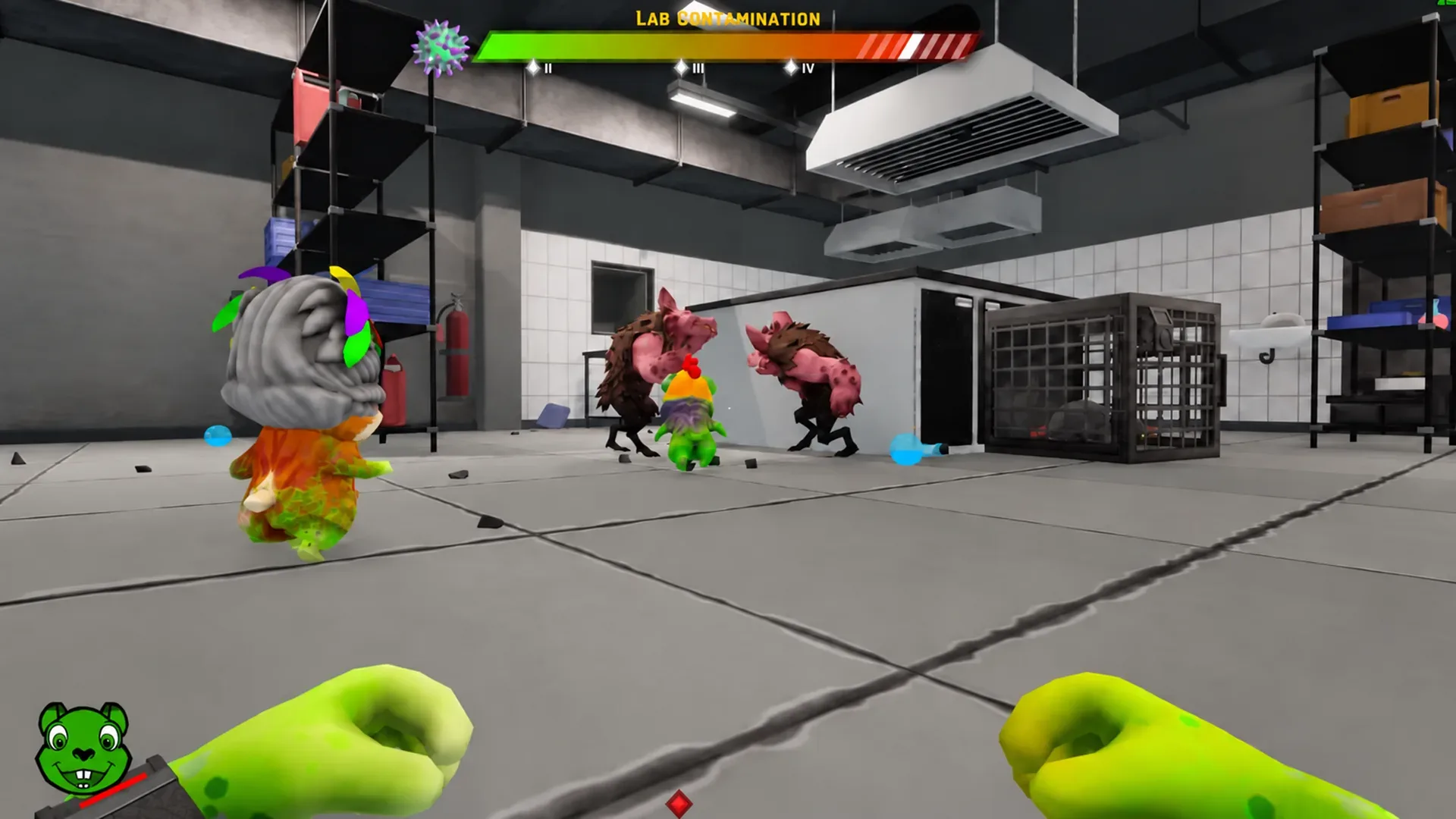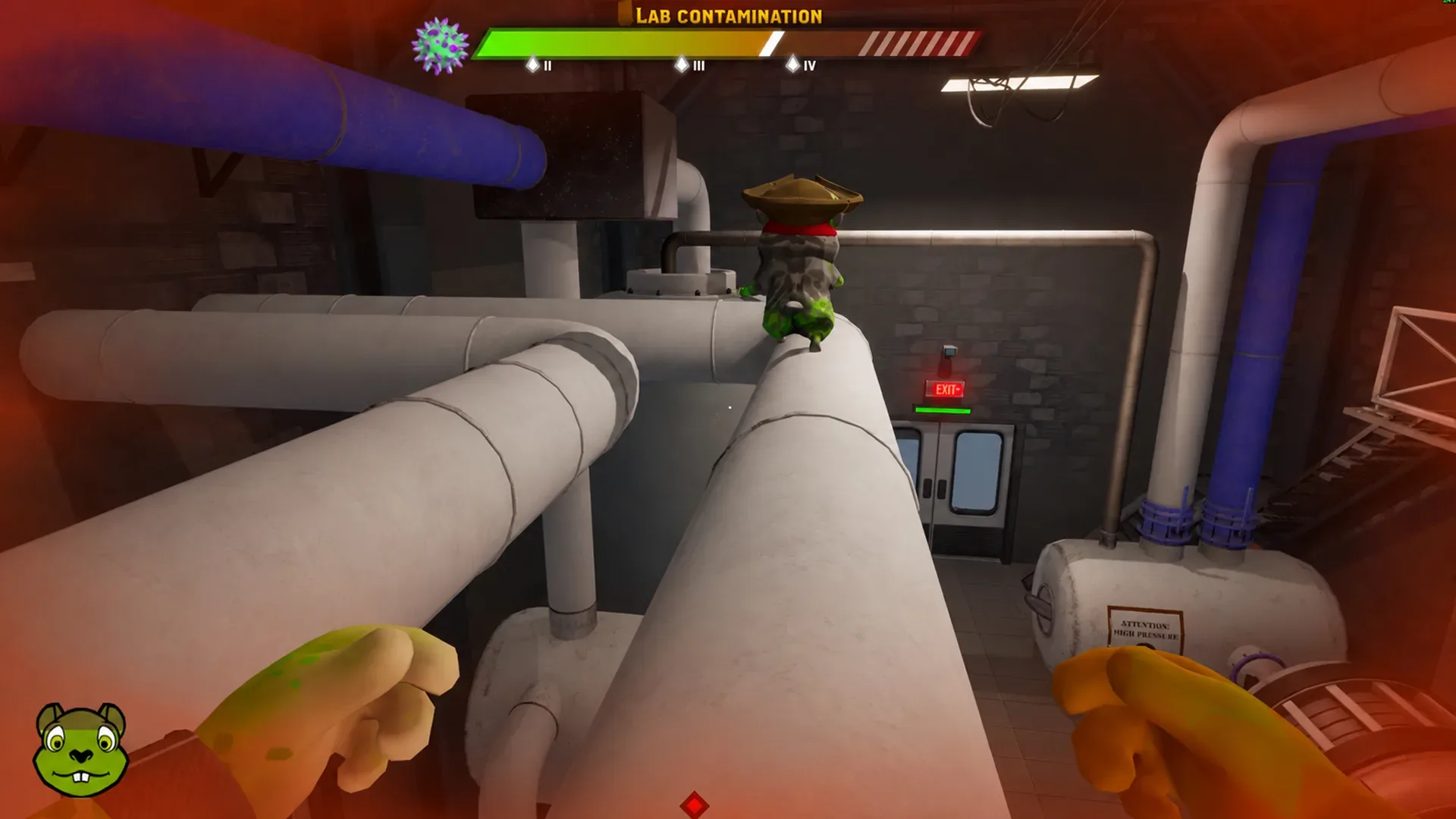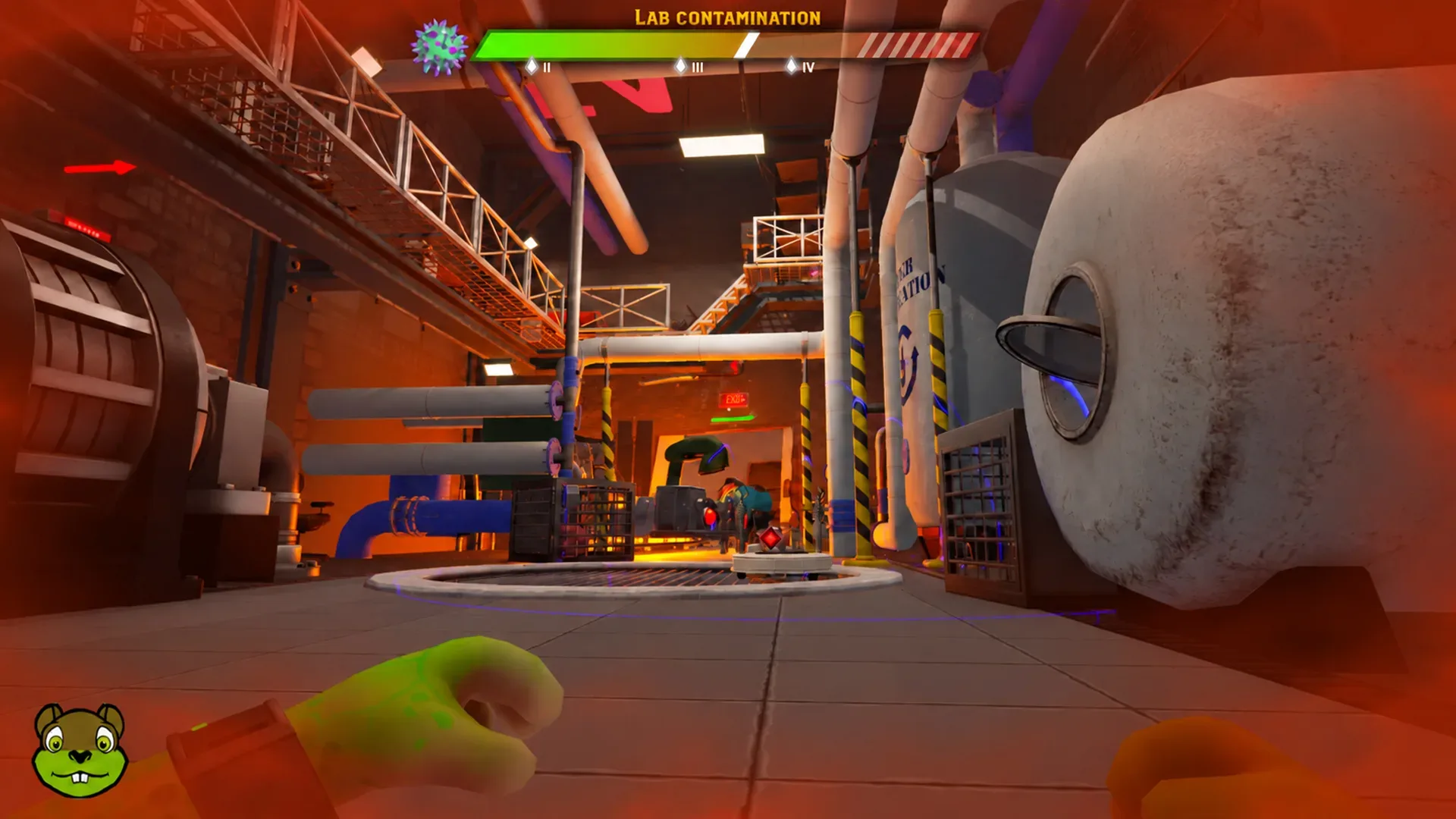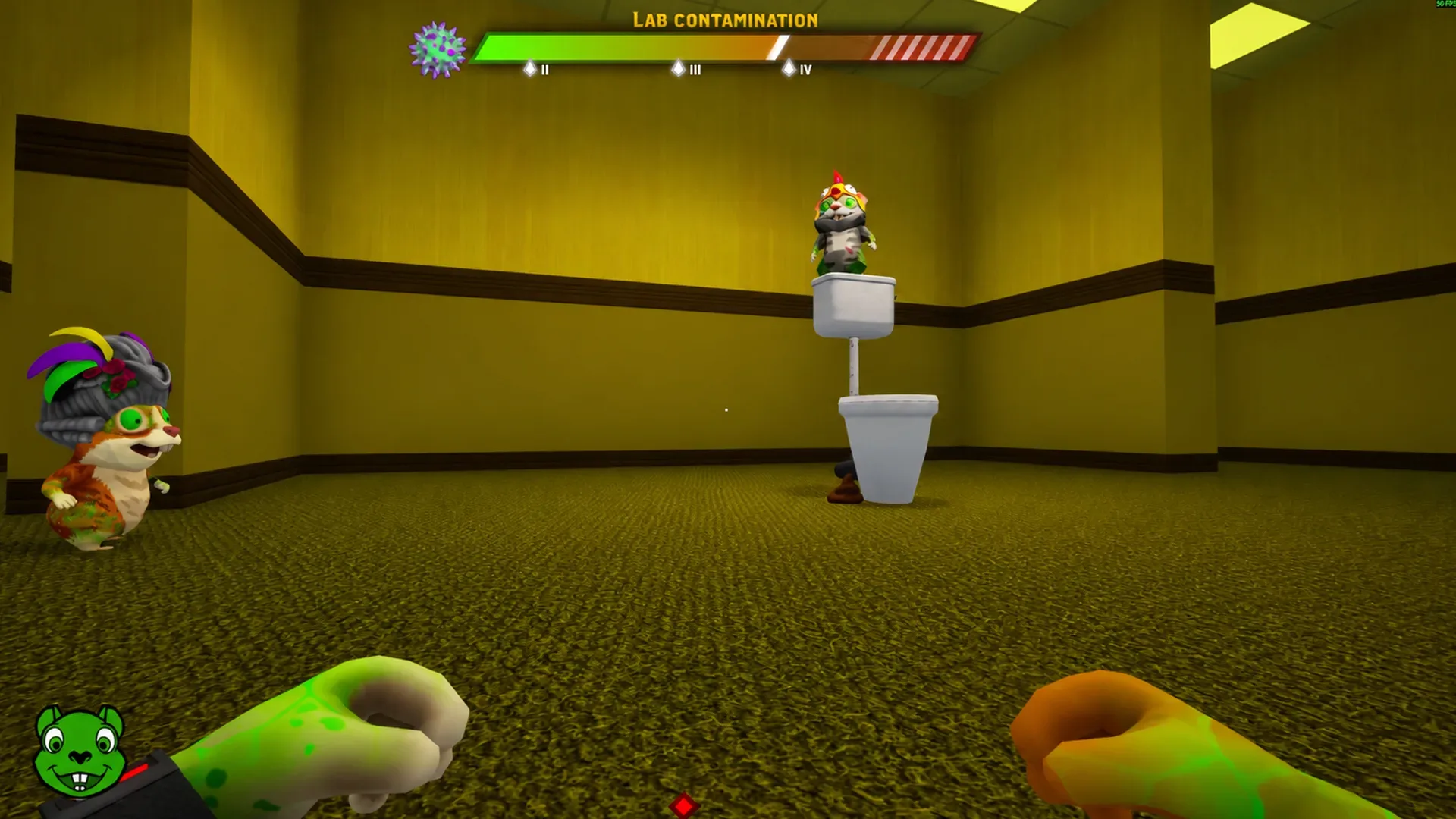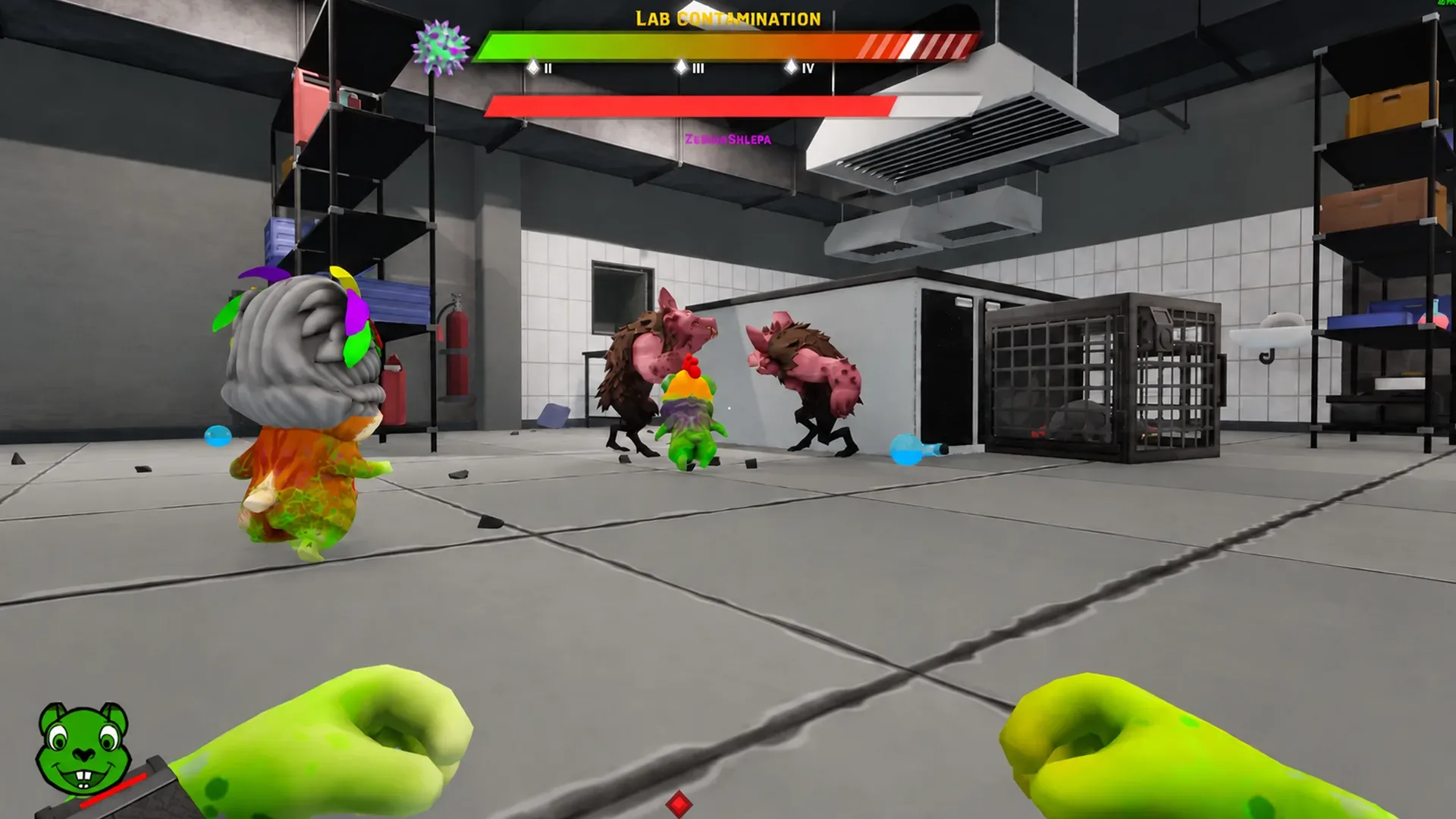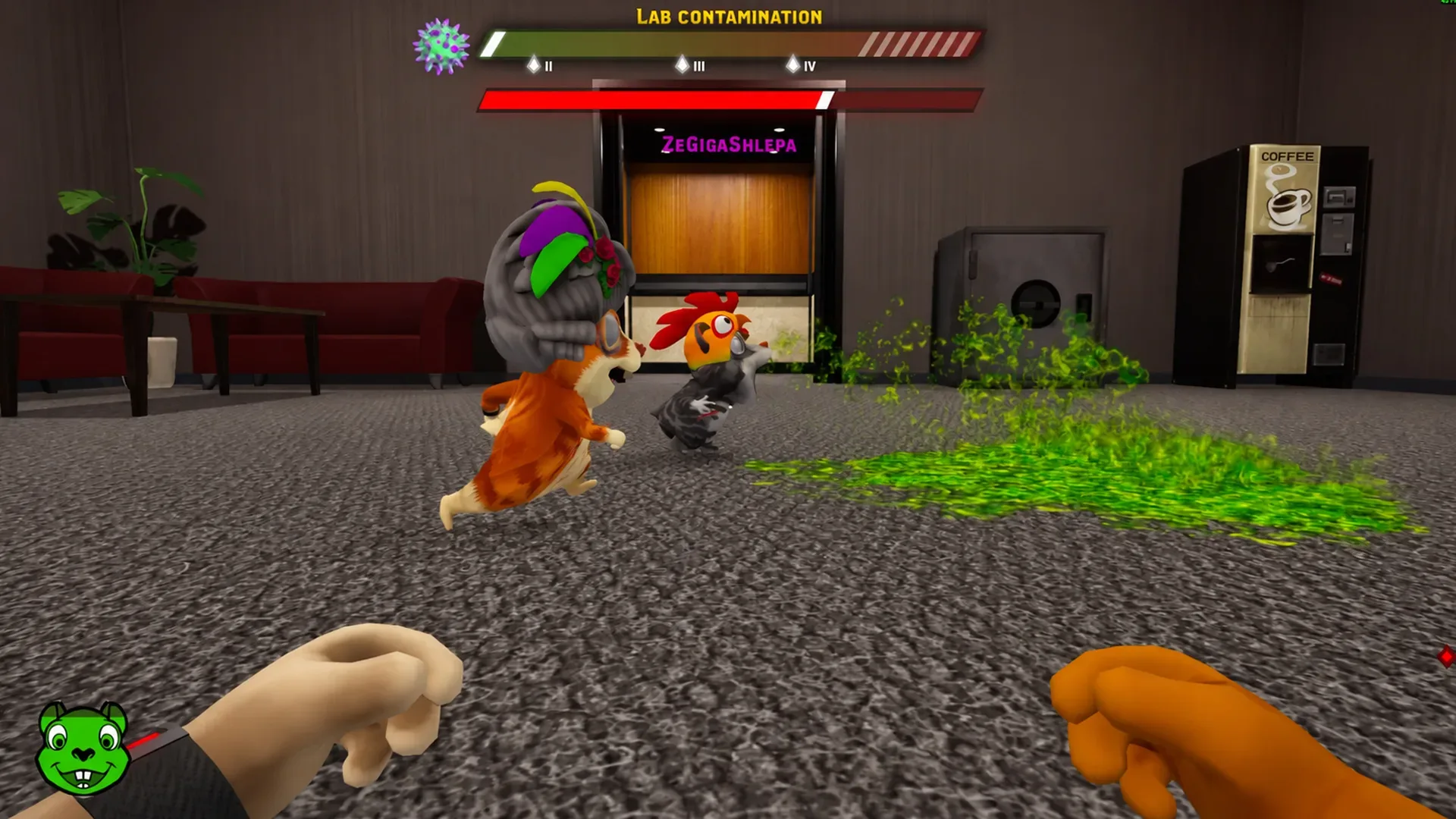

Rogue Biscuit has outlined Zombie Hamsters, a co-op action game about turning a research facility into a considerably worse workplace. Players enter a huge procedurally generated laboratory, navigate its puzzles, traps and hostile inhabitants, then try to engineer an escape alone or with as many as three other players.
The central hook is not simply surviving the lab: players can infect scientists, security guards and other inhabitants, spreading what the game describes as a hamster apocalypse through the facility. That premise sits alongside stealth, exploration, platforming and combat, giving Zombie Hamsters a deliberately unruly set of tools for tackling a dangerous space.
A release date has been announced, though the date itself was not included in the available details. The announcement also points players toward a Steam store page, an official trailer and a press kit, but does not establish further release-platform information.
A lab escape with room for bad ideas
Zombie Hamsters supports solo play and co-op for up to four people. Its setting is a research laboratory occupied by scientists, security personnel and mutant experiments, with deadly traps and enemies adding pressure to every attempt to get out.
The important design detail is that the game does not present one mandatory solution for each obstacle. Instead, it gives players objectives and tools, then allows them to plan and carry out an escape in their own way. In practice, that means a route through the laboratory may be shaped by reconnaissance, a decision to stay unseen, an attempt to use infection to change the population of an area, or a more direct response to whatever stands in the way.
That does not mean every option will lead to the same outcome. The stated puzzle and platforming challenges have multiple possible solutions with consequences. A plan that seems efficient may create a new danger, while a cautious approach may take longer but preserve an alternate route. The announcement does not specify exactly how those consequences are tracked, but it clearly frames improvisation as a major part of the game’s intended play.
What procedurally generated means here
Procedural generation refers to game content assembled through systems rather than a single fixed, hand-authored layout that appears exactly the same every time. For Zombie Hamsters, the relevant promise is a procedurally generated laboratory.
The supplied information does not say which parts of the laboratory change between runs—such as room layouts, hazards, routes, enemies or puzzle elements—so those specifics remain unconfirmed. Still, a shifting lab fits the broader emphasis on exploration and alternative solutions. Players cannot rely entirely on memorising one set of corridors if the environment is designed to produce different situations.
Related coverage includes Zombie Hamsters Sets Up a Co-op Lab Escape With Infection at Its Core.
For a co-op game, that uncertainty can also make communication matter. One player may investigate ahead, another may search for a ventilation route, and a group may have to revise its plan when it finds traps or hostile forces in an unexpected position. Those are logical implications of the described systems, rather than confirmed player roles or classes; no fixed character specialisations have been detailed.
Infection is the game’s standout system
Zombie Hamsters’ infection mechanics are what separate its escape setup from a straightforward stealth-and-combat mission. Players can infect laboratory inhabitants, including scientists and guards, and spread the outbreak further. Rather than treating every person in the lab as only an obstacle, the game makes at least some inhabitants part of the player’s potential toolset.
That opens an interesting tactical question: when is it better to avoid a populated area, and when is it worth triggering chaos inside it? The game’s description supports both approaches. Stealth is a featured pillar, but infection is also presented as a core mechanic. The tension between discretion and escalation could give groups very different routes through the same broad objective.
There are boundaries to what has been confirmed. No information has been provided on whether infected characters become allies, distractions, additional threats, or something else entirely. Nor are there details on infection limits, timing, resistance, upgrades or whether it affects every enemy type. The safe takeaway is that infection can be spread to listed inhabitants and is fundamental to the game’s apocalypse-themed premise—not that every outcome of that spread has been revealed.
Stealth, vents and alternate routes
Rogue Biscuit specifically identifies ventilation shafts as a way to sneak through the facility and discover alternate routes. Vents are a familiar stealth-game shortcut, but their inclusion matters because it reinforces the stated goal of letting players solve problems without following one prescribed path.
Exploration therefore appears to be more than a search for scenery. Finding an alternate passage could allow players to bypass immediate threats, approach a puzzle from another side, or avoid committing to a fight. The laboratory is also explicitly dangerous, so route selection will likely carry weight even before a team encounters one of its puzzles.
The announcement’s mix of stealth and platforming suggests that movement itself is part of the challenge. However, it does not detail a perspective, a movement toolkit, checkpoint system, difficulty settings or the exact form of the platforming. Players should not read the feature list as confirmation of precision movement mechanics beyond the fact that platforming challenges are included.
Co-op can support planning—or multiply the disorder
Up to four players can explore and overcome challenges together, while solo play remains an option. This makes Zombie Hamsters potentially appealing to two distinct audiences: players who want to coordinate a lab breakout with friends, and those who prefer to test routes and systems on their own.
In a cooperative escape game, a shared objective does not necessarily produce a shared method. One player may want to quietly map a vent route while another sees an opportunity to infect nearby guards. The game’s open-ended positioning leaves room for that kind of negotiation and experimentation. Whether it provides tools for coordination, revives, shared inventories, player-versus-player interference or other co-op-specific mechanics has not been stated.
What is clear is that the four-player option is not an add-on to an otherwise solitary premise. Co-op is listed among the game’s headline features, alongside infection, stealth, puzzles and the laboratory’s hazards. Players who enjoy emergent stories—those memorable runs that go off-plan because someone made a bold or questionable decision—may find the systems especially promising.
How Zombie Hamsters fits into the current Steam conversation
The game’s Steam reference puts it in the same broad PC-focused space as other recent independent projects with a sharply defined mechanical hook. For example, The Devil’s Due’s Steam debut is framed around a very different blend of roguelite poker and tarot routes. Zombie Hamsters, by contrast, is concerned with navigating a hostile laboratory through co-op action, stealth and contagion.
That distinction matters because “procedurally generated” alone does not explain what a game asks players to do. Here, the available details point to an escape game where changing layouts or circumstances support a toolkit of choices: sneak through shafts, face enemies, solve puzzles, negotiate platforming obstacles, or spread infection through the people running the facility.
What has and has not been confirmed
- Confirmed: solo play and co-op for up to four players.
- Confirmed: a massive procedurally generated research laboratory.
- Confirmed: scientists, security guards and mutant experiments inhabit the setting.
- Confirmed: infection can affect scientists, guards and other laboratory inhabitants.
- Confirmed: stealth, ventilation routes, exploration, puzzles, platforming, traps and hostile enemies are featured.
- Confirmed: the game promotes multiple approaches rather than one prescribed solution.
- Not detailed in the available announcement: the actual announced release date, pricing, release platforms beyond a Steam-page reference, or the exact workings of procedural generation and infection.
For now, Zombie Hamsters is best understood as a flexible co-op laboratory escape game with a mischievous infection mechanic at its center. Its appeal will depend on how convincingly its procedural spaces, alternate routes and consequences create meaningful choices—but the announced ingredients suggest that a clean, quiet escape may be the exception rather than the plan.