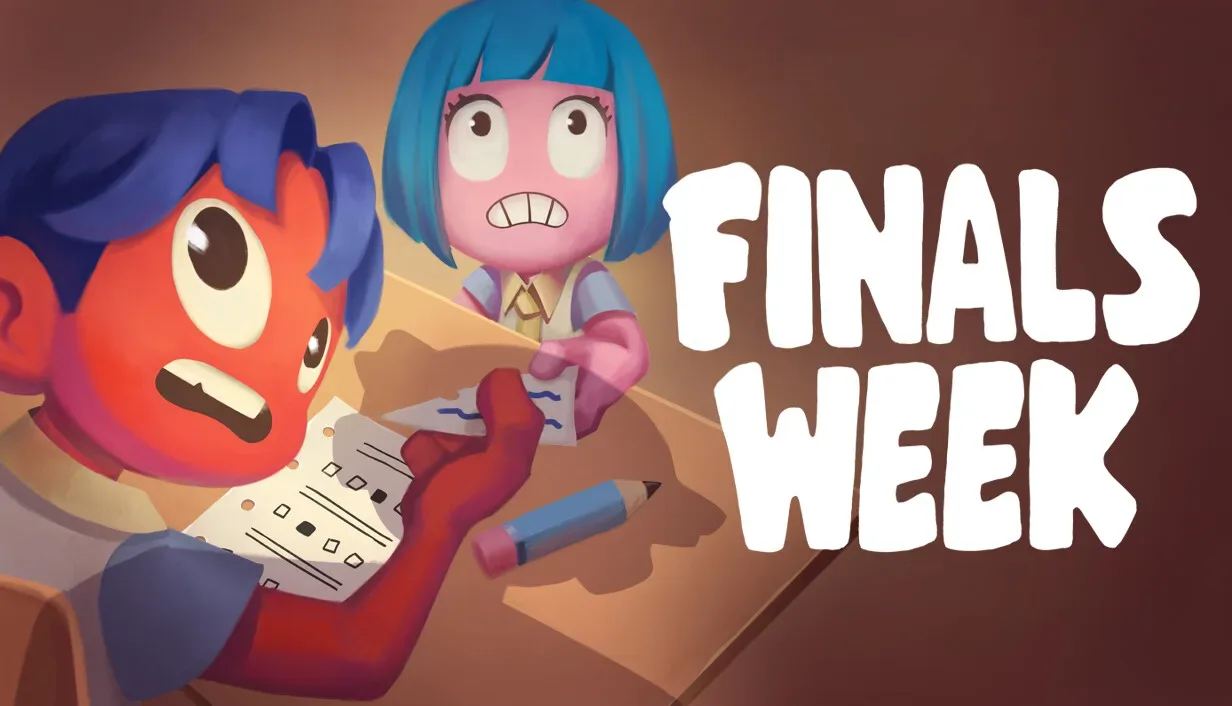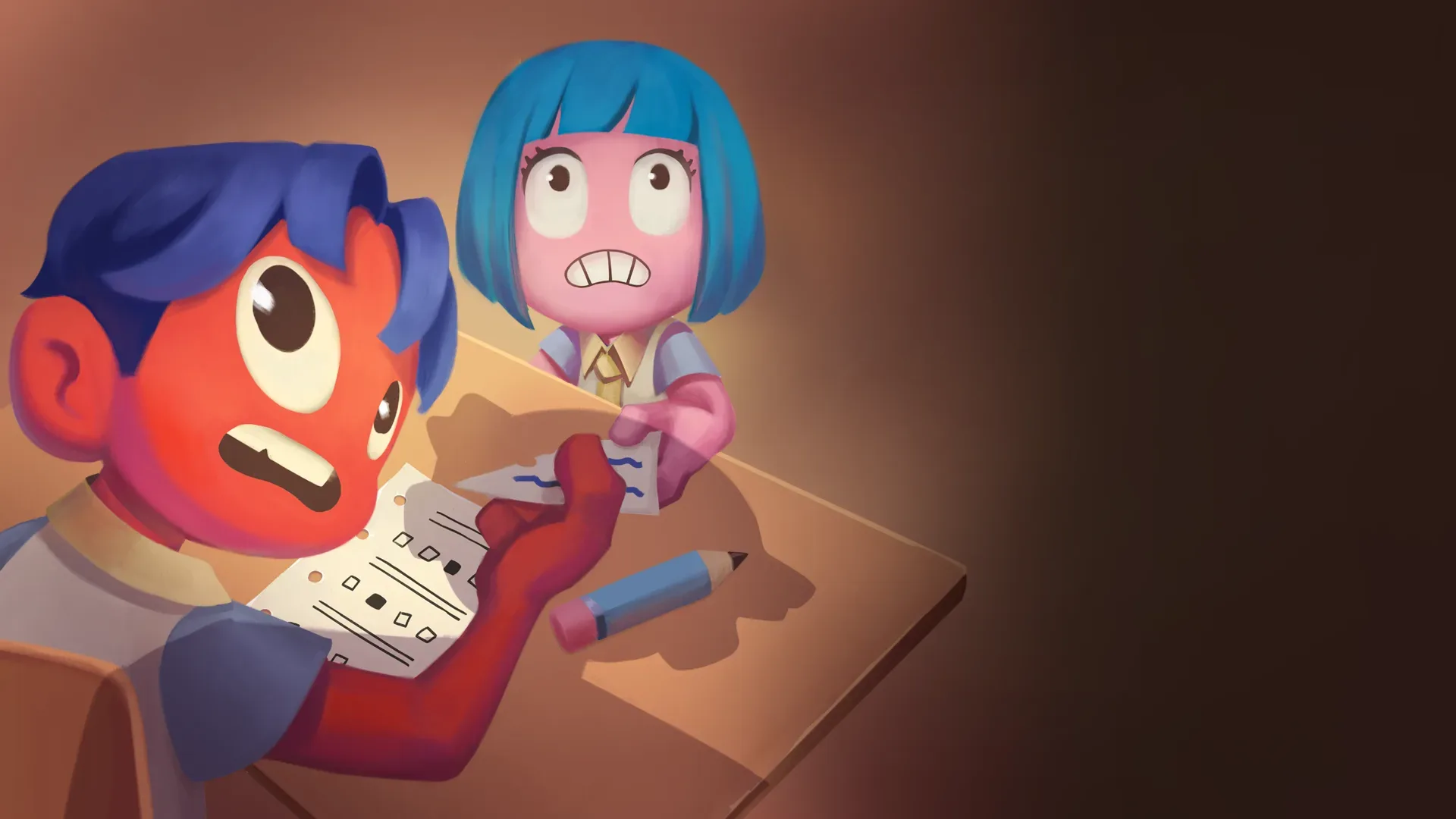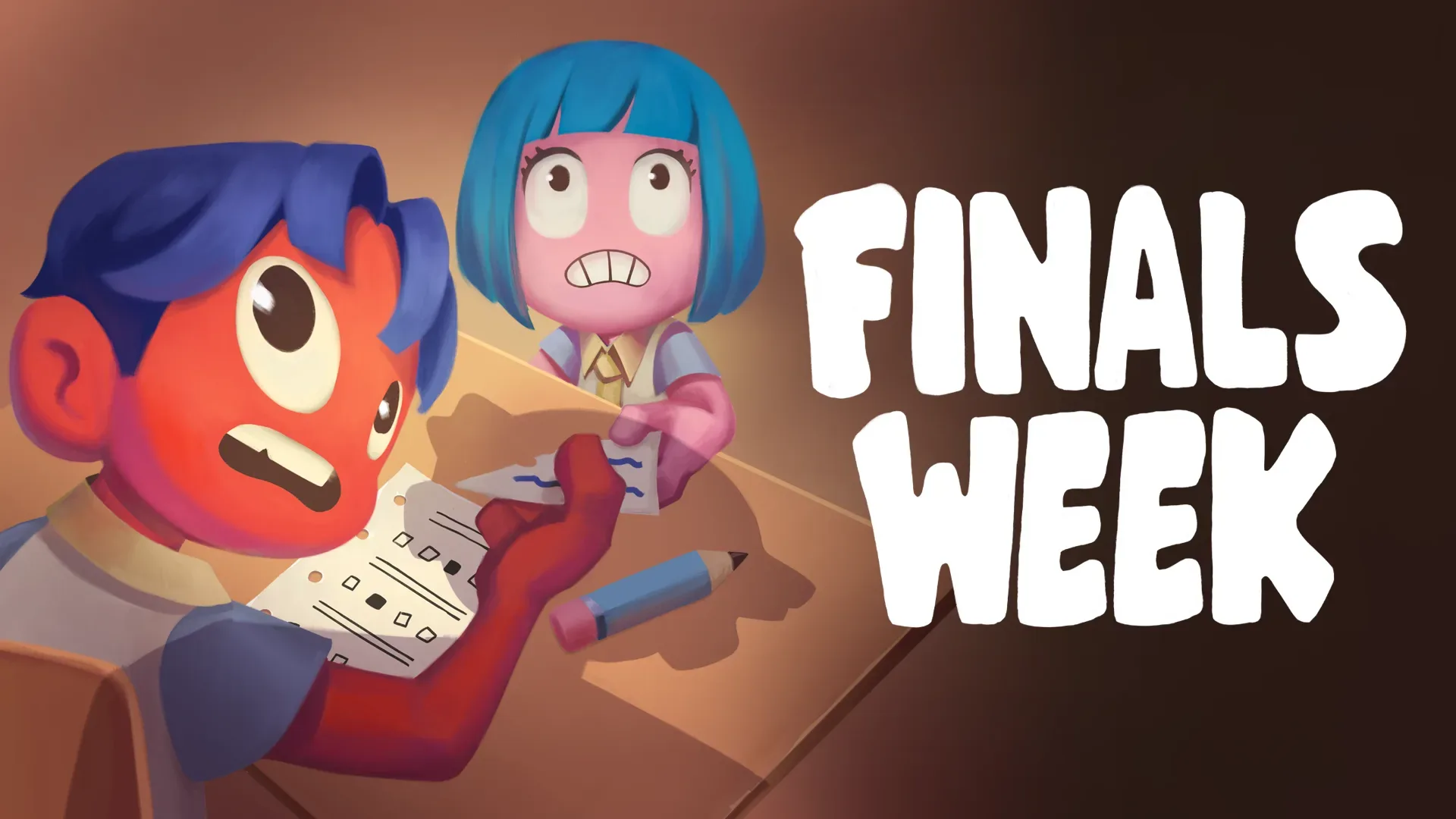
Finals Week, a chaotic co-op game about surviving school exams by doing everything except revising, is now available on Steam. Developed by DESTINYbit and published by Pretty Soon, it supports one to four players and frames its classroom misconduct as a light, escalating multiplayer challenge rather than an academic simulation.
The premise is deliberately unruly: players are placed in a 90s-style school and asked to get through a sequence of 12 exams. Instead of preparing beforehand, the group is expected to improvise inside the school, locate information and get answers to one another without attracting the teacher’s attention. It is a game-world scenario, not advice for real academic settings; the pressure comes from its systems of suspicion, patrols and punishments.
Finals Week is listed at $7.99 USD, with a 38% launch discount available during its first two weeks on Steam.
Twelve exams, one increasingly alert Professor
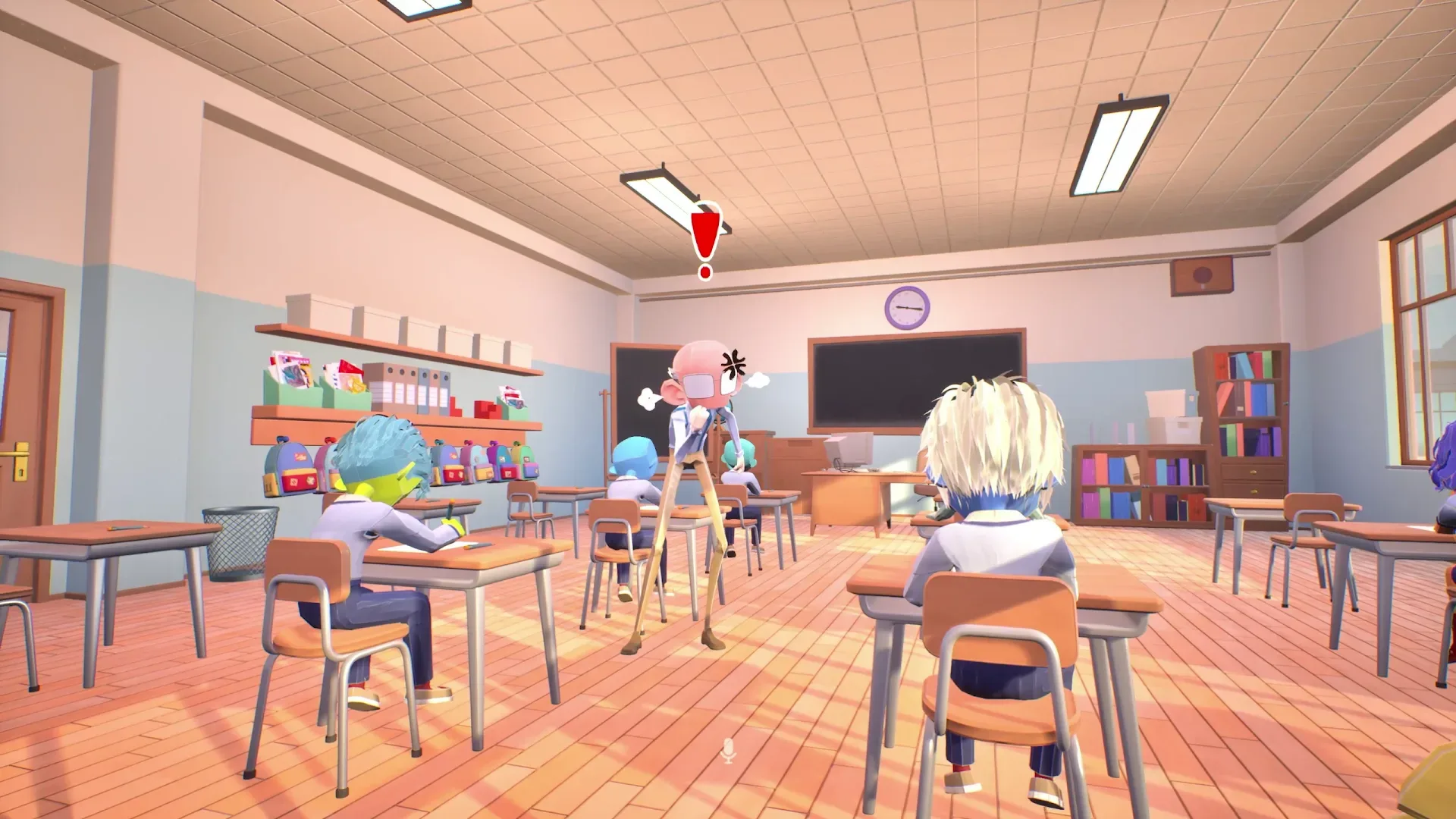
The central structure is straightforward but gives the game room to raise the stakes. Each exam is part of a run of 12 increasingly difficult tests, while the Professor becomes more suspicious as players progress. That escalation matters because the team cannot count on a single successful trick working unchanged from one exam to the next.
Restrictions tighten as the school day advances, requiring players to adapt their plans. The Professor also patrols the classroom and reacts to conversations and behaviour that appear suspicious. In practical terms, this means a group’s task is not simply finding an answer: it is deciding who looks for it, who relays it, when to communicate and how conspicuous that communication might be.
The game’s consequences are played in broad slapstick terms. Players can be gagged, tied up, smacked or knocked out as the challenges escalate. Those setbacks appear designed to interrupt a team’s routine and turn mistakes into a new problem for the remaining players to solve, rather than simply ending the broader session.
Information is the resource players are chasing
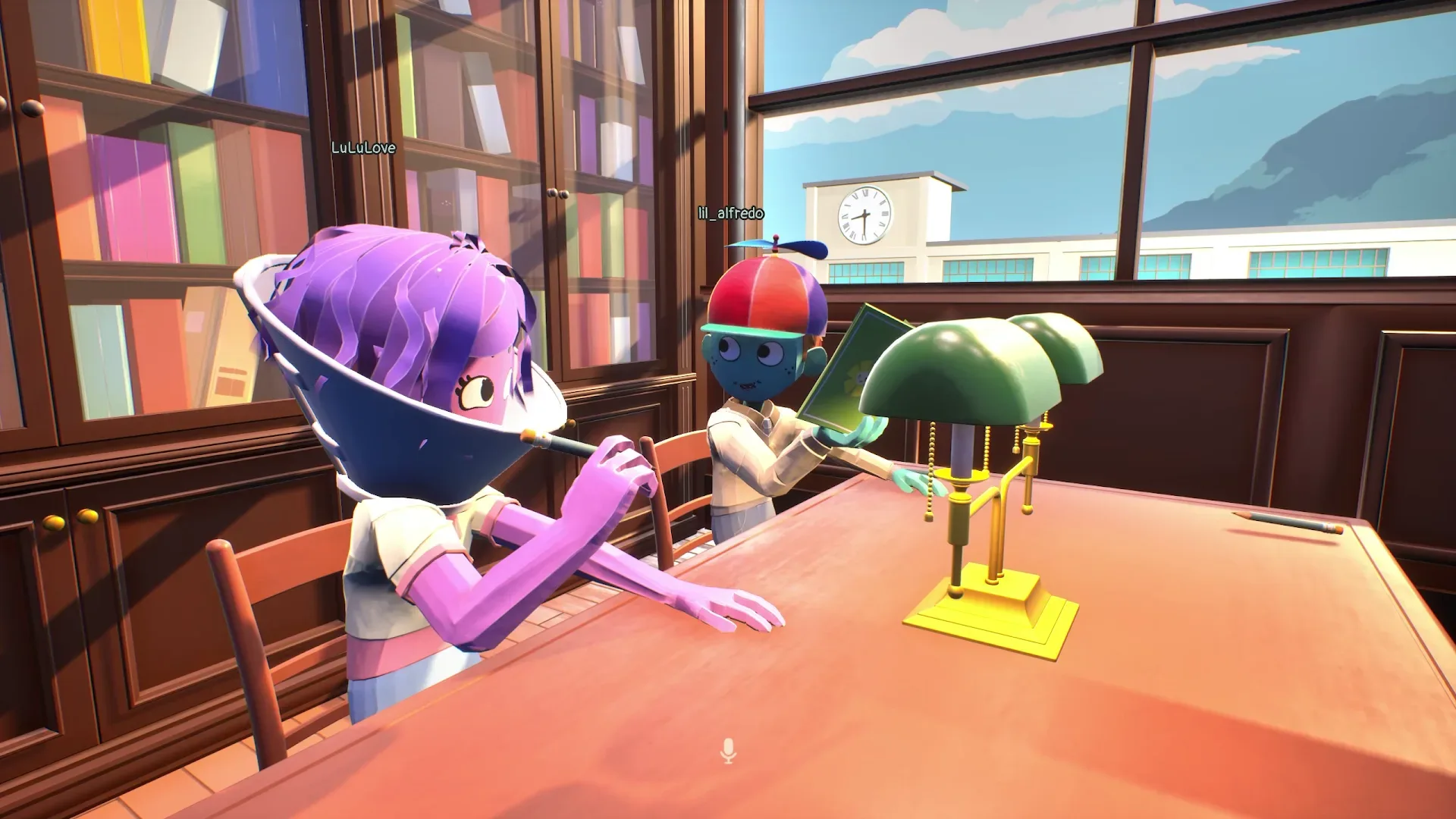
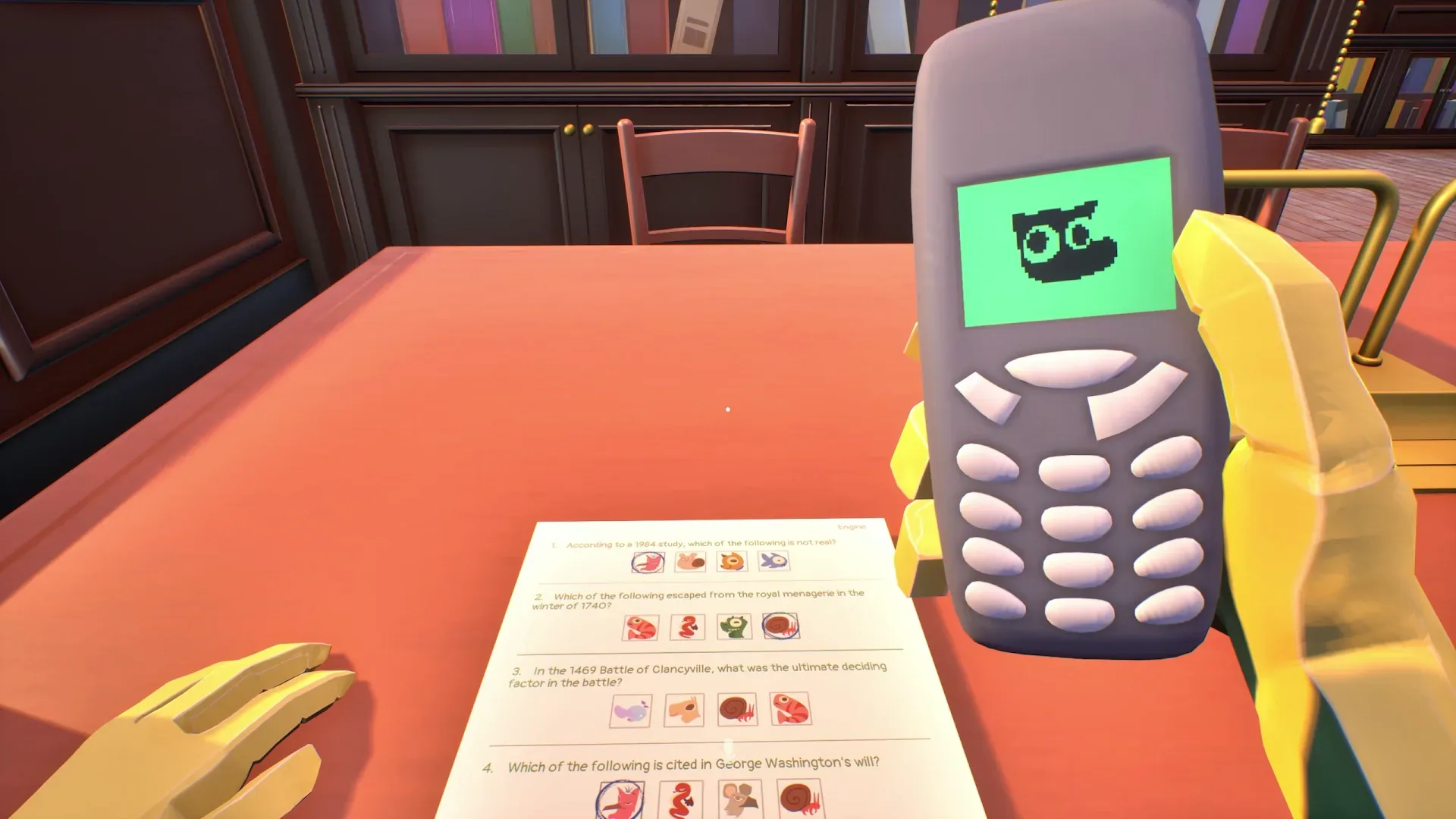
Finals Week’s cheating-simulator label comes from the tools it offers for finding and transferring exam information. Players can steal answers from NPCs, search textbooks scattered around the school, or look online. Once a clue has been found, the group has multiple ways to pass it along:
- text messages;
- walkie-talkies;
- proximity voice chat;
- writing directly onto available surfaces.
Proximity voice chat is a communication system where voice is affected by how close players are to each other in the game world. In Finals Week, that makes physical positioning part of collaboration. A teammate standing nearby can potentially receive information directly, but close-range talking may be harder to conceal from a teacher who responds to suspicious conversation. Moving apart may make the group less obvious, yet it also changes how easily they can coordinate.
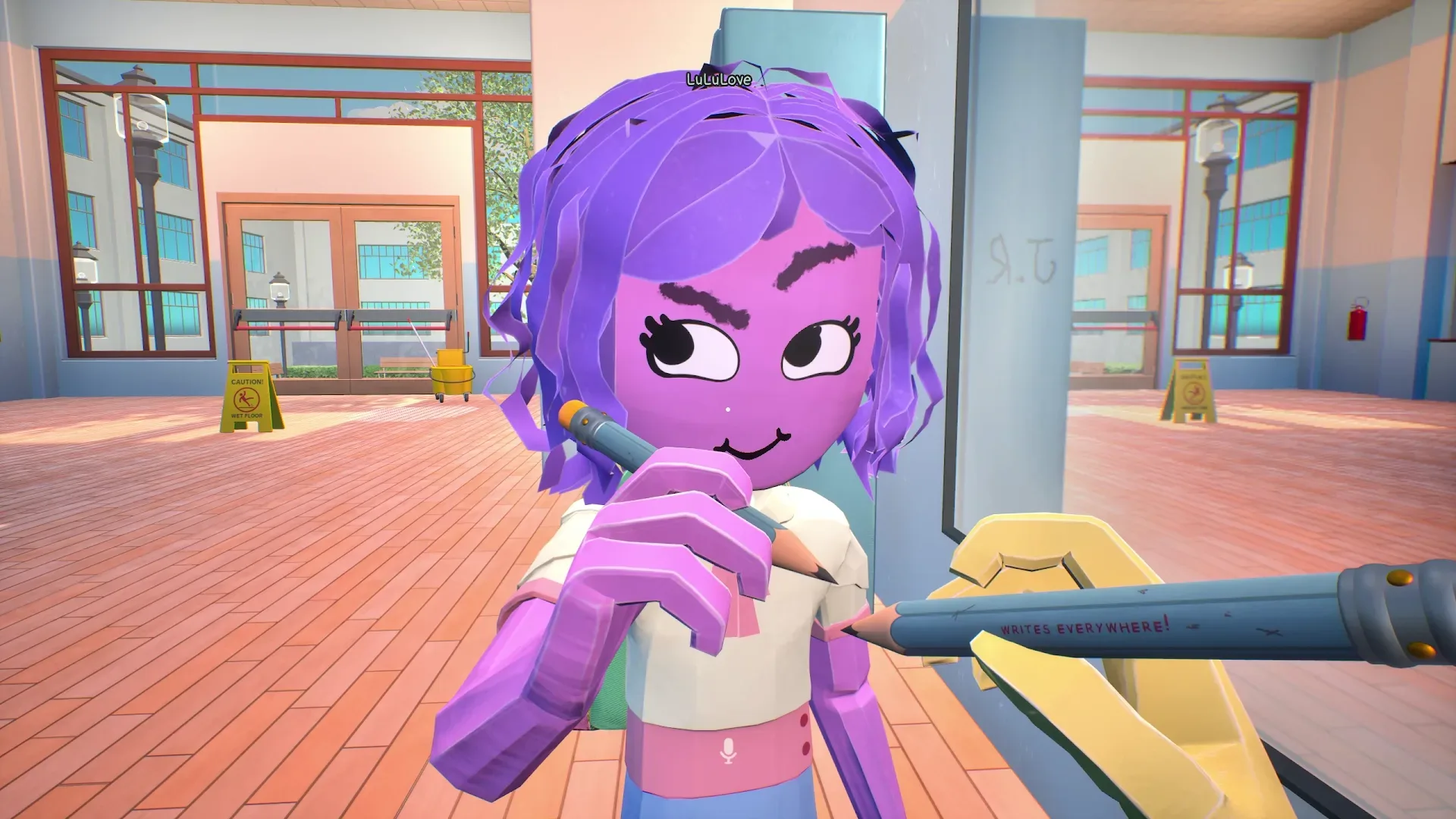
The game also encourages an especially literal form of note-passing. Paper, desks, walls and even teammates’ faces can be used as writable surfaces. This is more than a visual gag: it gives players several places to record or transmit information when a direct chat route is inconvenient. The source material does not specify limits on those options, so players should treat the exact rules and risks of each method as something to learn in play.
Co-op improvisation is the real focus
While Finals Week can be played solo, its concept is built around the friction and comedy of a group attempting a poorly organized plan under supervision. Four people need not all pursue the same answer at once. One player might search a textbook, another might follow or distract an NPC, and a third could wait to relay a clue. Even without a formally described class system, those temporary jobs emerge naturally from the game’s tools.
That is what “emergent” play means in this context: memorable situations arise from players interacting with a set of mechanics, rather than from a single fixed scripted solution. The game supplies exams, patrols, a school environment, communication tools and reactive authority. Players supply the plan—then usually the complication.
A strong co-op approach will likely depend on keeping information clear and responsibilities simple. Groups that all search independently may find several leads, but can also crowd one another or create a noisy, suspicious cluster. Conversely, a team that assigns one person to find information and another to act as a relay may be more organized, but risks losing momentum if one member is caught or incapacitated.
The important caveat is that Finals Week is explicitly about improvisation. A carefully arranged role division should not be mistaken for a guaranteed solution. As restrictions rise and the Professor’s suspicion changes, a group may need to abandon its preferred method, work around a teammate who has been knocked out, or find a less obvious path through the school.
What to watch for when playing with friends
- Keep messages useful. Since answers and clues need to move quickly, short, unmistakable information is more valuable than a long explanation during a tense moment.
- Use the environment deliberately. Writable paper, furniture, walls and character faces are part of the game’s available toolkit, not merely decoration.
- Respect the patrol. The teacher reacts to suspicious behaviour, so timing and location are as relevant as discovering an answer.
- Expect a plan to break. Gags, restraints, hits and knockouts are stated parts of the escalating challenge. Leave room for another player to pick up the job.
- Explore between exam problems. The school contains secret passages and other spaces outside the immediate classroom, which may create options beyond the obvious route.
A school built for detours as well as tests
Exams are the focus, but the school is also meant to be explored. Players can discover secret passages, spend time in the hall, play basketball and generally cause trouble. These diversions support the game’s wider tone: it is not presented as a strict series of questions on a desk, but as a social playground where the group can create its own moments between attempts to beat the Professor’s scrutiny.
That exploration may be valuable for more than a breather. Secret passages, by their nature, suggest alternate movement through the building. The supplied details do not establish exactly how they affect individual exams or whether they offer a strategic advantage in every case, but their inclusion fits a design where players are encouraged to look beyond the immediate room for an opportunity.
Character customisation is also available through unlockable outfits, hairstyles and colours. These are progression and expression options rather than stated gameplay advantages. In other words, they give players a way to personalise their student without any indication that a particular cosmetic choice changes how the Professor detects behaviour or how an exam works.
The appeal is shared chaos, not a perfect score sheet
Finals Week is positioned as a compact, low-cost multiplayer game for players who enjoy plans going sideways. Its premise transforms a familiar school anxiety—being unprepared for an exam—into a co-op problem where the goal is coordination under comic pressure. The 12-exam format supplies an arc, while the rising suspicion system is intended to prevent the experience from remaining static.
For solo players, the available tactics suggest a game of juggling search, communication and avoidance alone. For groups, it becomes a negotiation over who takes risks, who delivers information and whether a loud but fast approach is worth the danger. The presence of proximity voice chat, text messages, walkie-talkies and writable surfaces gives teams several channels, each suited to a different situation.
Steam players looking for more recent PC releases may also want to see Inner Voice’s Last Dream update, another Steam-focused item with exploration at its centre—though its puzzle-and-horror direction is markedly different from Finals Week’s classroom comedy.
Finals Week is out now on Steam from DESTINYbit and Pretty Soon. Its first two weeks include the stated 38% discount from the $7.99 USD list price.