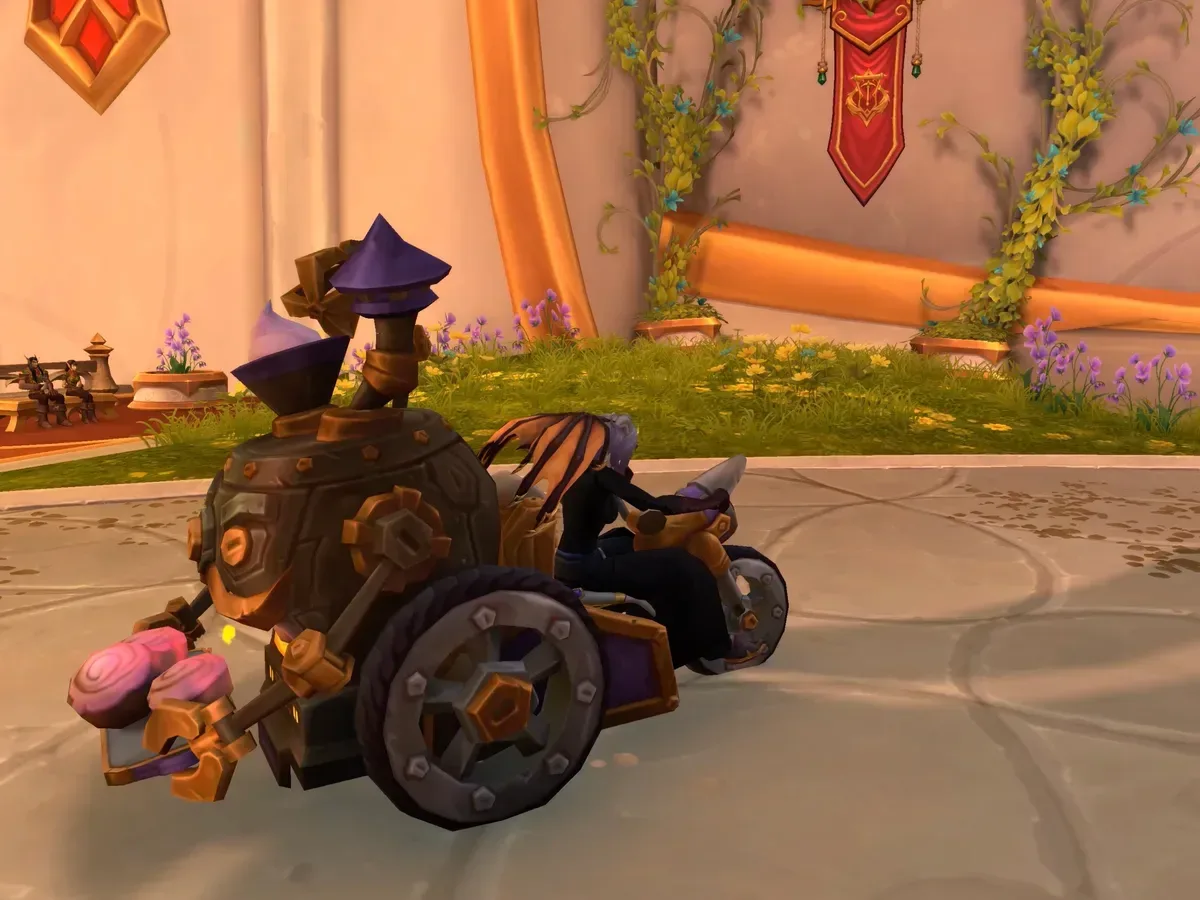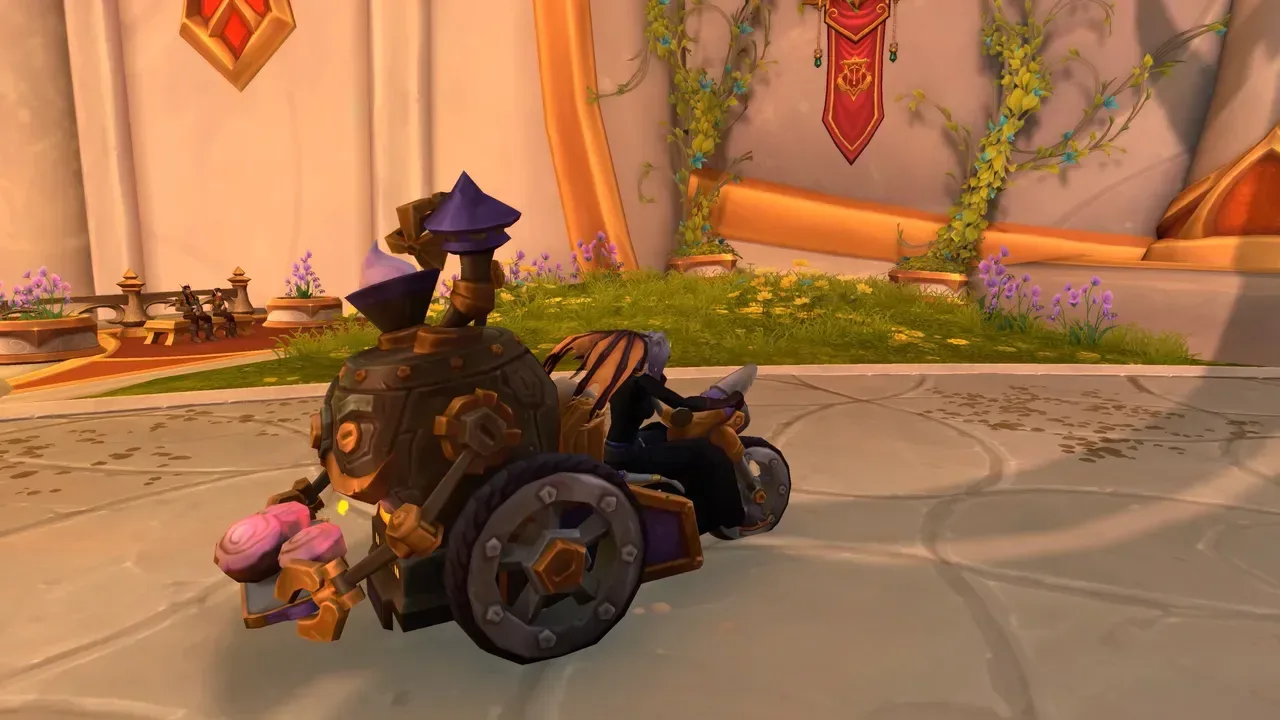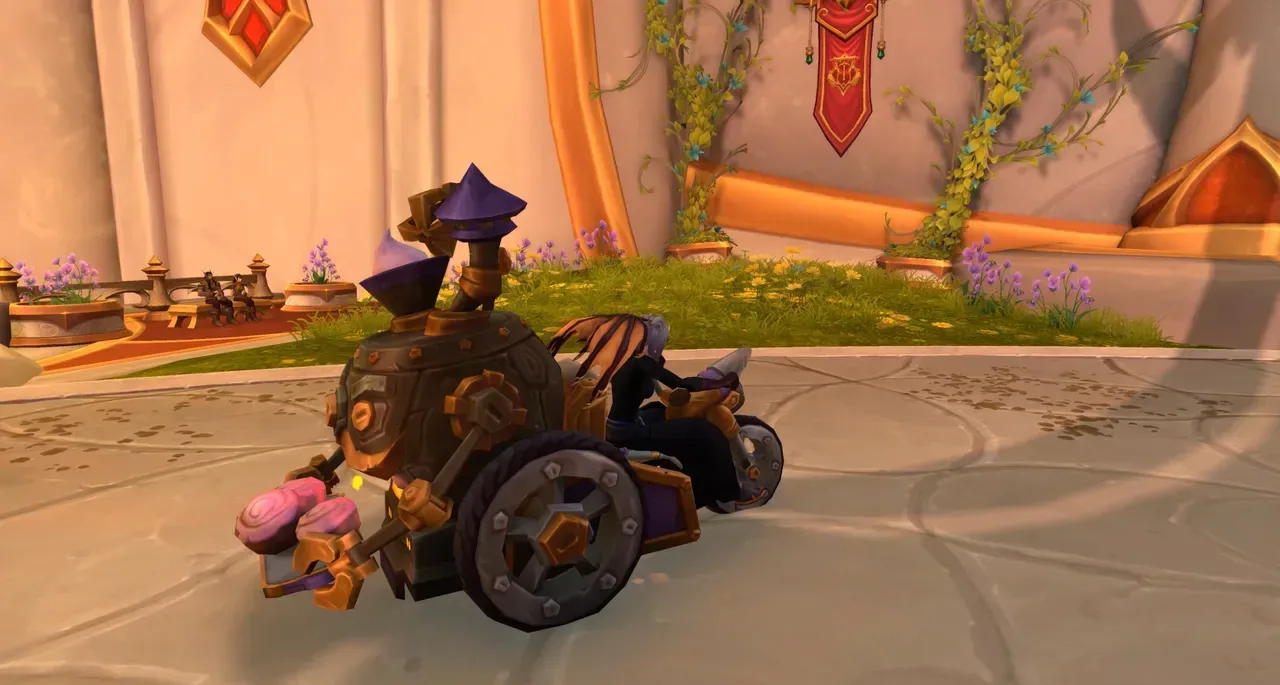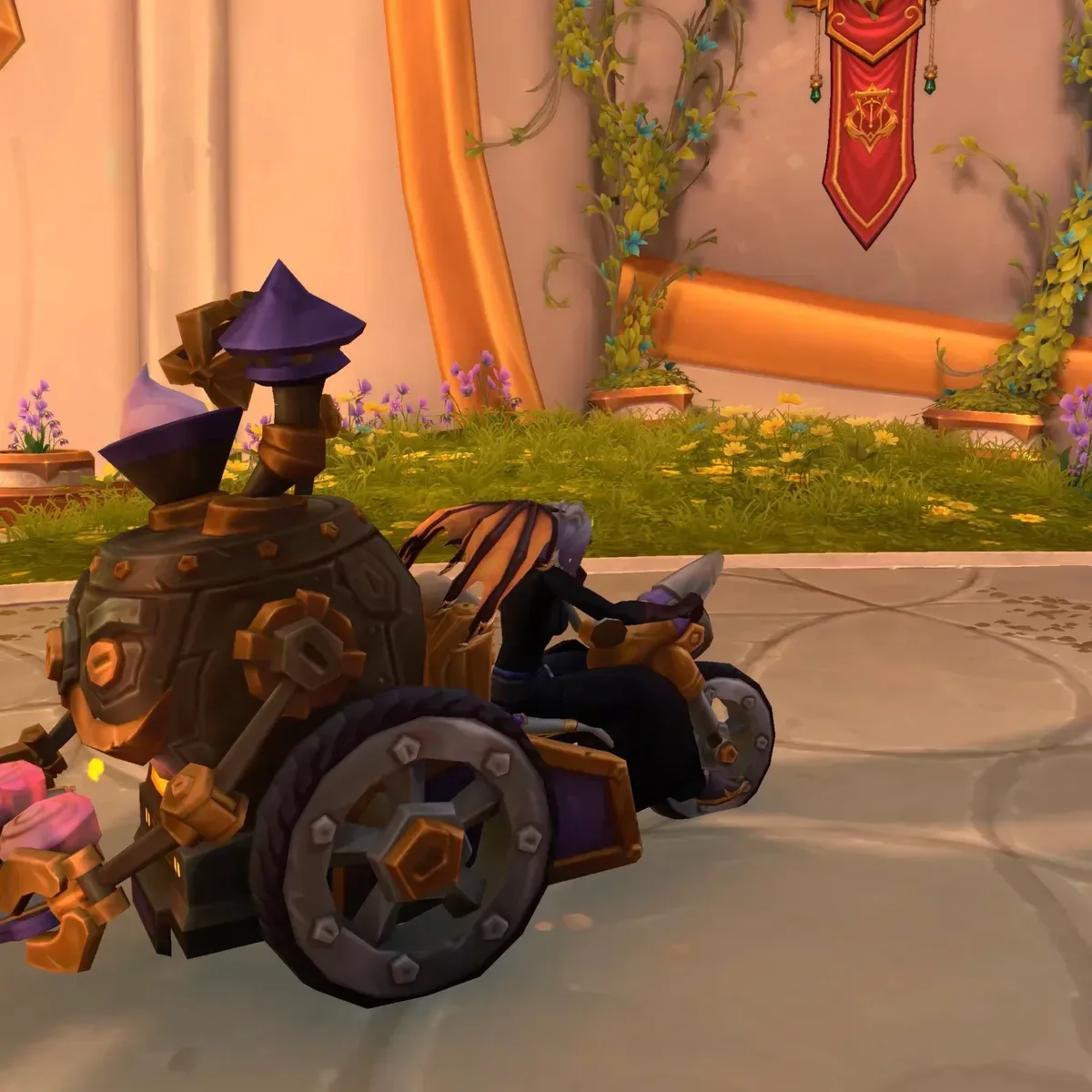
A novelty tricycle with an oven on the back is not, on its own, the sort of thing that should dominate a conversation about a long-running MMO. Yet the Hot Motocross Bunmover 4000 has landed at exactly the wrong moment for retail World of Warcraft. The mount, added through November’s Trading Post selection, is meant to be a seasonal bit of food-themed whimsy. Instead, players have focused on a glaring presentation problem: its wheels do not animate and can pass through the ground, giving the impression that the vehicle is sliding rather than rolling.
That defect is minor in terms of direct gameplay impact. It does not change a character’s power, block progression, or prevent someone from using the mount. But bugs are not judged only by mechanical severity. A highly visible issue on a cosmetic reward can become an unusually effective measure of player confidence, because everyone can immediately see it. In this case, a missing wheel animation has become shorthand for a larger argument over the condition of retail WoW after Midnight launched.
The discussion is not really about whether a bun-themed motor trike deserves an elaborate animation budget. It is about what players infer when a small, front-facing detail appears unfinished in a game built around frequent updates and collectible cosmetic rewards. That distinction matters: the Bunmover’s problem is a symptom at the center of the debate, not proof of every broader criticism being made around it.
What is wrong with the Hot Motocross Bunmover 4000?
The Hot Motocross Bunmover 4000 is a tricycle-style mount with an oven attached to its rear, fitting the Thanksgiving-season theme of November’s Trading Post offerings. Its reported flaw is visual rather than functional. Its wheels remain static instead of turning, and they clip into terrain as the mount moves.
For more context, explore Apple Cannot Say When iPhone Duo Supply Will Catch Up With Demand.
Clipping is the term used when two game objects overlap in a way they ordinarily should not: here, parts of the wheels appear to move through the ground. It can result from animation, collision, or model-placement issues. Collision is the game system that determines when objects should physically meet or be blocked by one another. Nothing in the available information establishes the precise technical cause of this particular bug, so it would be speculative to declare whether the animation, collision setup, or another part of the asset is responsible.
What is clear is why the issue reads so poorly. Mounts are constantly visible while traveling through the world. Unlike an intermittent quest error or a problem hidden in a specific combat encounter, this is a defect a player can notice every time they ride the item. Cosmetics also carry an expectation of finish. They may not improve raid performance or character stats, but they are rewards designed to be seen, collected, and shown off.
Why a small cosmetic issue has become a bigger complaint
Community posts responding to images and video of the mount have been sharply dismissive. The tone centers on a belief that quality has declined across retail WoW, rather than on the inconvenience caused by this one tricycle. Some commenters have tied the mount directly to the game’s eight-week patch cadence, while others argue that the frequency of releases cannot fully explain a problem they see as more fundamental.
That reaction has context. Midnight initially arrived to a positive reception, with praise for its zones and endgame loop. But an MMO’s launch period is only part of its life. Ongoing patches have to sustain the game with new reasons to return, coherent story developments, and a degree of polish that makes repeated participation feel worthwhile.
Players unhappy with the recent state of retail have pointed to invasions that they feel are too similar to activities from previous seasons, along with dissatisfaction over recent writing. The current patch’s treatment of a well-liked Horde character has added emotional weight to that broader criticism. None of those concerns are resolved by fixing a wheel animation, of course. But the Bunmover provides an easy visual metaphor for a community already primed to scrutinize each new update.
That is why the reaction has traveled beyond a standard bug report. A normal report asks whether a defect can be reproduced and when it might be corrected. A flashpoint asks what the defect says about priorities, process, and the direction of the game. The latter is much harder to address, because it involves trust as much as code.
The eight-week cadence is central to the argument
The current discussion repeatedly returns to retail WoW’s eight-week patch cadence. The schedule began during Dragonflight as an answer to a longstanding MMO problem: extended content droughts. A content drought is the stretch between meaningful updates when regular players may exhaust the available new goals and feel they have little reason to log in.
On paper, predictable and frequent patches offer a strong remedy. They can keep a seasonal game moving, give groups fresh objectives, and reduce the sense that subscribers are waiting indefinitely for the next chapter. A cadence is simply the planned rhythm of releases. It is not inherently a quality problem; its effect depends on the scope of updates, the time available for testing and iteration, and the development resources supporting that pace.
The player concern is that the rhythm now appears to be coming at the expense of polish and variety. Critics describe repeated content and bugs appearing across patches, and the Bunmover’s wheels have been taken as a conspicuous example. This does not establish that an eight-week schedule caused this exact defect. Software development rarely allows such a clean conclusion from one visible issue. Still, the cadence is a reasonable subject for players to debate when they perceive a recurring mismatch between the volume of releases and their quality.
There is also a practical design question underneath the frustration. Frequent updates create a promise of momentum. If players instead see familiar activities returning with limited variation, that momentum can start to feel like churn. If they encounter prominent glitches along the way, the schedule stops looking like a player-friendly guarantee and starts looking, to critics, like a deadline that the game is chasing.
WoW Forever offers a contrasting approach
The timing of the retail argument is notable because World of Warcraft Forever is approaching its November 4 release. Its developers have indicated that the Classic+ mode will use a slower update schedule, a contrast that invites obvious comparisons even though the two projects have different ambitions and audiences.
A slower cadence is not automatically superior. Fewer updates can mean longer waits for players eager for new content, and it does not guarantee that each release will meet expectations. But it can create more room for testing, revision, and differentiation between releases. The important point is not that every live-service game should slow down; it is that cadence is a strategic choice with trade-offs, rather than an unquestionable virtue.
WoW Forever has had its own difficulty before launch, including problems with name reservations. Even so, its beta audience was reportedly larger than its developers expected. Its launch may give players who want a different pacing model an alternative place to spend their time, while also putting additional attention on whether retail can respond constructively to complaints about its update process.
For more on how the Bunmover bug became an emblem of dissatisfaction with retail WoW, the broader community discussion illustrates the intensity of the response.
What a fix can, and cannot, accomplish
Correcting the mount’s animation would be the straightforward first step. A properly rolling set of wheels that sits cleanly on terrain would remove the immediate irritant, and it would be a sensible quality-of-life repair for everyone who earns or uses the item.
But a patch for this individual asset would not, by itself, answer the complaints attached to it. Players asking for more varied seasonal content, stronger ongoing narrative work, and a more reliable level of polish are asking about the production of the game as a whole. Those concerns can only be addressed over multiple updates, through the consistency and distinctiveness of what arrives next.
Retail WoW has endured serious periods of player dissatisfaction before, including the low points associated with Warlords of Draenor and Shadowlands. Its history suggests that a rough patch does not automatically define its future. The present complaint is nevertheless valuable feedback because it identifies a gap between what players expect from rapid updates and what they believe they are receiving.
The Bunmover is a small object, but it is an unusually legible one. Every static wheel and every trip through the ground reinforces the same impression for frustrated players: that the game is moving forward without enough of its parts moving properly with it. Whether that impression changes will depend less on this one mount than on the polish, variety, and care visible in the patches that follow.