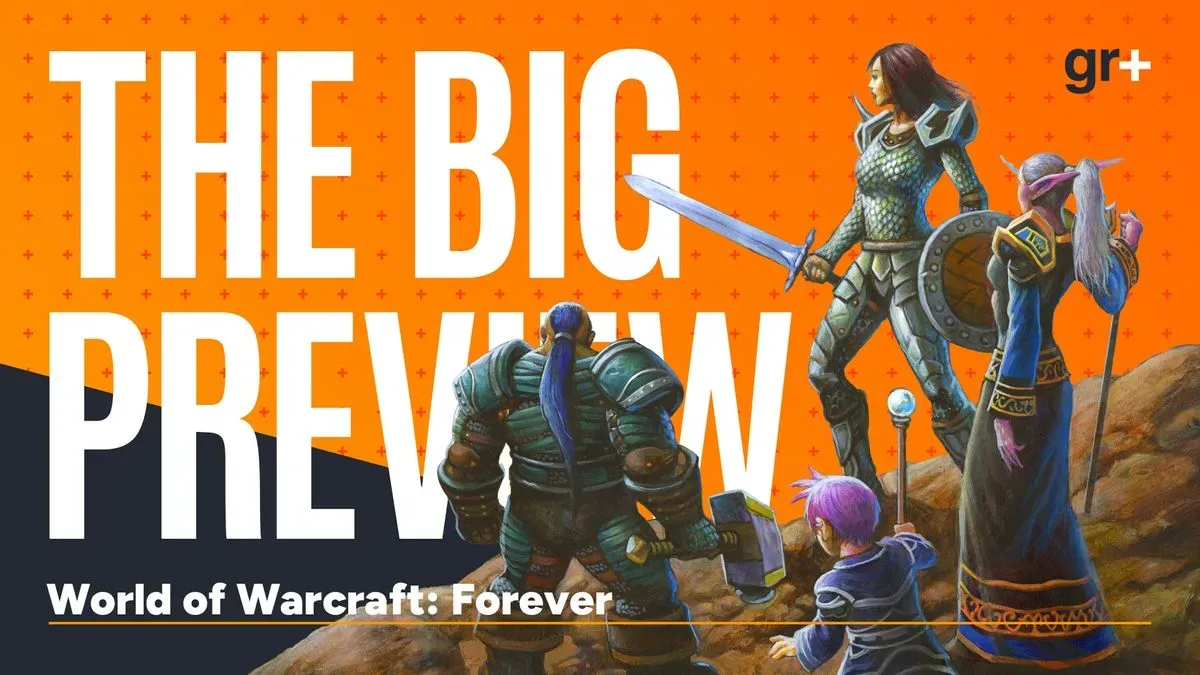
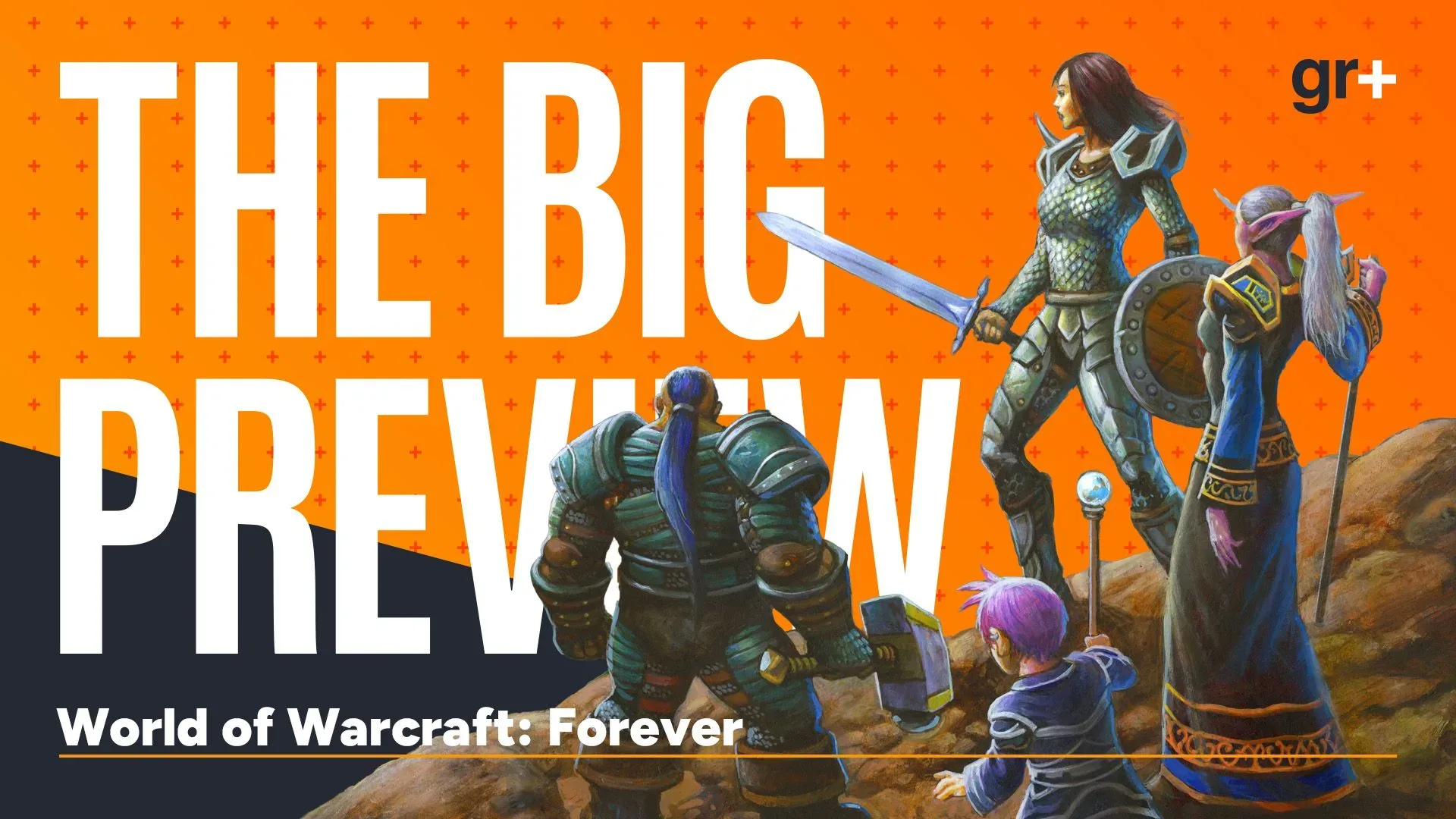
World of Warcraft: Forever is positioned as a notably different branch of Azeroth rather than a simple return to an older ruleset. Its basic proposition is familiar: a level-60 World of Warcraft experience with an emphasis on the original world. But the reported design choices point to a much more deliberate attempt to make travel, equipment, leveling and spontaneous cooperation matter for longer.
That makes “Classic+” a useful community shorthand, though it does not tell the whole story. Forever is said to combine a permanent level cap and an absence of expansion packs with more than 1,000 new quests, new areas, and guidance that better connects activities such as professions, tradeskills and zone progression. The idea is not merely to preserve an earlier pace, but to support that pace with clearer direction and newer connective tissue.
The biggest distinction from Retail World of Warcraft is philosophical. Retail’s broad, expansion-spanning game can make rapid advancement and frequent equipment replacement feel routine. Forever instead appears designed to make a trip across the map, a bag upgrade, an offered resurrection and a level gained feel consequential. Whether that slower rhythm suits a player will likely be the deciding factor.
A permanent level 60 cap changes the premise
Forever’s most consequential rule is its permanent level 60 cap. The mode is not expected to add expansion packs or raise the maximum character level. That means it is avoiding the familiar structure of vertical progression.
Vertical progression is the steady increase of a character’s numerical ceiling: higher levels, increasingly powerful stat ranges and a recurring expectation that yesterday’s prized equipment will be outclassed by tomorrow’s. It gives players a clear ladder, but it also creates pressure to keep climbing it.
Forever is intended to prioritize horizontal progression at level 60 instead. In practical terms, this means advancement is not framed around a future level-cap increase. The supplied details do not define every system that will support this model, so players should not assume specifics about endgame rewards. The important point is the design direction: characters can develop through choices and goals without a new level tier automatically resetting the destination.
This could be especially meaningful for players who enjoy alts, professions, exploration or social play more than a perpetual race toward the newest maximum-level track. A fixed cap can make level 60 a place to inhabit rather than a platform waiting to be replaced. It also places extra importance on the quality and longevity of the content available at that cap.
No flying means distance becomes gameplay again
Flying mounts will not be part of Forever. That is a simple restriction with a wide reach. Aerial travel is efficient, but it changes how a world is perceived: paths, dangerous stretches of terrain, roadside encounters and other travelers can become something passed over rather than experienced.
Related coverage includes World of Warcraft: Forever Is Taking Azeroth Back to Level 60.
Without flying, the route matters. A player planning a cross-zone task has to account for travel time and choose how to get there. The reported addition of a boat route between Auberdine and Stormwind suggests the goal is not simply inconvenience; it is to preserve the sense of a connected, ground-level journey while supplying a practical shortcut where it helps.
This is also where Forever may feel most demanding to players accustomed to Retail’s pace. A journey that takes 10 minutes or more needs to be treated as part of the session rather than dead time between objectives. Fans who want Azeroth to feel large and physical may welcome that. Players who primarily log in for quick, targeted progress may find it harder to accommodate.
The payoff, if the underlying world activity supports it, is a stronger chance of incidental interaction. Seeing other people on the road, helping with an enemy pull, or forming an impromptu party has more opportunity to happen when everyone is using the same terrain instead of crossing it from above.
A smaller map footprint, but a more concentrated population
Forever will not extend into expansion-pack territory, yet it is not limited to a pure recreation of the original geography. New zones named in the available details include Mount Hyjal, Zephras Isle and Riverglades. That gives the version fresh spaces to explore without changing its core commitment to a contained level-60 world.
“Smaller” in this case refers to the absence of the many expansion regions that have accumulated elsewhere in World of Warcraft. The practical argument for that limit is population density. As a game world sprawls across many destinations, players can be dispersed across them. A more compact setting can put more adventurers on the same roads, in the same quest hubs and around the same local problems.
Forever is also said to move away from individual servers: players choose a ruleset and are placed into the same world. The details do not establish how every population or grouping function will work, but the intended social effect is clear. Instead of treating a server choice as a potentially permanent decision about where one’s community lives, the design seeks to keep players in a more shared environment.
That could make a major difference to the texture of day-to-day leveling. General chat may be busier, gathering areas may be livelier, and it may be easier to locate help for content that benefits from a group. The flip side is that social density can bring competition and noise as readily as camaraderie. A populous MMO world is more alive, not necessarily more polite.
Slower leveling is meant to make each milestone stick
Forever is expected to level more slowly than Retail. One reported efficient route reached level 15 in roughly 10 hours, while some players reached level 20 within that period depending on how they played. Those examples are not universal benchmarks, but they illustrate the intended contrast: reaching the cap is not meant to be a brief opening act.
A slower leveling curve changes the value of routine rewards. When a level arrives less often, unlocking an ability or becoming strong enough for a new zone can feel like a genuine turning point. It also gives players more time to understand a class and to establish habits around travel, money, professions and grouping before the game moves them onward.
That is not inherently better than fast leveling. It is a trade. Players looking to join friends at the cap swiftly may see the slower climb as a barrier. Those seeking a longer character-building adventure may see it as the main attraction. Forever’s systems appear aligned around the latter audience: the time spent becoming a level-60 character is not treated as content to skip.
Gear is intended to be scarce enough to matter
Another part of that character-building approach is a slower stream of meaningful equipment. Retail’s rapid reward cadence can produce what players often call gear creep: increasingly powerful gear arrives so often that an upgrade is quickly replaced, reducing the emotional impact of obtaining it.
Forever aims for a more Classic-like relationship with equipment, where stronger pieces are comparatively rarer and can remain useful for longer. Even low-level practical items such as bags can have a material impact on a character’s day-to-day life. A weapon, armor piece or inventory upgrade has more room to become part of a player’s story when it is not expected to disappear from use shortly after it is acquired.
This approach has practical consequences beyond sentiment. Players may spend more time considering whether a purchase is worthwhile, keeping an item for several levels, or valuing a quest reward that fills a genuine gap. It also means that a character’s progress may be easier to recognize at a glance: their kit is assembled over time rather than constantly overwritten.
However, gear scarcity can only feel rewarding if upgrades remain attainable through varied activities. The broad direction is known, but the full balance of drops, purchases and quest rewards is not established by the available information. That makes it sensible to view the intended item philosophy as a key promise to watch rather than a completed verdict.
More quests should provide a clearer path through Azeroth
Forever reportedly includes over 1,000 new quests, many intended to make the game’s systems connect more naturally. Some introduce professions and tradeskills; others can direct players toward bags or useful basic weapons. Zone progression is also meant to be clearer, with prompts that better guide a character to appropriate new areas as they level.
This matters because a slower-paced MMO does not have to be an opaque one. “Cohesive” here means activities reinforce one another: a quest can point to a profession, an item reward can solve a practical need, and a zone lead can reduce uncertainty over where to adventure next. The player still has a world to explore, but is less likely to feel stranded between disconnected systems.
For newcomers, that could make Forever easier to approach than an experience that assumes familiarity with longstanding Warcraft conventions. For returning players, the appeal may be in seeing familiar spaces threaded together with additional purpose. Lore-minded players may also appreciate a more continuous route through the world, though the available details do not outline specific story arcs.
Social play is encouraged without making solo play disappear
Forever is not presented as a game in which every task demands a party. Players can still complete substantial amounts of content alone. The difference is that travel restrictions, population concentration and a more grounded pace are intended to make other people feel present and useful.
Reported beta activity included players grouping up and offering revives to strangers. Those are small moments, but they are central to the appeal of an MMO designed around shared spaces. A character in trouble can receive aid not because a matchmaking tool assigned it, but because another player happened to be nearby and chose to help.
A group campfire that grants buffs is another example of a system encouraging people to pause together. It does not make cooperation mandatory, but it gives social proximity a mechanical benefit. In a game prioritizing the journey, that sort of modest incentive can be more fitting than a system that pushes every player directly toward the next queue or reward chest.
Who World of Warcraft: Forever may suit
Forever appears best suited to players who want Azeroth to be a place rather than an efficient sequence of destinations. Its permanent cap, no-flying rule, measured leveling and enduring gear are all aimed at creating attachment—to a character, a route, an item and other people in the world.
It may be less immediately attractive to players who value the speed and breadth of Retail, or who prefer an MMO where reaching current endgame content is the primary objective. Its design makes a clear request: slow down, travel deliberately, and let the middle of the adventure carry as much weight as its endpoint.
For more PC gaming updates with a very different tone and genre, see our coverage of Goblin Cleanup’s Black Bay update.