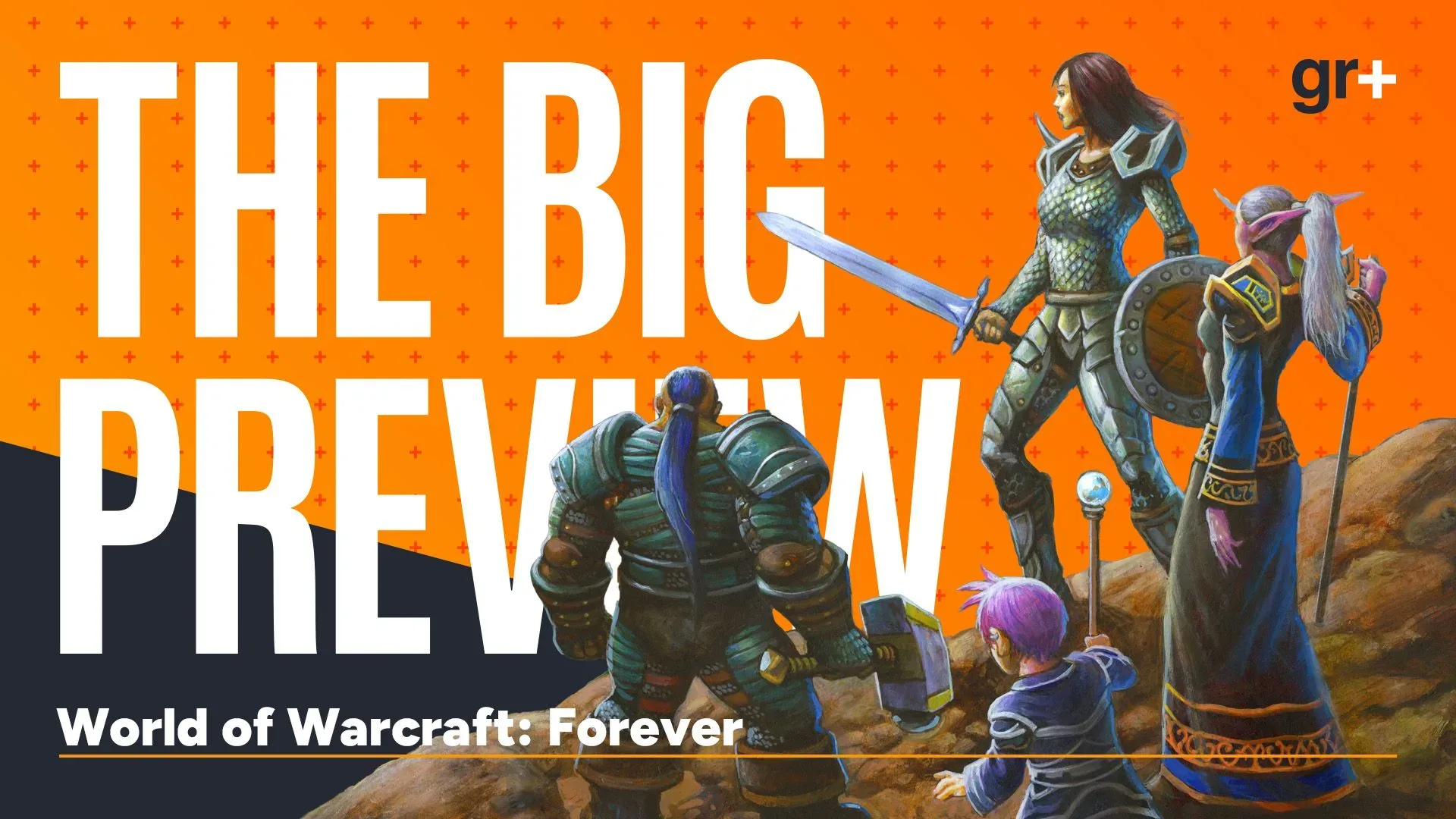
World of Warcraft: Forever is being positioned as more than another nostalgia server. The project is described as a new, major route through Azeroth: one that begins with the feel of the game’s early-2000s era, then asks what could have followed from that point. Its stated goal is neither a replacement for the current game nor a simple repeat of World of Warcraft Classic. Instead, it aims to occupy a separate space alongside both.
That is an unusually ambitious promise for a long-running MMORPG. “MMORPG” means massively multiplayer online role-playing game: a persistent online world where players develop characters, cooperate and compete at scale, and return over long periods as the world’s activities change. In a game with a deeply invested audience, the challenge is not merely adding content. It is giving returning players a familiar place to inhabit while making a convincing case that the new version has its own identity.
Forever’s approach appears to be rooted in that tension. It revisits an older vision of Azeroth, but it is not presented as a museum piece. The core proposition is a retro-styled continuation, intended to feel distinct from Classic while offering an alternative to the modern game’s direction. A November 4 launch is planned following its beta period.
A third route, rather than a replacement
The language around Forever matters because the World of Warcraft audience is not a single audience with a single idea of what the game should be. Some players value the original structure and social rhythms associated with the early game. Others prefer the accumulated systems and contemporary direction of the live version. Classic already provides a way to revisit older eras, so Forever’s job is to answer a more difficult question: why create another branch at all?
The answer appears to be forward motion within an older framework. Classic is associated with returning to a prior version of the game. Forever, by contrast, is framed as a world that starts from an old-school baseline and continues into new territory. That distinction could be important for players who want recognizable aesthetics and pacing without knowing every destination in advance.
It also means Forever will be judged on two separate standards. It has to make its early-era inspiration legible in its visuals, mechanics and atmosphere. At the same time, it must add enough that it does not feel like a static recreation with a new label. The project’s identity depends on the balance between those two demands.
Social activity is central to the pitch
A greater emphasis on social activities is among the features being highlighted for Forever. That may sound broad, but in an MMO it is a meaningful design priority. Social systems are the parts of an online game that give people reasons to meet, organize and remain connected beyond a single combat encounter. They can shape whether a player experiences the world as a sequence of tasks or as a shared place.
For a title that is explicitly trying to connect classic sensibilities with newer ideas, leaning into social play is a logical focus. It reinforces the sense of Azeroth as a lived-in setting rather than merely a queue of objectives. It may also help Forever differentiate itself from both a straightforward retrospective experience and a purely systems-driven update.
Related coverage includes World of Warcraft: Forever Could Become Azeroth's Most Ambitious New Old-School Adventure.
The practical implication is that prospective players should look beyond the headline premise. A retro visual identity or familiar setting can draw attention, but repeat engagement will depend on what players can do together and how naturally the game encourages those interactions. The stated aim is to provide more reasons to spend time in Azeroth, with mechanics meant to bind that activity together.
Skyborne illustrates the project’s biggest balancing act
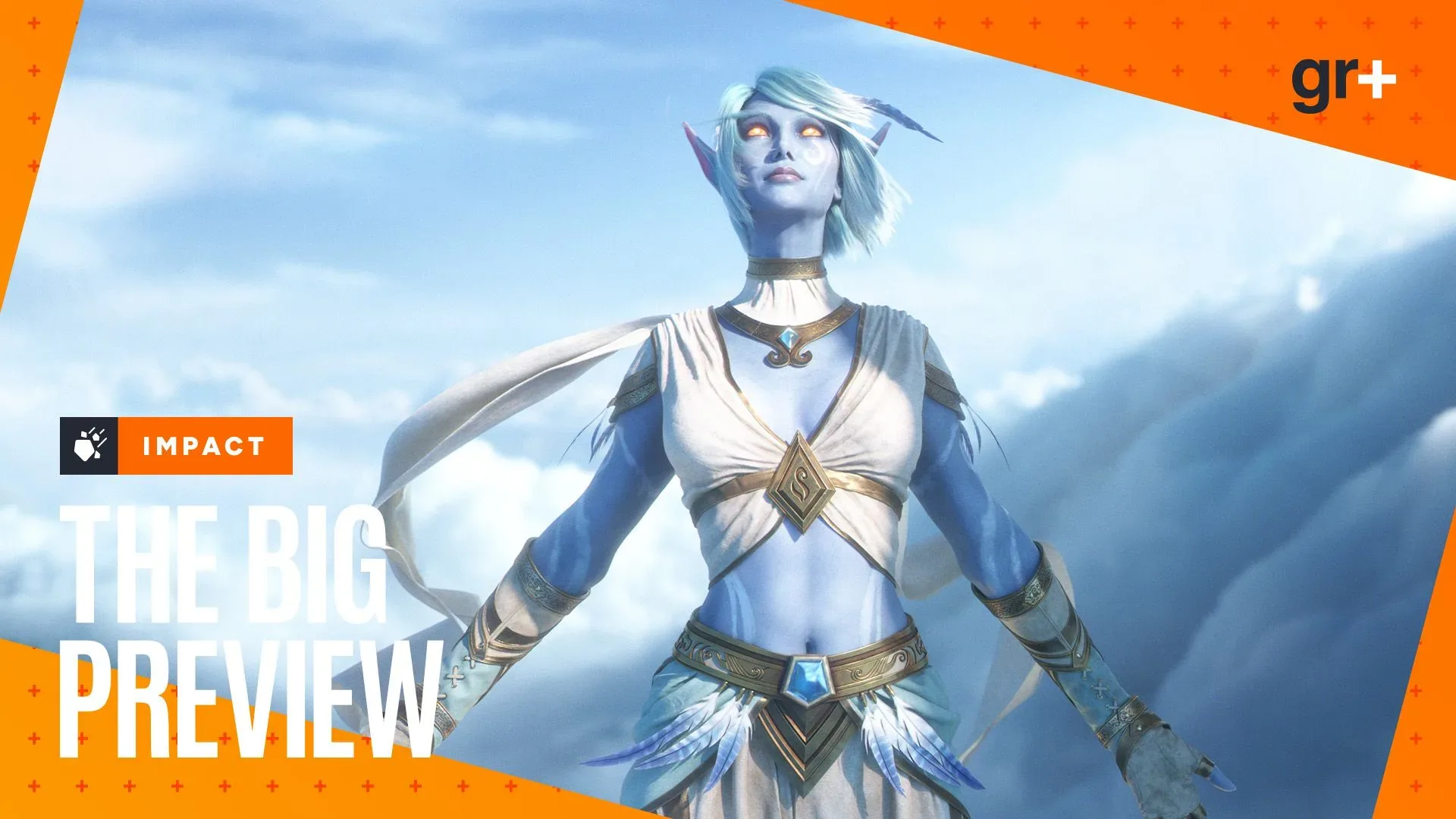
The Skyborne race has become an immediate focal point for the debate around Forever. It is priced at $30 and has attracted criticism, yet it has also been described as one of the beta’s most popular options across both Horde and Alliance players. Popularity and controversy are not opposites here: an addition can draw substantial use while also raising questions about pricing, appearance and fit.
The visual concern is especially revealing. The Skyborne are a new addition to a game built around an older look, and their design has been considered potentially jarring against that foundation. The effort to address that concern reportedly reaches back to 2004 for stylistic guidance. That does not mean every player will agree with the final result, but it identifies the standard Forever is trying to meet: new material should feel compatible with the version of Azeroth it is invoking.
This is the broader issue facing any “new old-school” project. Authenticity is not just a matter of lower-fidelity visuals or familiar locations. It is a sense of coherence. Players notice when an element seems to belong to a different game, whether the disconnect comes from art direction, progression design, monetization, or the rhythm of repeatable activities.
Skyborne therefore serves as a useful early test case. It is both optional paid content and an aesthetic statement. Its reception will likely inform discussions about how much room Forever has for additions that would not have existed in the original era, even if those additions are reworked to echo its style.
Economy enforcement comes with an acknowledged risk
Forever is also expected to pursue suspicious gold aggressively. In an MMO, gold is the in-game currency used for economic activity, and its circulation matters because it influences how players trade, acquire goods and value their time. “Suspicious gold” generally refers to currency flows that appear connected to illegitimate activity rather than normal play.
The stated plan is not without risk: false positives may occur initially. A false positive is when a system flags or acts on legitimate activity by mistake. That admission is significant because enforcement in a player economy is rarely invisible to the people affected. A tough approach can deter unwanted behavior, but it must also distinguish correctly between suspicious transactions and ordinary player conduct.
For players, the practical takeaway is straightforward: a clean in-game economy is being treated as an important part of Forever’s health, but the early period may involve adjustments. For the team behind the game, the task is to demonstrate that firm enforcement can be paired with fair correction when automated or investigative decisions get something wrong.
PvP changes face skepticism over weekly structure
Player-versus-player, or PvP, activity is another area due for change. Forever is said to be simplifying the usual approach to PvP while also introducing a weekly grind that has already prompted pushback. A “weekly grind” is recurring progress tied to a weekly reset or cadence, typically requiring players to repeat activities to keep up with rewards or advancement.
The objection is easy to understand. Recurring goals can give a multiplayer game a dependable routine and help ensure that there is always a reason to log in. But they can also turn a leisure activity into an obligation, particularly for players who feel they must complete a prescribed set of tasks before the reset. The concern is not simply that the activity repeats; it is whether missing a week creates unwanted pressure or leaves someone behind.
Simplifying PvP could make the competitive side more approachable, but it will be assessed in conjunction with that weekly structure. A streamlined system can reduce friction. A tightly managed reward schedule can add it back. How those elements coexist may determine whether the change feels welcoming or restrictive.
Class adjustments and dungeon design will be watched closely
Patch notes have also generated calls for more class adjustments. In a game built around different character classes, changes to a class can affect far more than one player’s damage or utility. They influence group composition, the feeling of a chosen role, and whether players believe several playstyles remain viable. Early balance concerns are common in a beta-to-launch transition, but they carry added weight in a project asking players to commit to a new version of a familiar world.
A new dungeon has also drawn attention for breaking what is characterized as one of the MMO’s major unwritten rules. The available details do not establish exactly what that rule is or how the dungeon handles it, so it would be premature to treat the dispute as settled. Still, its emergence shows how closely players are examining individual design decisions. In an established online game, even one encounter or one dungeon convention can become a wider argument about values and direction.
That scrutiny is not necessarily a bad sign. It reflects an audience that understands the genre’s systems and has strong expectations of Azeroth. Yet it also leaves little room for vague messaging. If Forever is to be a durable third pillar, players will expect clarity about why a change exists, who it serves and how it fits with the old-school identity being promised.
Azeroth’s future remains deliberately open
There is room for Forever to travel beyond its initial scope. Northrend and Pandaria have been mentioned as possible places to visit in the future, with the simple rationale that Azeroth is a large setting. Those possibilities should be understood as potential destinations rather than confirmed commitments.
Even so, the mention is important. It suggests that Forever is being considered as an ongoing platform rather than a one-time experiment. That aligns with the project’s central premise: it is not only looking backward, but imagining a different path forward from an older point in the world’s history.
The team’s broader stated hope is to grow the World of Warcraft audience rather than fracture it. That is perhaps the clearest measure of the project’s challenge. A successful Forever would give veterans a compelling new reason to return, offer newcomers an understandable starting point, and remain distinct enough that it does not merely compete with the other ways to play World of Warcraft.
As the planned November 4 launch approaches, the most consequential questions are concrete ones: whether its social focus sustains communities, whether Skyborne feels at home in the art style, how economic enforcement handles mistakes, and whether PvP progression respects players’ time. Forever’s premise is bold because it asks an old world to feel new without ceasing to feel like itself.
For another look at how legacy games are being adapted for modern hardware, see James Pond 2’s native PC recompile and ultrawide update.