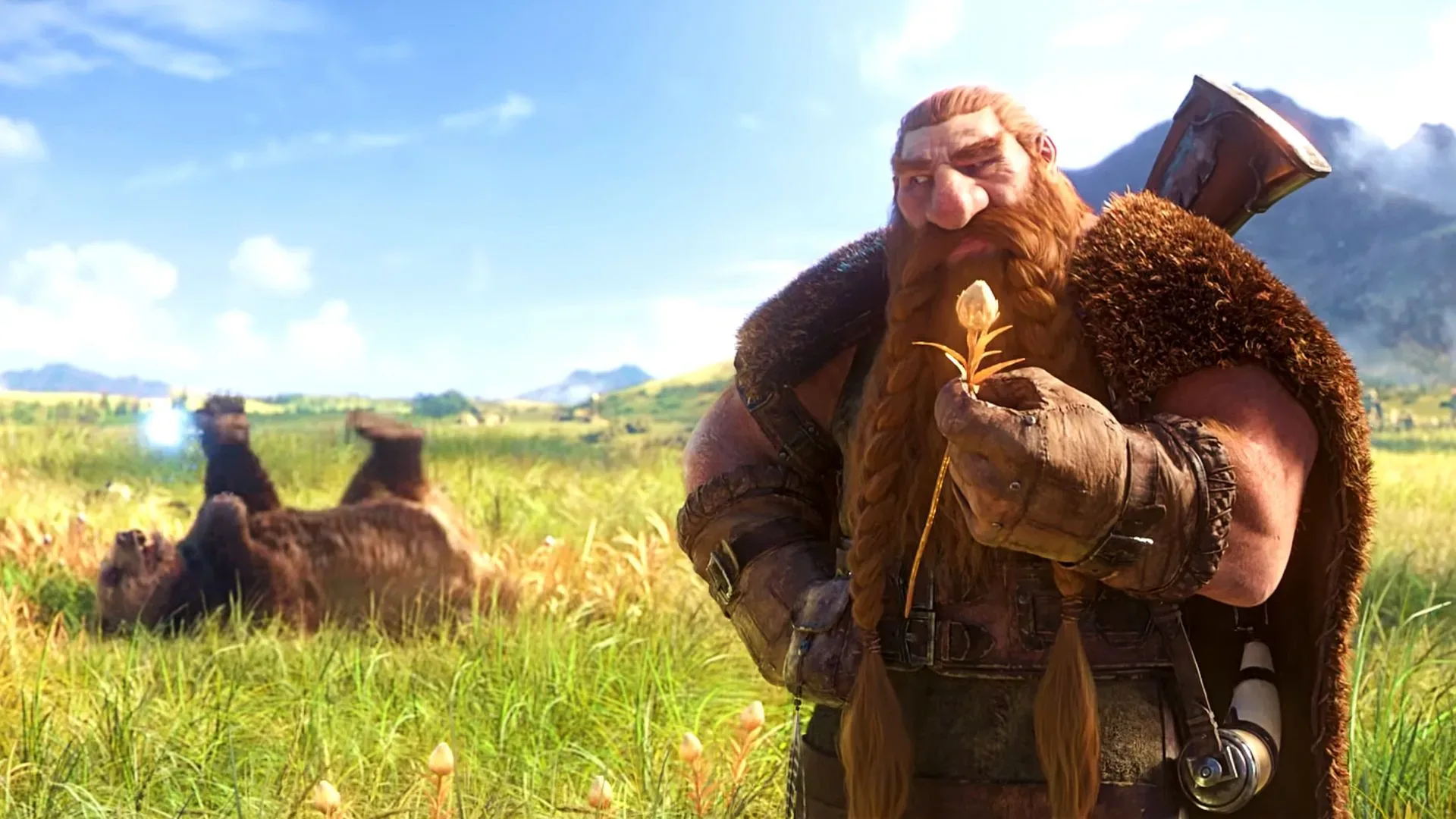
World of Warcraft: Forever is being positioned as more than another expansion or a straightforward recreation of the original game. Due to launch on November 4, it is a separate, vanilla-inspired branch of World of Warcraft designed to grow over time while retaining a deliberately slower, more social approach to Azeroth.
That is a significant distinction. The project is intended to sit alongside the modern version of World of Warcraft and WoW Classic, rather than replace either. Its opening package is described as containing the scale of an expansion: nine new dungeons, two new raids, new zones, talents and systems, plus refreshed visuals and interface improvements. Yet its bigger idea is less about a checklist of new destinations than a different relationship with the world and the people inhabiting it.
Holly Longdale, executive producer and vice president for World of Warcraft, and associate production director Clay Stone have described Forever as a response to a long-running community desire often called “Classic Plus.” In practical terms, that phrase means building new material in a classic-style World of Warcraft space instead of merely preserving an older snapshot or continuing directly down the expansion path the game historically took.
The result, if it holds together, could give players a fourth kind of WoW experience: not the rapidly evolving modern game, not a strict archival-style Classic journey, but an ongoing alternate course beginning from the early-era foundations.
A beta response that created both momentum and uncertainty
The Forever beta reportedly drew an unexpectedly intense response, with returning players, long-time vanilla fans and newcomers treating the test period with the kind of commitment normally associated with a live release. Server population limits were raised more than once, and a public stress test gave the team a chance to observe demand and gather feedback under heavier load.
That is useful preparation, but it is not a guarantee that launch-day conditions will be simple. Longdale said the team cannot fully predict how November 4 will unfold. The beta delivered valuable live-operations information, but a launch is still its own event: player numbers can change rapidly, and early community reaction may lead to adjustments after the game opens.
Live operations, or live ops, refers to the ongoing work required to run an online game after and around its release. It encompasses server capacity, monitoring player activity, responding to technical problems, tuning balance and making changes based on how the community actually plays. The beta’s scale matters because it gave the developers an opportunity to collect real behavioral data before Forever’s full debut rather than relying solely on internal projections.
Two areas are still receiving attention in the final stretch: the balance of the level 1–60 journey and disputed changes involving racial abilities and traits. That framing suggests an important reality for prospective players: Forever’s exact balance and systems should be treated as subject to refinement, even with the game close to launch.
Related coverage includes World of Warcraft: Forever Aims to Make Azeroth Feel New Again.
Three versions of WoW, and a question no one can answer yet
The arrival of Forever makes World of Warcraft’s ecosystem more complicated. The contemporary retail game is following the multi-expansion WorldSoul Saga, announced in 2023 and expected to conclude with The Last Titan in 2027. Classic has already advanced beyond Wrath of the Lich King into Cataclysm and Mists of Pandaria, a direction that has proven divisive for some players.
Forever enters that landscape as a third major home. Stone was candid about the unknown: the team does not know exactly how players will distribute themselves across retail, Classic and Forever. Some may remain where they are, while others may shift between the offerings or settle into the new branch.
That uncertainty is not a minor footnote. Massively multiplayer games depend on populated worlds, active groups and durable communities. Splitting an audience can create challenges, particularly when a new experience expressly emphasizes social play. On the other hand, the stated aim is not to force one audience into one format. Forever is meant to serve a preference that the other versions do not fully address: an early-Azeroth-style world that can receive original additions over time.
Stone calls it a “forever home” in a vanilla-inspired space. The wording carries an implicit condition as well: the game will continue for as long as players want to make that journey. It is a long-term ambition, not a promise that every future path or system has already been set in stone.
What “meaningful friction” means for actual play
One of Forever’s defining ideas is the preservation of “meaningful friction.” In game-design terms, friction is not automatically a flaw. It describes resistance between a player’s goal and the quickest possible route to it: travelling on foot, needing to find other people for group content, taking time to explore, or being unable to instantly skip across a map.
Meaningful friction is the argument that some obstacles create valuable experiences. If a player has to travel through a region, that region has an opportunity to become memorable. If a dungeon requires a party, conversations and informal cooperation can follow. If progress is slower, discoveries can feel more consequential rather than becoming background scenery.
Forever’s developers say they are intentionally leaning into those elements. Players will be expected to run between places and form parties to experience all content. This is a material contrast with an approach that prioritizes uninterrupted speed, instant access and efficient advancement above everything else.
The trade-off is clear. Players looking for maximum convenience may find the approach demanding. Players who value chance encounters, shared travel and a stronger sense of place may see the same design decisions as a feature. Neither response is inherently incorrect; Forever is explicitly choosing one kind of MMO rhythm over another.
Flying mounts are a particularly illustrative example. Forever is removing them from its design, a decision tied to the team’s view that Azeroth itself should be central to the experience. The reasoning is that flying can let players bypass the terrain, routes and staged progression that make a world feel connected. Without that option, the journey through the landscape becomes harder to ignore.
That does not mean Forever is simply rolling back the clock. Its stated direction combines this old-school pace with newer presentation and interface work. The design challenge will be making travel, exploration and cooperation feel purposeful rather than merely inconvenient. The beta response has encouraged the team, but the lasting answer will come from how players engage once the world is open to everyone.
New content, but firm boundaries around the alternate path
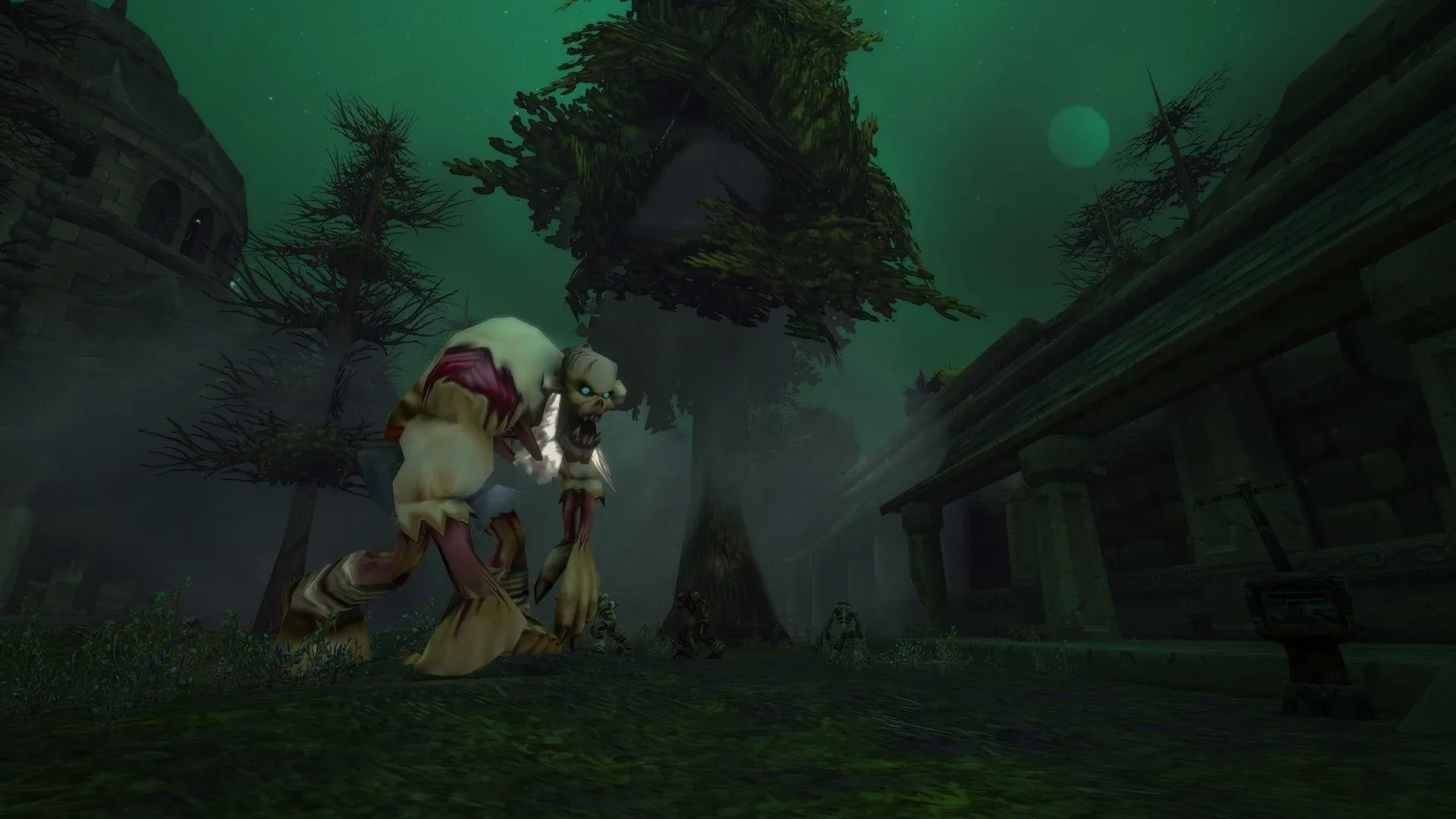
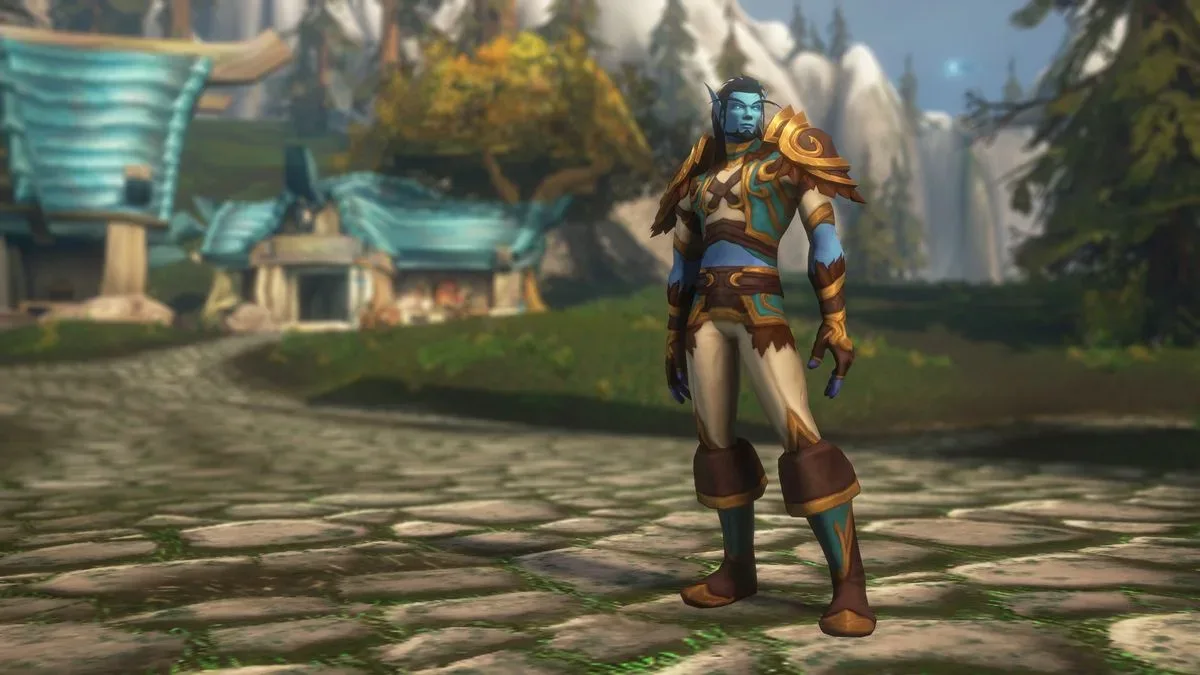
Forever is rooted in the 2004–2006 era of World of Warcraft, but it is not limited to existing vanilla material. The game will add new races and class combinations, campsites intended to encourage social connection, new raids and dungeons, and improved visual fidelity. Its developers have also discussed places in Azeroth that were unused or unfinished in the original versions of the continents as potential creative space.
Still, the team is drawing boundaries. Stone said the design ethos behind Forever involves not going through the Dark Portal—the gateway associated with The Burning Crusade expansion—though he did not present that as an absolute, permanent impossibility. The current purpose of the boundary is structural: it clarifies what Forever is and avoids turning it into a simple repetition of World of Warcraft’s established expansion chronology.
This is where the label “Classic Plus” can be useful, provided it is not mistaken for a complete roadmap. The concept is not a promise to add every imagined feature or revisit every later expansion differently. It is a framework for creating new material that belongs to an alternate, vanilla-inspired version of the setting.
For players deciding whether to begin at launch, the practical implication is that Forever is not simply a museum piece. There will be fresh things to discover from day one, but its future is intended to unfold inside a defined identity rather than chase every destination already familiar from the franchise’s history.
Horizontal progression puts the world ahead of a higher level cap
Forever will keep a fixed maximum level of 60 and pursue horizontal progression. This term describes expansion that adds choices, systems, activities or areas without continually raising the numerical ceiling on character levels. It differs from vertical progression, where a game repeatedly increases the level cap and pushes players toward progressively larger numbers and more powerful gear tiers.
A fixed cap has obvious consequences. Reaching level 60 should remain a meaningful endpoint rather than being periodically overwritten by another climb. The continuing game can then focus on widening the world, adding systems and placing more emphasis on what players do at the cap instead of simply raising it.
That approach fits Forever’s emphasis on exploration. The developers have pointed to unused space in the original versions of Kalimdor and the Eastern Kingdoms, as well as the possibility of other Azeroth locations in the future. Those statements are possibilities rather than confirmations of specific future zones, but they establish the intended direction: expansion through the world’s breadth, not only through ever-higher character levels.
It is also a concept that depends heavily on execution. A level cap only stays satisfying if new world content, social systems and activities give players reasons to return. Forever’s campsites, for example, are intended as one social-focused system within that broader strategy. The game’s long-term test will be whether those additions make the level-60 world feel like a home instead of a holding area.
Native controller support broadens the PC conversation
Perhaps the most technically notable addition revealed in the beta is native controller support. World of Warcraft has historically been built around mouse-and-keyboard input, so official gamepad mapping represents a meaningful change in how people may interact with its many actions, menus and movement demands.
Native support means the controls are implemented by the game itself rather than requiring an external mod or workaround. That matters because it can make controller play more approachable and less dependent on unofficial configuration. It may also make Forever more viable on portable PC hardware, where a controller is often the default input method.
Longdale’s stated ambition is to let people play where they want and, eventually, on whatever they want. However, that should not be read as a console release announcement. The immediate work is focused on making gamepads function well in World of Warcraft, and the developers framed the benefit as flexibility that could extend beyond consoles. Forever is described as launching on PC.
The distinction is important amid speculation around Xbox. Native gamepad support and a broader platform ambition do not confirm a version for Xbox or another console. They do signal that the team is reconsidering a long-standing PC control assumption, particularly as handheld PCs become another way players access games. Those who play at a desktop may also find the support useful for relaxed or alternative setups, provided the mappings meet the needs of WoW’s complex gameplay.
Controller and portable-PC play also put renewed focus on the surrounding setup. For anyone building a quieter desk or handheld-friendly arrangement, a recent Soundcore Q20i headphone price drop may be relevant, though input support itself remains the central Forever change.
Why Forever’s opening weeks matter
World of Warcraft: Forever is making a carefully defined bet. It is betting that a sizable audience still wants slower advancement, more travel, group dependence and a world that cannot be skimmed from the air. It is betting that vanilla-era foundations can support genuinely new content without becoming a remake of a familiar expansion sequence. And it is betting that a fixed level cap can make a continually growing world feel more coherent, not less ambitious.
The beta enthusiasm is an encouraging signal, while the developers’ caution about launch and player movement is sensible. A busy test can show demand, but it cannot fully forecast server pressure, community habits or the durability of a new long-term branch.
For now, the clearest expectation is straightforward: Forever is built for players who want to start at level one in a newly evolving version of Azeroth, accept a little resistance along the way, and see what happens when an MMO treats the journey through its world as part of the reward.