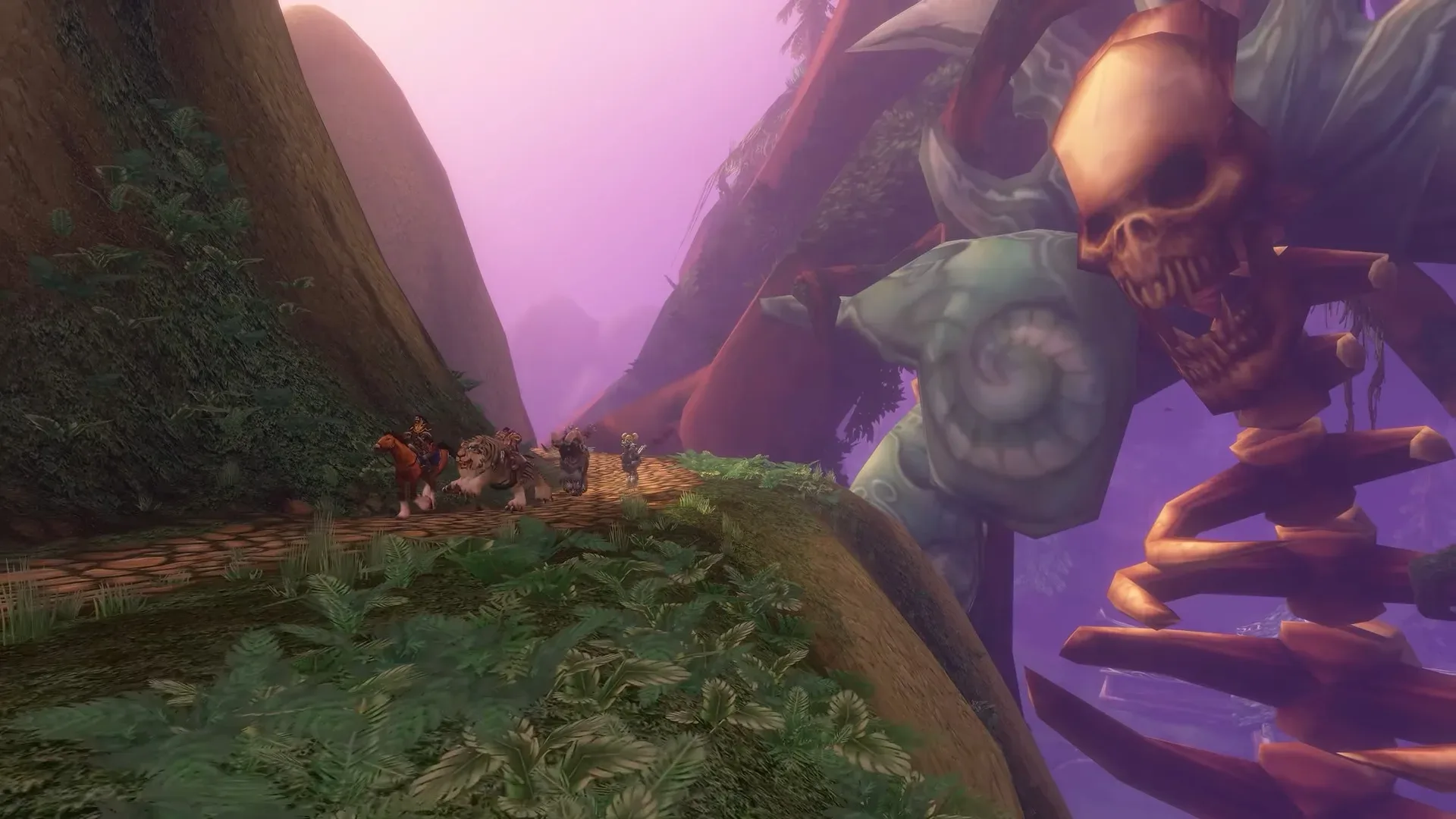
World of Warcraft: Forever is shaping up less like a remix designed to throw every experimental switch at once and more like a permanent, carefully maintained home for players who want a Classic-flavored version of Azeroth. The project’s latest details establish several clear boundaries: no flexible raid sizing, no one-button combat rotations, and no unusual class-role combinations such as Shaman tanks at launch. At the same time, the plan includes 10-player raiding in every tier, a revamped PvP advancement path, a Looking for Group tool, and an ongoing level-60 experience intended to grow horizontally rather than move on to a new expansion cap.
That combination will be encouraging to players looking for consistency, and potentially frustrating to those who hoped Forever would absorb the wildest ideas from Season of Discovery. But the central message is unusually direct: this is meant to be a place where a character can remain relevant for the long haul, rather than another temporary stop on the way to a reset or expansion transition.
Class identity comes before experimental roles
Season of Discovery became notable in part because it let classes bend their traditional assignments. Runes opened the door to possibilities such as Mage healers and Shaman tanks, giving familiar characters startling new jobs within parties and raids. Forever is not starting from that same design philosophy.
The team’s stated baseline is closer to Classic’s simplicity and its clearer distinctions between classes. Shaman talent changes may differ from the original Classic trees, but the available information does not point to a launch environment built around fully supported off-meta tanking or healing specializations. In practical terms, players should not assume abilities associated with those experimental roles will signal a new Shaman tank option in Forever.
That does not necessarily make the discussion permanently closed. The developers have indicated they want feedback from players who care deeply about unconventional class roles. Still, the important qualifier is at launch: Forever’s opening identity is being framed around readable roles, simpler systems, and a more recognizably Classic structure. Anyone creating a character around the expectation that every Season of Discovery-style surprise will return should plan cautiously.
Raids will be fixed-size, but 10-player groups are protected
One of Forever’s most consequential social decisions concerns raiding. Flexible raid scaling is not planned, so groups will not be able to bring an arbitrary number of players within a broad range and have encounters adjust around them. That is a firm choice in favor of fixed formats.
However, every raid tier is set to include at least one 10-player option and at least one 20-player option. Some tiers may also contain 40-player raids. The promise of recurring 10-player content is particularly significant for smaller guilds, friend groups, and communities that do not want their progression blocked by recruiting up to 20 or 40 people.
- Every tier is expected to have a 10-player raid.
- Every tier is expected to have a 20-player raid.
- Some tiers can also include 40-player content.
- 10-player raids are intended to offer meaningful challenge and rewards, rather than serving only as a lesser introductory activity.
That model tries to retain the logistical character of old-school MMO raiding without repeating a particularly painful transition for smaller teams: suddenly needing a dramatically larger roster to continue participating. A consistent 10-player route will not solve every scheduling problem, but it gives tightly knit groups an enduring lane through each tier.
It also makes Forever’s priorities clearer. The project is not trying to eliminate social friction altogether. Instead, it is choosing which friction it considers part of the game’s identity and which barriers it can soften. Fixed-size raids remain; a dependable small-group raid path is the compromise.
Mounts will still represent an investment
Mount access at level 40 is not being treated as a free milestone. The gold balance is changing so that the larger cost is tied to riding training rather than the mount item itself. The underlying goal is straightforward: seeing someone riding across Azeroth should still suggest that they spent time progressing and accumulating resources.
For players who remember saving every coin while leveling, that approach will sound familiar. It preserves the sense that obtaining a mount is an achievement and a change in a character’s economic status, not merely a button pressed when a level requirement is met. The details provided do not establish an exact training price, so it is too early to calculate the real burden or compare it precisely with other versions of the game. What is clear is that the cost is intentionally being used to maintain the weight of the moment.
The team did not offer further guidance on future monetization decisions when asked about gameplay-related paid content. That remains an area where players will need more concrete information before drawing broader conclusions.
Convenience tools have limits: bring a Warlock or travel
Forever will include Meeting Stones outside dungeons, but those stones are not becoming universal summoning devices. Instead, they open a new Looking for Group feature that helps players list and discover groups for the content they want to run.
That is a useful improvement to group formation, especially for players who want help finding companions without relying solely on public chat. Yet forming the party and physically assembling it are still separate problems. Without a Warlock, players will need to travel to the dungeon or raid entrance themselves. Warlock summons therefore remain a valuable group utility rather than an obsolete convenience.
This is another example of Forever splitting the difference between modern clarity and Classic travel commitments. Finding a group should become easier; instantly appearing wherever the group is gathered is not part of the plan. The same balance between accessibility and friction is often central to debates over persistent online games, including the wider technology choices discussed in how software features can be deliberately limited by context.
Add-on restrictions and no automated rotation button
Add-ons are also expected to face restrictions similar to those used in the modern version of World of Warcraft. Exact implementation details have not been laid out, but the intended target is clear: computational add-ons that automate tactical marking, communications, or calculations during play will not be available in the same way.
For raiders, this matters because the line between a helpful interface improvement and an outside tool doing too much of the encounter-management work can be contentious. Forever is signaling that it wants players, not automated add-on logic, making more of the moment-to-moment decisions.
One-button rotation functionality is likewise not coming to Forever. That result may be unsurprising given the stated focus on a simpler, more Classic-adjacent game, but it still confirms that combat execution is intended to remain an active responsibility. Simplicity here does not mean reducing a class to a single automated input; it means keeping systems and identities understandable while asking players to play their own rotations.
PvP progression aims for a clearer seasonal path
Player-versus-player content will use honor to advance characters through a ranking system. Within a season or patch cycle, it will be possible to reach rank 14, with cosmetic rewards and stat-bearing PvP armor available through that progression.
The setup is designed to make the PvP path feel more legible and rewarding across a defined cycle. Rather than presenting high rank as an opaque aspiration, Forever is outlining a progression track with an achievable endpoint during that window. Of course, the final experience will depend on the tuning of honor gains, ranking requirements, matchmaking behavior, and reward pacing—details that have not yet been specified.
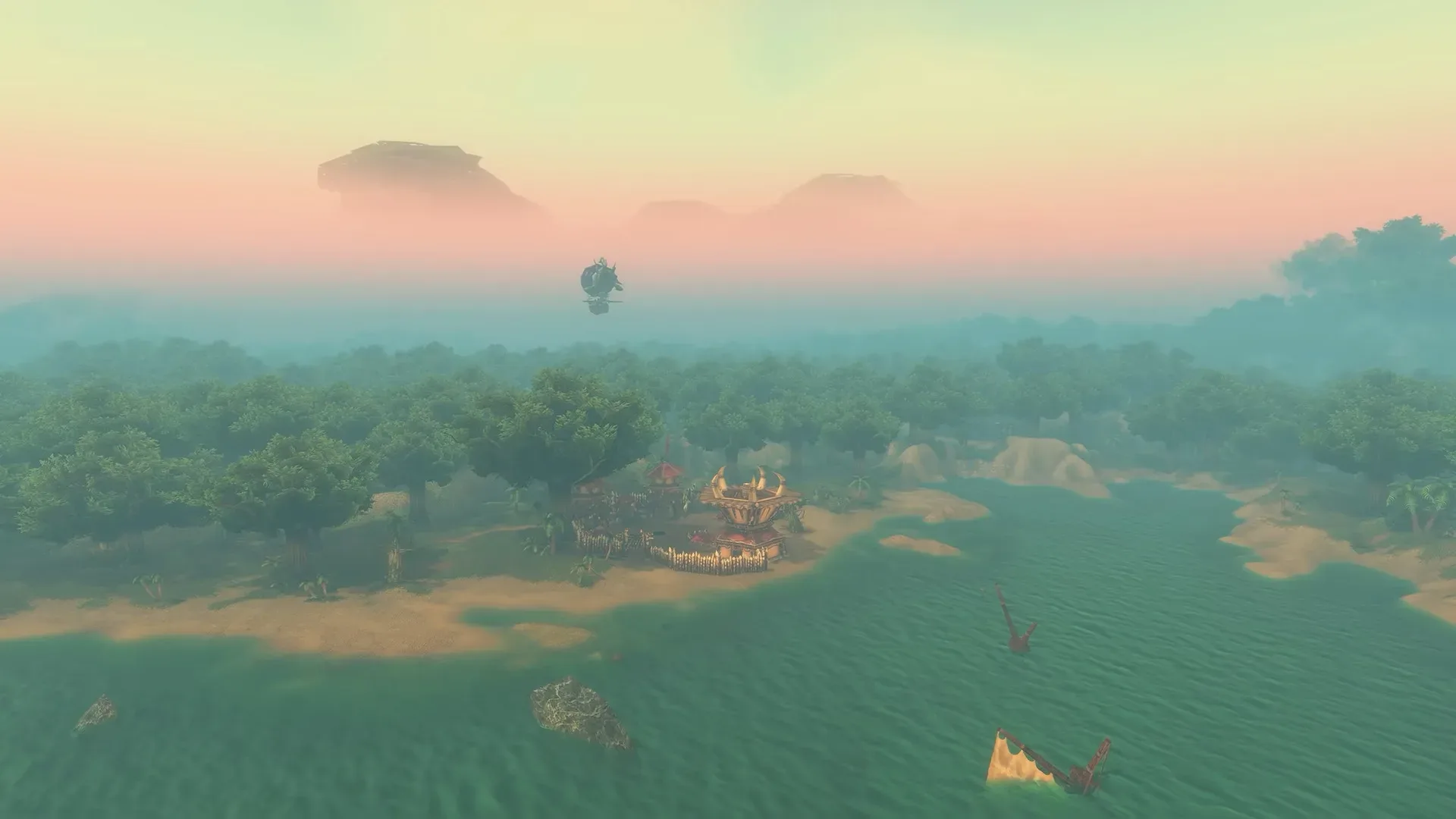
New battlegrounds are part of the plan as well. Darkspear Islands will join the original Vanilla battleground lineup, giving PvP-focused players fresh territory while retaining the recognizable foundations of early World of Warcraft competition. It is a telling fit for Forever’s overall strategy: add new material around the old core instead of replacing that core with a fundamentally different game.
What “Forever” means for level 60 characters
The defining promise is permanence. Forever will keep a level 60 cap and add content horizontally. In other words, the game is being positioned to expand through new activities and reasons to engage rather than through the familiar pattern of raising the cap and rendering previous gear and accomplishments less central.
A legacy system is also intended to encourage alternate characters, supporting a broader account-level sense of progression. The concept addresses a persistent concern surrounding seasonal and expansion-driven formats: why make a major investment in a character if that character’s destination is already known to be an ending, migration, or replacement?
Forever’s answer is that time spent on a character is supposed to continue mattering. The name is ambitious, and it naturally creates a high bar. Sustaining a level-capped MMO without relying on vertical progression will require a regular stream of worthwhile content, rewards, social goals, and reasons for different kinds of players to stay engaged. But the current outline makes the mission easy to understand: keep the Classic-era journey relevant, preserve its meaningful commitments, and give players a stable place to build a history in Azeroth.