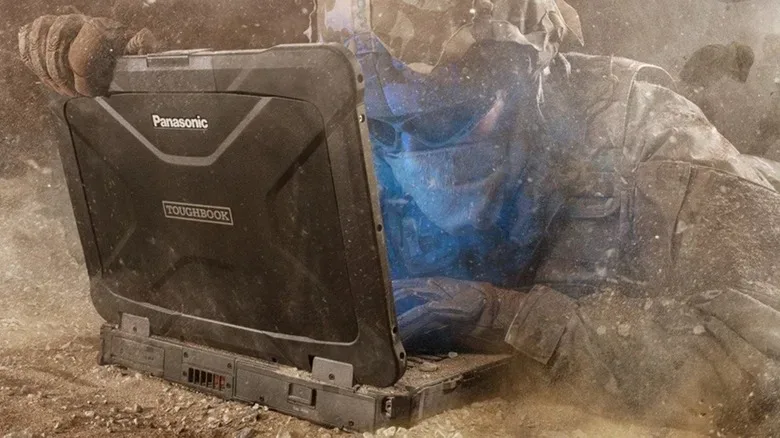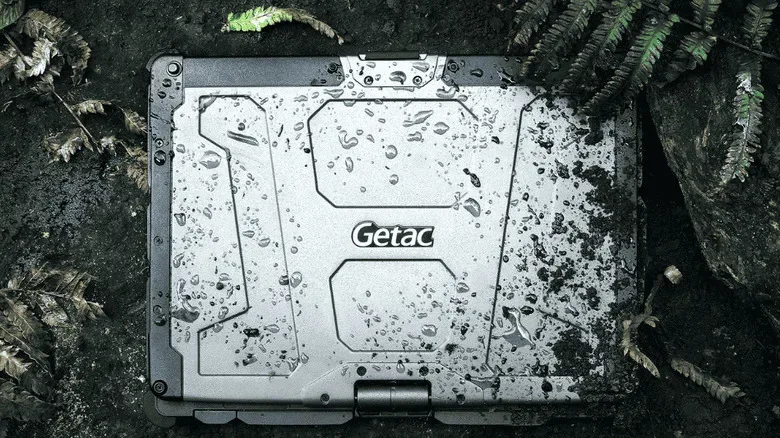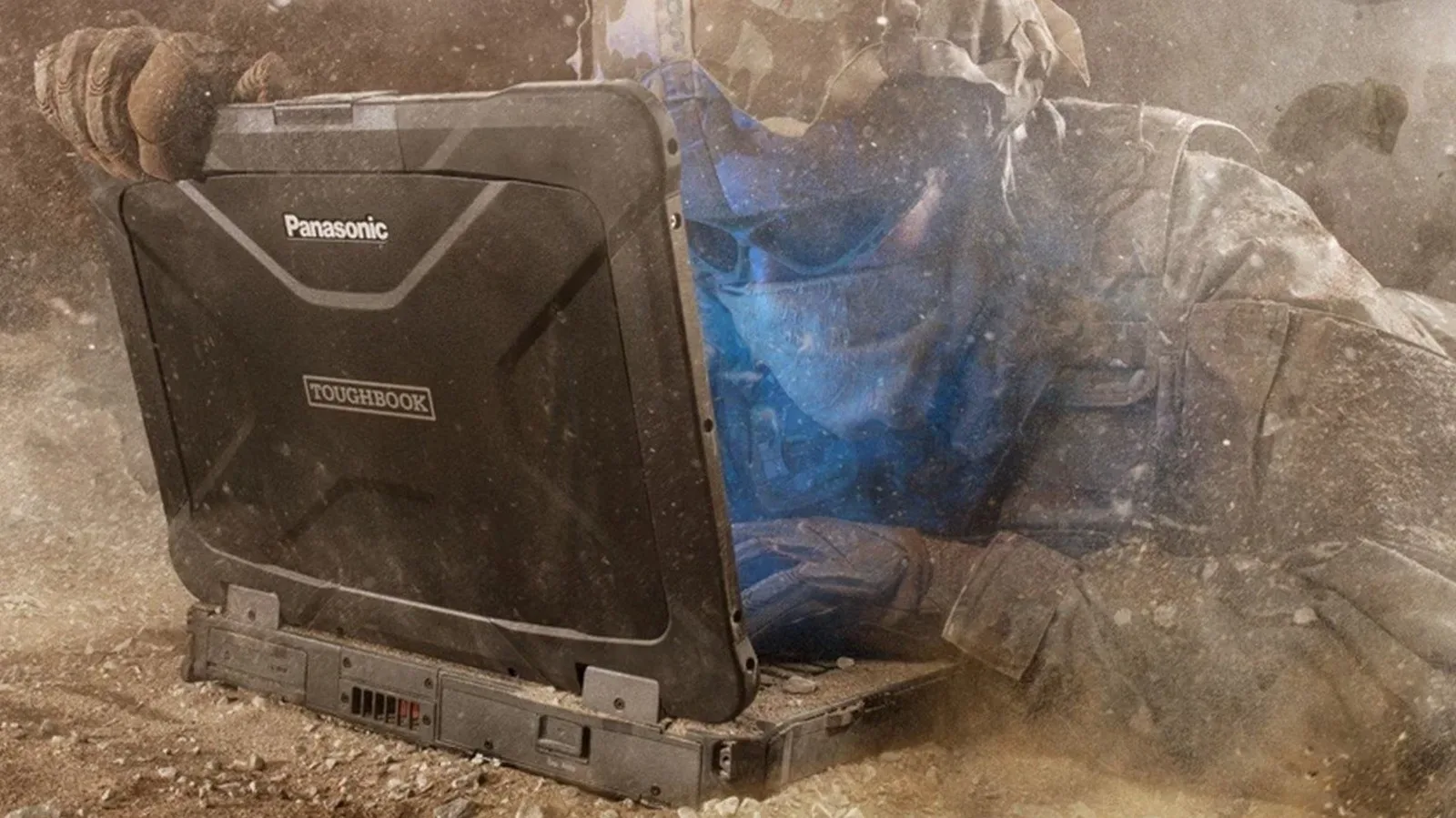
A fully rugged laptop has an undeniable appeal. It is the PC equivalent of showing up to a coffee shop in a tank: excessive, impressive, and almost certainly carrying features nobody near the latte machine will need. Reinforced shells, sealed ports, glove-friendly touchscreens, replaceable batteries and bright outdoor displays all sound great in isolation. But the reason these machines remain unusual purchases for consumers—and, by extension, most PC gamers—is simple: they are purpose-built tools for environments that ordinary laptops rarely encounter.
Models such as Panasonic’s Toughbook 40, Getac’s B360 Pro, Dell’s Pro Rugged 13 and Durabook’s Z14I are designed around a different definition of a bad day. A conventional laptop may need to survive commuting, a crowded backpack and the occasional clumsy collision with a table. A rugged machine may need to keep working around dirt, rain, vibration, machinery or a vehicle-based workstation. It is a meaningful distinction. The traits that make a computer dependable at a field-service site can be needless bulk and expense in a bedroom, office or gaming den.
For people choosing a portable PC to play games, manage an emulation library, edit clips or simply browse between sessions, the question is not whether rugged laptops are impressive. They are. The question is whether their protection solves a problem worth paying thousands of dollars to solve.
Built for hostile environments, not a typical gaming backpack
The Toughbook 40 illustrates the fully rugged formula clearly. Panasonic rates it for drops of up to 6 feet, lists IP66 dust and water resistance, and says it has been tested to MIL-STD-810H standards. Its touchscreen can work with gloves. Its batteries can be replaced. Parts of the machine can be configured for different hardware and ports. Those capabilities are sensible for field service, public safety, military work and other jobs where weather, grime, rough handling and access to equipment are daily considerations.
They are much less central to ordinary home and consumer use. Someone carrying a laptop from a house to an office, classroom or café generally benefits more from a manageable weight, a strong display, responsive performance and a price that leaves room for accessories or games. A gamer taking a laptop to a friend’s place may want durability, of course, but likely does not need a machine engineered around sealed openings and prolonged exposure to harsh conditions.
That gap is why rugged laptops can seem so strange when judged with consumer-laptop expectations. A serial port, extra Ethernet connections or an optical drive might look like a baffling use of physical space on a mainstream notebook. For a worker connecting to industrial gear or relying on established equipment in the field, those options can be essential. The design is not behind the times; it is serving a use case that has little overlap with chasing a thinner chassis or the sharpest possible screen for games.
The armor has a very real weight penalty
Protection needs material. Reinforced frames and corners help absorb impacts. Seals and protective port covers help keep water and dust away from electronics. Outdoor-oriented displays must remain usable in bright conditions. Together, those requirements lead to a category where weight is not an accidental compromise but a consequence of the mission.
- Panasonic’s Toughbook 40 weighs 7.5 pounds.
- Getac’s B360 Pro starts at 6.79 pounds and carries 6-foot drop and IP66 ratings.
- Dell’s fully rugged Pro Rugged 13 starts at 5.29 pounds.
- Durabook’s Z14I weighs nearly 8 pounds.
None of those numbers automatically make a system unusable. A machine can spend much of its time in a vehicle dock, on a workbench or moving between job sites where durability outweighs carrying comfort. Yet a heavy laptop becomes an especially obvious trade-off for a consumer who might use it on a couch, travel with it frequently or bring it to a local multiplayer night.
That is where rugged design and gaming-laptop priorities pull apart. A portable gaming machine already has to balance size, thermals, battery needs and graphics performance. Adding the substantial construction required for serious drop and ingress protection asks the buyer to accept even more mass, while not necessarily delivering the qualities they value most. For most players, surviving a six-foot fall is far less useful than a lighter device that is easier to pack, position and use every day.
Brightness and modularity matter—but for different reasons
The Toughbook 40 has a 14-inch, 1080p screen that can reach 1,200 nits. In a normal consumer specification contest, 1080p on a premium-priced 14-inch laptop might attract criticism. In outdoor work, however, screen brightness can matter more than chasing resolution. A display that remains readable while working outside is a practical feature, not a spreadsheet victory.
The same logic applies to replaceable batteries and configurable bays. A field worker may need to complete a shift away from a wall socket, swap a battery rapidly or connect the laptop to particular equipment. Organizations may need special docks and long-term compatibility with systems already installed in vehicles or facilities. These are not trivial preferences. A broken computer can stop work, leave equipment idle or complicate a public-safety response.
But a consumer’s priorities usually sit elsewhere. The person spending several thousand dollars on a conventional laptop can generally put more of that budget toward portability, display quality or performance. That spending decision has become more favorable than it once was because rugged systems are not necessarily weak. Current Toughbook 40 configurations offer Intel Core Ultra 5 or Ultra 7 processors, and discrete graphics are an option; modern Getac systems offer similar current-generation hardware. The category is capable, but its price is funding far more than speed.
That distinction is useful for anyone evaluating a PC purchase. Specifications should not be read as a single leaderboard. A 1,200-nit display, a sealed port and a hot-swappable battery can be valuable features. They just deliver value only when a buyer’s routine gives them a chance to do so. The same applies to broader PC-market pressures, including the concerns around infrastructure costs covered in the growing cost crunch facing gaming: when budgets are constrained, buying hardware tailored to the actual job matters even more.
The price turns admiration into a niche purchase
Fully rugged systems do not merely ask buyers to carry more. They ask them to pay for engineering intended to prevent expensive downtime. Panasonic’s original Toughbook 40 was priced at $4,899 in 2022. Panasonic does not list a current starting price for the Toughbook 40 and instead directs potential buyers to its sales team. That sales process itself signals the machine’s professional focus: configurations, deployment needs and support requirements can matter as much as a simple consumer checkout page.
Even stepping down from fully rugged territory remains costly. Panasonic’s Toughbook 56 is positioned below the company’s fully rugged machines, with a starting weight of 4.66 pounds, IP53 protection and a 3-foot drop rating. It starts at $3,325. Dell and Getac also offer semi-rugged models that reduce some protection in pursuit of a smaller footprint.
For the right buyer, the premium can be rational. If one damaged laptop can halt a worker’s tasks, strand a vital piece of connected equipment or create repeated replacement costs, durability becomes an operational investment. A business can also place value on swappable batteries, docks and compatibility over many years. Consumer buyers face a different calculation. A machine that never encounters rain, industrial dust, gloves or a six-foot fall cannot return much on its most specialized features.
Repairability is a different route to a long-lived PC
There is an important difference between making a laptop survive extreme punishment and making it easier to maintain over time. Both goals can extend a device’s useful life, but they solve separate problems. A rugged computer protects against external hazards. A repairable computer can reduce the pain of replacing or upgrading individual parts.
The Framework Laptop 13 Pro represents the latter approach: rather than building a notebook meant to shrug off a six-foot drop, it gives owners a route to replace or upgrade components. For a consumer PC owner, that can align more closely with reality. The threat may not be a soaked worksite or a fall onto concrete. It may be an aging component, a desire for an upgrade or a part that needs replacement after ordinary years of use.
Neither philosophy is universally superior. Rugged machines are specialized precisely because their users have specialized risks. For everyone else, a lighter laptop, sensible care, a protective bag and an emphasis on repairability may be the better package. Fully rugged laptops are rare in everyday life not because they fail at being tough, but because they succeed at solving unusually demanding problems. The rest of us usually need a PC that can survive the commute—not a portable command center prepared for the apocalypse.