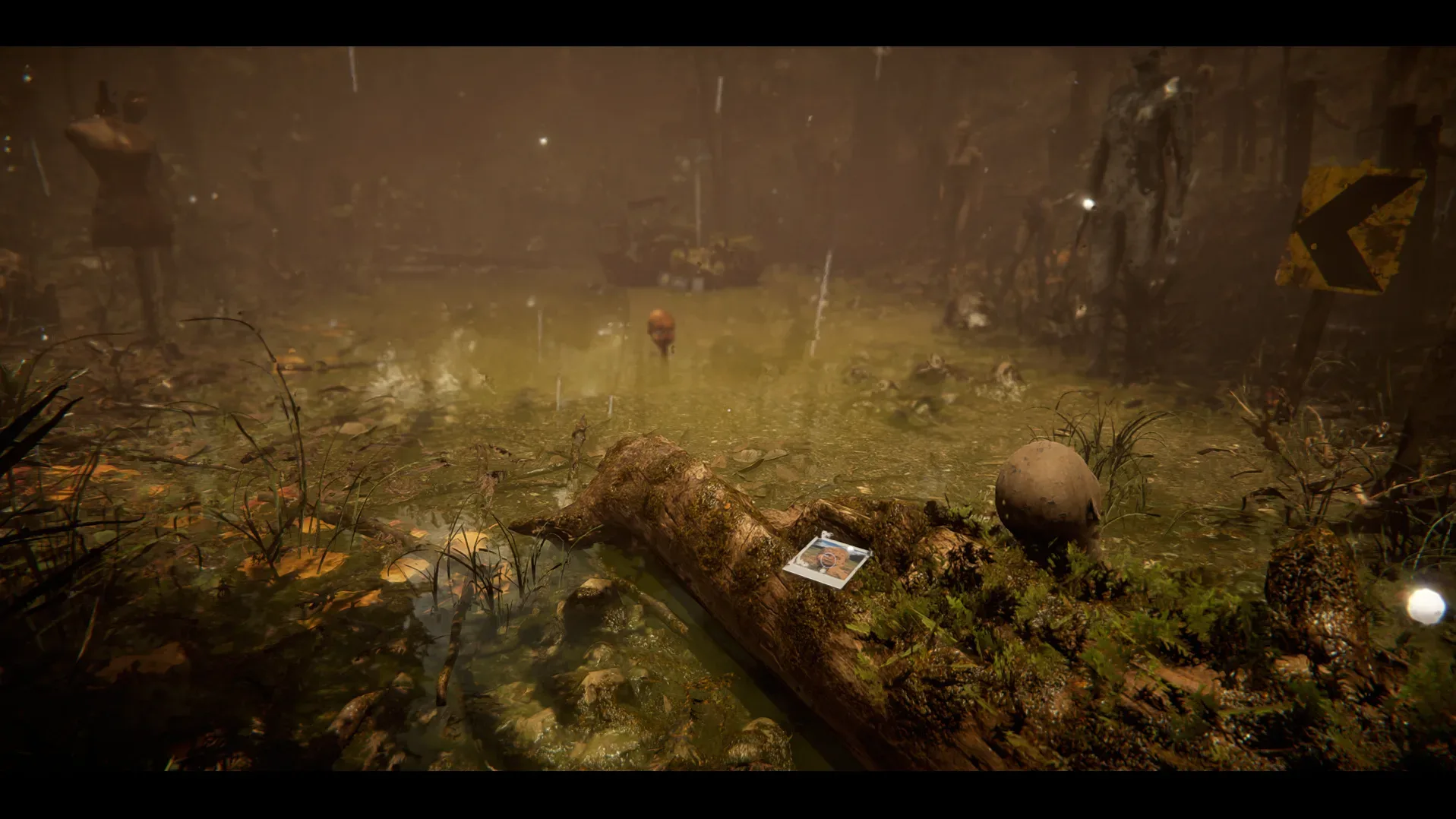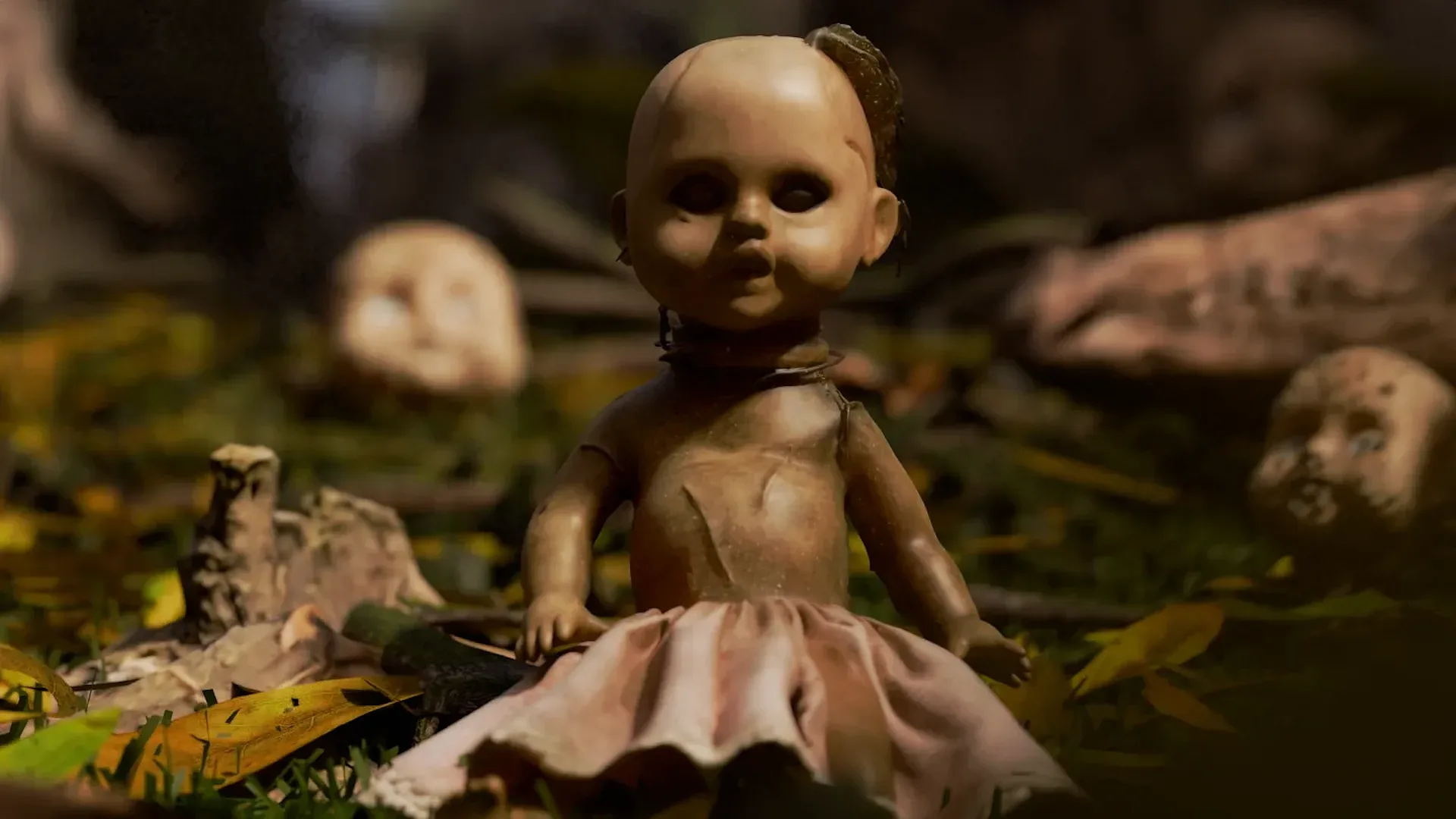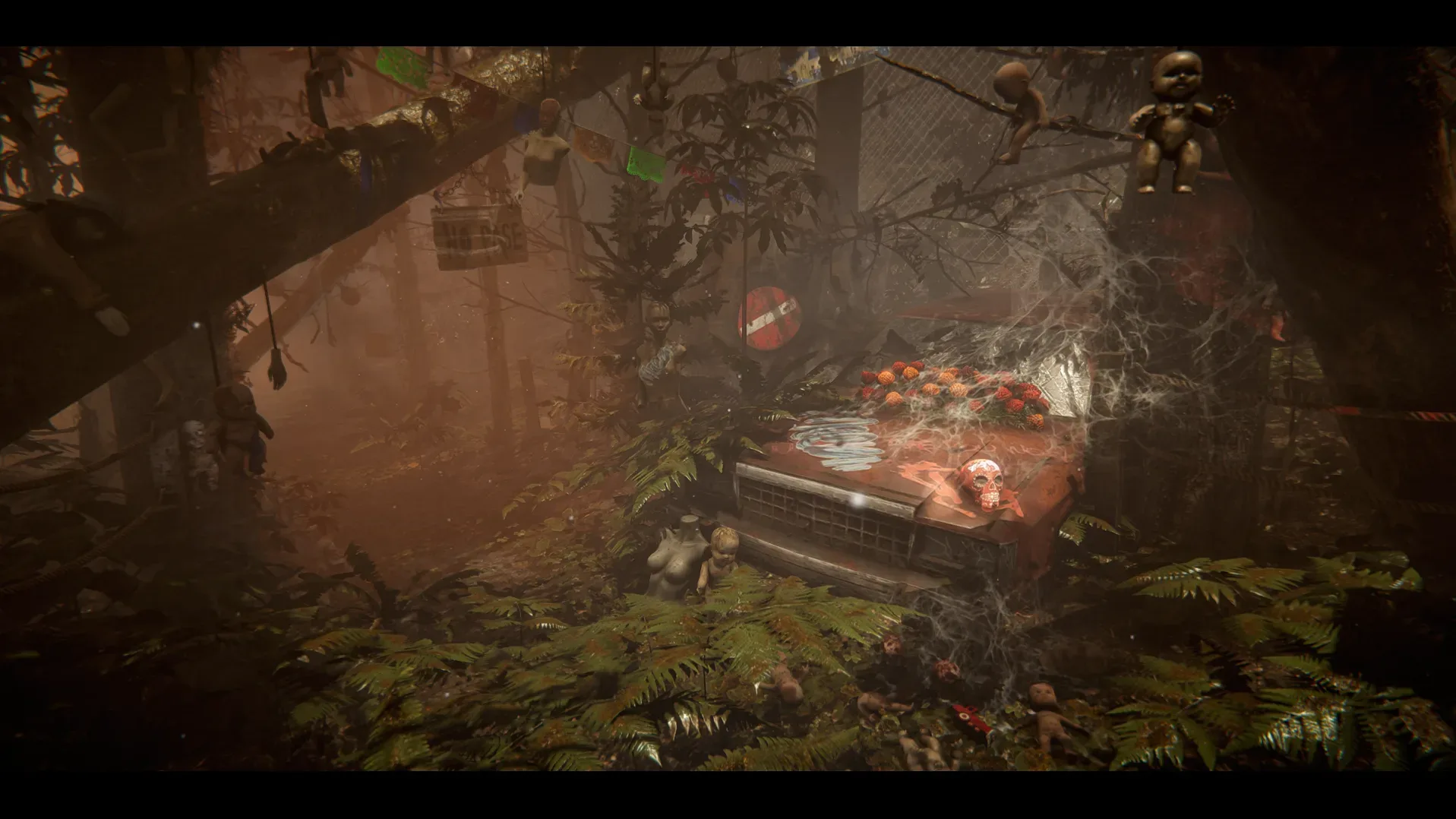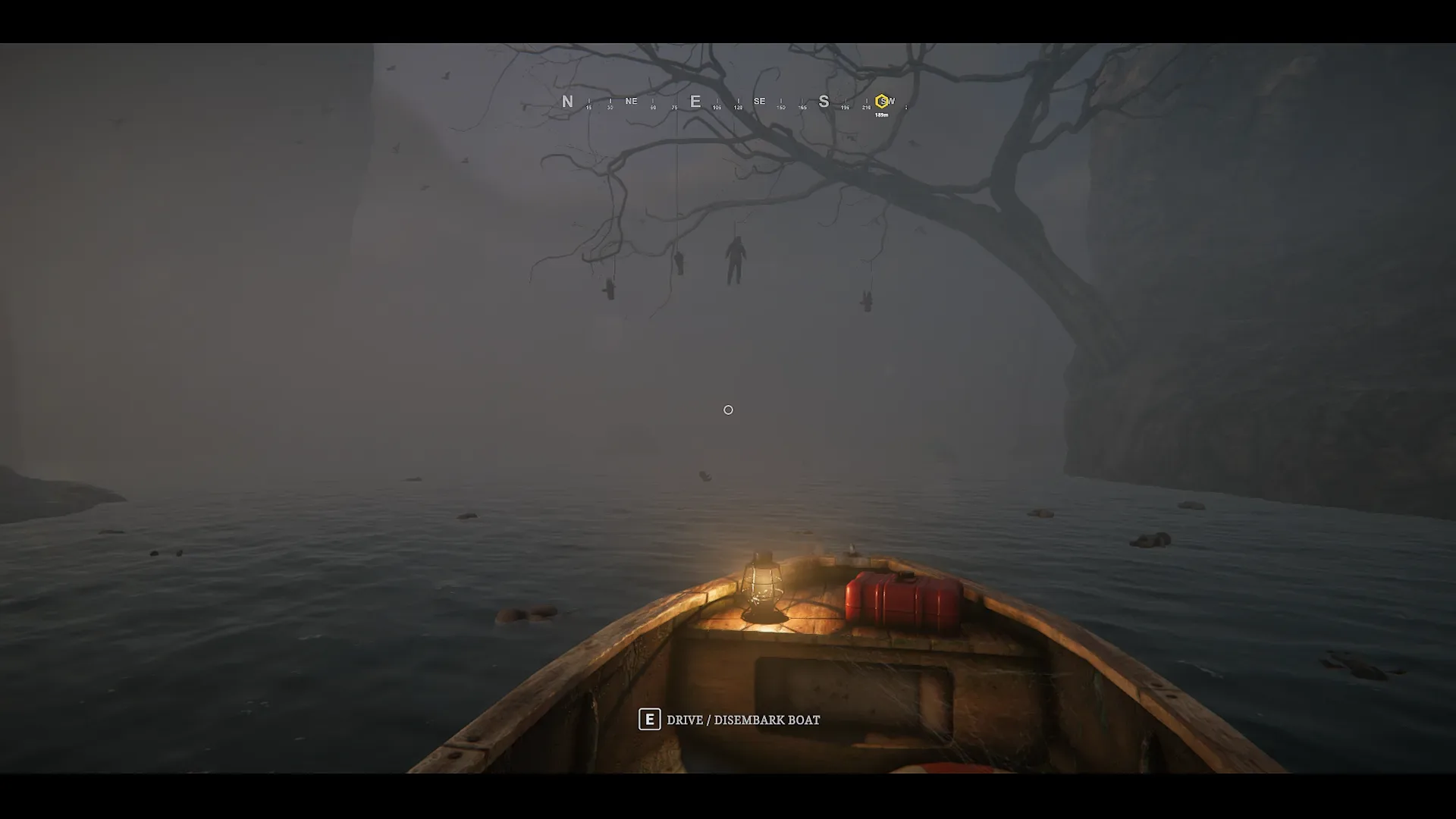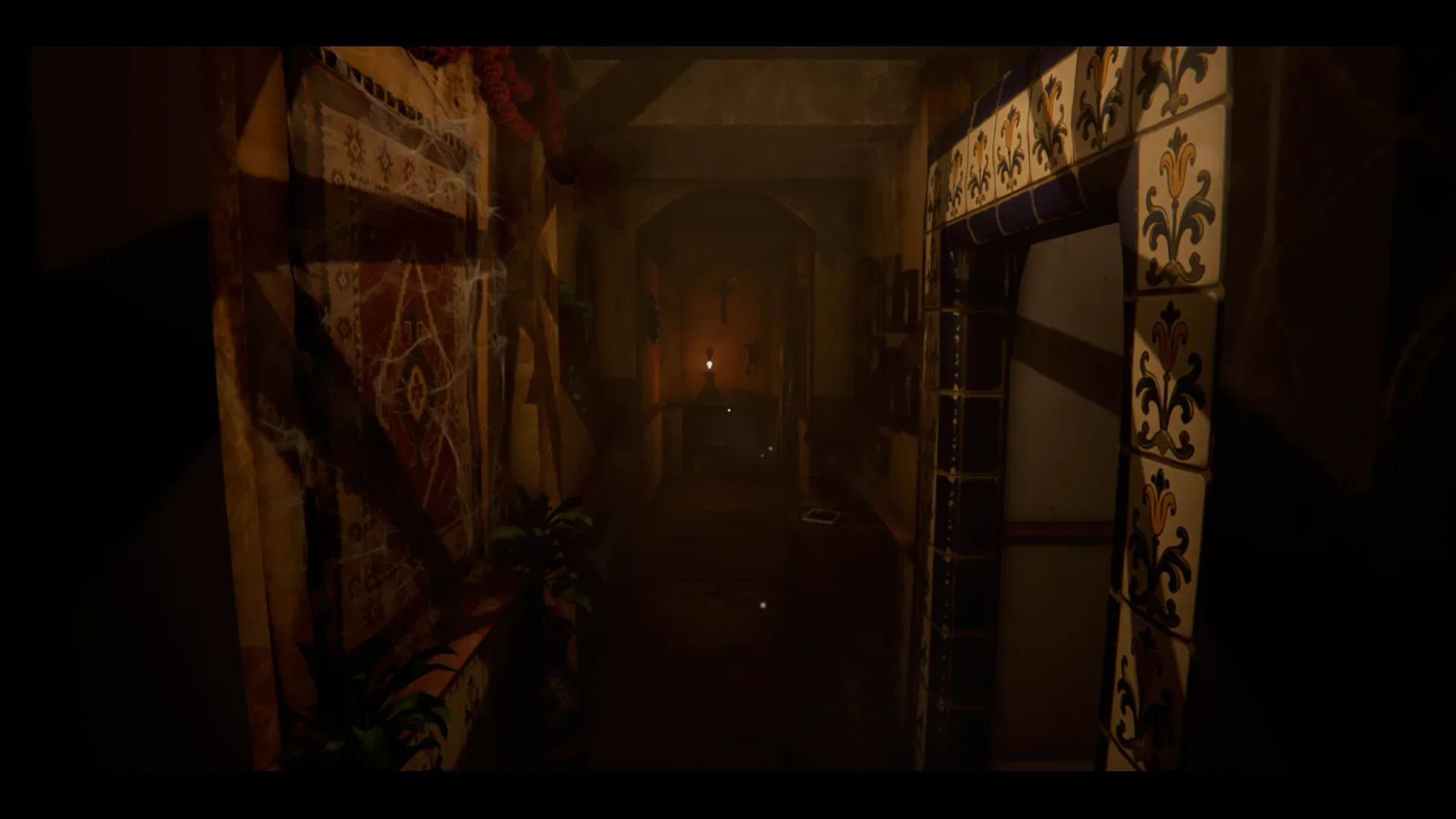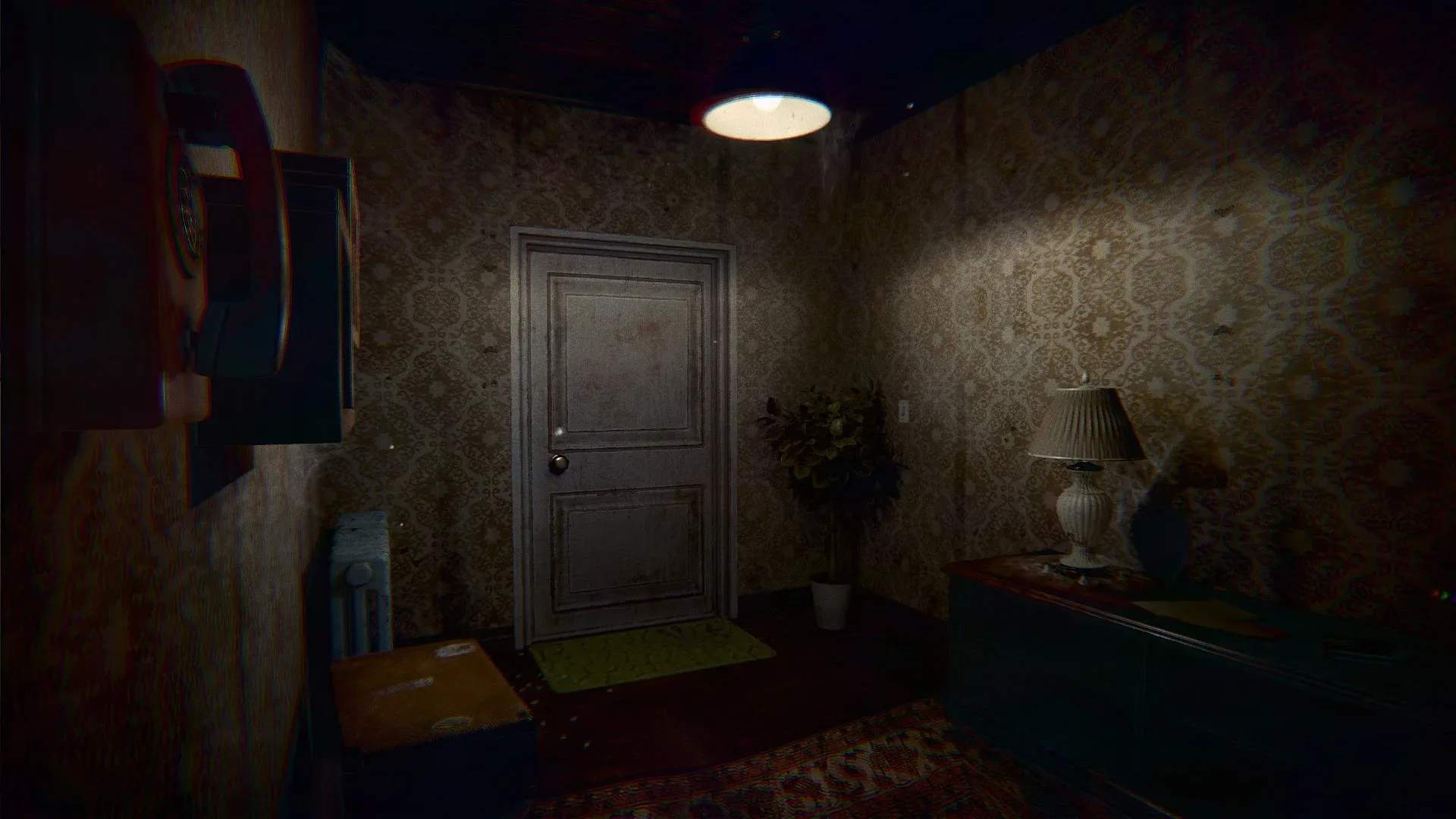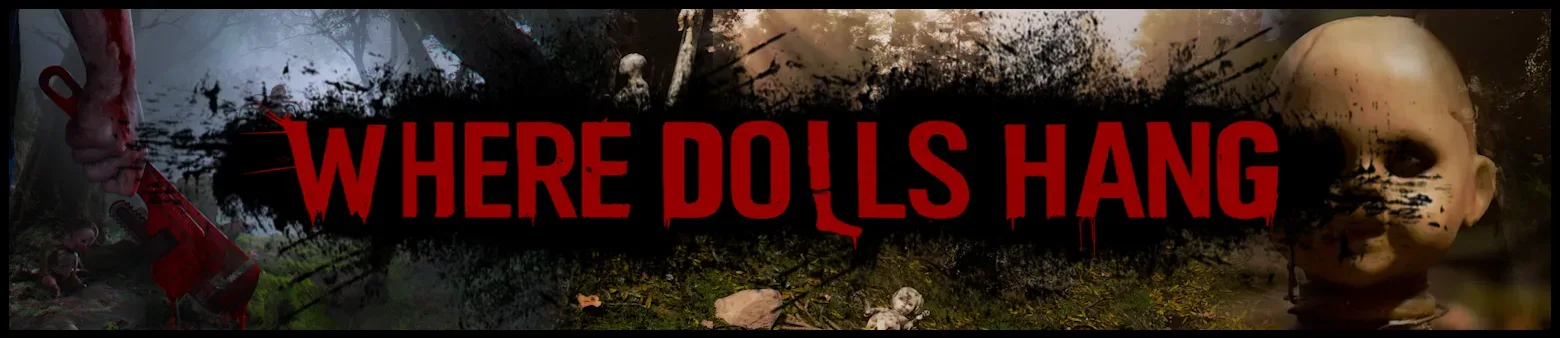
Psychological horror is often built from uncertainty: a sound behind a wall, an object that seems out of place, a scene that feels uncomfortably familiar. Steelkrill Studio’s upcoming Where Dolls Hang is taking that familiar feeling unusually literally. The Mexican horror game, inspired by Isla de las Muñecas, will incorporate doll imagery recreated from real photographs—and let players discover the original photographs within the game itself.
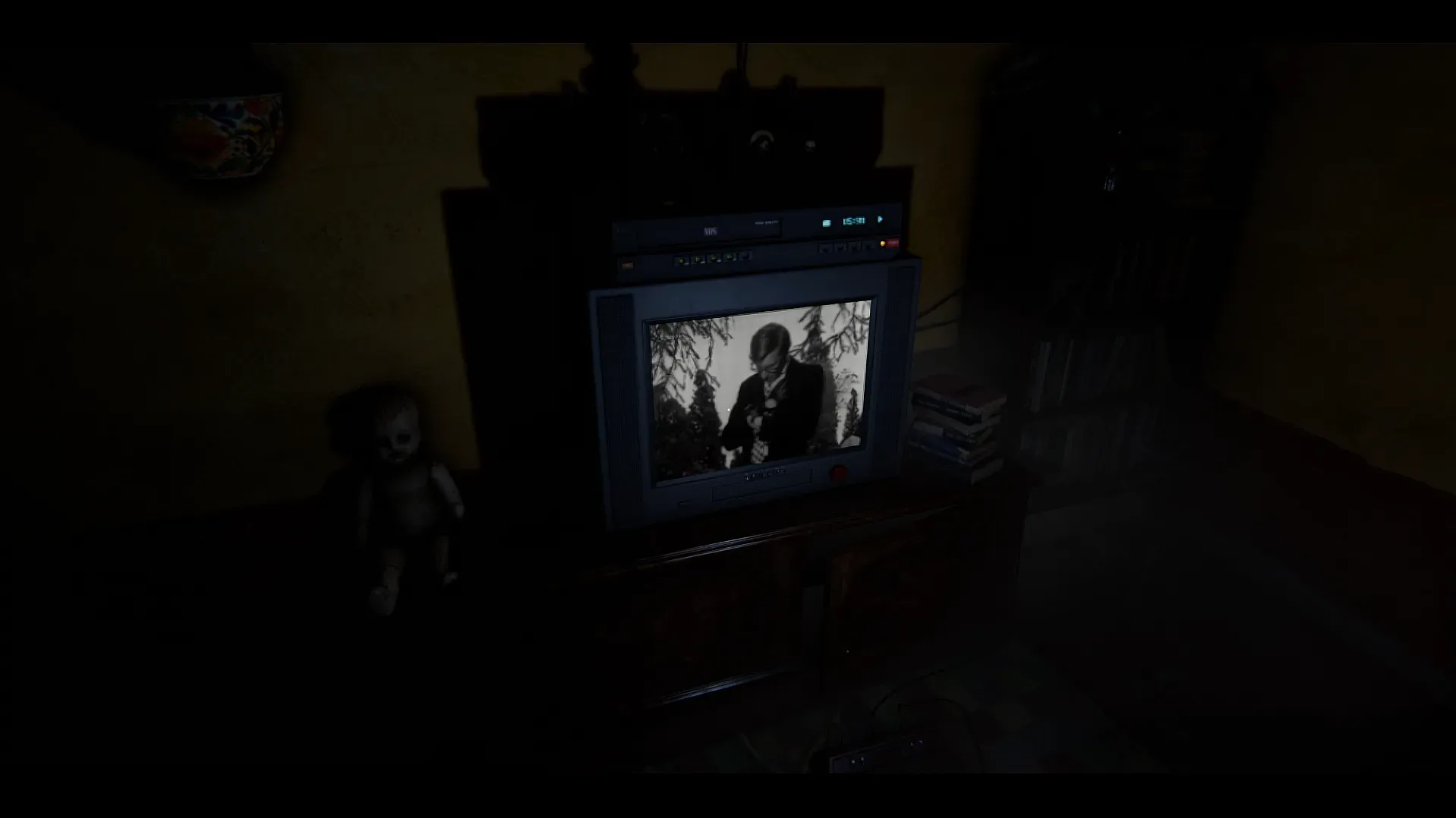
The project’s real-world material will not stop at still images. Players will also be able to find real VHS tapes and classic films, place the tapes into televisions and VHS players in the game, and watch the films while the surrounding game world continues to progress. It is a deliberately strange proposition: an apparently fictional nightmare making room for media that originated outside it, rather than treating every object on screen as invented set dressing.
Where Dolls Hang remains in development and can currently be wishlisted on Steam. No release date or additional platform plans were provided alongside these details.
Real photographs become part of the game’s doll imagery
Some of the doll pictures in Where Dolls Hang were recreated from real photographs. In practical game-development terms, that means players may encounter 3D models derived from those images as they explore. The original photographs are also discoverable in the game world.
That two-part structure matters. A developer can use a photograph as visual reference without a player ever knowing it existed. Here, the photograph and the 3D recreation are both intended to be encountered. The game is therefore inviting players to notice a relationship between an in-world object and its real-world basis, rather than keeping the production reference hidden behind the curtain.
It is an effective fit for a game inspired by Isla de las Muñecas. The stated premise already places dolls at the center of its horror language. Attaching at least some of that imagery to real photographs gives the objects a different texture from wholly fabricated props. The unease is not simply “that doll looks unsettling”; it can become “that doll image has an existence beyond this particular fictional space.”
That does not make the game a documentary, nor does the announcement present every doll or scene as a direct recreation. The scope is specific: some doll pictures are based on real photos, and those source images can be found in the game. Keeping that distinction clear is important, especially when a horror game is intentionally playing with the boundary between reference material and fiction.
VHS is more than a background prop
The VHS component sounds designed to be interactive rather than merely decorative. Players can locate tapes, insert them into in-game televisions and VHS players, and watch real classic films. Crucially, the game world keeps unfolding while the footage plays.
That last point separates the idea from a conventional collectible that opens a separate menu, pauses exploration, or plays as an isolated cutscene. The TV is part of the environment. Choosing to put on a tape is an in-world action, and the player remains situated in the same unsettling setting as the film runs.
The technical storytelling term most useful here is diegetic. A diegetic object is something that exists within a story’s world: a radio a character switches on, a note lying on a desk, or in this case a television and VHS player that can be used in the space the player is navigating. By contrast, an inventory screen, a pause menu or a detached cinematic sequence generally sits outside that world.
Making the tapes diegetic can heighten horror without needing to promise that every tape contains a new scare. The television is simultaneously an object players operate and a source of real footage. Attention is split between what is playing on the screen and what may be changing, moving or waiting in the room. The announcement does not specify whether the game will react in particular ways during viewings, so players should not read that as a confirmed mechanic. But the decision to let the world continue is clearly central to the intended tension.
Why the format suits the concept
VHS carries a physical ritual even when represented digitally. A tape must be found, carried to a player and inserted. That sequence is slower and more deliberate than selecting a video from a list. In a horror setting, small acts of interaction can create vulnerability: looking at a screen means choosing where to direct attention, and deciding whether to continue watching becomes part of the atmosphere.
The format also lets Where Dolls Hang layer media types in one place. It has 3D spaces and models, photographs that point back to real images, and films that play through in-world equipment. Each has a different relationship to the player. A 3D doll can occupy the room. A photo can feel like evidence or a record. A film can demand time and attention while events continue around it.
None of that requires the game to explain the boundary away. In fact, the announced design seems interested in leaving that boundary visible. Real materials are not being used solely as an invisible source for fictional assets; they are being placed into a fictional environment in forms players can directly encounter.
A horror game built around blurred edges
The unifying idea is a controlled collision between a fictional psychological-horror experience and real media. The 3D dolls are recreations, the original images are available to discover, and classic films can be watched from VHS tapes in the world. The effect is not about claiming that the game’s events are real. It is about making the player repeatedly confront media with a real-world origin while moving through a constructed nightmare.
That approach offers a sharper version of the familiar “found footage” mood. Rather than applying artificial wear to everything or presenting fictional recordings as though they were recovered artifacts, Where Dolls Hang is described as using actual photographs and films alongside its original game content. The friction between those forms may become the game’s most distinctive feature.
It also places emphasis on exploration. The photographs and tapes are things players can find, not simply details delivered at the beginning. That framing gives the environment an investigative role. Players who explore may uncover material that changes how they view objects already seen in recreated form, or may decide to spend time at a television even though the game has not stopped around them.
For prospective players, the practical takeaway is straightforward: this is a horror game where environmental interaction appears to be part of the premise, not just a path between scripted scenes. The announcement identifies photographs, tapes, televisions and VHS players as meaningful objects. It does not outline progression systems, combat, puzzle structure, runtime, or how frequently this material appears, so those remain unknown.
What is confirmed—and what is still unknown
- Confirmed: Where Dolls Hang is a Mexican psychological horror game inspired by Isla de las Muñecas.
- Confirmed: Some doll images were recreated from real photographs, with both 3D recreations and original photos available for players to encounter.
- Confirmed: Players can find real VHS tapes and classic films, use in-game televisions and VHS players, and watch while the world continues around them.
- Confirmed: The game is in development and has a Steam wishlist page.
- Not detailed: a release date, other platforms, the names of the films, or the broader gameplay structure.
For now, Steelkrill Studio’s pitch is less about a list of systems than a particular kind of discomfort: the realization that an image or film inside a game was not made solely for that game. For horror players interested in how media, memory and environment can be woven together, that is a premise worth keeping an eye on. Steam users can add it to a wishlist, while anyone tracking unusual PC horror concepts may also want to follow broader PC gaming news.