Some game leaks arrive with the subtlety of a Tank smashing through a safe-room door: a hacked database, an errant storefront listing, an employee saying too much, or a publisher accidentally scheduling a video for the wrong time zone. Then there are the leaks that are not really leaks at all.
Former Valve writer Chet Faliszek has described one such case from the Left 4 Dead 2 era. In a recent video, Faliszek said Valve intentionally put a trailer into the wild early because the Entertainment Software Rating Board would not permit the studio to release it through the normal route. It is a remarkable bit of retrospective context for a sequel built around frantic improvisation: when the marketing plan hit a barricade, Valve apparently chose a very Valve-like side door.
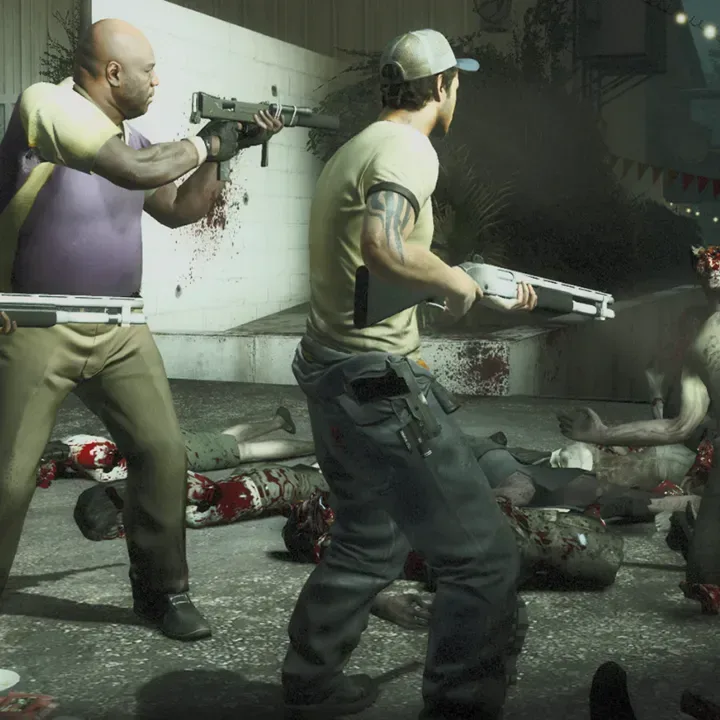
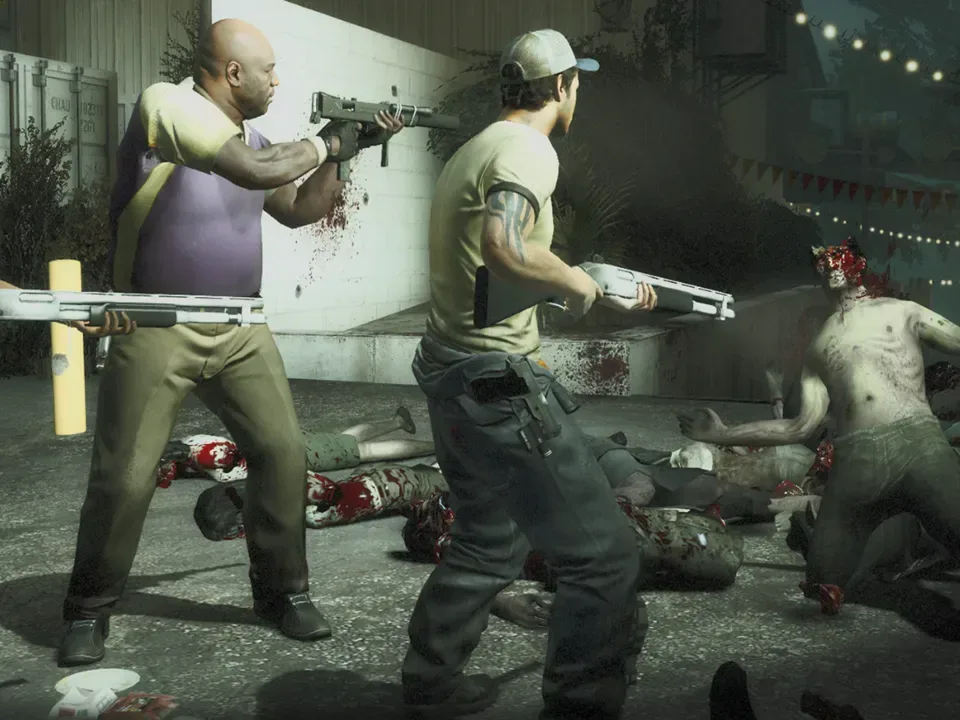
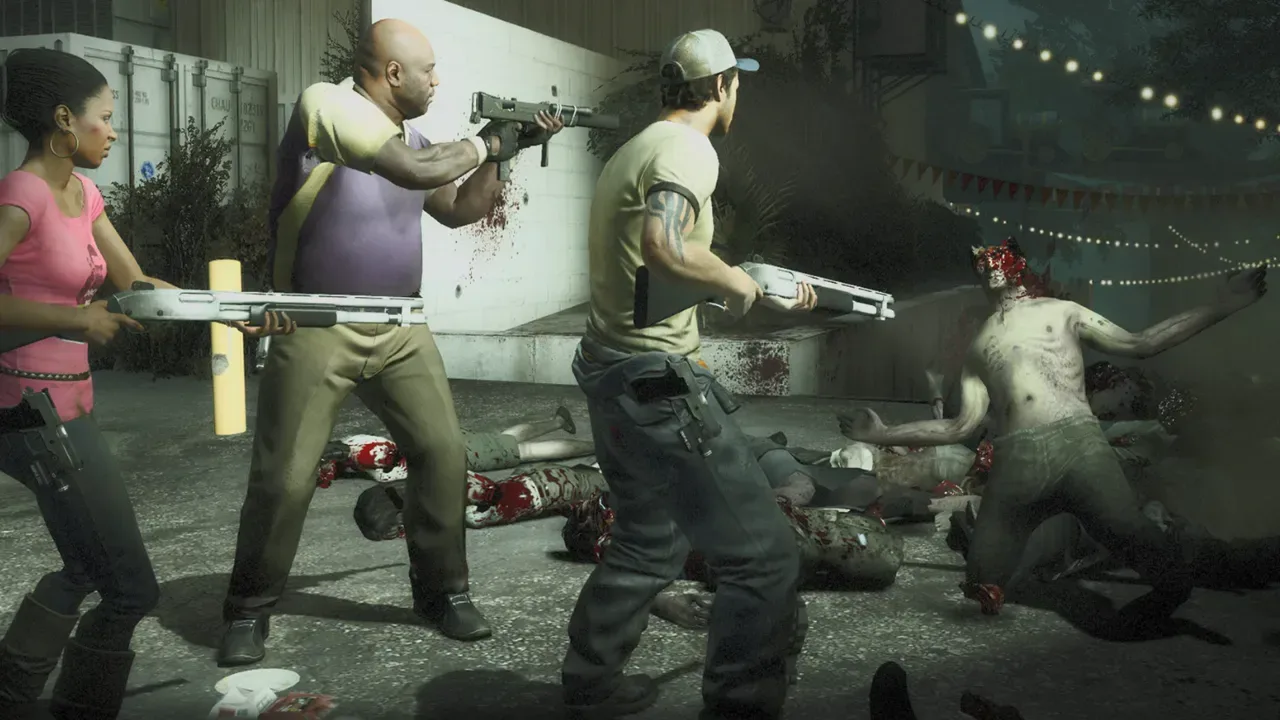
The footage appears to have been the three-minute Zombie Survival Guide cinematic, which surfaced online in October 2009, about a month before Left 4 Dead 2 launched. Rather than presenting a dry feature rundown, the trailer throws the four new survivors—Coach, Ellis, Nick, and Rochelle—into a furious zombie outbreak with firearms, chainsaws, and an enormous amount of undead chaos. Its tone was in lockstep with the game’s high-energy, gruesome co-operative action.
Faliszek did not specify precisely what aspect of the material prompted the ratings-board problem. The trailer’s violence is the obvious possibility, but it would be speculation to pin the issue on a particular shot, weapon, injury, or line. What he did say is that language had to be reduced after Valve’s disagreement with the board. That detail distinguishes the event from an accidental upload: the release circumstances, as remembered by someone who worked at the studio, were tied to a content-approval obstacle.
A leak with an unusually clear motive
Faliszek’s account strips away the usual mystery people attach to “leaked” game footage. In this instance, the reported purpose was not sabotage, theft, or a disgruntled individual trying to embarrass a company. It was a calculated distribution decision made when official distribution had become difficult.
Valve “leaked our trailer ahead of time because” the ESRB “wouldn’t let us release the trailer,” Faliszek said.
That is a striking explanation because the word leak generally implies loss of control. A deliberate leak reverses the equation. The company maintains the content, controls the timing well enough to make it useful, and benefits from the excitement generated by footage that looks forbidden, premature, or somehow outside the marketing machine. The audience gets a reason to circulate the video; the company gets a conversation it may not have received from a conventional trailer upload.
It is also worth remembering the period. In 2009, online game trailers could still feel like small digital events, passed through forums, video sites, blogs, and social-media feeds that were far less consolidated than today’s platforms. A video appearing unexpectedly could quickly build its own mythology. The line between a genuine breach and a canny publicity maneuver was not always easy for fans to identify in real time.
Related coverage includes Valve Deliberately Leaked a Left 4 Dead 2 Trailer After ESRB Dispute, Former Writer Says.
Faliszek himself framed the confession as ancient history, joking that the team was probably beyond getting in trouble over something from roughly two decades ago. He also noted the odd archival consequence: trying to find a supposed leaked Left 4 Dead 2 trailer now may not reveal much, because older uploads and the surrounding chatter can disappear. The internet retains plenty, but it does not preserve everything equally. Low-resolution reposts, dead links, altered titles, and deleted accounts can turn even a major game’s marketing trail into a scavenger hunt.
Why the trailer mattered for Left 4 Dead 2
Left 4 Dead 2 had no shortage of attention ahead of its November 2009 arrival. It was a follow-up to a co-operative zombie shooter that had already established a distinctive identity: four players, four survivors, special infected designed to split up the group, and an AI Director intended to reshape pacing and enemy pressure. The sequel brought a fresh cast, melee weapons, new infected threats, additional campaigns, and a Deep South setting that gave its action a different visual and cultural texture.
The Zombie Survival Guide cinematic focused on the clearest selling point: personalities under pressure. Coach’s forceful presence, Ellis’s excitable energy, Nick’s cynical attitude, and Rochelle’s competence all read quickly as the group fights through a disaster that has already spiraled beyond control. Chainsaws and gunfire make for simple trailer language, but the emphasis on survivors trying to remain together also reflects what made the series work. The infected were the immediate danger; keeping a human team coordinated was the real assignment.
That balance remains important when considering why a disputed trailer could have value. A conventional advertisement might be expected to emphasize systems, platform branding, release information, and carefully moderated tone. A cinematic that is louder, bloodier, or rougher around the edges can more directly sell the emotional promise of Left 4 Dead 2: the next few minutes will be messy, frightening, funny, and significantly easier if friends do not abandon each other.
The game went on to be widely praised. One contemporary review awarded it a 9/10, and critical discussion frequently highlighted its co-operative design, campaign variety, weapons, and replayability. None of that proves that a trailer leak changed the commercial or critical outcome; it would be a stretch to credit one marketing episode with a game’s legacy. Still, the incident now reads as a revealing footnote to a sequel whose public image was already inseparable from unruly zombie spectacle.
Ratings boards, marketing plans, and the gray area in between
Ratings boards occupy a practical position in game publishing. They provide age guidance and content information, while platform holders, retailers, advertisers, and publishers may rely on that framework when determining how and where promotional assets can run. A trailer is not merely a tiny version of the game. It can be evaluated differently because it is intended to reach a broad, often unscreened audience.
That creates inevitable friction. A publisher wants a memorable spot that conveys the intensity of its game. A ratings organization may require changes in language, imagery, context, or presentation before a particular trailer can be used in a particular channel. The end result is often mundane: an edited cut, a restricted version, or a change in placement. Valve’s reported response stands out because it seemingly used the language of an unauthorized release to place the original material in front of people anyway.
There is no need to romanticize that strategy as a universal playbook. Companies confronting a ratings concern today face different policies, distribution tools, contractual obligations, and public expectations. Deliberately blurring the boundary between official marketing and an apparent leak could confuse audiences and undermine trust, particularly when people are accustomed to real leaks exposing unfinished work or sensitive information without consent.
Yet the Left 4 Dead 2 story does underline how easily the term “leak” can conceal radically different circumstances. A leaked trailer may be stolen. It may be mistakenly published. It may come from a partner with access. Or, as Faliszek recalls here, it may be an intentional escape hatch from an approval problem.
Valve’s enduring reputation for doing things differently
Valve has long attracted fascination partly because it has often taken unusual routes through development, distribution, and communication. From its defining PC series to Steam’s central role in PC game sales, the company’s history includes major successes, lengthy silences, experimental hardware, and an enduring ability to make fans scrutinize every small trace of activity. A trailer supposedly leaking before a sequel’s launch fits comfortably into that broader image, even if the actual reasoning was less mischievous than it sounds.
It also offers a reminder that marketing artifacts deserve preservation. The original trailer, its different edits, upload dates, descriptions, ratings notices, and community reaction are all pieces of a game’s history. For players who care about the PC era that produced games like Left 4 Dead 2, tracking that material can be as revealing as revisiting patch notes or old multiplayer maps. And while old trailers are not the same thing as practical modern hardware advice, PC players weighing what matters in their setups can also consider why fully rugged laptops rarely make sense for everyday PC players.
Most importantly, Faliszek’s recollection does not resolve every detail. The specific ESRB objection remains unstated, and the full internal decision-making process has not been laid out. But the central claim is unusually direct: Valve wanted the trailer seen, could not release it as intended, and allegedly arranged for it to surface as a leak. In a genre full of shambling corpses, that may be the rare marketing plan where the “unauthorized” part was apparently alive all along.