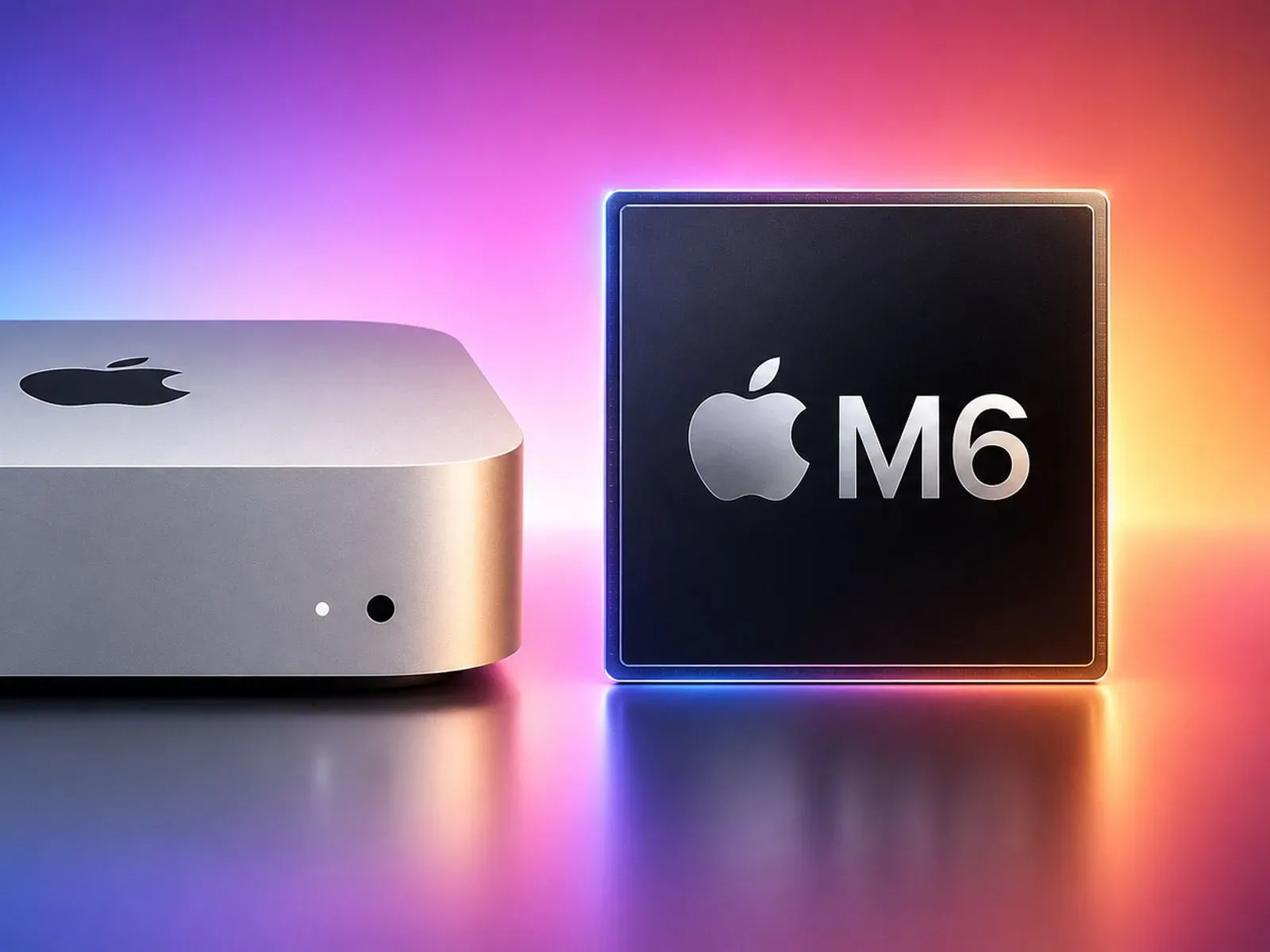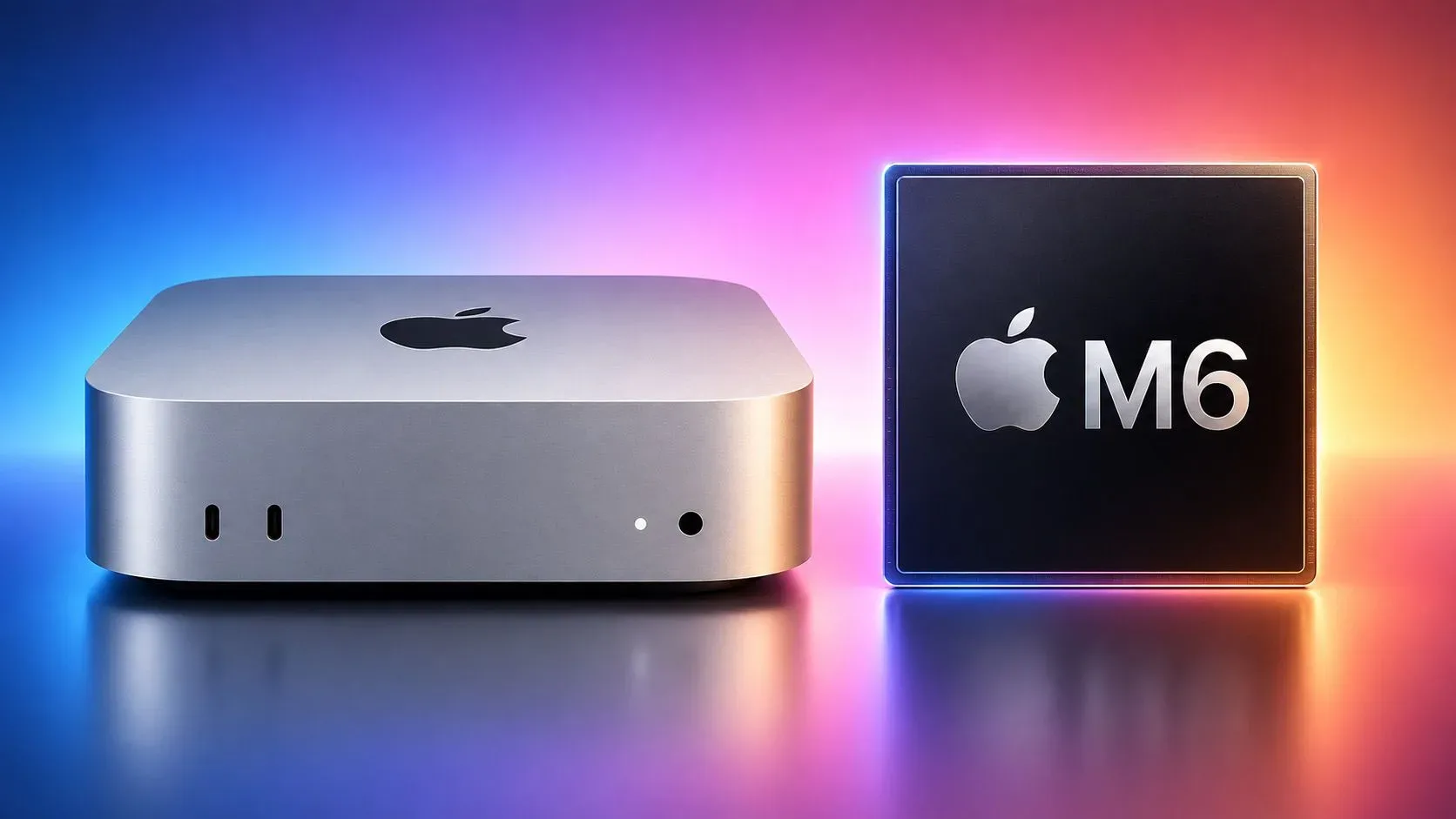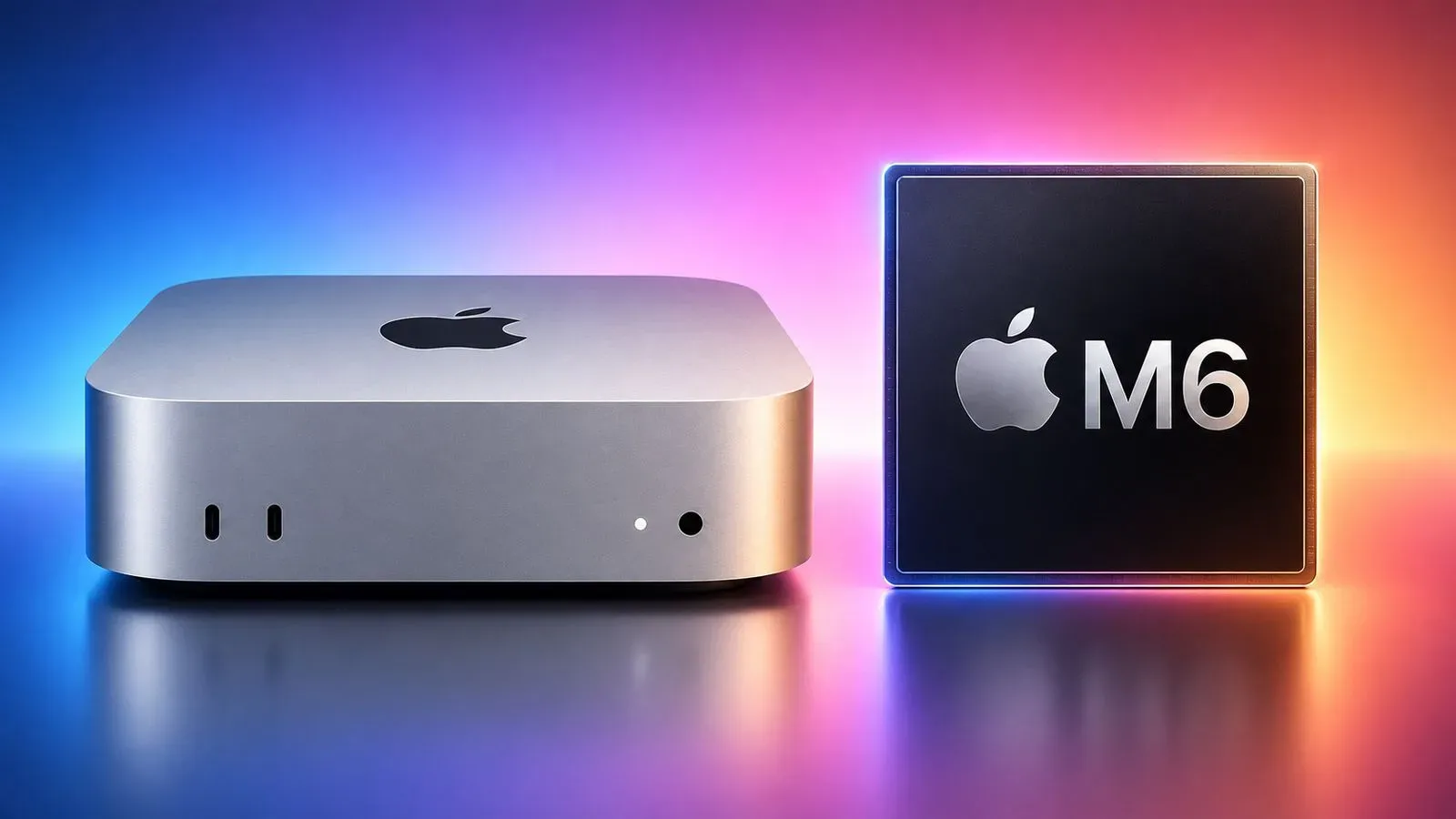
An unverified Geekbench 7 entry has offered an early, incomplete look at Apple’s forthcoming M6 chip ahead of the new Mac mini’s September 22 launch. The result lists a 4,071 single-core CPU score and a 22,783 multi-core CPU score for the 2nm processor.
Those figures are attention-grabbing, especially for a base M-series chip appearing first in a compact desktop. But there is a large asterisk attached: this is one result in a benchmark database, not a broad body of independently repeatable testing. It provides a useful performance signal, not a final buying verdict.
What the initial M6 result shows
For context, the supplied average scores for the M5 are 3,641 in Geekbench 7 single-core and 17,948 in multi-core. If the M6 result is representative, that works out to roughly a 12% single-core increase and a 27% multi-core increase versus M5.
- M6: 4,071 single-core; 22,783 multi-core
- M5: 3,641 single-core; 17,948 multi-core
Single-core performance measures work handled primarily by one CPU core. It can matter to the responsiveness of many everyday actions and tasks that cannot be effectively divided across numerous cores. Multi-core performance measures throughput when an application can keep multiple CPU cores busy at once. That is the figure most relevant to heavily parallel workloads, though any individual app’s results will depend on whether it can actually make use of the available threads.
The M5 comparison does come with a caveat. The M6 entry is associated with the new Mac mini, while the supplied M5 averages are based on a 14-inch MacBook Pro. The expectation is that performance should be similar, but it is not a strict same-machine, same-thermal-environment comparison. A laptop and a desktop do not share precisely the same physical design, and one benchmark record cannot settle how all configurations will behave over time.
A high single-core score, with the usual benchmark warning
The 4,071 single-core figure exceeds the scores cited for Apple’s M5 Max at 3,731 and Qualcomm’s Snapdragon X2 Elite Extreme at 3,396 in the Geekbench 7 database. On that database-based comparison, M6 lands at the top among Macs and PCs listed.
That outcome also aligns with Apple’s claim that M6 delivers the fastest single-threaded CPU performance. “Single-threaded” is another way of describing work running substantially on one processing thread, and is closely related to why readers look at single-core scores.
Still, benchmark rankings need careful reading. Geekbench is a standardized synthetic test: it runs a designed collection of workloads so different systems can be compared using a common scoring method. That makes it valuable for identifying relative CPU performance, but it is not a direct measurement of every program a person might use. A score does not, by itself, disclose everything about sustained behavior, graphics performance, memory capacity, storage speed, software optimization, or a particular game engine’s bottleneck.
It is also important not to turn an unverified database listing into a promise. The record could be accurate, atypical, or incomplete. More M6 entries, testing across retail hardware, and results from a range of workloads will be needed before the early number can be treated as a dependable baseline.
How M6 fits into Apple’s multi-core lineup
The reported 22,783 multi-core score would place the standard M6 well above the cited M5 score of 17,948, while leaving it below several higher-tier Apple silicon chips. That distinction matters. Chip family names alone can obscure the fact that Apple’s Pro, Max, and Ultra variants are aimed at substantially different levels of parallel CPU capability.
Among the supplied Geekbench 7 multi-core figures, M6 would sit below M1 Ultra’s 23,328 but ahead of M2 Max’s 17,387. It also remains behind chips including M3 Max at 24,649, M4 Pro at 24,894, M2 Ultra at 28,789, M4 Max at 29,047, M5 Pro at 33,593, M5 Max at 35,119, and M3 Ultra at 39,059.
That makes the apparent M6 result more interesting than a simple generation-over-generation bump. A standard chip in the new Mac mini would approach the multi-core performance of older high-end Apple silicon, at least in this specific CPU benchmark. At the same time, the higher-tier chips retain clear leads in the numbers provided, which is a reminder that “newer” and “fastest for every demanding task” are not interchangeable.
Against the original M1’s cited multi-core result of 8,582, the M6 score is more than 2.5 times higher. That comparison illustrates the scale of the M-series CPU progression within the available data, but it should not be read as a universal claim that every workflow will finish 2.5 times faster. Real-world speed depends on the task and on which component is limiting it.
Why CPU results do not answer every Mac gaming question
For gaming, a strong CPU result is encouraging but incomplete. CPUs handle work such as game logic, simulation, asset preparation, and draw-call-related tasks, while the GPU is responsible for rendering graphics. Which side matters more changes from game to game and from setting to setting.
No Geekbench 7 GPU result for M6 has appeared in the supplied information. That missing data is important. Until graphics figures emerge, this leak cannot establish the M6 Mac mini’s graphics performance or show how it compares with other Apple silicon options in GPU-limited workloads.
Likewise, a CPU benchmark does not establish compatibility, native support, game availability, or how a title behaves under extended play. It is simply one slice of the performance picture. Mac owners considering a system for games should regard this M6 result as preliminary CPU evidence, then wait for graphics benchmarks and more complete testing before drawing conclusions about gaming capability.
The launch also arrives as Mac users are dealing with software-maintenance considerations beyond processor speed. For example, macOS 27’s removal of Time Capsule backups is a separate upgrade issue worth understanding for anyone refreshing a Mac setup.
What will launch on September 22
Apple’s new Mac mini configurations with M6 and M5 Pro chips are scheduled to launch on Tuesday, September 22. New Mac Studio models with M5 Max and M5 Ultra chips are also scheduled for that date.
The M5 Ultra remains a major unknown in the benchmark picture, as results for that chip have not yet appeared. Its position cannot be inferred from the M6 listing. The same applies to M6 graphics performance: it remains unmeasured in the available Geekbench 7 data.
For now, the early M6 score supports a specific and limited takeaway. If it holds up through additional results, Apple’s new Mac mini begins the M6 generation with a meaningful CPU uplift over M5: particularly in multi-core throughput, while also posting an exceptionally high single-core number. The fuller answer—especially for graphics-heavy uses—will have to wait for more evidence.