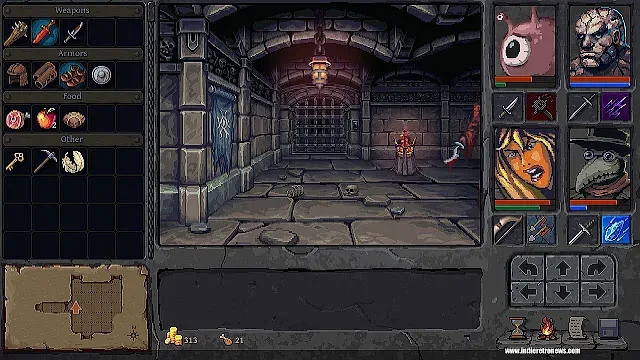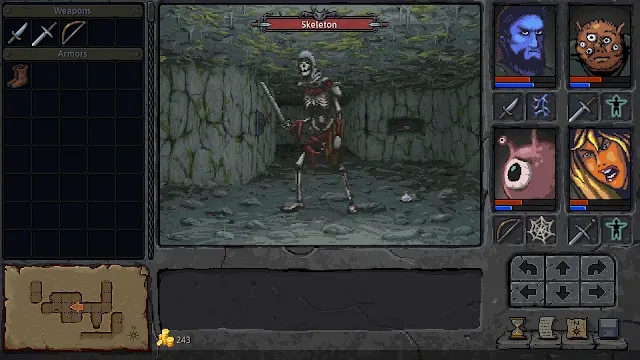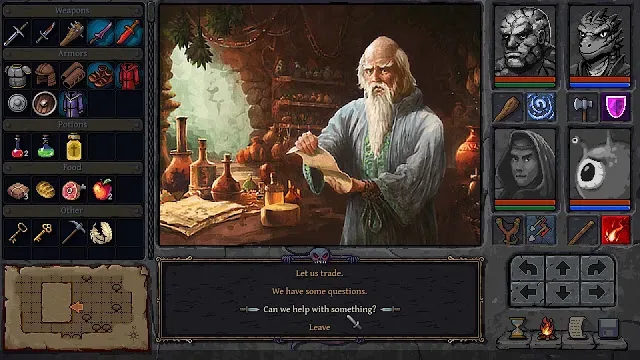
Rake in Grass has released Underkeep on PC through Steam and GOG. The new dungeon crawler is built around an intentionally old-school proposition: assemble a party, move square by square through handcrafted underground spaces, read the room before committing, and accept that a closed door or unexplored corner may be considerably more complicated than it looks.
That premise places Underkeep firmly in the first-person, grid-based dungeon-crawling tradition associated with games such as Dungeon Master, Eye of the Beholder and Ishar. The game is not presented as a straight exercise in nostalgia, though. Its stated aim is to retain slow-burn tension and tactical decision-making while adding modern controls, clear visuals, a designed-for-purpose interface and other conveniences intended to reduce older genre frustrations.
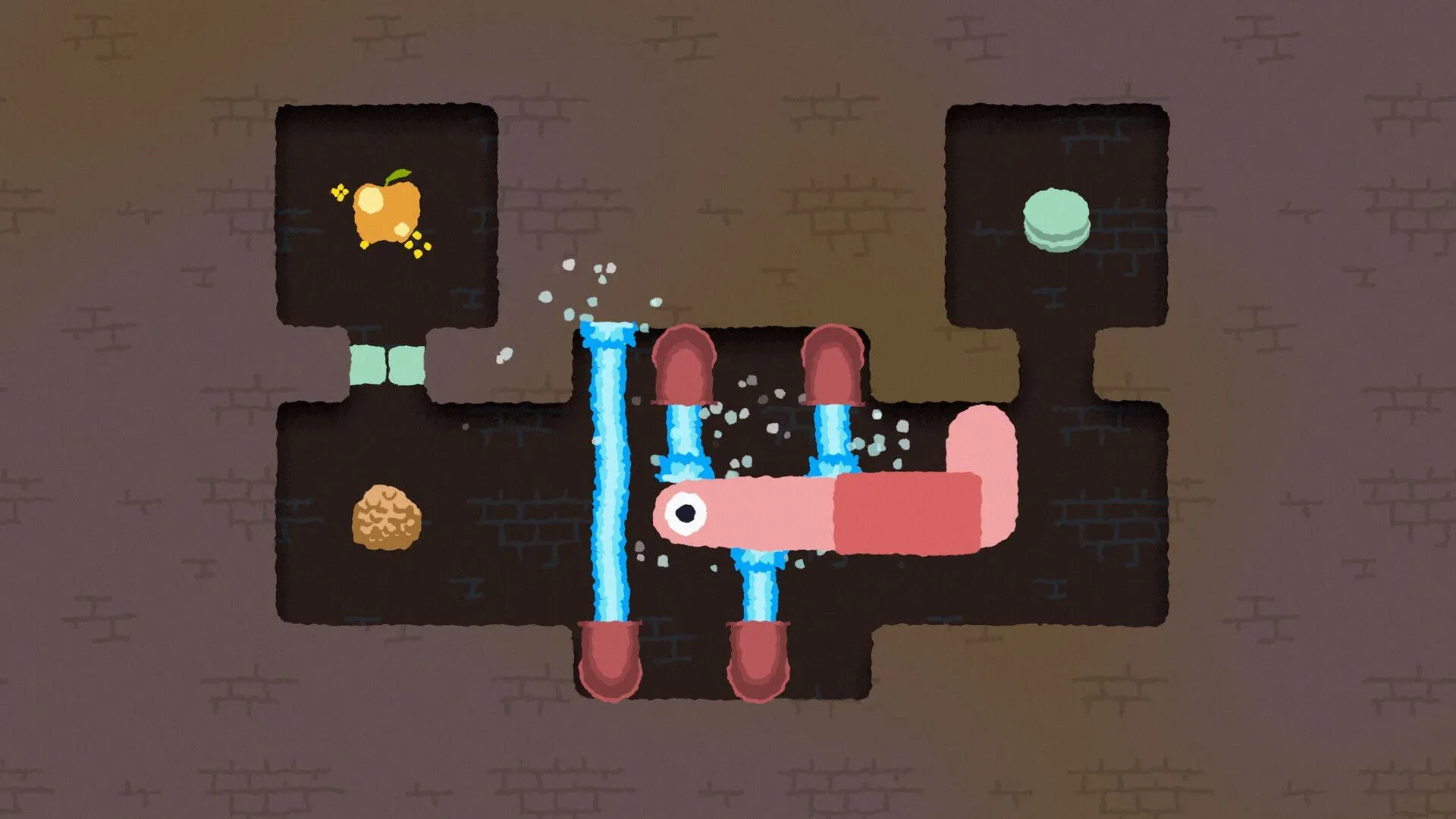
For PC players who enjoy compact, systems-led games with a strong central idea, it joins a broader indie field that includes projects such as Woim’s deliberately demanding puzzle approach. Underkeep’s particular hook is different: it wants exploration, party management and combat planning to share the same dark corridor.
What Underkeep is bringing to the dungeon
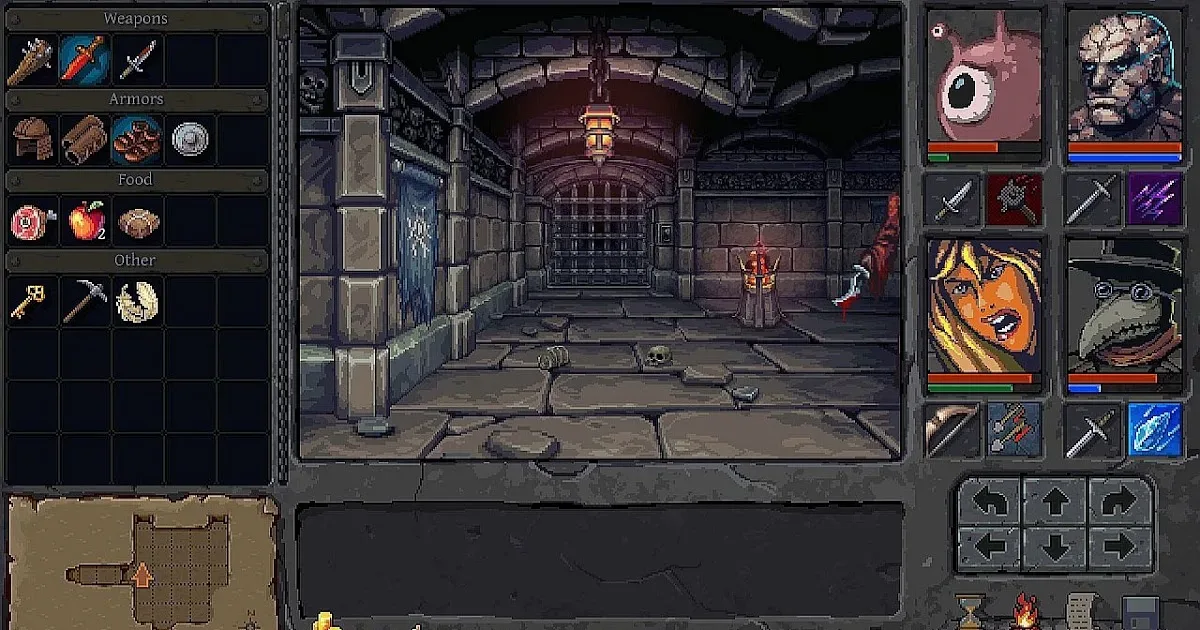
The core structure is first-person grid movement. Rather than freely gliding through a 3D environment, players move through the dungeon in discrete steps and turns. That format makes positioning unusually important. A passage is not merely a route to a quest marker; it is a confined tactical space, where the order of movement, the party’s condition and the decision to press forward can matter.
Underkeep’s dungeons are described as hand-built, with corridors and rooms containing lingering spirits, abandoned camps and cryptic symbols. These details suggest spaces meant to be examined rather than rushed through, although the available information does not spell out how each clue or encounter functions. What is clear is that the game combines exploration with hidden passages and ancient puzzles, and that it includes NPCs—described as peculiar locals—who can be spoken to during the journey.
The party is also central. Multiple adventurers are available, and their individual strengths and flaws are said to shape survival. That wording matters because it frames party selection as more than a cosmetic choice. A dungeon crawler with differentiated party members asks players to account for limitations as well as advantages: the answer to an encounter may depend on who is present, what they can do and what the group cannot safely handle.
Grid movement, explained
Grid-based movement means the game world is navigated in fixed increments. One input generally advances the party one tile or turns them in place. It is a familiar language for classic dungeon crawlers, and it changes how players read a map. A dead end can become a point of suspicion; a narrow hall can be a danger zone; and a sequence of turns can be worth remembering if it leads back to a locked route or an unexplained symbol.
The format can generate tension without requiring constant action. Every advance is a small commitment. Players are not simply moving toward the next objective at top speed: they are deciding whether to investigate one more chamber, search for a concealed route, speak to someone encountered below ground, or retreat and reconsider. Underkeep explicitly leans into that slower rhythm.
Related coverage includes Underkeep Brings Classic Grid-Based Dungeon Crawling to PC.
Its automap is therefore a meaningful inclusion. An automap is an in-game map that records explored areas as players travel. In a maze-like dungeon, it can relieve the burden of manually tracking each turn while preserving the task of interpreting the layout. The tool does not necessarily solve the dungeon; it simply gives exploration a clearer record. That distinction is particularly relevant for a game that also promises secrets, passages and puzzles. Mapping where the party has been is useful, but identifying what remains hidden is another matter.
Tactical combat is about choices before the clash
Underkeep promises tactical combat, with planning positioned as being as valuable as courage. In this context, tactical combat means encounters are meant to reward deliberate choices rather than reckless momentum. The supplied details do not identify a specific turn structure, attack system or set of character classes, so those mechanics remain unknown. Still, the stated emphasis gives a useful indication of the intended pace: players should expect to consider the party and the situation, not merely charge through every threat.
That approach fits naturally with first-person dungeon crawling. Exploration and combat need not feel like separate modes when the party is confined to corridors and chambers. A dangerous encounter affects how far it makes sense to venture from a known route. A party member’s weakness may alter the appeal of a particular path. And a discovery—whether a secret, symbol, camp or local character—can make the player reassess where to go next.
The game’s emphasis on choices that “echo deeper” suggests consequences are part of its tone, but the specific nature of those consequences has not been detailed. It is safest to read that as a design promise rather than a confirmed list of branching systems. Players interested in narrative decision-making should look for further mechanical specifics, while those drawn to atmospheric dungeon exploration already have a clearer outline of what Underkeep is trying to deliver.
Modern conveniences without abandoning the old rhythm
Underkeep’s pitch rests on a balancing act that many retro-inspired games attempt but do not always define clearly. It wants the methodical feel of classic dungeon delving while avoiding frustrations associated with older interfaces. Here, the promised improvements are modern controls, clear visual presentation, a well-designed UI and the automap.
UI, short for user interface, covers the information and controls players use to understand and operate a game: menus, party readouts, maps and other on-screen elements. In a dungeon crawler, a legible UI is especially valuable because the player is often tracking several things at once—where the party is, what the dungeon has revealed, which adventurers are present, and whether the next step is wise. Underkeep’s claim of a thoughtfully designed interface does not tell us every screen or feature it contains, but it establishes readability and responsiveness as explicit goals.
The larger implication is not that Underkeep is trying to make dungeons harmless. Its listed ingredients—hidden secrets, encounters where planning counts, mysteries in handcrafted rooms and a party with weaknesses—point in the other direction. The aim appears to be reducing friction around controlling and reading the game, not removing uncertainty from the dungeon itself. The walls can remain suspicious; the controls should not be.
Who Underkeep may appeal to
The clearest audience is players who already enjoy deliberate first-person dungeon crawlers, especially those who value mapping, dungeon atmosphere, party composition and puzzle-solving alongside combat. The named inspirations set expectations for a genre in which careful progress is part of the appeal. Underkeep’s handcrafted layouts and focus on concealed routes reinforce that it is designed for people willing to investigate rather than simply follow an obvious line.
It may also be a useful entry point for players curious about the structure of older dungeon games but wary of dated presentation. Modern controls, clear visuals and an automap are practical accessibility points, particularly for someone who likes the idea of navigating cryptic underground spaces but does not want interface friction to be the main challenge.
Conversely, players looking for rapid, reflex-driven action should calibrate expectations. Underkeep is explicitly built around grid movement, gradual tension and tactical planning. Those are not minor flourishes around a fast action game; they are the center of the design. The pace is intended to leave room for thought, and the game’s mysteries, party trade-offs and underground encounters are meant to give that thought a purpose.
What is confirmed, and what remains to be seen
Confirmed elements include PC availability through Steam and GOG; a first-person grid-based format; handcrafted dungeons; multiple adventurers with distinct strengths and flaws; tactical combat; NPC interactions; hidden passages; puzzles; secrets; an automap; and a UI designed for clarity. The presentation also foregrounds lingering spirits, abandoned camps and cryptic symbols as part of the dungeon atmosphere.
There are still important unknowns. Available information does not detail the number of adventurers, the exact combat rules, the scope of the campaign, the structure of choices, or how puzzles and conversations develop. Nor does it establish whether every convenience can be adjusted to suit players who prefer a more austere old-school experience. Those are reasonable questions for prospective players, but they should not be filled in with assumptions.
What Underkeep does establish is a confident design direction. Rake in Grass is offering a PC dungeon crawler in which the next square can be a tactical decision, a clue can point toward a concealed route, and a party’s imperfections are part of the expedition rather than an inconvenience to be designed away. For fans of methodical underground exploration, that is a promisingly specific invitation.