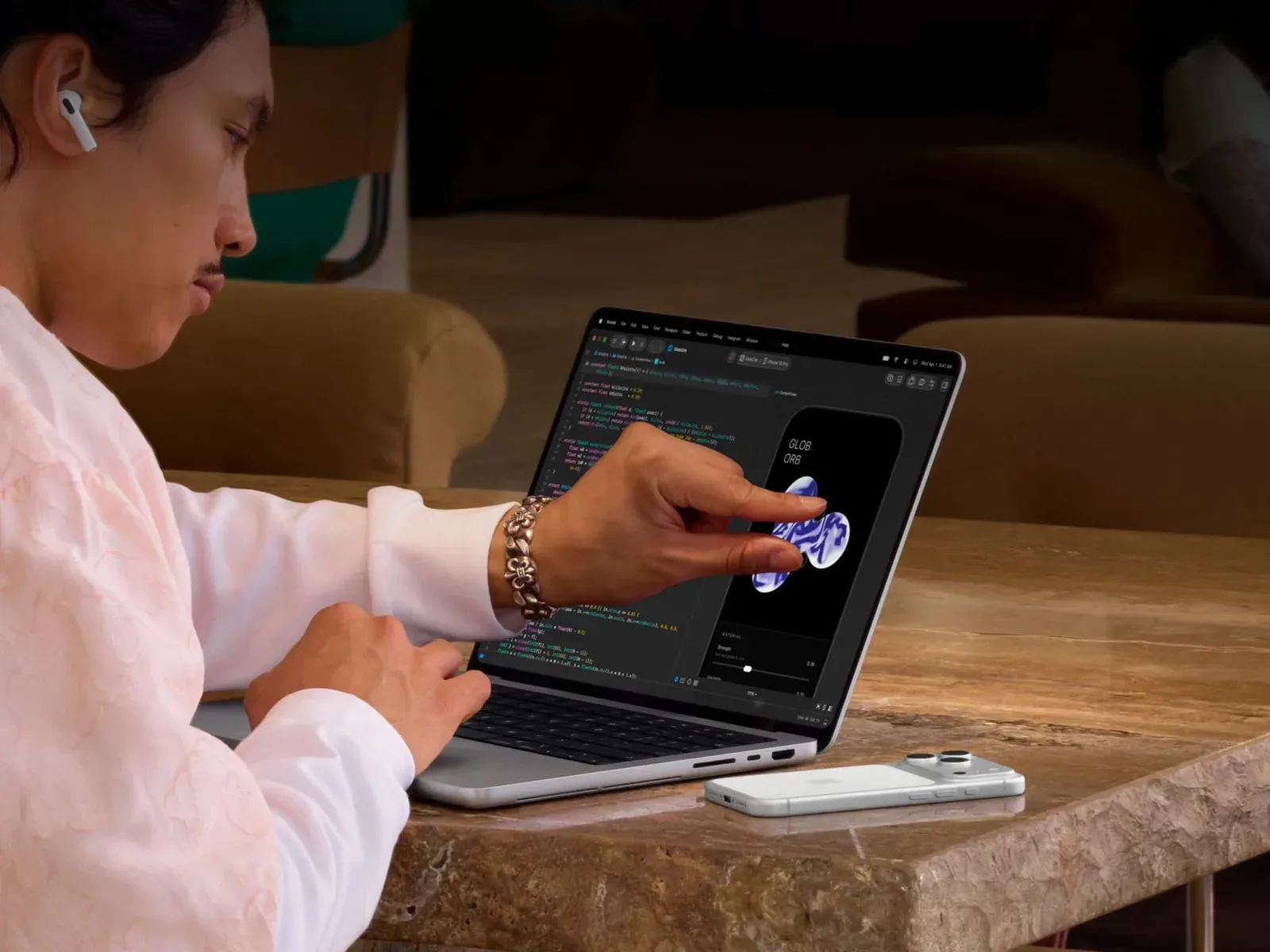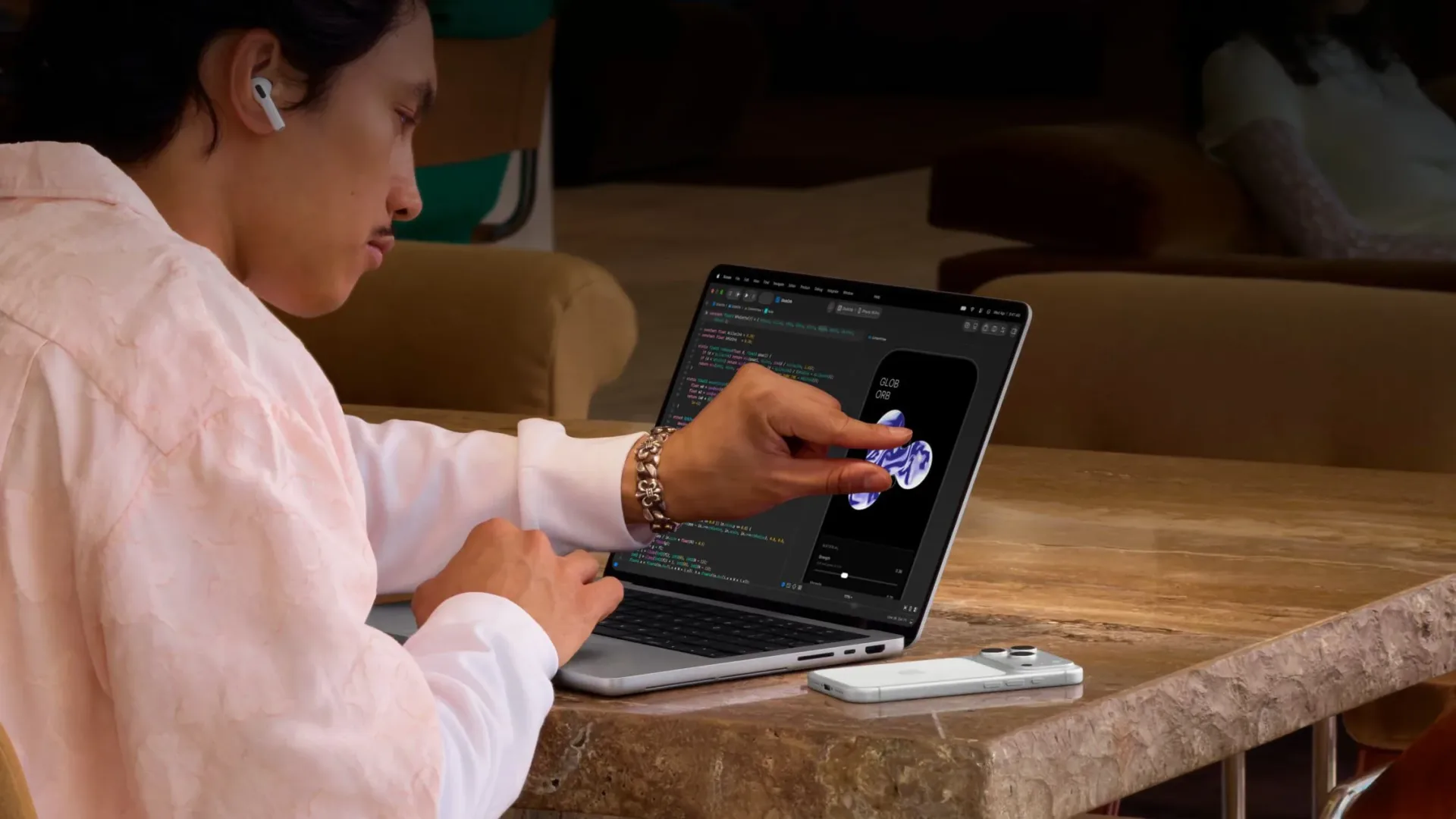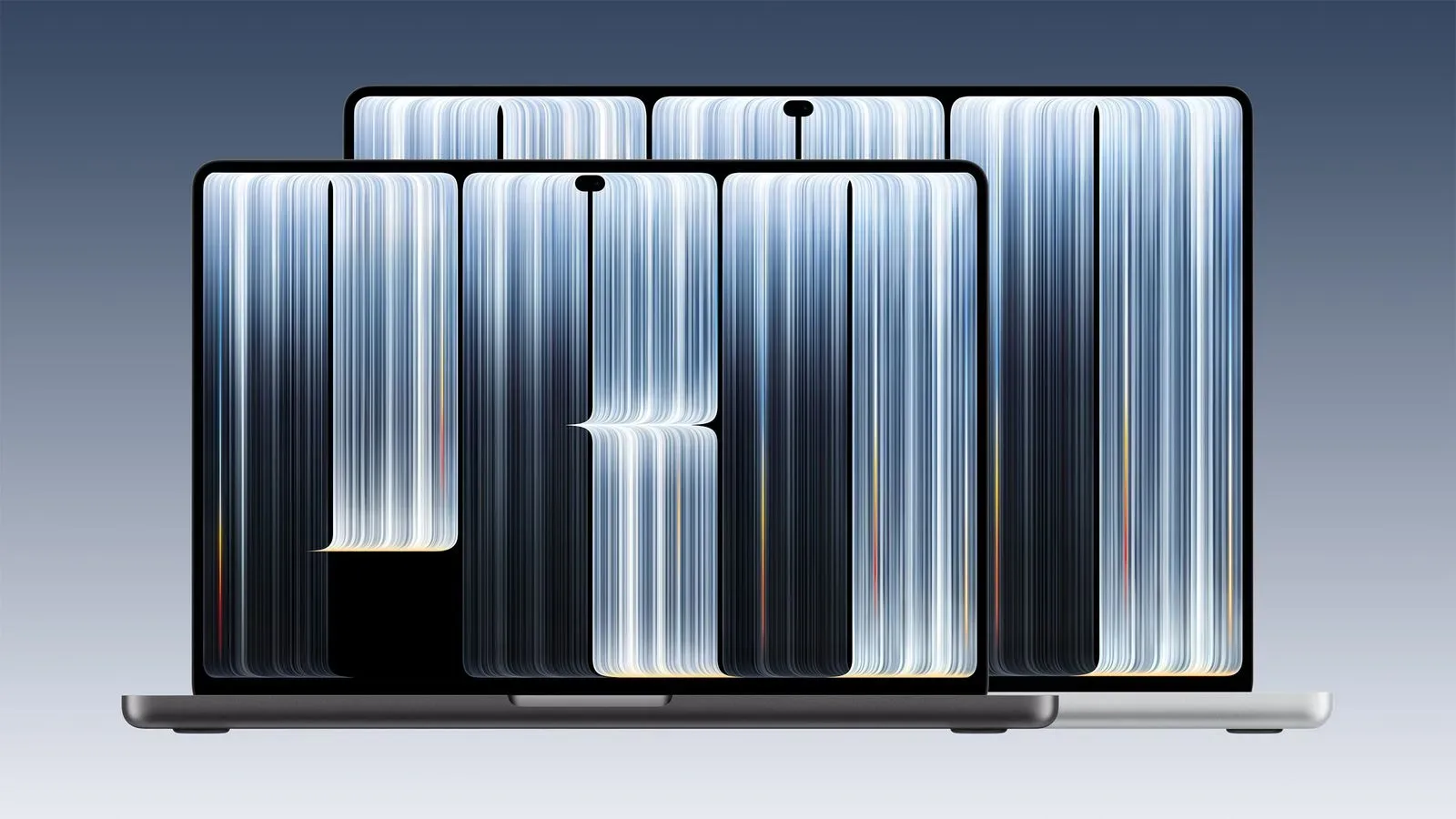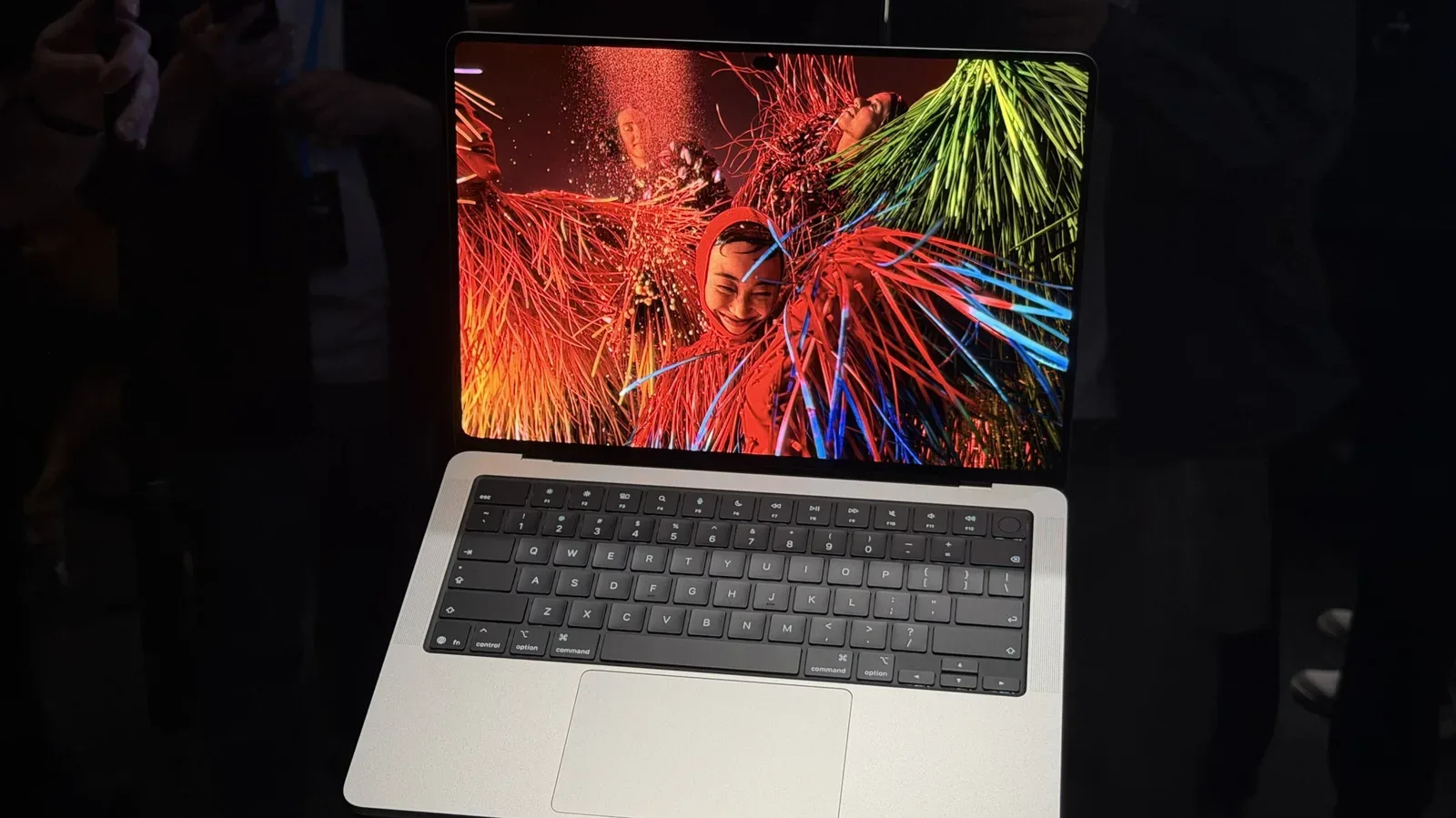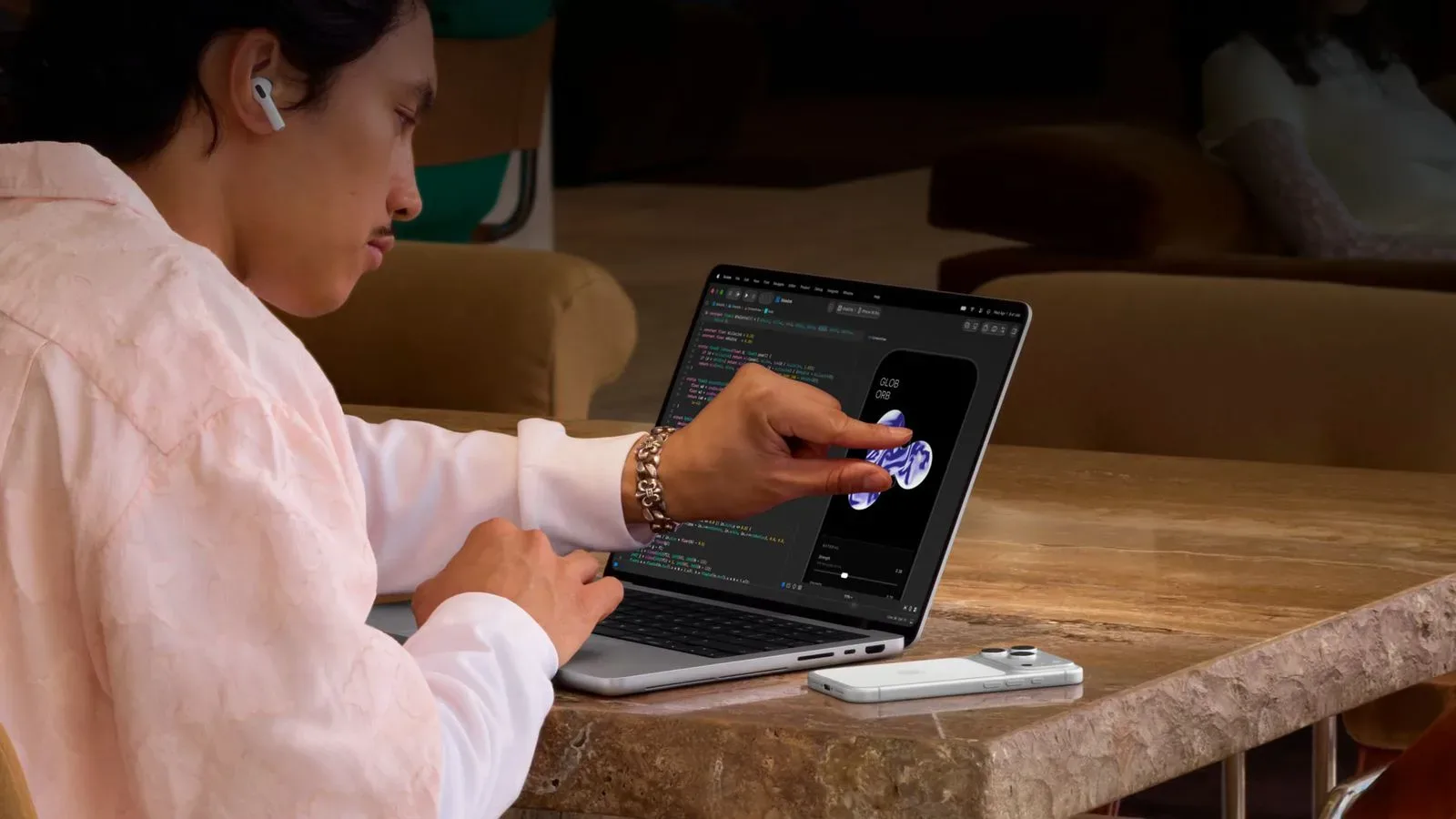
The new touch-capable PROLED MacBook Pro models retain the same advertised maximum battery-life figures as their comparable mini-LED counterparts, despite introducing an OLED display and touch integration. For buyers who saw a touchscreen as an inevitable hit to unplugged endurance, that is the headline: the published figures do not show a trade-off.
The comparison matters because the 14-inch and 16-inch versions use the same M5 Pro and M5 Max chip options across the PROLED and mini-LED lines. That makes the screen technology—and the added touch layer—the major differentiators in this particular battery discussion. The available information points to OLED efficiency potentially balancing the additional power associated with touch capability, although that remains an explanation rather than a measured breakdown of power use.
The listed battery-life figures
Battery estimates are split into two activities: streaming video and wireless web use. Those are useful reference points, but they are not interchangeable with every workload a prospective owner might run. They establish a controlled comparison between the display variants, rather than a promise that all applications, brightness levels, peripherals, or work sessions will produce the same result.
- 16-inch M5 Pro: up to 24 hours of streaming video; up to 17 hours of wireless web use.
- 16-inch M5 Max: up to 22 hours of streaming video; up to 16 hours of wireless web use.
- 14-inch M5 Pro: up to 22 hours of streaming video; up to 14 hours of wireless web use.
- 14-inch M5 Max: up to 20 hours of streaming video; up to 13 hours of wireless web use.
Those maximum estimates are the same for corresponding PROLED and mini-LED configurations. The top claim belongs to the 16-inch M5 Pro configuration at up to 24 hours of video streaming. The 16-inch M5 Max follows at up to 22 hours, while the 14-inch versions reach up to 22 hours with M5 Pro and up to 20 hours with M5 Max.
Wireless web estimates are lower across the board: 17 hours for the 16-inch M5 Pro, 16 hours for the 16-inch M5 Max, 14 hours for the 14-inch M5 Pro, and 13 hours for the 14-inch M5 Max. That gap is worth reading literally. Streaming video and browsing make different demands, so the video-streaming number should not be treated as a universal battery benchmark.
What “the same battery life” does—and does not—mean
It means the comparable models have matching maximum ratings for the stated test categories. It does not mean the two display technologies necessarily consume identical power at every moment, nor does it establish that touch use has zero energy cost in all circumstances.
A touch display must detect interaction, and an OLED panel is a different display technology from mini-LED. Yet a laptop’s battery outcome comes from the entire system: processor activity, display behavior, network use, software tasks, and the battery itself all matter. Here, the useful product-level finding is that the transition to PROLED and touch has not lowered the published endurance targets.
OLED is short for organic light-emitting diode. In an OLED display, pixels emit their own light. Mini-LED describes a display approach using a backlight made up of very small LEDs. The supplied specifications do not detail the panel behavior, brightness testing conditions, touch-controller power draw, or the methodology behind each runtime figure. Therefore, claims beyond the matching advertised estimates would go further than the available evidence supports.
For shoppers, the practical implication is straightforward: choosing between the PROLED and mini-LED variants should not require accepting a lower official battery rating for the same size and chip tier. The decision can instead center on the display and touch experience, alongside the usual choice between a 14-inch or 16-inch system and an M5 Pro or M5 Max processor.
Screen size still makes a clear difference
The 14-inch machines contain a 72.4-watt-hour battery, while the 16-inch machines use a 100-watt-hour battery. A watt-hour is a measure of stored energy: it describes battery capacity, not a direct guarantee of how long a laptop will last during a particular job. The larger 16-inch models have the higher capacity, and their listed battery estimates are correspondingly higher in the supplied comparisons.
The difference is especially visible with M5 Pro. The 16-inch M5 Pro is rated for up to 24 hours of video streaming and 17 hours of web use, versus 22 and 14 hours for the 14-inch M5 Pro. With M5 Max, the 16-inch model is rated up to 22 hours of streaming and 16 hours of web use, compared with 20 and 13 hours on the 14-inch.
That does not make the 14-inch models weak on endurance; their figures remain substantial in the stated tests. Rather, it clarifies the compromise between portability and capacity. Someone prioritizing the longest listed runtime has a reason to look at the 16-inch models. Someone prioritizing a smaller chassis can see that the smaller machines retain the same PROLED-versus-mini-LED parity, even though their absolute estimates are lower.
M5 Pro versus M5 Max: read the estimates by configuration
The ratings also differ between the M5 Pro and M5 Max options at the same size. In the figures provided, M5 Pro configurations carry higher maximum battery estimates than M5 Max configurations. The 16-inch difference is two hours for video streaming and one hour for web use. On 14-inch machines, it is two hours for streaming and one hour for web use.
That is a reminder not to reduce a shopping decision to one headline number. “Up to 24 hours” applies to a specific 16-inch M5 Pro configuration during streaming video. It is not the stated result for every MacBook Pro in the range. Buyers should compare like with like: same screen size, then M5 Pro versus M5 Max, then PROLED versus mini-LED.
This is particularly relevant for people balancing a laptop between production software, ordinary browsing, media consumption, and PC gaming-adjacent use. A game or other demanding real-time workload is not the same scenario as video streaming or web browsing, so these ratings should not be repurposed as gameplay-duration estimates. Readers following the broader PC side of games can also see how software support and hardware context remain separate questions in coverage of World of Warcraft: Forever.
Why the comparison is more useful than a single maximum claim
“Up to” is important language. It identifies a maximum result under a defined usage scenario rather than a minimum guarantee. Actual results can vary because a laptop is not used in a single fixed way. A person watching streamed video, a person browsing websites, and a person running a demanding program are giving the system different tasks.
Still, matching ratings across the two display generations provide a meaningful point of comparison. The mini-LED and PROLED machines share their M5 Pro and M5 Max chip choices, and their 14-inch and 16-inch versions retain the same stated battery capacities within each size. With those components aligned, the published numbers indicate that adding touch and moving to OLED did not reduce the advertised battery ceiling.
That will likely matter more than any blanket claim that one kind of panel is always “better” for battery life. Display power can vary with what is being shown and how the device is used. The disclosed ratings answer the consumer-facing question more narrowly: for the listed video and web tests, the newer touch-enabled models are rated the same as their mini-LED equivalents.
Price and availability
The 14-inch MacBook Pro starts at $2,899, while the 16-inch model starts at $3,399. Pre-orders are available now. Those starting prices establish the entry points for the two sizes, but they should not be assumed to describe every chip, display, or configuration combination referenced by the battery figures.
For a buyer deciding now, the cleanest takeaway is to first select the size and processor class that fit their needs, then compare the screen options without assuming touch automatically cuts into the official runtime. The available specifications say it does not: PROLED and mini-LED MacBook Pro models have the same maximum advertised battery-life estimates when matched by 14-inch or 16-inch size and M5 Pro or M5 Max chip.