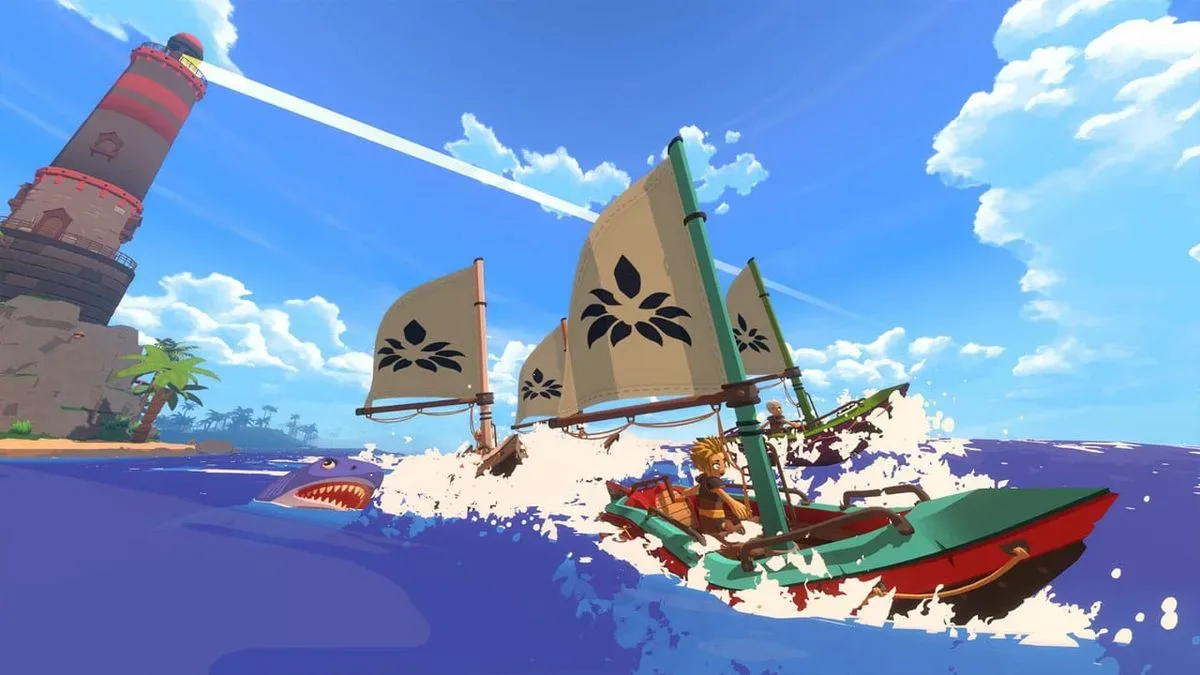
Tinker Island is scheduled to launch in Steam Early Access on December 10, 2026, bringing a tropical sandbox built around sailing, island exploration, settlement construction and character progression. Its bright, cel-shaded presentation and open-ocean setup immediately invite comparisons with The Legend of Zelda: The Wind Waker, but the described structure reaches beyond an adventure game: players will gather materials, make equipment, establish a home base and develop a preferred combat role.
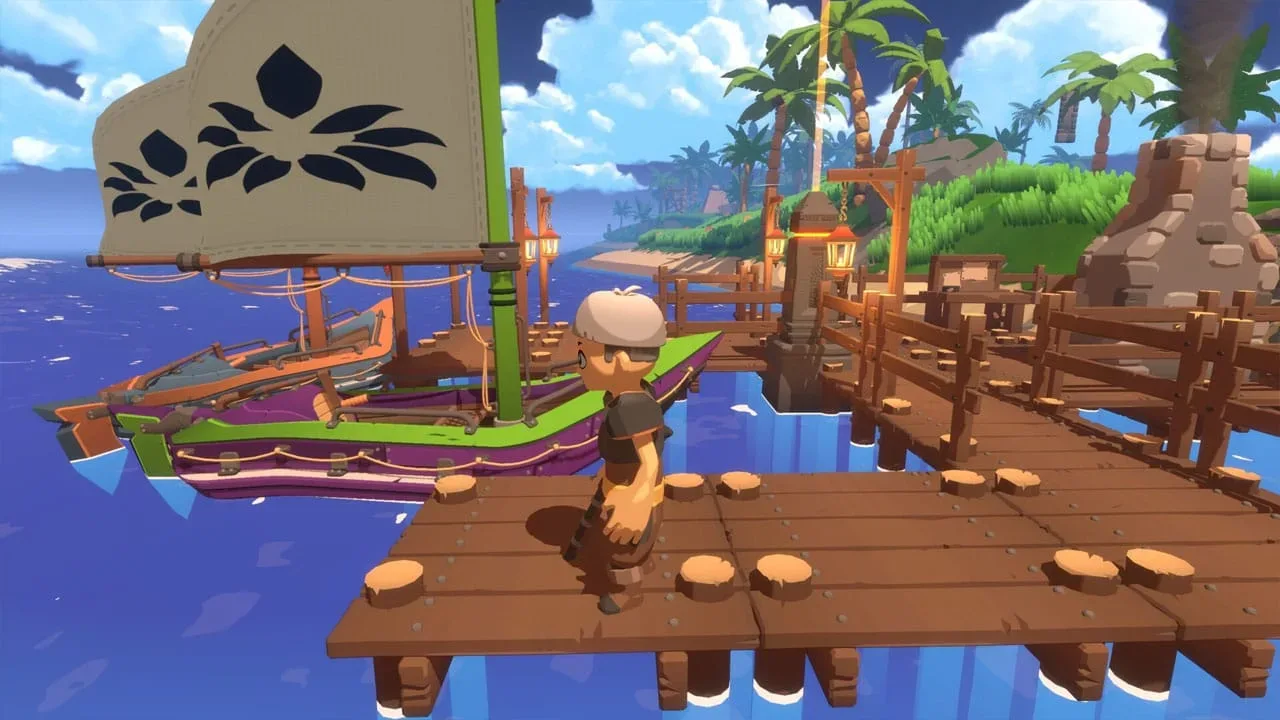
The premise is fundamentally one of choosing a direction and seeing what is over the horizon. Players sail between tropical islands, where beaches, jungles and cliffs can become the foundation for an outpost, hideout or larger township. The game also supports exploration with friends, placing its seafaring and survival-leaning systems in a multiplayer context.
An island sandbox centered on making a place your own
Tinker Island’s most concrete promise is flexibility in how players occupy its world. An island is not only a destination to visit for combat or a brief quest; it can be a place to settle. The announced building options cover small-scale hideouts as well as cozier towns, while advancement is linked to collecting resources, crafting tools and equipment, and locating stronger blueprints.
A blueprint, in this kind of game, is effectively a plan that unlocks the ability to create a particular item or structure. That makes exploration useful even when a voyage does not end in a major dungeon or fight. Finding a new blueprint can expand the practical choices available at a base, whether that means better gear or new ways to develop a settlement. The available details do not specify the full building catalogue or progression pace, so prospective players should regard those particulars as questions for the Early Access build rather than settled features.
Resource gathering is another key loop. Players will farm materials across the islands, then turn those supplies into weapons, tools and equipment. It is a familiar sandbox rhythm, but Tinker Island places it within a world where the next source of materials may require a boat trip rather than a short walk from camp. That travel layer could make the choice of where to build meaningful: a beautiful beach, dense jungle and towering cliff may each offer a different atmosphere, but the game has not yet detailed whether their resources or hazards differ mechanically.
Exploration, collecting materials, crafting equipment and discovering powerful blueprints form the stated path of progression, alongside the freedom to sail and build where curiosity leads.
Sailing is the connective tissue
The clearest visual calling card is the ocean. Tinker Island sends players across open water to uncover new islands, using a cel-shaded aesthetic that recalls the bold, stylized look associated with The Wind Waker. Cel shading is a rendering approach that gives surfaces a flatter, illustrated appearance rather than aiming for photographic realism. In this case, it fits the upbeat Caribbean setting and helps make the game’s sea, islands and characters look deliberately cartoon-like.
That resemblance is likely to be the initial hook for many players who remember Nintendo’s GameCube-era adventure, particularly because both games foreground sailing through a colorful world of islands. Still, a visual or thematic comparison should not be mistaken for proof that the games share the same structure. Tinker Island is described as a cozy sandbox with settlement building, material gathering, crafting and selectable archetypes. Those systems point to a play experience that may be more concerned with player-made homes, equipment improvement and repeatable exploration than a traditional, tightly authored quest.
Related coverage includes Tinker Islands Sets December Early Access Course With a Wind Waker-Like Sense of Adventure.
There is also animal riding, which should help players move around once they have made landfall. The announced information presents mounts as useful for traversing islands while collecting resources and avoiding danger. It does not identify the animals, describe how they are acquired or say whether they have their own abilities, so those are details to watch as the Early Access version takes shape.
Three character styles, from swordplay to fireballs
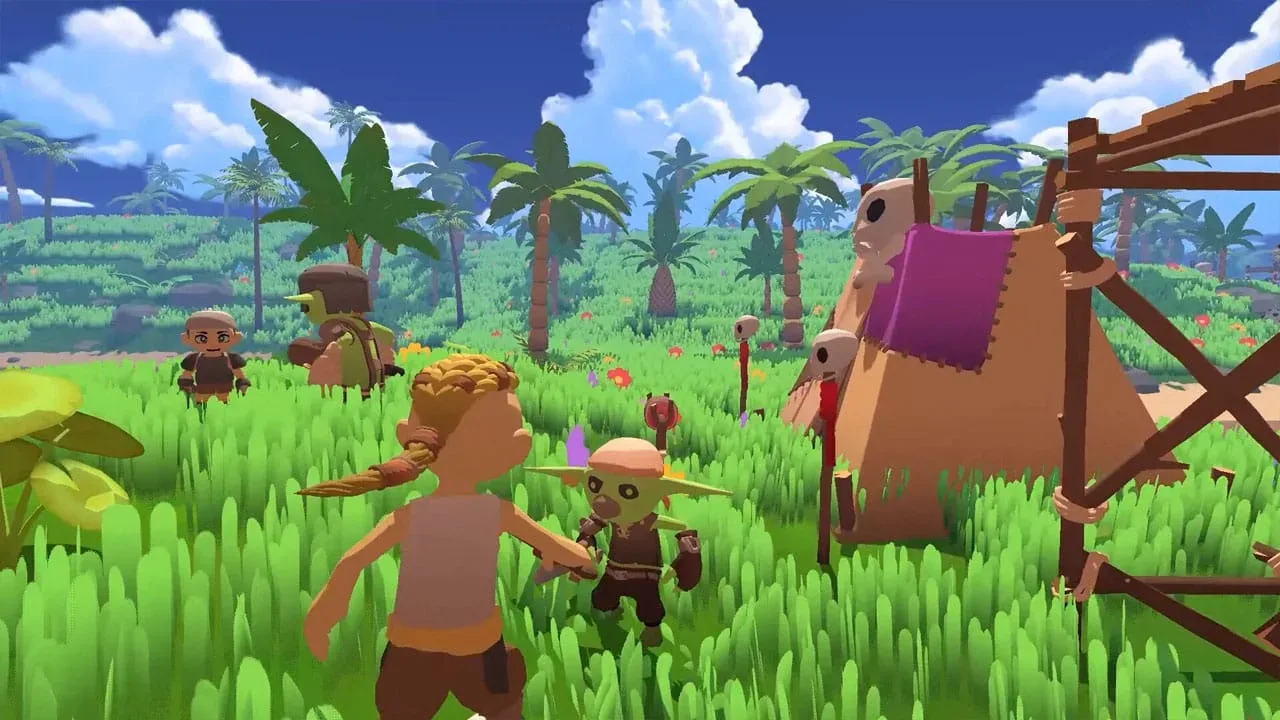
Tinker Island will let players pick a playstyle and improve it over time. Three options have been identified: a Mage who throws fireballs, a sword-wielding fighter with swashbuckling skills, and a hunter armed with a powerful blunderbuss.
An archetype is a broad character role defined by its combat tools and approach. Here, the mage suggests ranged magic, the fighter suggests close-quarters swordplay, and the hunter offers a firearm-based alternative. That spread gives friends a potential way to divide responsibilities when exploring together, although no detailed co-op roles, skill trees or class restrictions have been announced. The term “playstyle” is more useful than “class” at this point: it conveys an intended approach to combat without assuming players will be locked into a rigid role system.
Players will also need to craft weapons and upgrade gear as they advance. Gear progression generally means replacing or improving a character’s usable equipment over time. In Tinker Island’s case, it is presented alongside hidden dungeons, implying that better equipment and greater combat capability may be important for tackling more dangerous discoveries. The precise upgrade materials, stats and difficulty curve have not been outlined.
Hidden dungeons add an adventure-game thread
While building and resource collection form the sandbox side of Tinker Island, hidden dungeons give its island-hopping premise an explicit sense of discovery. These areas are described as places to delve into, and the game includes dangers on the overworld as well. Enemies glimpsed in the game’s material have drawn comparison to Moblins, another reason the Zelda parallel is hard to ignore.
For players who want more than an attractive construction game, the dungeons and combat options are important. A settlement can act as a visible record of progress, while dungeons offer a reason to venture beyond it. That combination could make an expedition feel like more than a materials run: sail somewhere unfamiliar, navigate the island, survive its threats, find a concealed dungeon and return with something useful for future crafting or upgrades. This is an interpretation of the systems described so far, not a confirmed mission flow.
The key uncertainty is scale. “Every world” is said to combine unique qualities with hand-crafted elements, but that does not establish how the worlds are generated, how many island types exist, or exactly what remains consistent between playthroughs. The phrase suggests a blend of authored design and variation rather than a purely identical map every time. Early Access may be the period in which players get a clearer picture of how much variety that approach produces.
What Early Access means for interested players
Early Access means a game is released before its developers consider it complete, allowing people to buy or play the in-development version while work continues. It can be a useful way for a sandbox game to expand through feedback and iteration, especially where building tools, balance, progression and multiplayer are involved. It also means interested players should be careful not to assume that every system suggested by the premise will be fully featured or finalized at launch.
For Tinker Island specifically, the confirmed near-term information is straightforward: it is heading to Steam Early Access on December 10, 2026, and a demo is available to download ahead of that date. A wishlist is also available on Steam for those who want to track it. No price, complete feature roadmap or final-release timing has been provided in the announced details.
Players looking at other PC gaming developments can also follow the latest reported activity around WoW: Forever. Tinker Island occupies a very different corner of the PC landscape, but its Early Access arrival adds another game focused on a persistent sense of progression—this time through voyages, handcrafted discoveries and the home a player chooses to build.
Why the Wind Waker comparison matters—and where it stops
It is reasonable to see why Tinker Island has attracted attention from people fond of The Wind Waker. The shared ingredients are visible: a small boat crossing a stylized ocean, tropical islands on the horizon and a vivid cel-shaded look. Those qualities can create a strong emotional shorthand for adventure, travel and discovery before a player has even touched the controls.
But the comparison should remain a reference point, not a verdict. Tinker Island’s announced identity rests on its own mix of settlement building, crafting, resource farming, animal riding, co-op exploration, weapon creation and role-based combat. The real question for its Early Access debut will be how smoothly those elements reinforce one another. Does sailing consistently lead to worthwhile discoveries? Does building feel like a creative goal rather than a checklist? Do the mage, fighter and hunter approaches feel substantially different? And do the handcrafted elements provide memorable destinations within worlds described as unique?
Those answers will have to wait for the game’s Early Access release. For now, Tinker Island is a colorful sailing sandbox with a clear visual influence, an explicit interest in player-directed exploration and a December 10 Steam date on the calendar.