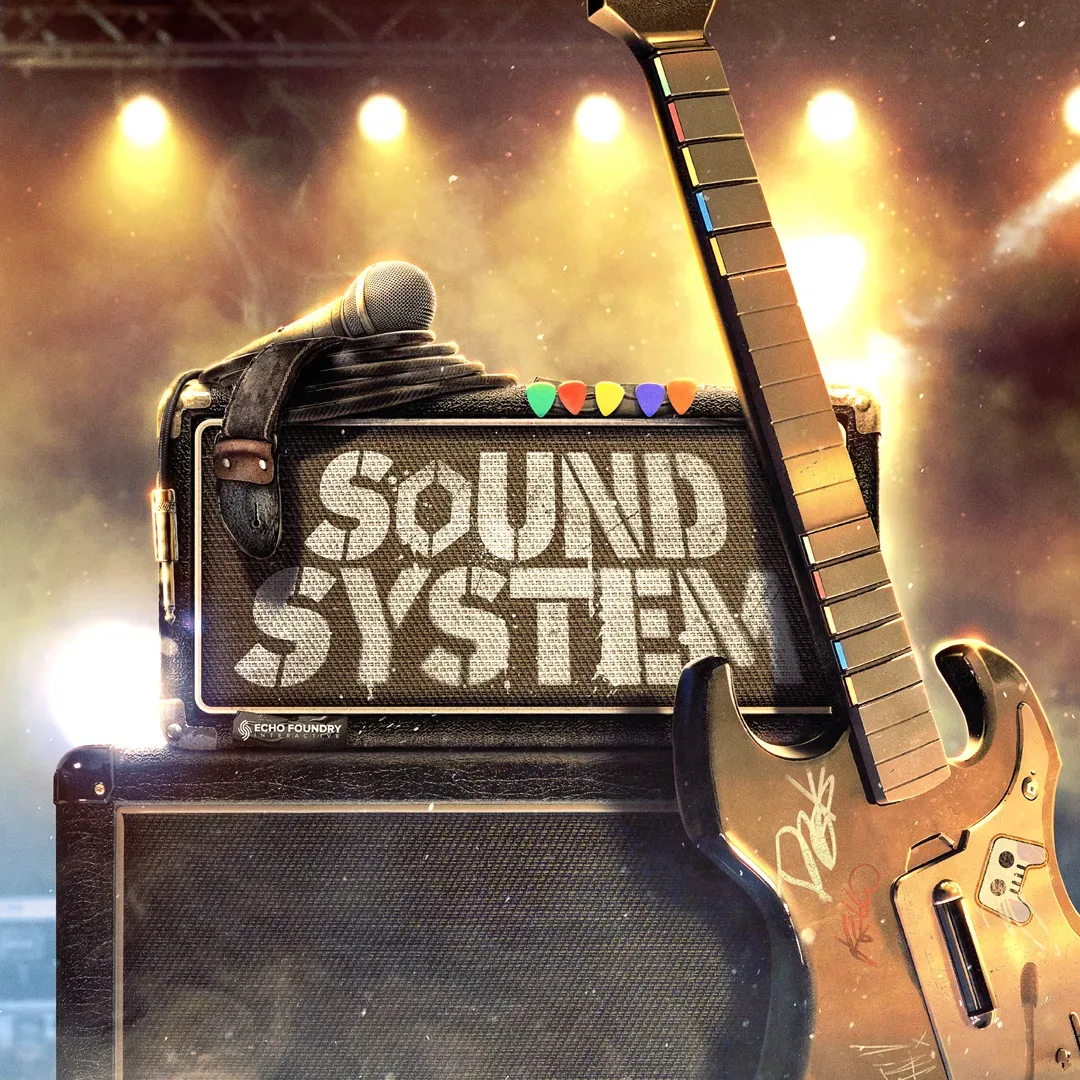
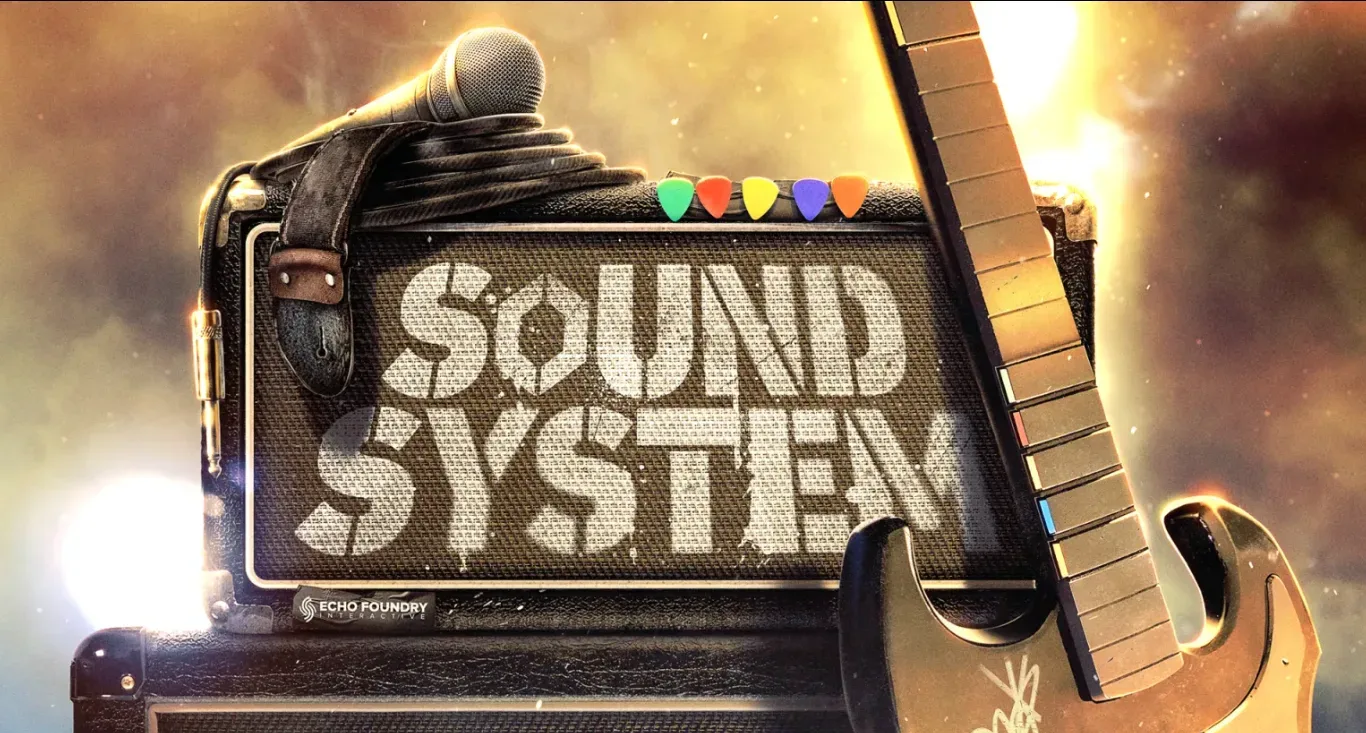
Sound System is now available in Early Access on Steam, giving rhythm-game players a starting feature set built around guitar, bass and drums play in both solo and local group sessions. Echo Foundry Interactive developed the game with support from Bonus Stage Publishing, and its November 16 launch marks the first stage of a planned three-phase rollout.
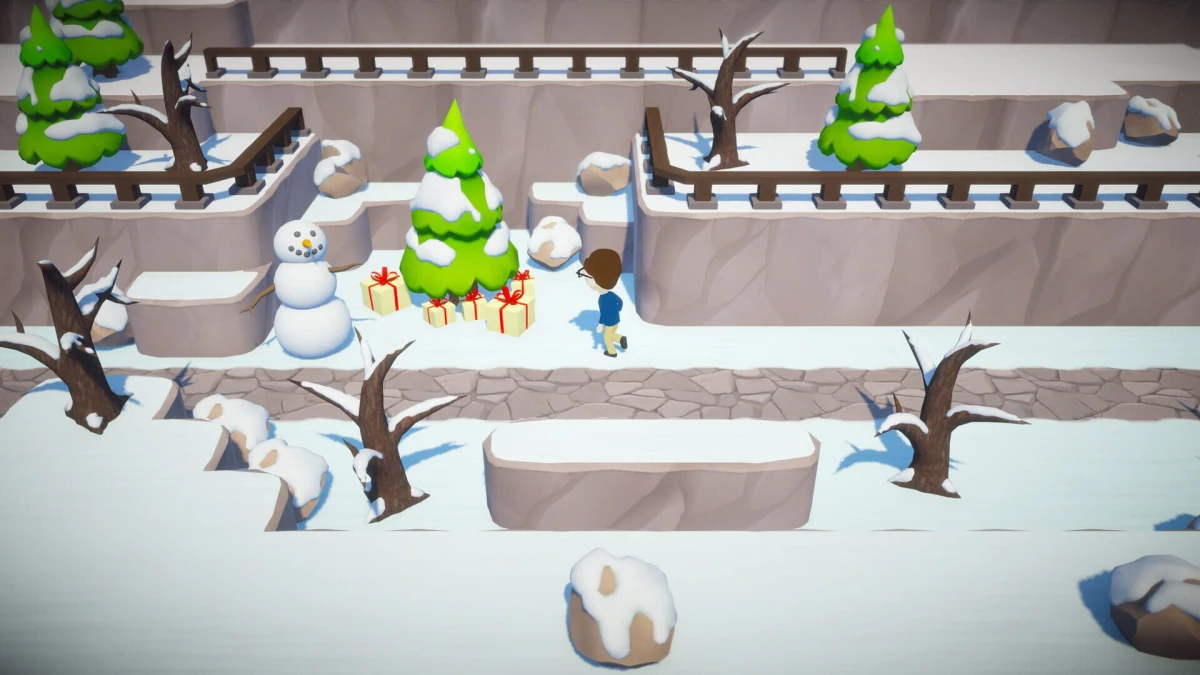
At entry, Sound System supports one player on guitar, bass or drums, as well as local multiplayer for one to three players spanning those same instruments. The Early Access build includes 33 songs, four difficulty settings, the PulseMap note editor, and a selection of presentation options comprising seven FMV backgrounds, five visualizer backgrounds, one static background and 14 note highways.
The immediate proposition is straightforward: a music-performance game intended to work for an individual player or a small group sharing the same space. The longer-term plan is more significant than the raw launch checklist, though. The developer has separated custom music support and online multiplayer into later phases, making the current version an Early Access foundation rather than the final form of the game.
What is in Sound System at Early Access launch
Sound System’s first phase contains the core playable modes. Players can perform songs alone on a selected guitar, bass or drums part, or take part in local multiplayer with up to three participants. The supplied outline identifies local play as supporting guitar, bass and drums, which gives a three-player group a distinct instrument role for each person.
The launch content and customization features are:
- Single-player performance on guitar, bass or drums.
- Local multiplayer for one to three players using guitar, bass and drums.
- Four difficulty levels.
- 33 songs.
- PulseMap, a note editor.
- Seven FMV backgrounds.
- Five visualizer backgrounds.
- One static background.
- Fourteen note highways.
A note highway is the scrolling playfield where incoming notes and performance cues are displayed. It is a central visual component in this type of game: players follow it to read when and what they need to play. Having 14 options indicates that Sound System offers several ways to alter the appearance of that lane without changing the underlying song or instrument part.
The listed backgrounds serve a similar presentation role. FMV means full-motion video, in this case referring to video-based backdrops. A visualizer background generally reacts visually to audio, while a static background remains still. These are aesthetic options, not separately identified game modes, but they give players a way to change the screen environment around the performance track.
PulseMap gives the game an editing component
The PulseMap note editor is one of Sound System’s more consequential Early Access features because it points beyond simply playing through the built-in set. A note editor is a tool for placing, adjusting or otherwise authoring the note information that players follow during a song. The provided launch details do not spell out its full workflow, sharing functions or the scope of its output, so those specifics remain unknown. Its inclusion nevertheless establishes editing as part of the initial release.
Related coverage includes Sound System Enters Steam Early Access With Local Multiplayer and 33 Songs.
That matters in the context of the roadmap. Phase 2 is set to add the ability for players to upload their own music collections for personal use and local multiplayer. Put plainly, the planned feature concerns music files or collections chosen by the player, rather than an announced expansion to the initial 33-song lineup. The plan describes use for personal play and in-person multiplayer only.
It is worth keeping the two ideas separate. PulseMap is explicitly described as a note editor, while the later upload capability concerns player music collections. The available information does not state exactly how those systems will connect, whether uploads will require charts made in PulseMap, or what formats and setup will be involved. Players interested in bringing their own music should therefore treat that functionality as planned for Phase 2 rather than as part of the current Steam Early Access package.
A phased plan for custom music and online play
Echo Foundry Interactive has framed Sound System’s development in three stages:
- Phase 1: the current Early Access release, focused on the core experience, single-player and local multiplayer.
- Phase 2: upload capabilities for players’ own music collections, intended for personal play and local multiplayer.
- Phase 3: online multiplayer, planned for the full release.
This ordering makes a practical distinction between local multiplayer and online multiplayer. Local multiplayer means participants play together in the same location. Online multiplayer would allow players to connect over the internet, but it is not part of the initial Early Access offering. The full release is identified as the intended destination for Phase 3, yet no release date or schedule for either later stage has been provided.
For prospective players, the distinction avoids a common Early Access assumption: a game having multiplayer at launch does not necessarily mean it has networked multiplayer. Sound System has group play now, but that group play is local. Anyone whose priority is playing remotely with friends should view online functionality as a future plan, not a currently available feature.
The phased approach also means that the current version should be assessed on the features it actually contains: its provided songs, its instrument roles, its difficulty range, its local sessions and its visual and editing tools. The announced additions help explain where development is headed, but they should not be mistaken for present-day launch functionality.
Built around shared-room rhythm play
The focus on one-to-three-player local sessions is consistent with the stated goal for Sound System. Lennon Lange, co-founder of Echo Foundry Interactive, said the team hopes the game can bring families together again in the way such experiences did two decades ago.
“We are hoping that Sound System will bring families together again as they did 20 years ago,” Lange said.
That ambition is reflected in the launch structure more than in any unannounced promise. Three distinct instrument choices can support a small group arrangement, while four difficulty levels potentially give players options to select a challenge level suitable for their own ability. The available details do not say whether different players may mix difficulties in the same session, so that should not be assumed. But the presence of multiple difficulties gives the game a stated range of challenge settings.
Its visual selections can also make sense in a shared-screen environment. Different note highways and backgrounds let a household or regular group change the game’s look between sessions without requiring a change to the songs themselves. That is a modest feature on paper, but it can matter for a game built around repeat performances and a screen visible to multiple people.
What the 33-song count does—and does not—tell players
The Early Access launch includes 33 songs. That is the confirmed library for the starting build, but no song titles, genres, artists, licensing details or plans for additional built-in tracks have been specified in the supplied information. It would therefore be premature to draw conclusions about the musical range of the set or to promise particular styles.
What can be said is that Sound System launches with a defined catalog rather than solely an editor or a future upload pitch. Players have songs available immediately across the stated guitar, bass and drums modes. The eventual personal-music feature could broaden what people use with the game, but it is explicitly assigned to the next development phase.
For someone deciding whether to enter Early Access now, the most useful expectation is a contained core package: 33 included songs, local group functionality, selectable difficulty, appearance choices and an editing tool. The game’s roadmap gives it a clear direction, but the initial version should not be treated as if it already contains personal collection uploads or internet-based sessions.
Practical takeaways before jumping in
Sound System’s rollout has a few especially clear implications for different kinds of players:
- Solo players can play guitar, bass or drums from day one and have four listed difficulty options.
- Players sharing a room can use local multiplayer for up to three people across guitar, bass and drums.
- Creators and tinkerers have access to the PulseMap note editor at launch, though the exact feature scope has not been detailed.
- People waiting to use their own music will need to watch for Phase 2, because upload capabilities are not included in Phase 1.
- Remote groups will need to wait for Phase 3, when online multiplayer is planned for the full release.
There is a broader reason the roadmap is useful: it gives players a way to match expectations to their preferred way of playing. A household looking for a local music game can evaluate the Early Access version on its present merits. A player whose main interest is a personal library or online coordination has a reason to follow development rather than assume those features have already arrived.
Sound System joins the day’s broader Steam lineup as noted in our November 16, 2026 games release roundup. For now, its identity is that of a locally focused rhythm game with three playable instrument roles, a fixed launch song selection and a development plan that reserves two of its biggest expansions—music uploads and online multiplayer—for later phases.
The important caveat is the one built into the Early Access label itself. The Phase 1 feature list is specific, while dates and implementation details for Phases 2 and 3 are not. Sound System has laid out a route toward a larger toolset and connected play, but the experience currently available is the single-player and local-multiplayer base described above.