Main Sequence, a first-person factory-building game set in space, is scheduled to launch in Steam Early Access on November 12. Steam keys are now available ahead of that release, while video coverage, guides and Early Access impressions remain under embargo until 16:00 UTC on November 12.
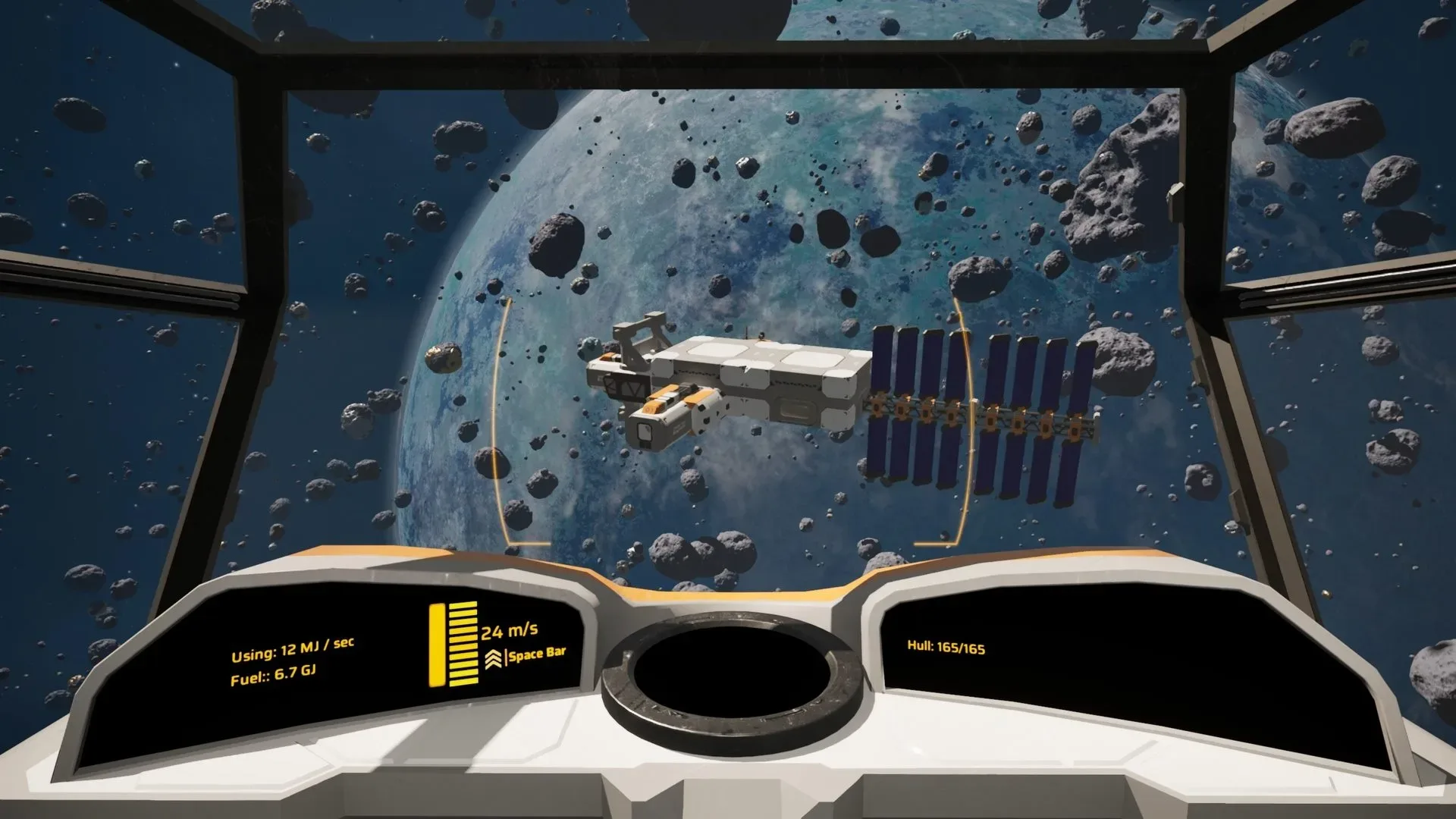
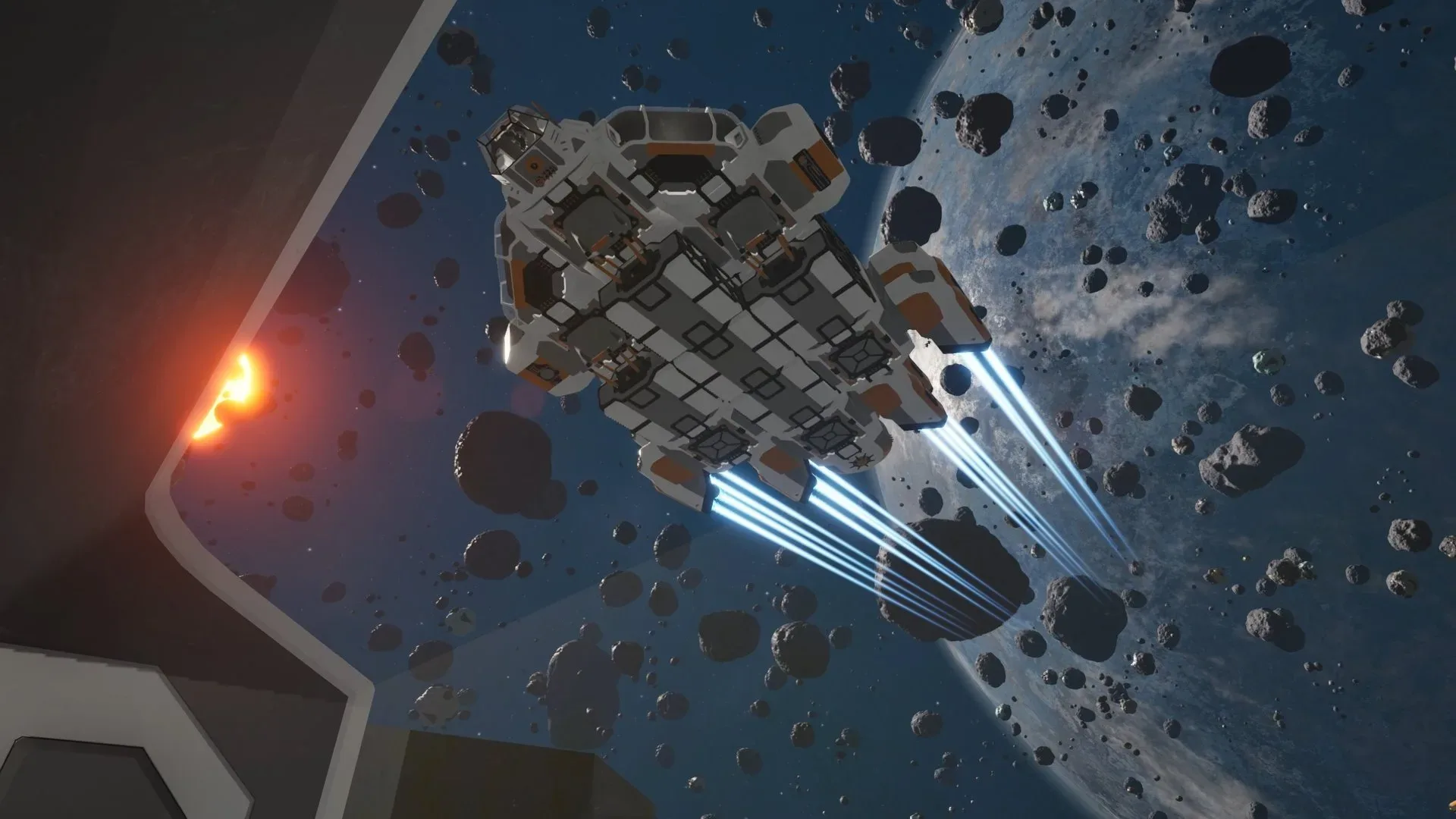
The premise begins on a relatively intimate scale: the player has a single mining ship in an asteroid belt rich in resources. From there, the stated goal is substantially larger—extract materials, refine them, construct a factory, unlock technology through research and keep expanding an industrial operation across space.
That makes Main Sequence a game about systems as much as scenery. Asteroids, stations and distant star systems provide the setting, but the central loop is intended to be industrial growth: locating inputs, turning those inputs into useful materials, and building an automated network capable of supporting further expansion.
A factory builder with a first-person view
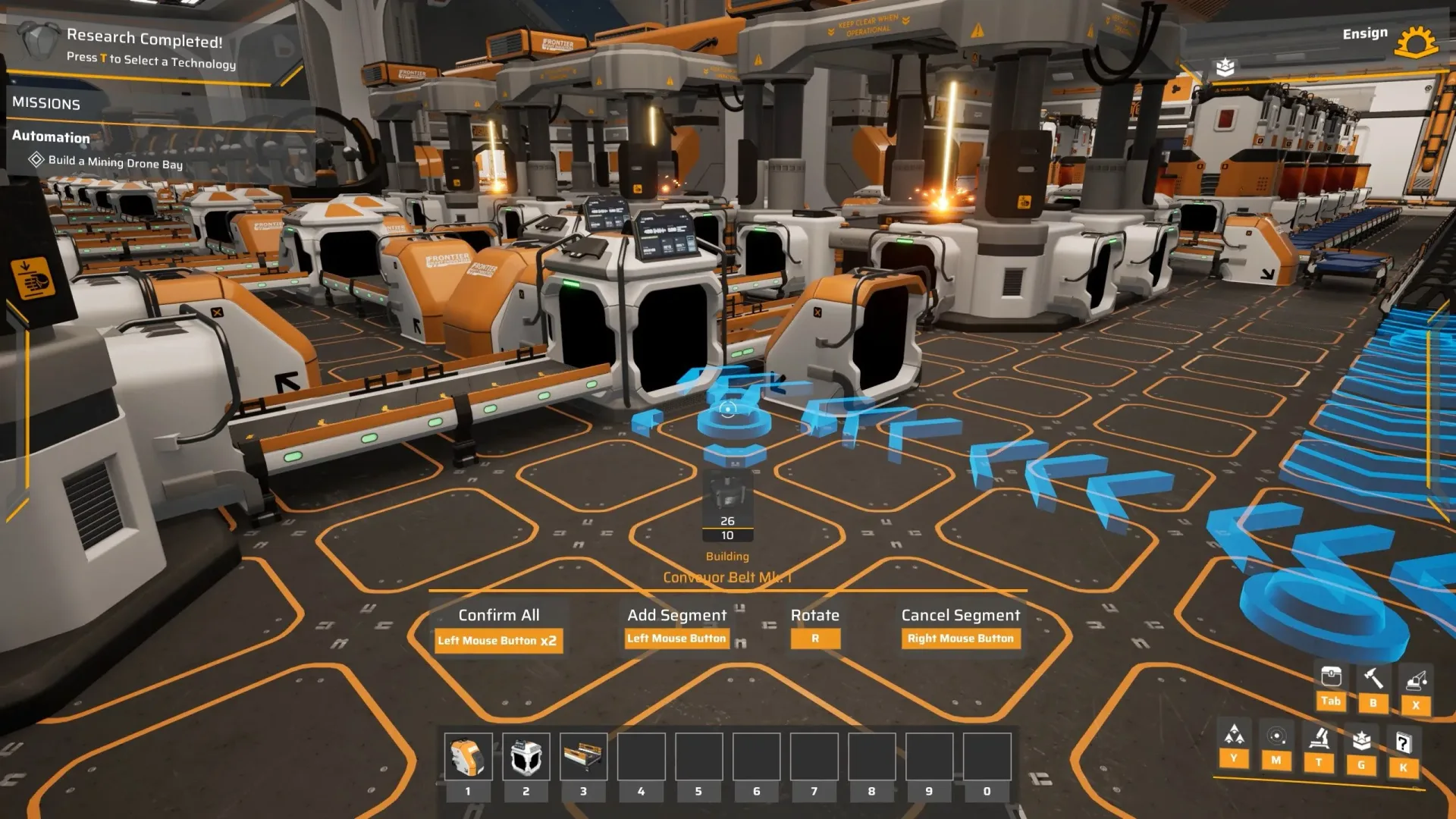
Factory builders generally ask players to create production chains. In practical terms, that means identifying a raw resource, moving it to the right place, processing it into another material, then using the result for construction, research or another stage of manufacturing. The challenge is not simply obtaining ore once; it is creating a repeatable system that continues producing as an operation grows.
Main Sequence places that familiar kind of management problem in a first-person, deep-space setting. Rather than framing the experience strictly as a distant overview of machinery, the game positions the player within its industrial frontier. Its announced features combine mining, refining, facility construction and automation with travel between systems.
Automation is the crucial word in that list. In a factory game, automation usually means building processes that keep working without the player manually repeating every task. The supplied details do not specify the individual machines, interfaces or logistics tools Main Sequence will use, so it would be premature to assume a particular building system. But the stated aim of automating “ever-expanding facilities” establishes the intended direction: a base should become an industrial network rather than remain a collection of one-off tasks.
The game’s early setup also suggests a progression from constrained beginnings to a wider operation. Starting with one ship and nearby asteroid resources gives the initial mining and refining loop a clear purpose. Research then serves as the route toward advanced technology, distant systems and deep-space materials. Expansion is not described as a purely decorative objective; it is connected to gaining access to resources and capabilities beyond the starting area.
Mining, refining and research form the expansion loop
The announced structure links several activities that are often treated as separate pillars in space games. Mining supplies materials. Refining changes those materials into forms that can support building. Factory construction turns resources into a durable productive base. Research opens advanced technologies, which in turn are meant to make long-range travel and more ambitious resource gathering possible.
Related coverage includes Main Sequence Sets November 12 Steam Early Access Launch.
That loop matters because it gives travel an economic function. Moving toward the edge of the solar system and beyond is not presented merely as sightseeing. Players are expected to research the means to reach distant star systems and seek deep-space resources there. The larger the industrial footprint becomes, the more the operation can theoretically support its own outward push.
There is an appealing tension in that setup. Growth can create opportunity, but it can also create more systems to organize. A factory that reaches further into space may need more resource routes, more processing capacity and more attention to how each part of the operation connects. Main Sequence’s premise is built around that escalating scale, from a single mining ship to what it describes as an interstellar industrial empire.
For players deciding whether the pitch matches their interests, the key distinction is between a game that merely includes crafting and one built around a production ecosystem. Main Sequence’s announced emphasis is firmly on the latter. Crafting can mean collecting materials to make a single useful object. A factory builder focuses on the broader infrastructure that continually supplies those objects and materials. The available description points toward mining, refinement and automated facilities as the foundation of play.
Space exploration will include stations and combat
Main Sequence is not described as a purely peaceful construction game. Alongside industrial expansion, the game includes abandoned space stations and deep-space combat. Those elements indicate that exploration may involve discovery and danger in addition to resource prospecting, though specific details about enemies, weapons, station activities or how combat intersects with factory management have not been provided.
Abandoned stations are especially notable as a contrast to the player’s own construction. The game’s premise centers on building new industrial capacity across the stars, while derelict locations introduce traces of existing—or former—space infrastructure. At this stage, it is only confirmed that players can discover such stations; their role, rewards and narrative significance have not been detailed.
Combat similarly broadens the tone without yet defining the balance of the experience. The announcement confirms deep-space battles, but it does not establish whether they will be optional encounters, a recurring pressure on industrial expansion or a major parallel progression track. Those are questions for the Early Access version to answer after the embargo lifts.
Solo and online co-op options are planned
Players will be able to explore Main Sequence alone or in online co-op. Co-op is a potentially natural fit for a factory-building game because different members of a group can divide attention among mining, construction, research and exploration. Still, the available information confirms the mode without outlining player limits, shared-world structure, progression rules or other multiplayer specifics.
Solo play remains equally central in the description. The game’s advertised arc—from a lone mining vessel to a spread-out industrial presence—has a clear single-player logic: one player can build a system that increasingly handles work through automation. Online co-op offers a different way to approach that same arc, with more people able to tackle parts of the operation at once.
The two options also matter for prospective players who prefer to learn complicated systems at their own pace. First-person construction and production games can ask players to keep track of resources, research goals and expanding facilities. The confirmation of solo play means that the experience is not framed as requiring a permanent group, while co-op gives players a collaborative alternative.
What Early Access means here—and what remains unknown
Early Access is a release model in which a game is made available before its development is considered complete. It commonly gives players access to a playable version while the developer continues working on it. That definition alone does not reveal Main Sequence’s roadmap, the amount of content in its initial build or what may change later, and none of those specifics have been provided here.
As a result, the confirmed information is best read as a statement of direction rather than a complete feature checklist. Main Sequence is set to offer first-person factory building in space, resource extraction and refinement, research, solo play, online co-op, system-to-system expansion, abandoned stations, combat and facility automation. It is not yet possible to responsibly fill in unanswered questions about the depth of any one system.
The embargo is also important context. Coverage in the form of videos, guides and Early Access impressions cannot be published before November 12 at 16:00 UTC. Until then, interested players have an official overview and trailer, but not embargo-cleared reporting on performance, balance, building complexity, multiplayer behavior or the practical shape of its opening hours.
That restraint is worth keeping in mind for any factory game, where broad genre labels can conceal meaningful differences. Two games may both feature mining, research and automation while feeling very different in the rhythm of construction, the demands of logistics, the role of exploration or the amount of combat. Main Sequence’s launch-day coverage should provide the first useful opportunity to assess those details rather than infer them from the pitch alone.
November 12 is the date to watch
For now, the concrete milestone is November 12, when Main Sequence enters Steam Early Access and the embargo on Early Access material lifts at 16:00 UTC. Steam keys being available ahead of launch signals that the release is approaching, but it does not change the fact that substantive coverage is timed to the same date.
Its central idea is easy to summarize: start with a ship in an asteroid belt, establish a supply chain, turn that chain into an automated factory operation and use research to carry the enterprise deeper into space. The addition of co-op, derelict stations and deep-space combat gives the planned experience a broader reach than a stationary base-builder, while the first-person perspective keeps the player close to the machinery and frontier they are building.
For another slice of PC gaming’s enduring fascination with putting software in unexpected places, see the growing chronicle of delightfully absurd devices that can run Doom. Main Sequence is aiming for a very different kind of technical fantasy: not getting one game to run on improbable hardware, but constructing an increasingly elaborate industrial system among the stars.