The old question is no longer merely whether a machine can run Doom. It is whether anyone can persuade a machine that plainly has no business running a game to do it anyway.
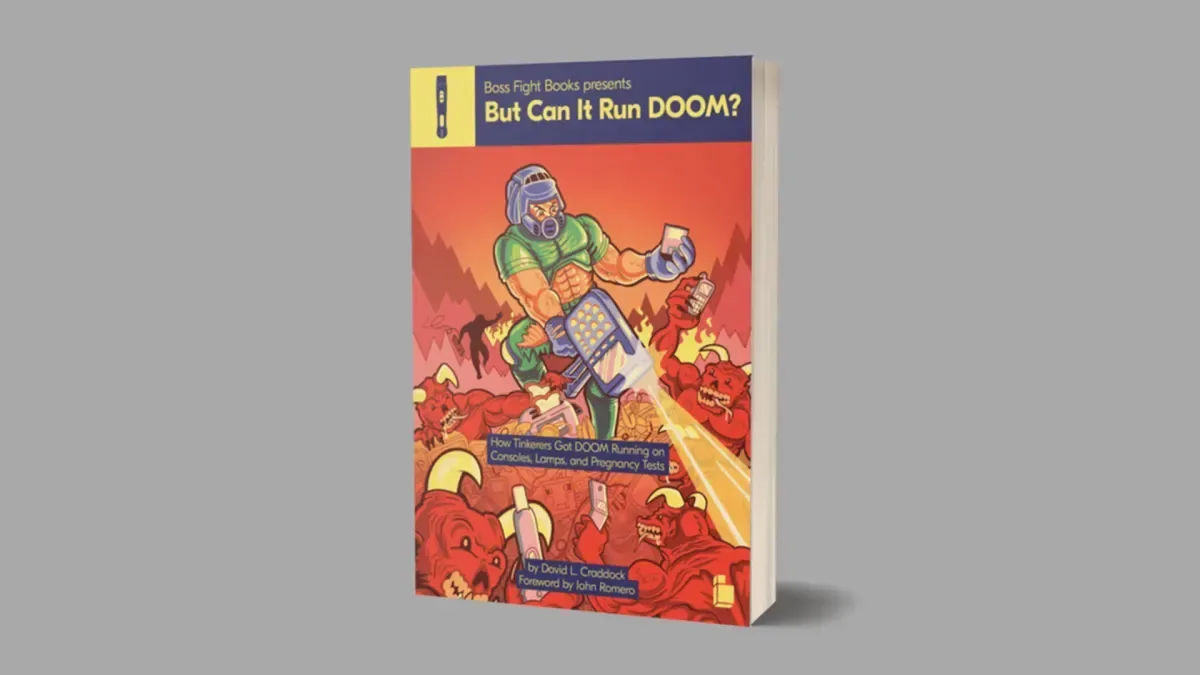
A forthcoming book by David L. Craddock is built around that wonderfully impractical impulse. Drawing on original interviews, the project chronicles the people behind adaptations of the retro game for platforms including a pregnancy test, a pair of earrings, an Ikea lamp, a Twitter bot, and even a field of Minecraft sheep. The crowdfunding campaign is live and has already exceeded its £3,770 target.
It is an appropriately strange subject for a physical book: a record of technical experiments that often begin as fleeting online demonstrations, then spread through posts, code, advice and increasingly ambitious follow-ups. The premise is funny because the targets are so incongruous. The work matters because each successful attempt reflects a mix of programming skill, hardware knowledge and persistence.
What the book is setting out to preserve
Craddock’s book is not presented simply as a catalogue of screenshots or an inventory of gimmicks. Its focus is the people and processes behind the ports, using original interviews to tell the stories of the tinkerers who made them happen.
That distinction is important. Seeing Doom displayed on an unexpected object is the punchline, but the interesting part is the path to that image. A project may involve understanding an unusual device, finding a way to make it accept new code or data, adapting controls and display output, and sharing enough of the process for other enthusiasts to learn from it. The examples named for the book show just how far the definition of a “platform” can stretch when curiosity is doing most of the driving.
Some of those examples are recognizable pieces of consumer technology. Others are objects people normally associate with a single practical task, decoration, wearable electronics, social posting, or another game entirely. Grouping them together gives the phenomenon a needed historical record rather than leaving it as a scattered collection of clever internet moments.
Why Doom became the running joke—and the technical challenge
“Can it run Doom?” has become a shorthand challenge in gaming and technology communities. In its broadest sense, it asks whether a device can be made to execute or present a version of the game despite being designed for something very different. The phrase has an intentionally silly surface, but it can cover a serious range of technical work.
A port is an adaptation that makes software operate on a different piece of hardware or software environment. That does not automatically mean every port is identical. The constraints of the target machine can affect how a project handles display, input, speed, sound or other elements. The core achievement, though, is getting the game’s logic and presentation onto an unfamiliar target.
Related coverage includes Book Project Tracks the Strange Machines That Have Been Made to Run Doom.
There is also a useful difference between a device that is powerful enough to run a game in ordinary circumstances and an object that needs radical improvisation. A conventional computer creates one kind of compatibility question. A pressure cooker, multimeter, pregnancy test, lamp or earrings creates another. In those cases, the fascination comes from treating a specialized object as a potential computing environment—or from finding a path around the limits that made it specialized in the first place.
The book’s subject is therefore not a benchmark in the usual sense. It is closer to a community game of technical one-upmanship, where the constraint is part of the entertainment. If the answer is obvious, the feat is less amusing. If the answer sounds impossible, the process becomes worth documenting.
A map of collaborative experimentation
The project describes this scene as one in which creators exchange tips and encouragement, pushing one another toward results that once seemed impossible. That may be the most durable idea behind the book. The oddest Doom ports can appear to be isolated stunts, but the proposed interviews frame them as a connected culture of experimentation.
That culture rewards several different kinds of expertise. Someone may understand how to work within a device’s limits. Someone else may solve the problem of displaying an image. Another person may find a way to translate an input method into something useful for a game. And others may preserve the work, explain it, or inspire the next project by showing that an unlikely target is not quite as impossible as it first sounded.
There is a practical lesson in that, even for readers with no intention of installing a game on home appliances or jewellery. Technical projects often advance when people make their methods visible enough for others to extend them. A successful oddball port is both a finished novelty and a proof that a certain barrier can be crossed. The next enthusiast gets a new starting point.
It is also a reminder that specifications are not the entire story of computing. A machine’s intended purpose tells you what its makers expected it to do; a tinkerer’s project tests what it might do under very different assumptions. That gap between intended use and demonstrated possibility is where the best “but can it run Doom?” stories live.
Formats, publisher and campaign details
The book is being published by Boss Fight Books, whose existing physical-media catalogue includes books connected with 007 GoldenEye and Super Mario Galaxy. For a topic that could easily disappear into short clips and screenshots, a publisher with experience creating game-focused books is a sensible fit.
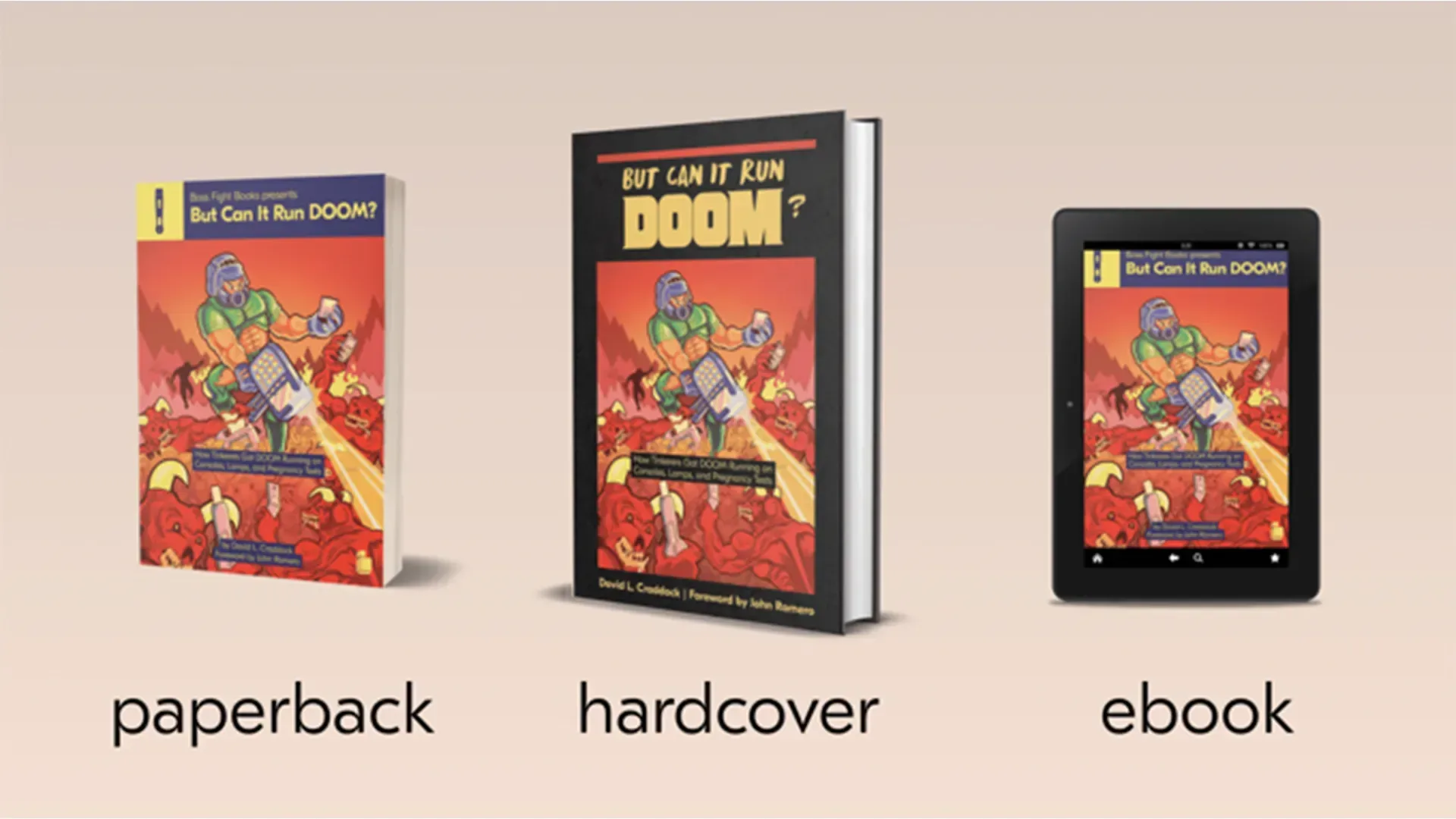
Three editions are planned: paperback, hardcover and ebook. The standard project is described as 168 pages. The hardcover is positioned as a special edition with additional pages and a larger format. Those differences make the choice more than a question of cover material: readers who want the expanded, larger physical edition have a distinct option, while the ebook offers a digital route into the interviews and history.
The campaign lists a £13/$16 pledge level for a copy, with shipping expected later in March 2027. As with any crowdfunded project, that expected timing is a plan rather than the same thing as a product already in hand. Potential backers should review the campaign’s current reward and delivery information before pledging, particularly if the format they want or shipping details matter to them.
More than a novelty shelf book
There is an easy version of this story: a book about Doom on bizarre gadgets is inherently amusing, and the list of devices provides plenty of material for the title alone. But the interview-based approach gives it room to be more useful than a joke collection. It can preserve the inventive decisions and communal momentum behind projects that are often remembered only by their most absurd final image.
That makes the book potentially relevant to retro-game readers, hobby programmers and people who enjoy the strange intersection of hardware and play. It also sits comfortably beside the wider habit of judging technology by the job it can actually do rather than the marketing label attached to it. For a more conventional example of separating a device’s advertised deal from its practical fit, see our look at the Lenovo V15’s work-first specifications.
In this case, practicality is emphatically not the point. No one needs a pair of earrings or a lamp to become a preferred way to play Doom. The point is the creative refusal to accept that an object’s ordinary purpose is its only possible purpose. Craddock’s book aims to give that refusal a durable home—one with pages, interviews and enough room for the weirdest machines in gaming’s longest-running technical dare.