Estella, a 3D music rhythm action game from Imanity Co., Ltd. and Shochiku, is scheduled to reach Steam Early Access for PC on Friday, January 29, 2027. The initial Early Access release is priced at $13.99 USD and is set to contain Chapter 1 of its story alongside approximately 40 songs, including tracks that have not previously been released.
The game’s core pitch is rhythm play with a more spatial presentation than a conventional flat note highway. Players move through octagonal lanes using a mouse and keyboard while differently shaped and colored notes approach an octagonal hit frame. It is designed as a single-player game with online multiplayer score competition for as many as 32 players at once.
What the Early Access version includes
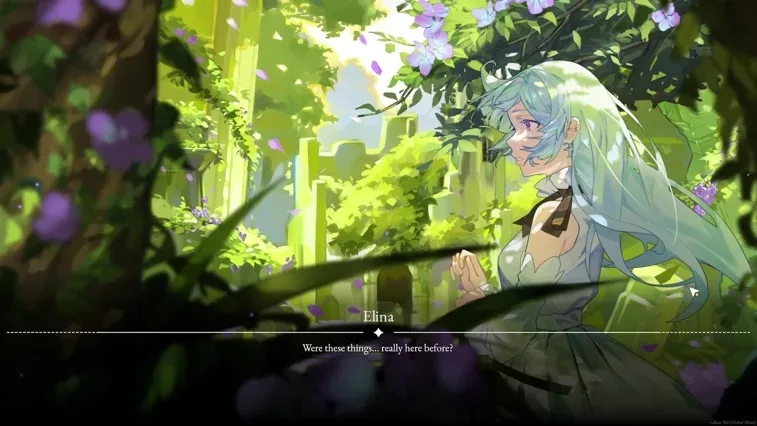
The January build is not described as Estella’s full 1.0 release. Instead, it begins with Chapter 1, centered on Elina, a girl selected by a golden comet. Further chapters and additional songs are planned during the Early Access period as the game advances toward version 1.0.
That structure matters for anyone considering the launch version: the stated 40-song count and first story chapter describe the starting package, not a promise that the game’s eventual content will be limited to that selection. Conversely, the information available does not set dates, quantities, or a release window for later chapters, song additions, or the full version. Those remain future plans rather than confirmed launch-day material.
The currently named song selection is only partial, but it establishes some of the music planned for the game:
- Fantasia Sonata Estella by PYKAMIA
- lost night meteor by kanase.
- Reblossia by Dadadaizu
- Exit This Earth's Atomosphere by Camellia
- PUPA by Morimori Atsushi
A further track, NightTheater by Wakadori, is due to be playable in the game’s WePlay Expo 2026 demo. Its inclusion at that event establishes it as part of the title’s public showcase, though the available release details do not specifically say whether it will be among the January Early Access songs.
An octagonal approach to rhythm action
In rhythm games, a note is typically a visual timing prompt: the player performs the relevant input as that prompt reaches a designated target. Estella’s target is an octagonal hit frame, with the surrounding lanes and 3D presentation forming the route players race across. Mouse-and-keyboard controls are the announced input method.
The game will use notes with different shapes and colors, as well as several specially named types. Each changes the basic expectation that every approaching object should simply be hit.
Related coverage includes Estella Sets January 29, 2027 Early Access Date on Steam.
- SKY NOTE: a note that appears in midair.
- RISK NOTE: a note players need to avoid instead of touching.
- LITE NOTE: a note intended to be traced for a successful hit.
The importance of the RISK NOTE is especially easy to understand in practical terms. Standard rhythm-game muscle memory generally rewards acting on an incoming prompt. An avoid-type prompt reverses that instinct, making recognition and restraint part of the challenge. Meanwhile, a trace note calls for a continuous movement rather than a single timed action, and a midair note signals that the player must account for the game’s three-dimensional staging.
Those descriptions explain the intended variety, but they do not yet specify scoring windows, difficulty settings, input remapping, accessibility options, controller compatibility, or how each special note affects a run. Players looking for those particulars will need to wait for more detailed information or the Early Access launch itself. The announced aim is for controls that are approachable for newcomers while still leaving room for experienced rhythm players.
Up to 32 players can compete in real time
Estella supports one player locally and online multiplayer for up to 32 players. The multiplayer focus is real-time score competition, with players able to join friends or create tournament-style matches.
“Real time” here means participants are competing during the same session rather than merely comparing scores recorded on separate attempts. Tournament-style lobbies could give groups a way to organize their own brackets or recurring contests, while friend matches offer a less formal route into the same competitive side. The game’s announced player cap is substantial for a score-focused rhythm mode, although details such as matchmaking rules, spectator support, ranking systems, regions, and connection requirements have not been provided.
That distinction is worth keeping in mind when reading the 32-player figure. It confirms the maximum stated online multiplayer capacity, not a list of every competitive feature or a guarantee that all modes use that size. The confirmed takeaway is narrower but still clear: Estella is being built around both solo rhythm play and large live score contests.
Chapter 1’s purple curse and golden comet
Estella’s first chapter frames its music action with a fantasy story about loss and recovery. The story begins when a mysterious purple flower blankets a forest overnight and numbs people’s hearts. Two years later, the unnamed girl at the center of the synopsis awakens alone to find that her hands have become translucent.
As the purple curse consumes more of the world, a faint golden light appears. Elina sets out to regain the warmth she has lost, while the broader Chapter 1 description identifies her as the girl chosen by the golden comet. The contrast between the purple affliction and the golden light gives the opening chapter two clear motifs: an expanding force that strips away feeling, and a smaller but hopeful signal that drives Elina forward.
Beyond that setup, the available information does not detail how the story is presented between songs or whether specific tracks correspond to particular plot beats. The chapter format does, however, make it clear that Estella’s progression is planned to extend beyond a standalone song list. New chapters are part of the stated Early Access roadmap toward version 1.0.
Public demos continue before launch
Estella has already appeared at Tokyo Game Show 2026 and has more showcase stops on its schedule. It is due at WePlay Expo 2026 in Shanghai on November 21–22, followed by G-EIGHT 2026 in Taipei on December 4–6. Steam Next Fest and Games Ground in Berlin also appear on the planned event list.
These appearances are expected to introduce new music before Early Access. For followers of the wider PC event circuit, another recent showcase story is Hanno: A Magical Tale’s G-STAR 2026 appearance, illustrating how event demos can give upcoming PC games a public stage ahead of release.
For Estella specifically, the important confirmed demo addition is NightTheater. The Shanghai showing provides the named opportunity to see that song in the game before the January 2027 Steam debut. It should not be treated as a substitute for a full feature list, however: event demos are limited public showings, while the Early Access product is the version slated to include Chapter 1 and around 40 songs.
What is confirmed, and what remains open
Estella’s basic launch outline is unusually straightforward: Steam for PC, January 29, 2027, $13.99, Chapter 1, about 40 songs, mouse-and-keyboard play, and online competition for up to 32 people. The creative hook is equally defined: players navigate octagonal lanes and respond not only to normal notes but also to aerial, avoid, and tracing prompts.
There are still sensible limits to what can be inferred from those details. Early Access means the game is intended to evolve, but no completed schedule for that evolution has been given. The partial song list is not a full soundtrack. And the multiplayer maximum does not reveal the shape of matchmaking or tournament administration. Those unknowns are significant for players who prioritize a particular competitive setup, song total, or full-story experience.
For now, Estella’s clearest identity is a PC rhythm game that pairs a story-led, chapter-based rollout with a 3D octagonal-lane format and large real-time score sessions. Its January Early Access release will establish the first playable version of that idea, with the remaining chapters and songs planned to follow on the road to 1.0.