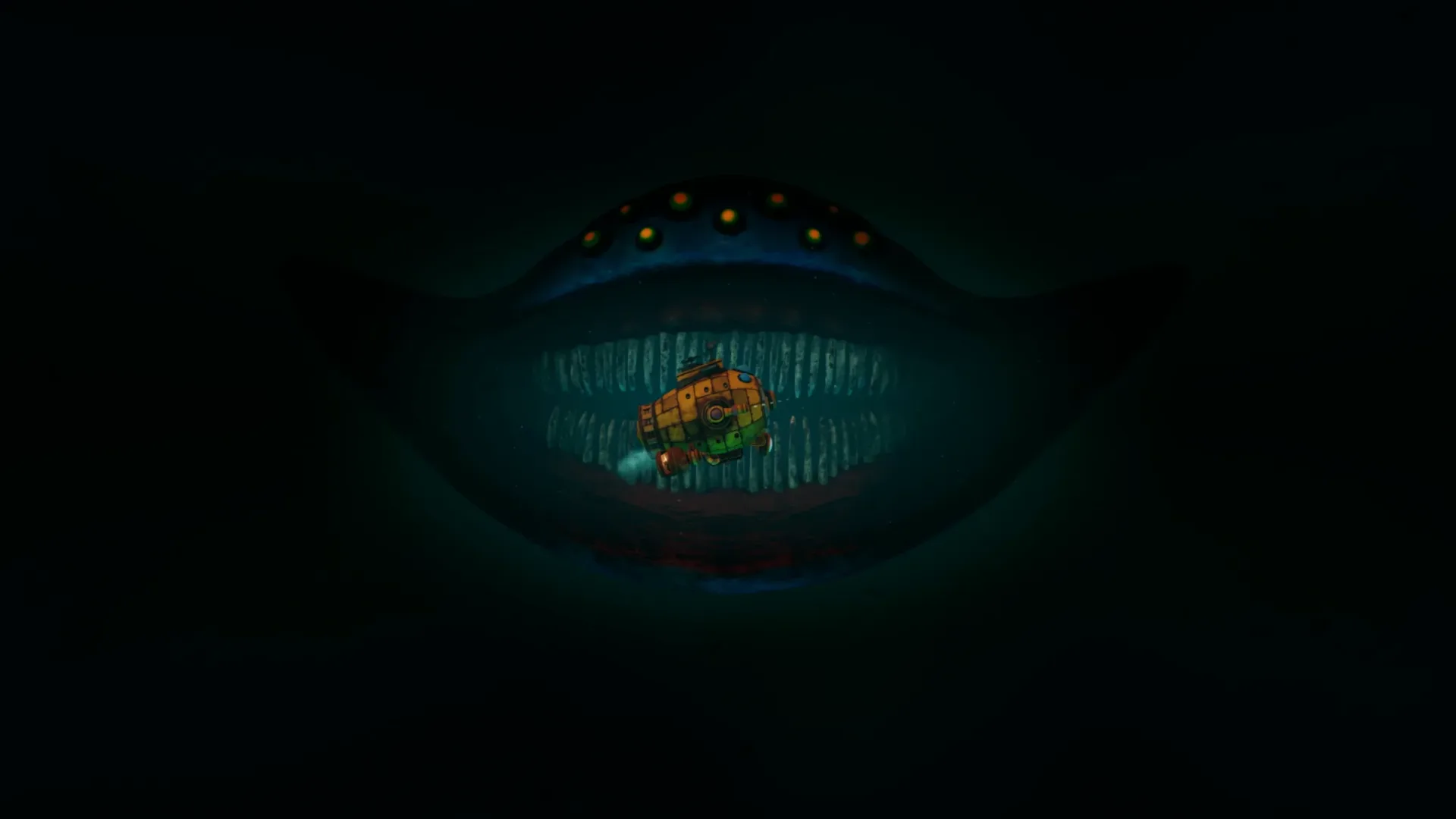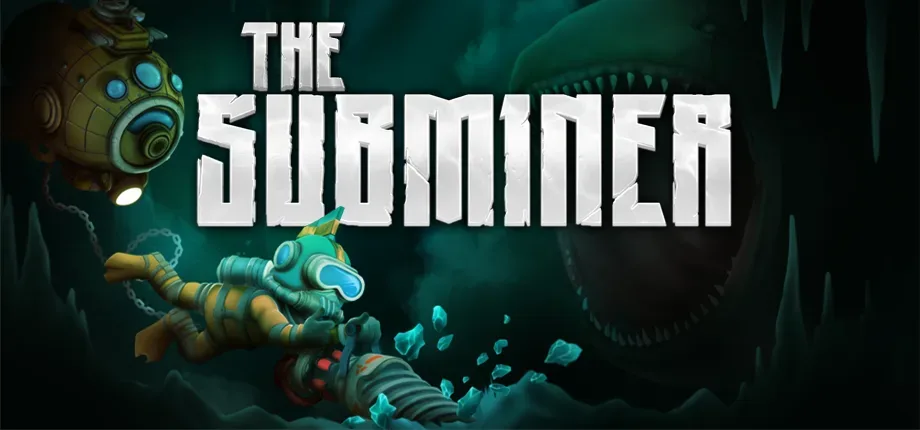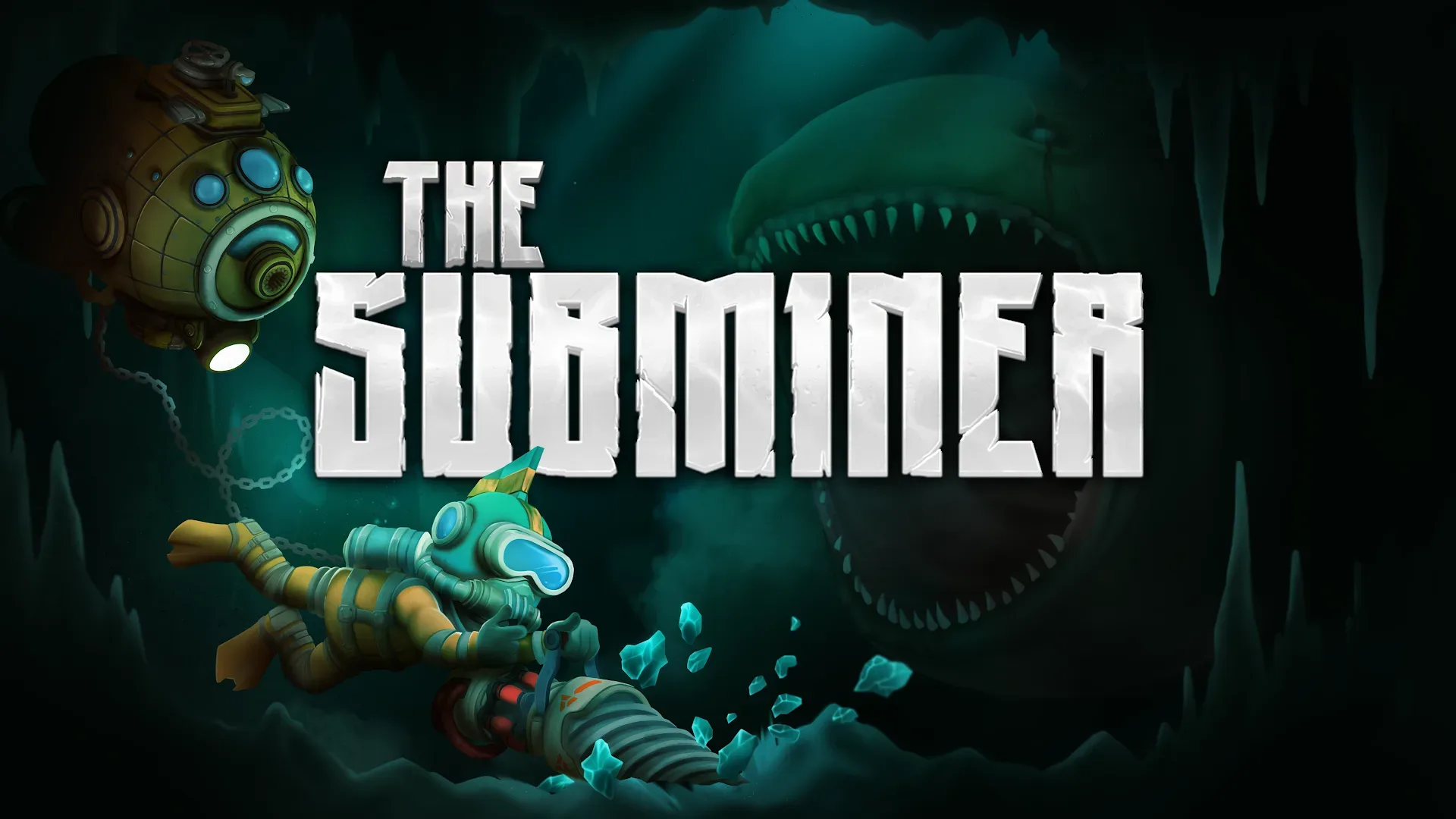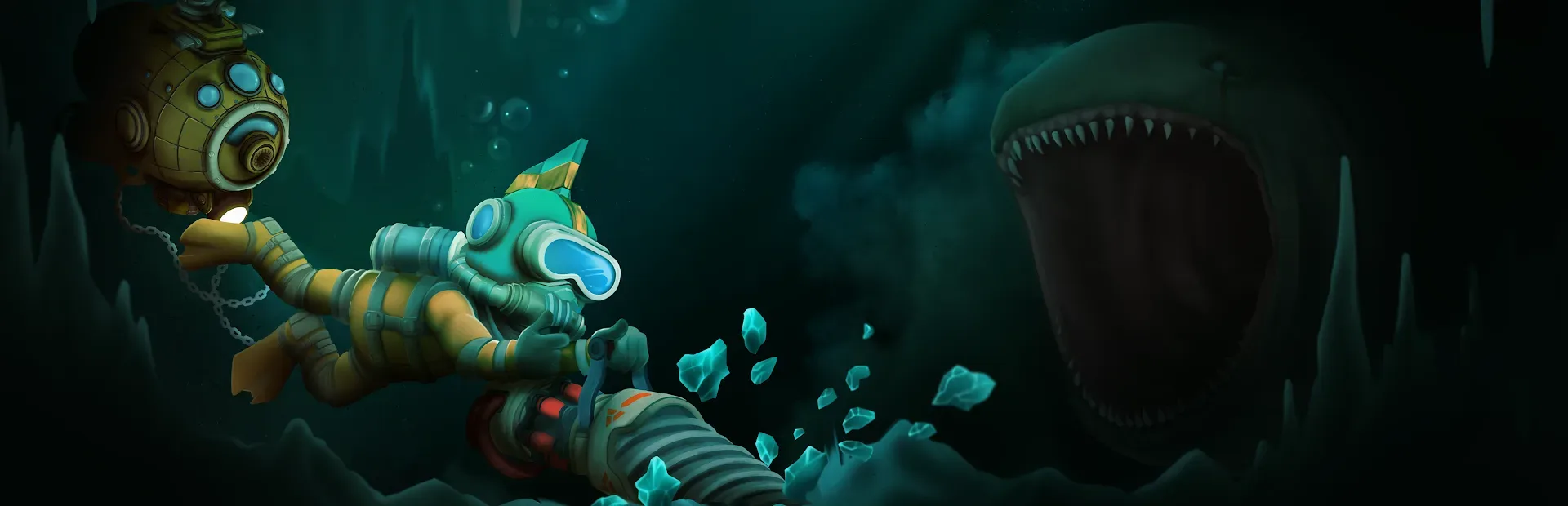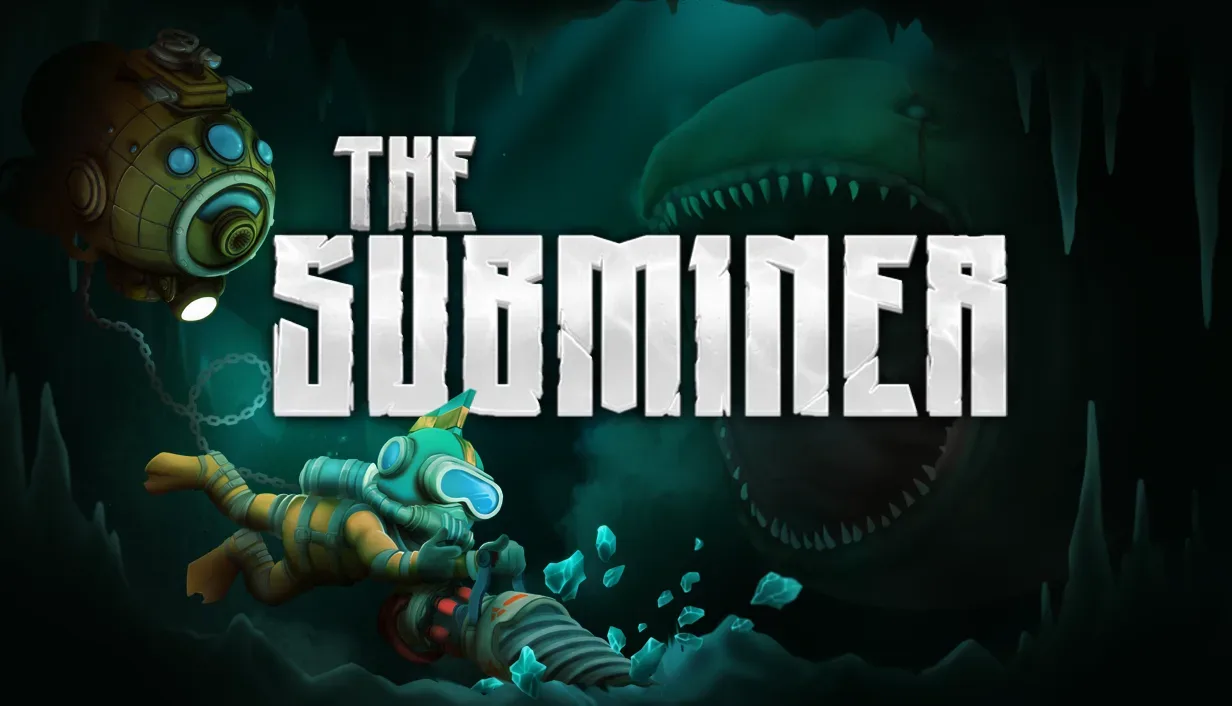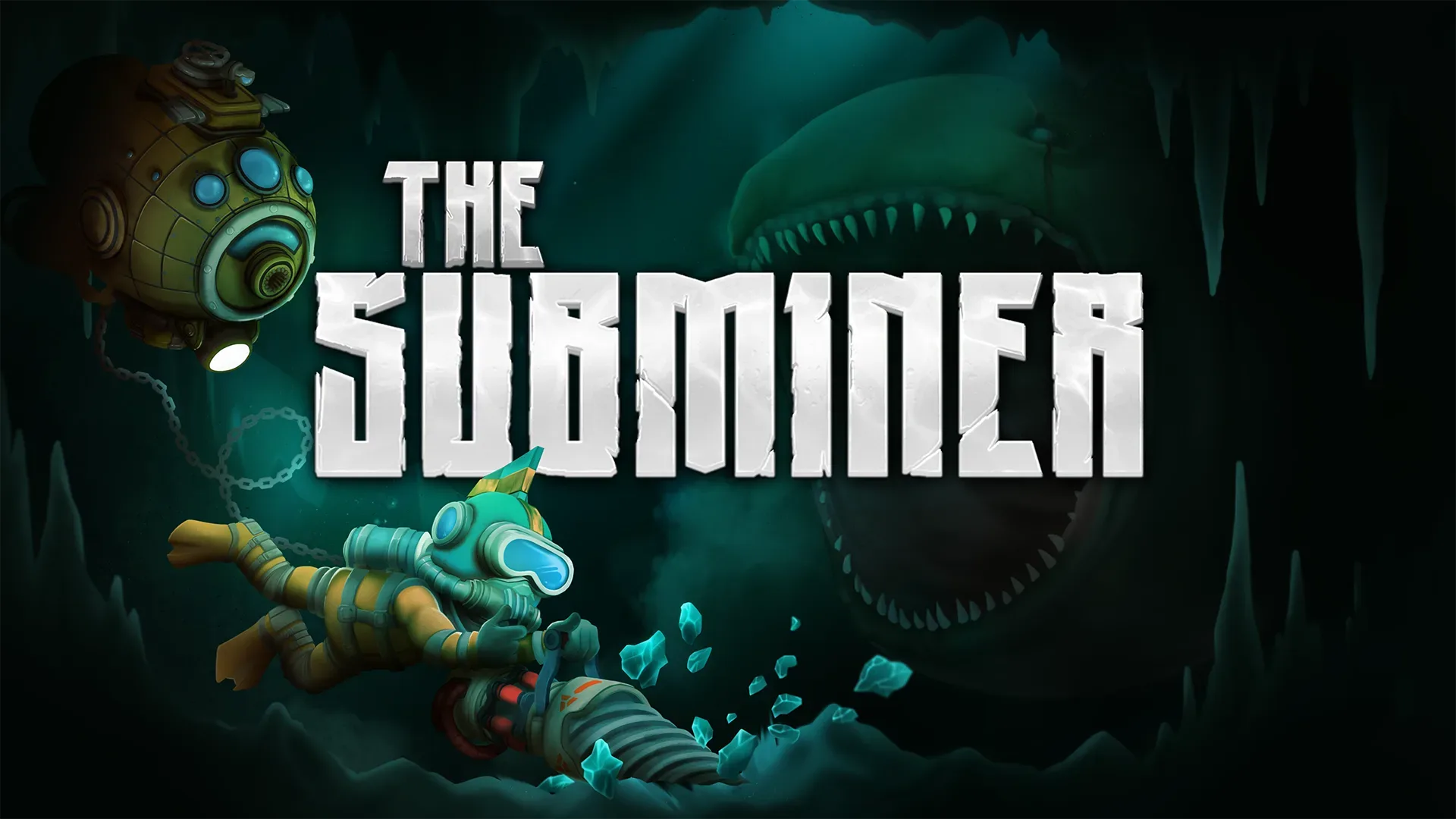
The Subminer, the upcoming underwater survival-exploration game from developer Tech Turtles and publisher Yogscast Games, now has a playable Steam demo as part of Steam Scream V. The demo follows the game’s earlier appearance during Steam Next Fest and offers a focused introduction to a premise built around pressure in every sense: limited resources, an unstable environment, dark water and the prospect of travelling farther from safety with each run.
Its setting is an alien ocean below the icy crust of Enceladus. Rather than treating the water simply as scenery, The Subminer positions the ocean and its depths as the foundation of the game’s risk-and-reward structure. Players mine through a breakable environment, explore areas formed procedurally, and must deal with threats including traps, bosses and corrupted creatures.
The important word in that description is loop. The Subminer is structured as a roguelike: a run is an attempt to descend, explore and secure progress before the dangers of the ocean cut that attempt short. At the end of a run, players can improve their toolkit, with those upgrades intended to support dives to greater depths on later attempts.
A descent shaped by mining and resource management
The Subminer combines several familiar game concepts, but its stated design puts mining at the center. The world is breakable, meaning excavation is not merely a cosmetic interaction or a fixed route through a level. Mining is how players make space, pursue resources and potentially create their own way through the underwater environment.
That flexibility also gives the game’s resource management added weight. A player deciding where to dig is also deciding how much time and capability to commit to a direction. The supplied details do not specify the individual resources being tracked, so it would be premature to assume a particular oxygen, fuel, power or inventory system. What is clear is that resource management is designed to sit alongside the game’s mining and exploration, rather than exist as an isolated survival-game feature.
“High risk/high reward” is an especially useful description for understanding the intended tension. In practical terms, the structure suggests that valuable finds and deeper routes will not be purely optional scenery: they are likely to be the reasons a player accepts escalating danger. A safe retreat may protect an existing run, while pushing onward can expose the player to traps, creatures or a boss encounter. The exact balance will be something the demo can begin to reveal, but the game’s broad objective is clear—make the descent tempting enough that caution and ambition continually compete.
The breakable-world angle also places The Subminer among PC games that use destructibility as a meaningful gameplay system rather than a visual flourish. That design choice has potential consequences for pacing. A conventional corridor can make a player’s destination obvious; a mineable environment can turn navigation into a series of choices about effort, risk and payoff. For another recently announced take on breakable spaces, see Guns & Goo’s destructible 2D multiplayer premise.
Three depth levels, with danger increasing below
The game’s procedurally generated ocean is divided across three depth levels. Procedural generation means the game assembles or arranges its playable spaces through systems rather than presenting one entirely fixed layout every time. That does not necessarily mean every element is random, nor does it promise unlimited variety. It does mean players should expect the route through the ocean to change between runs.
Related coverage includes The Subminer Demo Is Now Available on Steam.
For a roguelike built around repeated dives, that variation is significant. Fixed content is easier to memorize; procedural layouts can make knowledge more about recognizing situations and making good decisions than remembering a single safest route. In The Subminer, the three-depth structure provides a clear sense of direction: progress is downward, and toolkit upgrades exist to help players make deeper expeditions possible.
The claustrophobic element comes naturally from this setup. An underwater expedition beneath an icy crust begins from a confined premise, while a dark, destructible underground ocean makes distance from the surface feel consequential. The game also describes unknown terrors in the darkness, an approach that frames visibility and uncertainty as part of the threat. Not every danger has to be immediately identified for a run to feel unsafe; the possibility of encountering something hostile can be enough to influence whether a player continues mining or turns back.
What a roguelike loop means here
Roguelike is a broad term, and it is frequently used for games with very different failure rules and progression models. The Subminer’s announced structure identifies the pieces that matter here: repeated runs, procedural generation and improvements made at the end of each run. The game is therefore not described as a single uninterrupted expedition where a player simply advances through a campaign map once.
Its progression is split between what happens during a dive and what carries forward afterward. During a run, players face the immediate task of exploring, mining and surviving. Between runs, toolkit upgrades are intended to expand the player’s ability to reach lower levels. This kind of continuing advancement is commonly called meta-progression: persistent development outside the temporary state of an individual attempt.
That distinction matters because it gives failure a different role. A run can still end before the deepest objective is reached, yet the broader game can remain forward-moving if that attempt contributes to future upgrades or base development. The available details do not define what is lost or retained on a failed run, so players should not infer a specific penalty system. But the stated end-of-run upgrading establishes that repeated attempts are part of the intended experience, not a detour from it.
Base rebuilding and rescueable NPCs broaden progression
The Subminer’s persistent layer is not limited to a toolkit. Players can rescue NPCs, take on side quests and rebuild the surface base. Together, those systems suggest a wider framework around the individual dive.
The surface base is particularly notable because it creates a counterpoint to the hostile ocean. A dive is an outward and downward push into an unknown environment; rebuilding the base is constructive work performed at the place from which those expeditions begin. The details currently available do not say what each rebuild provides, which NPCs can be encountered, or how side quests are resolved. Still, the presence of these systems indicates that advancement is meant to be visible in the player’s home area as well as reflected in equipment.
Rescueable NPCs can also make exploration feel less purely extractive. Mining games often focus on materials, but finding people in need of rescue introduces another reason to take risks in dangerous spaces. Side quests further imply goals that can sit alongside a straightforward drive to go deeper. Whether players encounter them on a fixed schedule or through the procedural exploration structure has not been outlined, so that remains an open question for the full game.
Bosses, traps and corrupted creatures provide the more direct opposition. These categories imply different types of pressure: a boss can act as a major combat or survival obstacle, traps can punish careless movement or excavation, and corrupted creatures give the ocean a hostile population beyond a single climactic encounter. The announcement does not identify any of these enemies or explain their mechanics, and it is best not to assume how combat works from their inclusion alone. Their confirmed role is to make each descent more than a race against dwindling resources.
What the Steam demo can communicate
A demo cannot answer every question about a full roguelike, particularly one with a base-building meta-progression layer. It can, however, show whether The Subminer’s core interaction feels coherent: mining into a changing environment, assessing danger, managing what is available, and deciding when a dive has gone far enough.
It is also a chance to see how the game connects its distinct ideas. Underwater exploration, survival systems, procedural generation and destructible terrain can each create tension on their own. The Subminer’s central challenge is making them reinforce one another. Mining should affect routes and resources; route decisions should affect exposure to threats; and what happens on a run should feed meaningfully into the upgrades and surface-base recovery that follow.
The demo is available on Steam now during Steam Scream V. An official trailer is also available, offering an additional look at the game’s submerged alien setting and its mining-led descent. No release date or additional platform information is included in the announcement, so the Steam demo is the confirmed way to sample the game at present.