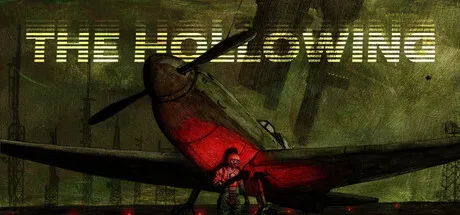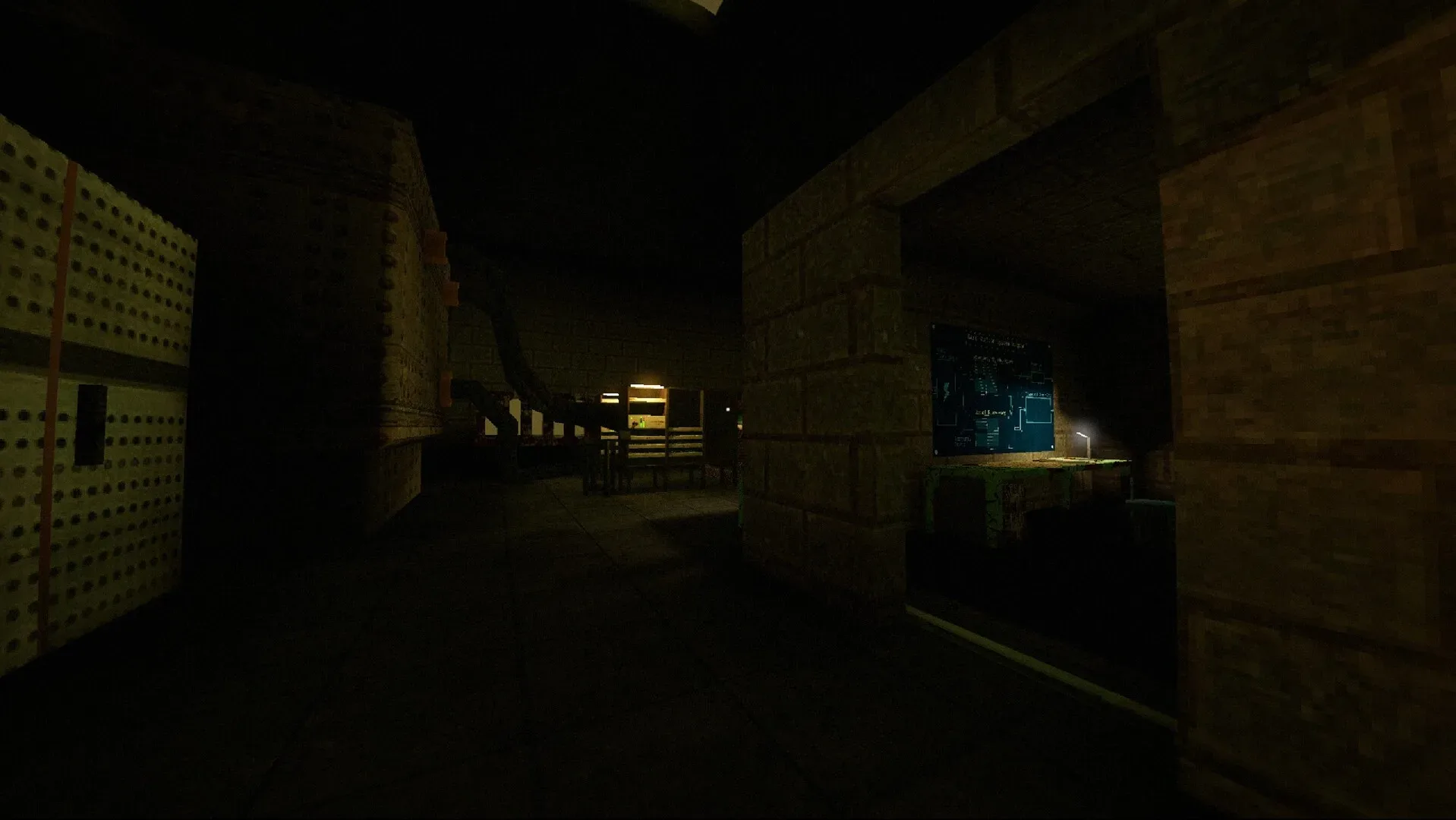
There are plenty of horror games built around dark corridors, locked doors and the uneasy feeling that something is just beyond the beam of a flashlight. The Hollowing takes its dread somewhere less familiar: into the air.
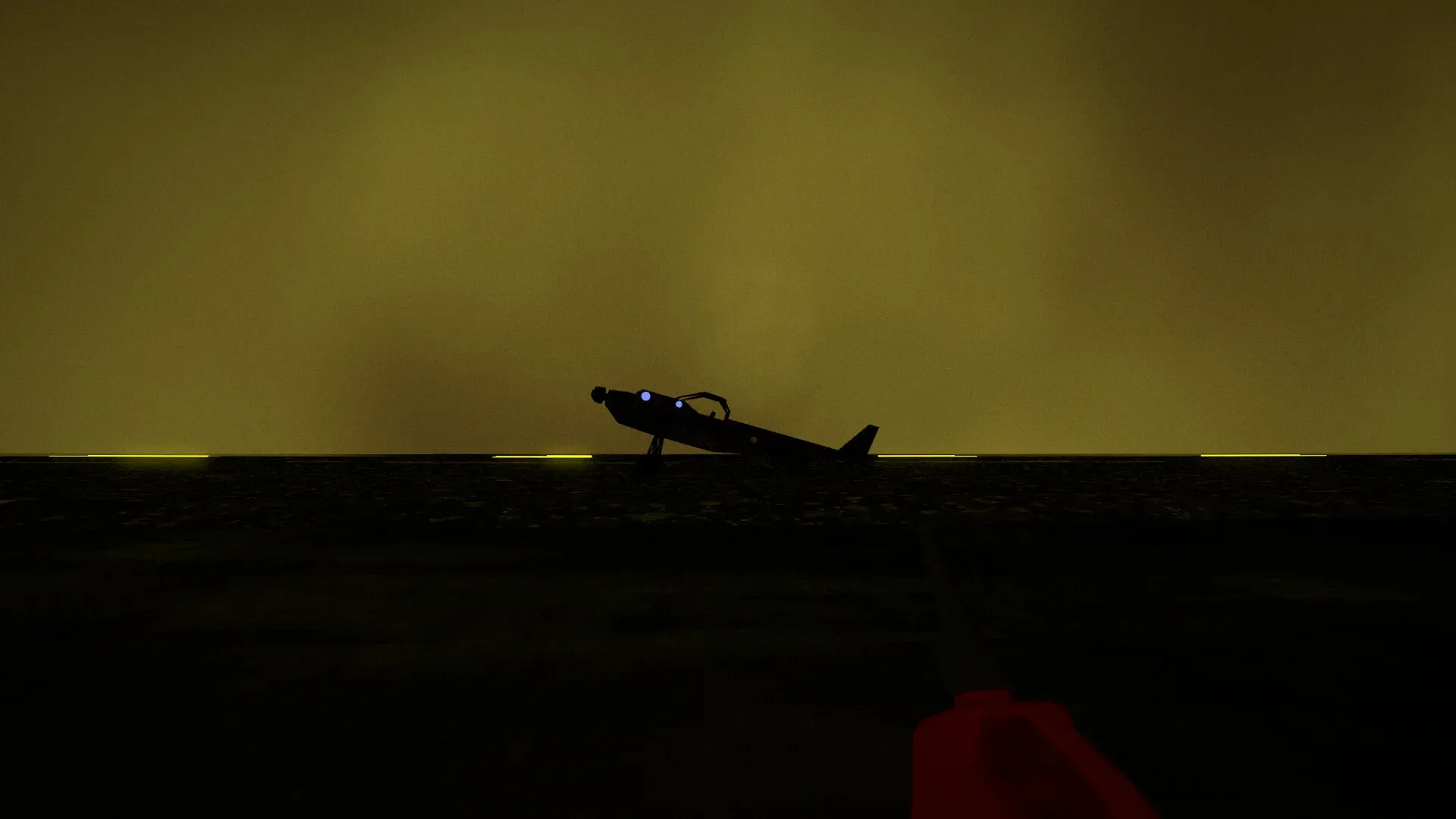
Announced during PC Gaming Show Tokyo Direct, Rubeki’s upcoming first-person horror flight sim places players alone in a mist-covered Megastructure. Their job is practical, at least at first: fly a delicate craft between airports and remote outposts, keep communications towers operating, and maintain the connection between scattered settlements. The trouble is that the setting is described as not quite human, the environments grow more oppressive, and a voice over the radio is there to guide the pilot—and haunt them.
A free demo is now available on Steam. The complete game is planned for Steam later in 2026. Rubeki is developing The Hollowing, while Future Friends Games will publish it.
A flight sim where the journey is the pressure point
“Flight sim” can mean many things, from a highly technical recreation of real aircraft procedures to a game that simply makes flying its central activity. The details currently confirmed for The Hollowing point to the latter’s core discipline without establishing how rigorous its systems will be: players will need to master takeoff, landing and navigation while piloting a fragile vehicle.
That focus is important because it makes routine travel part of the game’s tension rather than a fast-travel menu between scary scenes. A landing is not just an arrival; it is a task that demands control. Navigation is not merely a waypoint line; it is how the player moves through a mist-shrouded structure whose scale and nature are deliberately mysterious.
In practical terms, the premise suggests a loop with three connected parts:
- Depart: get the craft safely airborne from an airport or outpost.
- Navigate: cross the Megastructure from one isolated station to another.
- Maintain: repair or service communications infrastructure so settlements can remain linked.
That is a more grounded setup than horror built solely on escape. Maintenance work gives the player a reason to approach strange places, while the flying creates a potentially vulnerable stretch between them. The official outline does not specify enemies, combat, failure states or the exact repair mechanics, so those elements remain unknown. What is clear is that aerial handling and travel are intended to be fundamental, not decorative.
The Megastructure is more than a backdrop
The Hollowing is set in a Megastructure: an enormous constructed environment rather than a conventional natural landscape. Here, the term matters because it frames the world as something built at an overwhelming scale, with settlements, airports, outposts and communications towers existing inside it.
Related coverage includes The Hollowing Demo Is Live on Steam Ahead of 2026 Release.
Rubeki’s description leaves the true nature of the place unresolved. Players are meant to uncover the mysteries of a world that is not entirely human, which makes the maintenance assignment feel less like ordinary infrastructure work and more like an excuse to probe the seams of an unfamiliar civilization. The mist further limits certainty. It can conceal routes, landmarks and distant structures, turning open air into a space with its own kind of confinement.
This is where The Hollowing’s concept has the potential to distinguish itself. Horror does not require a cramped room if the player’s safety depends on keeping a small craft under control in a vast, unreadable environment. Isolation also has more than one form here: the pilot is physically alone, stations appear separated by difficult journeys, and communication itself is a resource needing upkeep.
That makes the communications network thematically useful as well as mechanically useful. Towers keep settlements connected, yet the recurring radio voice means communication is also the avenue through which uncertainty reaches the player. A voice normally offers reassurance, instructions or companionship. In The Hollowing, it is positioned as all of those possibilities at once, with the added promise that it can unsettle as much as it helps.
A return to the universe of Lorn’s Lure
The Hollowing shares its universe with Lorn’s Lure, Rubeki’s previous cult hit. More than 60,000 copies of Lorn’s Lure have been sold, establishing that the developer’s earlier expedition into this setting found an audience.
The connection is meaningful without yet defining exactly what form it takes. No specific returning locations, characters, plot threads or gameplay systems have been confirmed for The Hollowing. Players should therefore treat the shared universe as a setting link, not as proof that the new game will repeat its predecessor’s structure.
Instead, the announced concept suggests a change of perspective and activity. The Hollowing puts the player in a first-person cockpit and centers the experience on aviation, infrastructure and radio contact. It is a fresh role within the same broader world: not simply someone moving through a strange place, but a lone operator charged with keeping distant communities in touch.
For newcomers, there is no stated requirement to have played Lorn’s Lure before trying the demo. For existing fans, the appeal lies in returning to a recognizable universe through a different kind of journey. That approach can expand a setting without requiring every project to solve its mysteries in the same way.
Why the demo matters
The free Steam demo is especially useful for a game whose pitch rests on feel. Written descriptions can convey mist, radio unease and the broad maintenance premise, but they cannot fully communicate how the craft handles during a takeoff, how readable navigation is, or how a landing feels when the atmosphere turns hostile.
A demo is also the clearest opportunity for players to find out whether the game’s blend is for them. Someone interested primarily in atmospheric horror may discover that the flight component is the draw; someone who arrives for the cockpit mechanics may find the uncanny world is what keeps them invested. Since The Hollowing explicitly asks players to learn core flying actions, trying those controls firsthand should be more informative than judging the game only by its premise.
Players looking for other upcoming games where a distinct player role shapes the larger setting may also want to read our look at Petit Planet’s character-focused opening. The two projects are very different in tone, but both put the player’s relationship to a world and its inhabitants at the center of their setup.
What has and has not been confirmed
The announced information establishes a strong foundation, but there are still sensible limits to what can be assumed. The Hollowing is confirmed for Steam, with its full release expected later in 2026. It is confirmed to have a free Steam demo. It is confirmed to feature first-person flight, station-to-station travel, tower maintenance, an eerie Megastructure and a radio voice that occupies an ambiguous role.
There is not yet confirmation of a precise full-release date, other platforms, pricing, campaign length, controller support, difficulty settings, combat, or how broadly the game’s mysteries connect to Lorn’s Lure. Those are all details worth waiting on rather than filling in from the genre label alone.
Still, the outline already gives The Hollowing a clear identity. Its horror is built around responsibility: the player has somewhere to go, a machine to keep aloft, infrastructure to preserve and a voice to listen to with growing doubt. With the demo now live, Steam players can see whether that uneasy flight through the fog lands as ominously as the premise promises.