The Expanse: Osiris Reborn has an instantly compelling pitch. Owlcat Games is adapting a well-established science-fiction universe into a third-person action RPG, with squadmates, dialogue possibilities, specialized character builds, cover shooting and the sort of fraught space-station problems that fit The Expanse especially well. It is planned for PC, PlayStation 5 and Xbox Series X, with a stated release window of spring 2027.
A gameplay demonstration set aboard a guarded outpost suggests the project already understands one major piece of that assignment: how to make a dangerous, enclosed facility feel like a place where security failures can turn into a catastrophe at unsettling speed. Its gunplay also appears to have a solid foundation. Yet the same showing leaves an important part of the pitch unresolved. For a game carrying the RPG label, it offers only limited evidence so far of how freely players will shape their character, their mission outcomes, or their relationship with the world around them.
That caveat matters, but it should be applied fairly. A brief, curated segment is not designed to communicate every system in a large role-playing game. It can demonstrate weapons, powers, movement, environmental storytelling and a few choices without revealing the full scale of progression, companion writing, branching quests or consequences. The issue is not that the demonstration proves those elements are absent. Rather, it puts the spotlight so firmly on infiltration beats and combat that the larger RPG identity remains difficult to define.
An outpost job with a familiar Expanse-style escalation
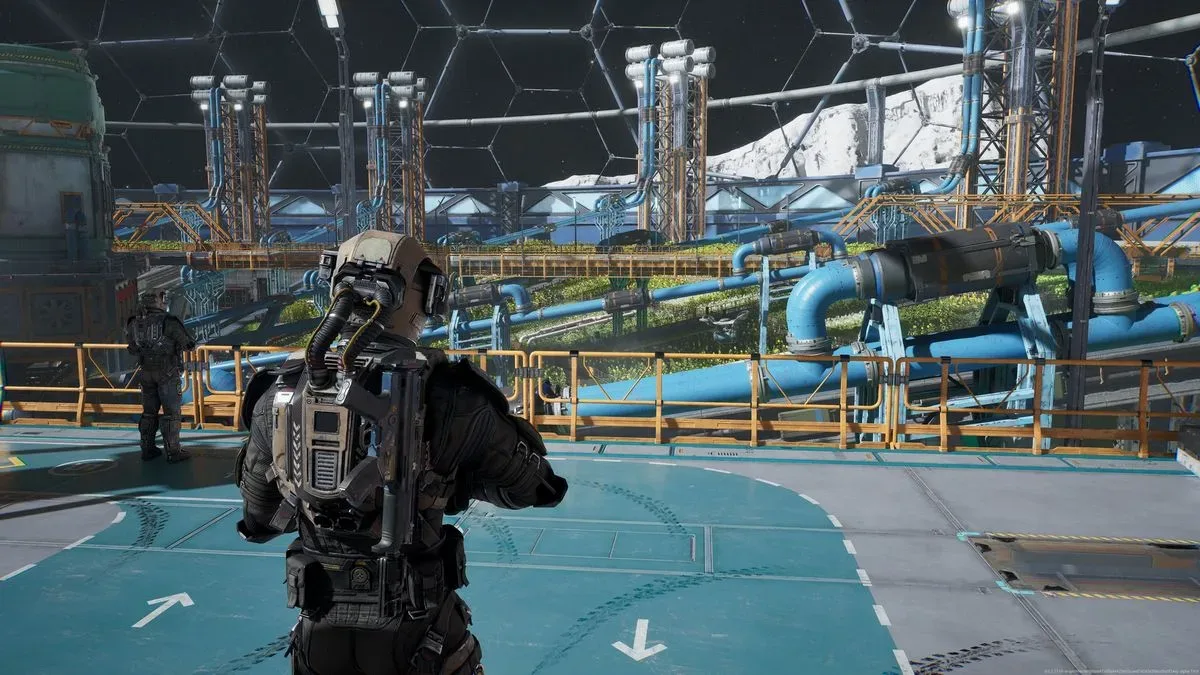
The mission begins with the player character and their twin companion, J, entering an outpost storage area to retrieve information from a case. They are equipped with Osirian space suits intended to support a discreet approach. The disguises are not exactly flawless—J notes that the suits look dated—but the pair initially make their way through the station with relatively little resistance.
A first encounter creates the expectation of a tense social or tactical hurdle. Two guards find the pair somewhere they should not be. Instead of the player needing to talk, threaten, sneak, fight or otherwise solve the situation, one guard persuades the other to let them go. It moves the plot along, but it also removes what could have been an early opportunity to establish player agency.
The pattern appears to continue during exploration. Security systems increasingly respond to the intruders, but the people operating inside the base reportedly do not press them for answers. Public terminals can be examined, server rooms can be entered, and the mission advances without a sustained effort to force a choice between stealth, deception, hacking, violence or retreat. A difficult quartermaster eventually provides some friction, and the sequence contains a small number of ability checks, but the section does not seem built around testing a player-created solution.
There is a difference between a game giving players freedom and a game simply letting them pass through a scene. In a convincing role-playing mission, easy access might itself be meaningful: perhaps a disguise check succeeds because of a prior decision, an ally creates a distraction, a faction recognizes the player, or bypassing protocol later has a cost. The demonstration does not show enough of the surrounding context to say whether Osiris Reborn will make those connections. For now, the infiltration section looks more like a narrative runway leading to the action.
Combat gives the demo its clearest identity
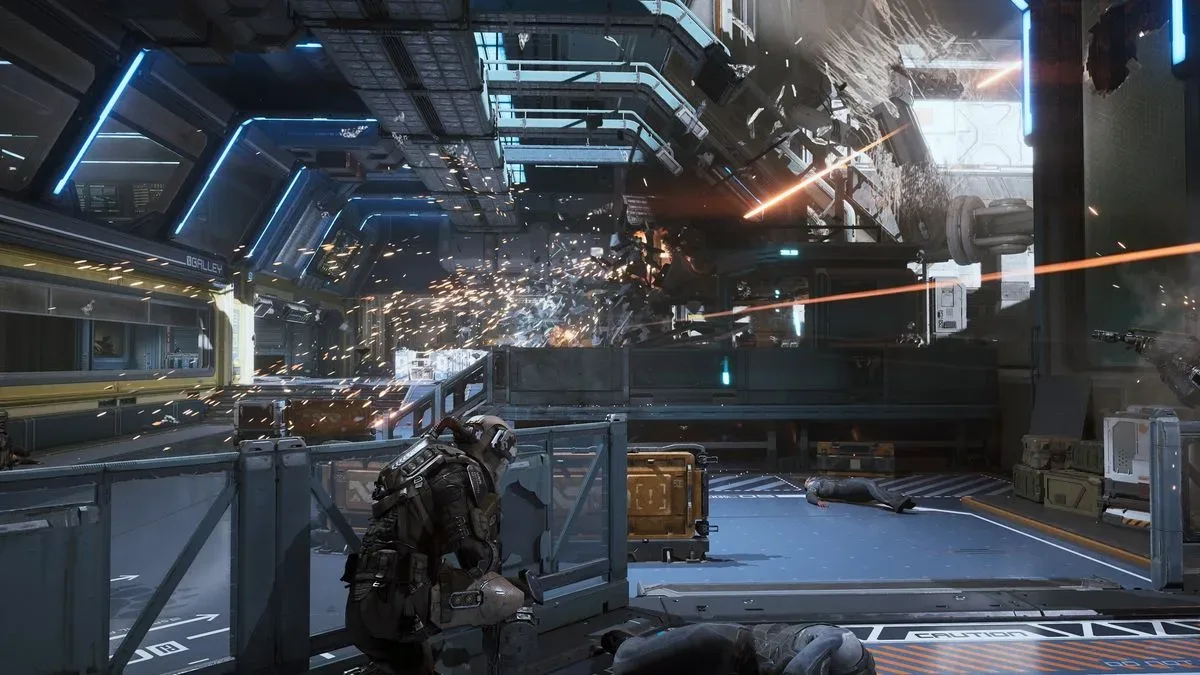
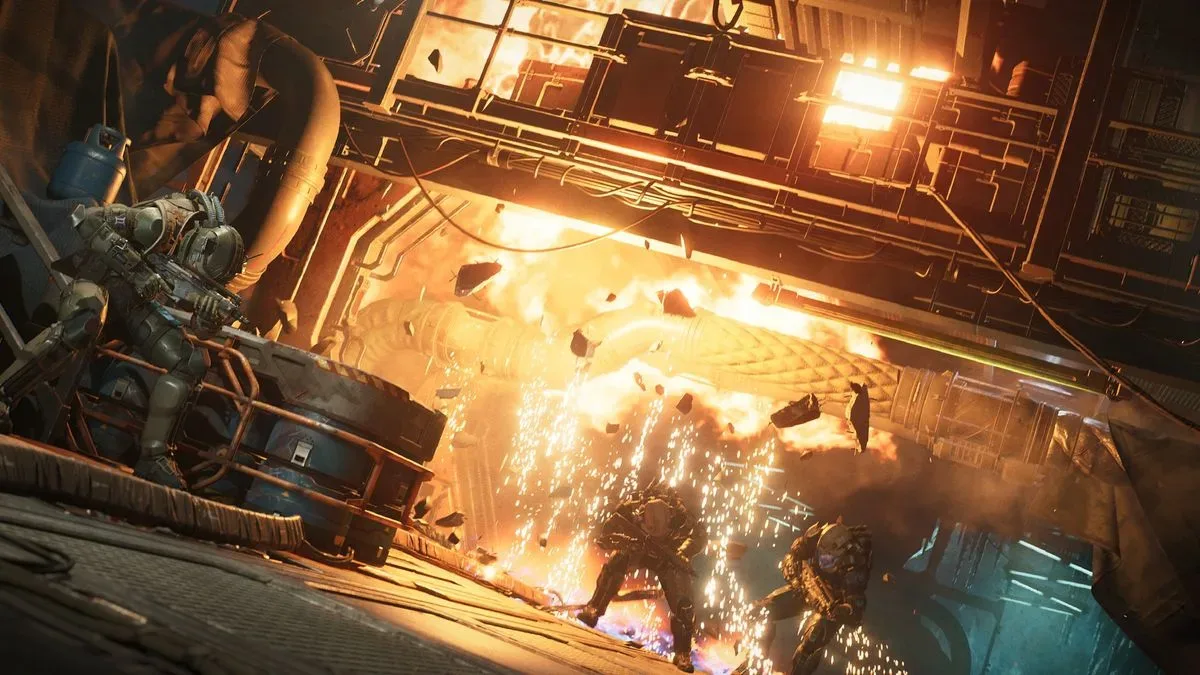
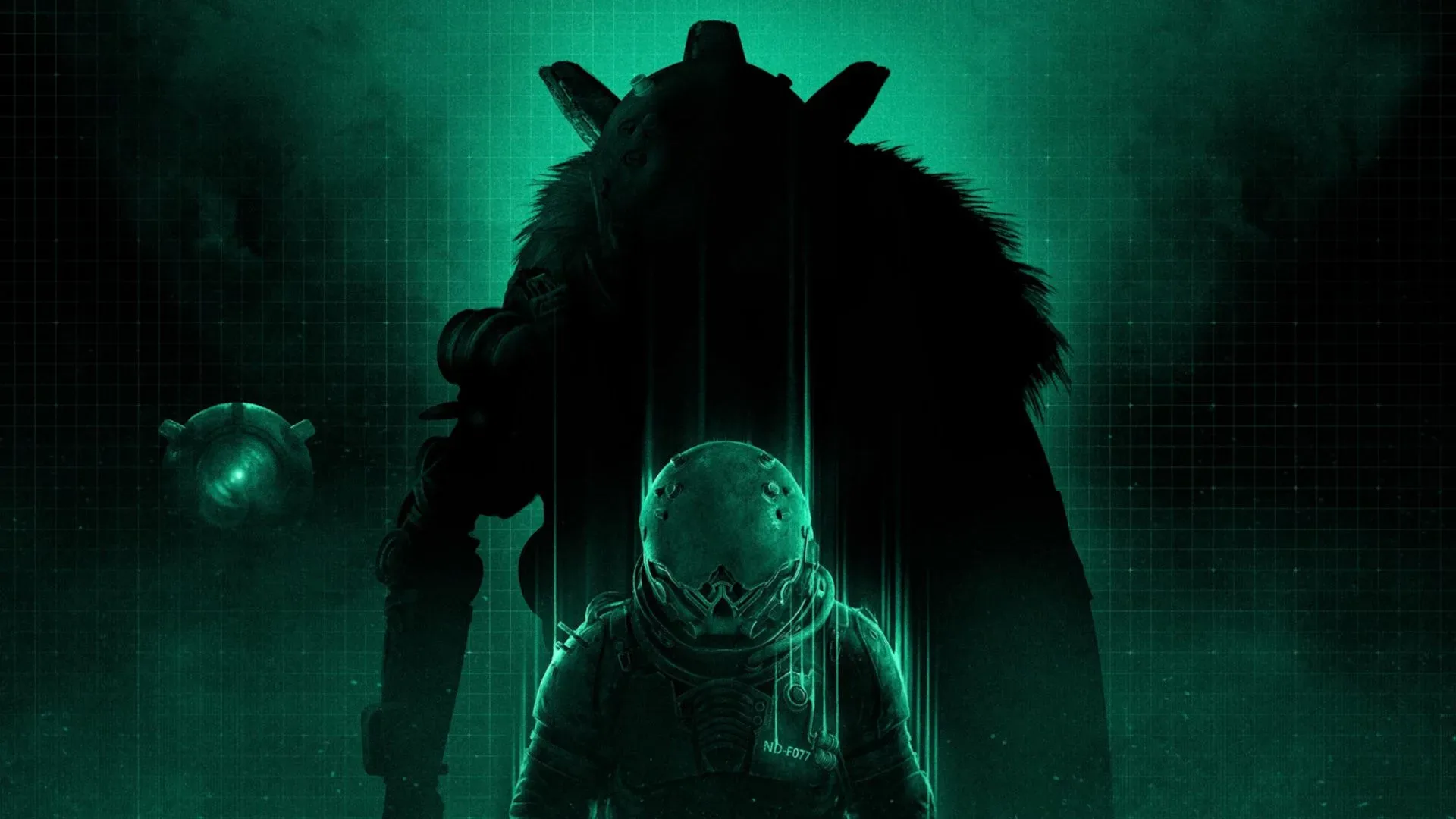
The situation rapidly deteriorates after the target data is secured. A squad of soldiers breaks through the facility roof, disturbing a biohazard container. Its occupant is a crystalline hybrid, a creature that should register immediately for followers of The Expanse. What follows turns the mission from covert retrieval into a hectic escape, with station personnel, armed enemies and the hybrid all contributing to the disorder.
Related coverage includes The Expanse: Osiris Reborn Looks Promising as a Shooter, but Its RPG Identity Remains Elusive.
This is where Osiris Reborn’s systems become easier to read. The available build in the demo emphasizes remotely deployed support tools: a drone and a turret. Those tools can help create pressure on enemies or reach angles that are difficult to attack directly from the player’s current cover. The setup is specific, but it gives the combat an appealing tactical wrinkle beyond simply leaning out from a wall and emptying a rifle magazine.
Encounters are structured to make placement matter. One section leaves the player with limited protection while enemies attack from elevated positions. Another involves a tougher foe using firebombs to drive the player out of cover. These are recognizable cover-shooter problems, but they are useful ones: they encourage movement, timing and smart use of abilities rather than passive hiding. The drone-and-turret build also suggests that distinct combat roles could be a meaningful part of character development, provided the final game offers a broad enough selection of viable approaches.
That sense of combat purpose is encouraging. A third-person RPG does not have to be a slow, menu-heavy experience to earn its classification. If build choices substantially alter battlefield tactics, if companions bring distinct capabilities, and if mission decisions meaningfully affect who survives or what resources remain, shooter-focused action can coexist with satisfying role-playing. The important unanswered question is how much these components will talk to each other outside of combat arenas.
A late choice, but no time to see its consequences
The escape eventually becomes a plan to confront the hybrid. Realizing it could kill civilians on the base, the team prepares to use a solar array against the creature. Doing so requires leading it through the agricultural center, where farmers are exposed to the escalating threat.
Here, the demo presents its most overt companion-related decision. The player can assign a squadmate to guide civilians toward safety or keep that companion close to improve the odds in the coming fight. It is an appropriately uncomfortable trade-off: protect vulnerable people or preserve the strength of the immediate team.
However, the segment ends before the battle and before any longer-term result can be observed. Some civilians can die amid the chaos, but the demonstration does not clarify whether that outcome changes the mission’s aftermath, affects companion attitudes, alters faction relationships, or closes off later content. It may well do so in the full game; the available slice simply cannot establish it.
This is the central uncertainty surrounding Osiris Reborn at this early stage. A choice is most interesting not merely because it is presented, but because the game recognizes it afterward. The Expanse is a setting full of competing loyalties, resource pressure, institutional distrust and terrible decisions made under time constraints. Those ingredients are tailor-made for an RPG that remembers what players do. Seeing the downstream effects of choices will be crucial to understanding whether the game captures that potential.
Owlcat’s RPG background raises expectations
Owlcat Games has substantial RPG pedigree through titles including Pathfinder: Kingmaker, Pathfinder: Wrath of the Righteous and Warhammer 40,000: Rogue Trader. That history makes it reasonable to expect deeper character systems and consequential narrative decisions than a short action-led presentation can convey. It also makes the limited showing of those traits more noticeable.
Osiris Reborn is not simply trying to translate a television-friendly sci-fi setting into corridors and firefights. It is taking on the challenge of placing players inside a universe whose drama depends on politics, identity, survival and distrust. The demo’s strongest moments—the panicked flight through a compromised facility, the need to use tools cleverly under pressure, and the threat represented by the hybrid—show that the game has a handle on immediacy. The next big reveal needs to explain the personal stakes behind the gunfire.
For PC players keeping an eye on other big science-fiction developments, StarCraft’s recent transmission has also sparked speculation around a notable missing name. Osiris Reborn, though, is pursuing a more intimate approach: a squad, an outpost, and decisions made when a supposedly controlled operation starts coming apart.
What to watch before spring 2027
The existing footage and details point to a potentially capable sci-fi cover shooter with a setting that naturally supports tension. The drone and turret build offers a promising glimpse of combat specialization, while the solar-array plan and civilian dilemma hint at the kinds of choices Owlcat may be preparing to explore more fully.
Before release, the most valuable information would concern the parts not yet visible: character creation, available backgrounds or classes, the number and nature of companions, dialogue paths, faction reputation, failure states, stealth options, and the permanence of mission decisions. It would also help to see the same scenario approached with contrasting builds or choices, demonstrating that Osiris Reborn is not merely asking players to select a line of dialogue before returning them to one fixed route.
At present, the game looks promising in the areas it actually displays. Its action appears competent, its escalating crisis belongs comfortably in The Expanse, and its tactical gadgets could give firefights texture. But its claim to the RPG space rests on possibilities still mostly offscreen. With a spring 2027 target, there is time for Owlcat to show the decisions, consequences and character expression that could make this more than a solid shooter set in a beloved universe.