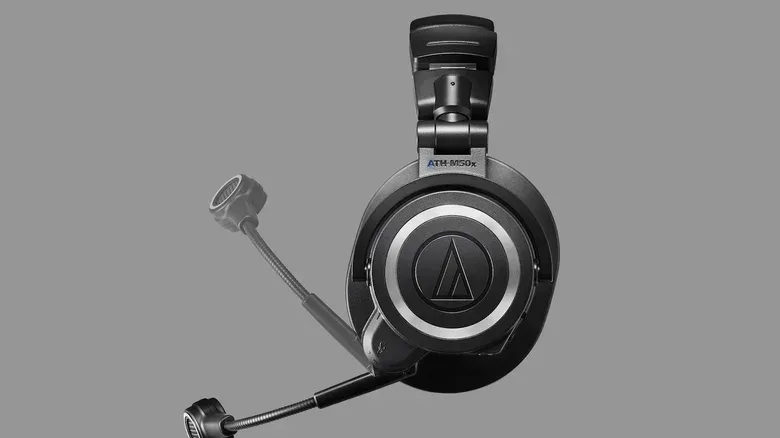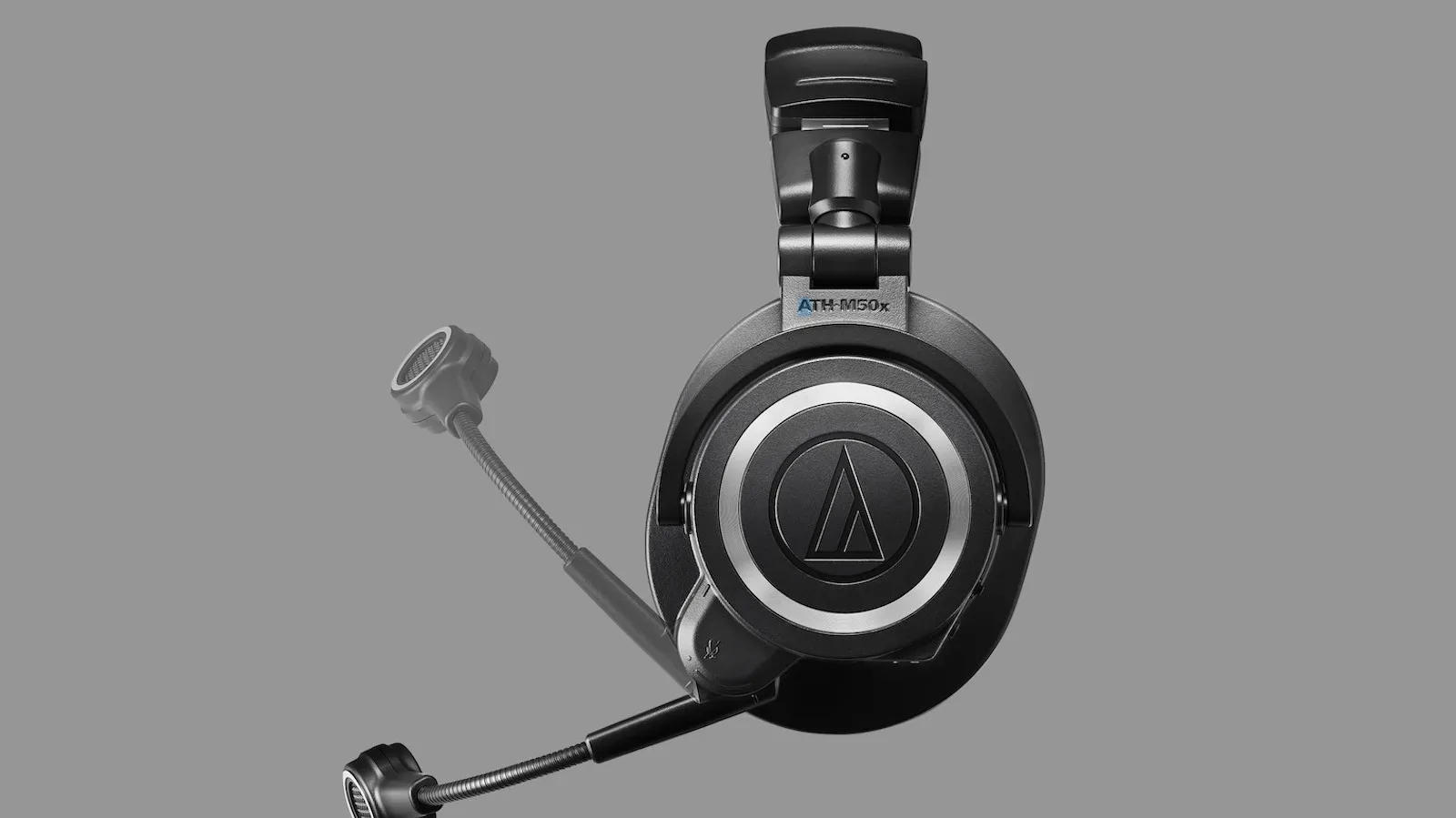
Audio-Technica has expanded its StreamSet range with the ATH-M50xSTS-WL, its first wireless headset in the line. It is aimed squarely at people whose play sessions are also production sessions: streamers, creators and gamers who need to hear the game while communicating clearly with teammates or an audience.
The important detail is not merely that the headset is wireless. The ATH-M50xSTS-WL uses a 2.4GHz connection through a USB transceiver rather than Bluetooth. That choice puts the product’s priorities in plain view: it is designed around low-latency audio, microphone use and support for PC and console setups, including PS5 and Switch 2.
At $299, this is a specialist headset with a professional-monitor family connection, not just a general-purpose pair of wireless headphones with a gaming microphone added afterward. Its 45mm drivers are drawn from Audio-Technica’s ATH-M50x studio monitor headphones, while its boom microphone is based on the company’s 20 Series microphones. The result on paper is an unusually clear statement of intent: monitoring, voice capture and practical streaming ergonomics are meant to share equal billing.
Why the 2.4GHz connection matters
Wireless is not one single technology or experience. Bluetooth is commonly used for convenient connections between personal devices, but the ATH-M50xSTS-WL instead includes a USB transceiver, sometimes called a dongle, that establishes its 2.4GHz wireless link with compatible hardware.
For gaming and live content creation, latency is a key concern. Latency is the delay between an event and the audio reaching the listener. In a game, that can mean the gap between an on-screen action and its accompanying sound. In a stream or voice chat, delay can make conversation feel less immediate and monitoring less dependable. Audio-Technica positions the headset’s 2.4GHz setup as an ultra-low-latency alternative suited to these uses.
The transceiver arrangement also makes the intended platforms more concrete than a vague “works with gaming devices” claim. It is meant to connect to PCs and consoles such as PlayStation 5 and Switch 2 through USB. That makes the ATH-M50xSTS-WL potentially relevant to players deciding how to build a shared desk-and-console audio setup, especially when their headset needs to cover both a multiplayer game and voice-led content. Readers considering other recent PlayStation hardware can also see how Sony has been approaching its wider accessory ecosystem in this look at the PlayStation Prism Collection.
There is a trade-off built into this design. A USB transceiver is a physical component that must be connected to the host system. That is different from simply pairing a headset in a device’s Bluetooth menu. But for the audience Audio-Technica is targeting, the extra hardware is part of the proposition: a dedicated link meant to prioritize responsiveness.
A wired fallback when the battery runs low
Audio-Technica rates the ATH-M50xSTS-WL battery for around 24 hours. Battery duration will be an especially practical consideration for streamers and players who use one headset across work, game nights and long sessions. A quoted runtime is useful, but it is not a promise that every use case will yield the exact same result; wireless operation and headset functions can shape real-world endurance.
The headset charges over USB and can continue operating through a wired connection while it is charging. That feature matters more than it may initially sound. A headset that becomes unusable at an inconvenient moment is a disruption; one that can turn into a wired headset while receiving power offers a more direct recovery path. For a creator in the middle of a recording schedule, or a player who simply forgot to charge overnight, this is a practical continuity feature rather than an ornamental specification.
It also preserves some of the flexibility familiar to users of wired StreamSet products. The new model broadens a range that previously used XLR and USB-connected models, but it does not make a hard break from the usefulness of a cable. Instead, it presents wireless convenience as the primary connection method and wired use while charging as the safety net.
Studio-monitor lineage, adapted for communication
The ATH-M50xSTS-WL uses 45mm audio drivers from the ATH-M50x studio monitor headphones. A driver is the component in a headphone that converts an electrical audio signal into sound. The size alone does not define sound quality, but the connection to the ATH-M50x gives this headset a clear place in Audio-Technica’s own product family.
That lineage is significant because the headset is being presented as a tool for people who may move between several types of listening. Someone could be monitoring a game, checking a recording, listening to music, speaking on a call and then joining a live broadcast without changing gear. The ATH-M50xSTS-WL’s design suggests Audio-Technica wants the product to serve those overlapping roles rather than treating game audio as a separate, isolated category.
The package includes two interchangeable earpad sets. One is intended to favor sound quality for music listening. The other uses breathable mesh and is designed for extended gaming and streaming. It is a small but meaningful acknowledgement that comfort and listening priorities are not always identical.
Earpads affect more than the feel of a headset. The materials around the ear can influence how a headset sits, how warm it feels over time and how the sound is perceived by the listener. Audio-Technica does not position the two included sets as a universal upgrade over one another. Instead, they are purpose-built options: one for a sound-focused listening scenario and one for longer sessions where breathability is the priority.
Boom mic design and the focus on voice
Gaming headsets often live or die on microphone convenience as much as headphone sound. The ATH-M50xSTS-WL uses a flexible boom arm with a cardioid condenser microphone, and flipping that boom upward instantly mutes it.
Cardioid describes a microphone pickup pattern intended to focus on sound from the front of the microphone while reducing sensitivity to sound from other directions. In straightforward terms, it is a sensible pattern for a boom mic placed near the speaker’s mouth. Condenser refers to the microphone’s transducer design; here, the relevant buyer-facing point is that Audio-Technica is drawing from its 20 Series microphone experience rather than describing the mic as a generic add-on.
The flip-to-mute behavior is especially easy to understand in the context of a stream or multiplayer session. It makes mute status a physical action: raise the boom when stepping away or when conversation needs to stop, then lower it to return. The design avoids requiring a separate button press just to silence the mic. That does not eliminate the need to check audio levels or software settings, but it gives users a fast and intuitive control at the headset itself.
Adaptive noise cancellation is about the outgoing voice
The ATH-M50xSTS-WL includes adaptive noise cancellation with two selectable levels. In this case, the feature is presented as a voice-prioritization tool. Audio-Technica says its algorithm continuously monitors audio input in an effort to make the user’s voice take precedence over ambient noise, including sounds such as PC fans and air conditioners.
That distinction is important. “Noise cancellation” can mean different things depending on the product. It can refer to reducing outside sound for the wearer, or to processing the microphone signal so people on the other end of a call hear less background noise. The language around this headset points to the latter: protecting voice intelligibility for a listener or audience when a room is not perfectly quiet.
There are two selectable levels, allowing the user to choose how strongly that processing is applied. Audio processing is always a balancing act. The goal is to lessen steady environmental sound without making the voice difficult to understand. The availability of levels indicates that Audio-Technica expects users to encounter different room conditions, whether that is a relatively quiet home office or a setup with a prominent computer fan nearby.
For prospective buyers, the sensible reading is practical rather than magical: adaptive processing may help a voice stand out against predictable background sound, but it does not change the value of sensible mic positioning and a reasonably controlled recording space. The flexible boom itself is relevant here because moving a mic closer to the mouth can be part of achieving a clearer voice signal before software processing enters the equation.
Who the ATH-M50xSTS-WL is for
The ATH-M50xSTS-WL is most clearly aimed at users who consider their headset both a listening device and a communications tool. A player who only needs occasional party chat may not need every element of its design. By contrast, someone who regularly streams, records, participates in extended voice sessions or shifts between PC and console play can see the purpose behind its combination of 2.4GHz connectivity, dedicated USB transceiver, boom mic, two pad types and wired-while-charging option.
It is also a product for buyers who place value on the ATH-M50x connection. Audio-Technica is not making a generic claim that this headset is “inspired by” a studio headphone. It specifies that the same 45mm drivers are used. That does not automatically tell every listener how the headset will suit their tastes, but it is a concrete technical link between the StreamSet wireless model and a well-established monitor-headphone name.
Available now for $299, the ATH-M50xSTS-WL gives the StreamSet family a wireless path without abandoning the wired contingency that matters when charging becomes unavoidable. Its central pitch is focused and appropriately modern: reduce the cable burden, keep latency low through a 2.4GHz transceiver, and give the user controls and microphone processing intended for the realities of gaming and live voice work.