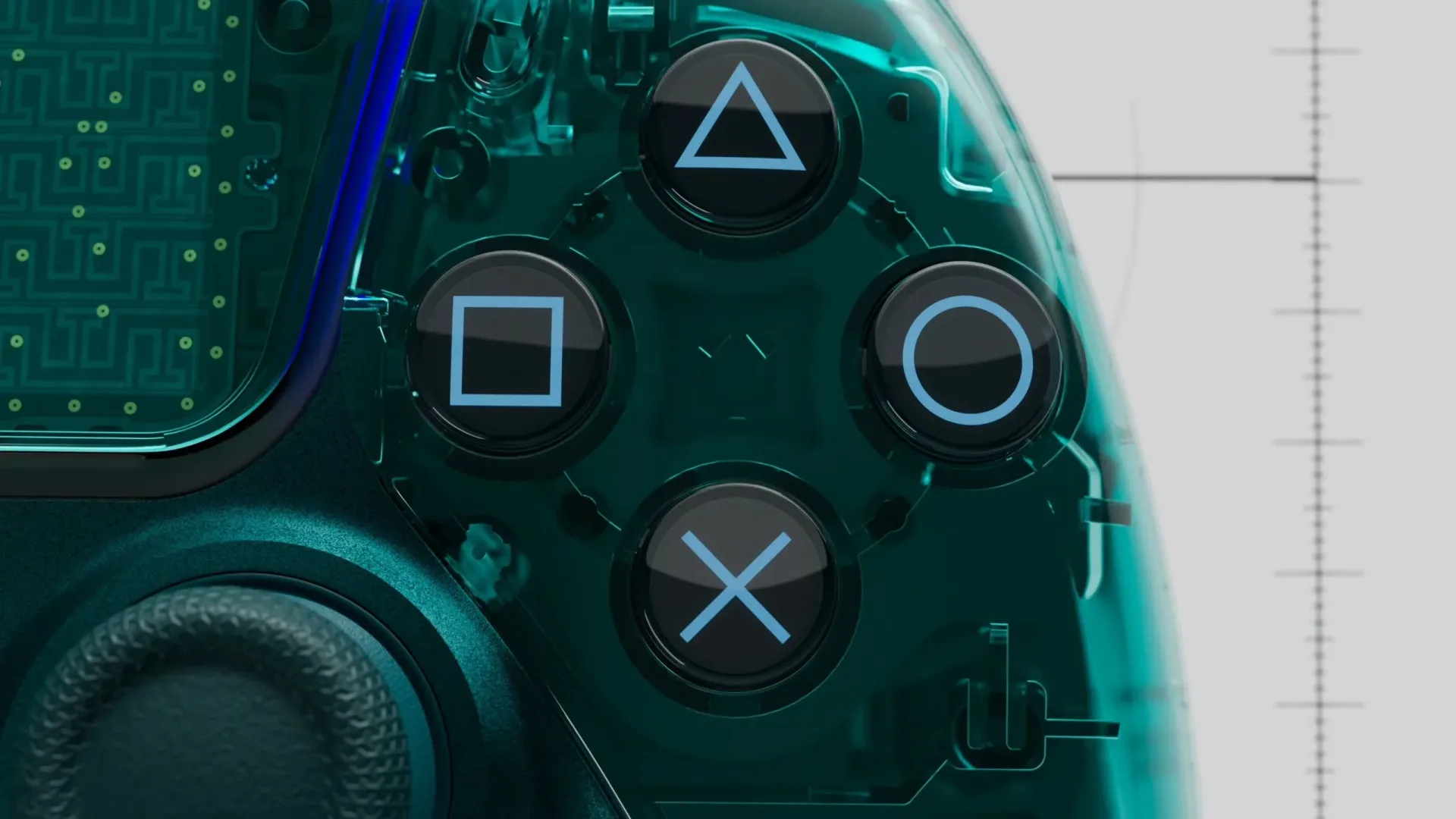
Transparent gaming hardware is returning to PlayStation 5 with the Prism Collection, a new range of translucent DualSense wireless controllers and PS5 console covers. The collection arrives in three named finishes: Flare Orange, Emerald Green, and Graphite Gray.
The basic pitch is wonderfully direct: take some of the visual language associated with late-1990s game hardware, apply it to the much larger and more sculpted shapes of the PS5 generation, and let a little of the machinery show through. The execution, at least as described, is not simply a clear-plastic shell. Each color is intended to retain a coordinated, mostly single-color look while using transparency, gloss and metallic accents to create depth.
DualSense controllers in the Prism Collection will cost $85 each, while the matching console covers will cost $75. Pre-orders are set to begin through the PlayStation Store on November 10 at 10 a.m. local time. Orders are not expected to ship until February 4, 2027.
For a closer rundown of the three-color lineup, see PlayStation’s Prism DualSense and PS5 Covers Bring Transparent Hardware Back in Three Colors.
What the Prism Collection includes
The collection covers two major visible pieces of a PS5 setup: the controller in the player’s hands and the outer plates that alter the console’s appearance. That paired approach matters. A special controller can be an appealing standalone accessory, but a coordinated cover allows the look to extend beyond the coffee table or charging station and onto the console itself.
PlayStation has assigned marketing names to the finishes, but the descriptions are more helpful than the labels alone:
- Flare Orange: a vivid orange finish that is said to take on a subtle rosy quality where transparent layers overlap.
- Emerald Green: a deep hunter-green look with additional visual depth from the translucent material.
- Graphite Gray: a cool-toned, storm-gray design. Despite the gray name, the finish has been described as showing bluish highlights.
The names point to a collection designed around color rather than an entirely neutral clear shell. That distinction is important. “Transparent” can mean anything from nearly colorless plastic to heavily tinted material; Prism appears to favor tinted translucency, where the internal structure remains part of the visual effect but the primary impression is still orange, green or gray.
How the translucent DualSense design is meant to work
On the controllers, the clear high-gloss treatment extends across the back. That should offer a view of some of the technology beneath the exterior while keeping the wider controller design monochromatic. A metallic middle cover is intended to bridge the glossy transparent exterior and the rest of the controller’s surfaces.
Related coverage includes PlayStation Reveals Prism Collection With Translucent PS5 Controllers and Console Covers.
“We know how much our fans have been looking forward to the return of transparent controllers,” designer Leo Cardoso said. “We wanted to bring back the iconic see-through trend of the late ’90s in a fresh, modern way that complements the PS5’s industrial design.”
In design terms, translucent does not necessarily mean every internal part will be fully visible with the sharpness of a glass display case. Translucent material lets light pass through, often while diffusing or tinting what sits behind it. That diffusion can make the inner components, structure and shadows feel layered rather than exposed in perfect detail. It is a useful fit for a controller, where the goal is frequently atmosphere and material texture rather than a literal teardown view.
The high-gloss finish is also a deliberate stylistic choice. Gloss reflects light more clearly than a matte surface, so it can amplify the changing shades created by colored transparent plastic. Under different lighting, transparent layers and their overlap can appear darker, brighter or slightly shifted in hue. That is particularly relevant to Flare Orange, whose rosy overlap effect has been specifically highlighted.
The metallic center section introduces contrast. Rather than turning the entire controller into one uninterrupted translucent object, PlayStation is combining materials: clear glossy plastic on the rear and a metal-like finish at the middle. The practical effect is intended to make the controller feel connected to the PS5’s current industrial design instead of resembling a purely retro replica.
A modern return to a recognizable hardware trend
PlayStation is openly framing Prism as a return to the see-through hardware trend associated with the late 1990s. That reference is not accidental nostalgia pasted onto an unrelated product. Transparent plastic has a particular appeal in game hardware because it turns the object’s construction into part of its decoration. A conventional solid shell hides its workings by design; a translucent shell makes the presence of those workings visually legible, even when it does not reveal every detail.
That approach has continued to show up across modern gaming hardware. Xbox has offered translucent controller options, and an X25 anniversary console has used an original-style green transparent look. Translucent finishes have also appeared on retro-focused systems including the Analogue 3D and Mod Retro. Prism therefore joins a visible broader interest in transparent hardware, but applies it to Sony’s current console ecosystem through both controllers and console covers.
The PS5 is a useful canvas for that treatment because its existing look already emphasizes pronounced surfaces rather than a simple rectangular box. The Prism covers have the opportunity to change the console’s silhouette from a solid, high-contrast object to one whose exterior suggests color and internal depth. The controllers extend that idea to the most frequently handled part of the system.
What buyers should plan around
The schedule is the key practical detail. The pre-order window begins November 10, but the stated shipping date is February 4, 2027. That creates a substantial gap between placing an order and receiving it, so interested buyers should treat the pre-order as an advance purchase rather than an immediate way to refresh a PS5 setup.
The listed pricing also makes clear that these are premium cosmetic accessories. At $85, each Prism DualSense costs more than the $75 console covers. Building a matched arrangement is therefore a deliberate purchase rather than a minor add-on, especially for players who want more than one controller in the same color.
Color choice may be the central decision. Flare Orange seems positioned as the loudest option, with its bright tint and reported rosy shifts through overlapping material. Emerald Green leans into the deep, classic transparent-hardware association while keeping a darker hunter-green base. Graphite Gray is likely the quieter fit for setups that favor neutral tones, though the cool blue highlights mean it is not a completely plain gray.
There is a useful difference between matching and mixing, too. The collection offers a coordinated controller-and-cover concept in each finish, but the three colors also have distinct personalities. Buyers who want a unified console presentation can keep the controller and console cover within one Prism color. Those more interested in a single standout accessory can choose the controller as the focal point while leaving the console unchanged. The available information establishes the products, colors, prices and schedule; it does not add further details about configurations beyond those announced items.
Why the material choice is the headline
Special-edition hardware often relies on a new color, printed art or a logo. Prism’s defining feature is different: it changes the relationship between surface and structure. A translucent finish makes depth part of the color treatment. Light can travel through the material, the color can become denser where layers meet, and elements under the shell can influence the overall look.
That is why the collection’s color descriptions emphasize overlap, depth and cool or warm tones. The orange is not described as merely orange; its transparency creates a rosier secondary effect. The green is not simply green; transparency adds depth. Graphite Gray is not flat charcoal; it carries cool, bluish highlights. The names communicate the palette, while the materials are meant to make that palette more dimensional.
There is also a clear tension between nostalgia and the PS5’s modern visual identity. The stated design objective is not to reproduce a late-1990s controller wholesale. It is to reinterpret the old see-through trend with gloss, metallic contrast and shapes that align with the current generation. Whether someone prefers the bold orange, the rich green or the cool gray, the point is the same: transparent hardware is once again being treated as a deliberate centerpiece rather than a novelty.
For PlayStation owners who have been waiting for a first-party translucent option, Prism provides a definite answer: three colors, DualSense controllers and PS5 covers, November pre-orders, and February 2027 shipping. The remaining choice is mostly aesthetic—and, in the best possible way, whether a living-room console should look a little more like the late ’90s.