Hunter’s Moon, a first-person historical narrative folk-horror game from independent developer Twin Swans, is now available exclusively for PlayStation 5. Written and directed by Alicia Contestabile, the game places players in the role of Lillith Thorne, a woman accused of witchcraft who must survive a single dangerous night.
Its premise is rooted in the history of 17th-century English witch hunts, but its stated focus is not supernatural spectacle. Lillith is trying to escape a rural village, then its surrounding forests and moors, while avoiding the Witchfinder General and navigating a community coming apart under suspicion. Stealth, listening and using what the villagers know are presented as central parts of her effort to reach safety.
A horror story built around accusation
Folk horror is a broad label, but it generally points toward horror shaped by rural settings, local traditions, isolation and collective belief rather than technology or a modern urban environment. Hunter’s Moon’s village, woodland and moorland setting fits that frame. More importantly, its core threat is human: an accusation can turn a neighbour into an enemy, and fear can create its own logic.
That emphasis matters to the game’s historical angle. The story is inspired by real English witch hunts from the 1600s, and Twin Swans describes its presentation as grounded in historical realism. The game does not need a literal monster to make its situation frightening. Lillith begins with a label placed upon her, and that label gives other people a reason—or an excuse—to pursue, judge and endanger her.
Contestabile has framed the project’s perspective plainly: the hunters are men rather than unknowable creatures, and the people who made accusations or helped send others to their deaths were also ordinary people who believed witchcraft was real. That is an important distinction for a narrative horror game. It shifts the question from “what is hiding in the dark?” toward “what happens when a group becomes certain that somebody among them is dangerous?”
“The hunters are just men,” Contestabile said. “And the truth is that those who accused others, put them on trial, and sent them to their deaths were also just people. They just deeply, deeply believed that witchcraft was real.”
The wording suggests Hunter’s Moon is interested in belief as a source of horror in its own right. A community may be dysfunctional, frightened and convinced it is acting correctly at the same time. For Lillith, that means danger can come from familiar places and familiar faces, not merely from the person designated to hunt her down.
What players are told they will do
The available description establishes a clear set of actions without promising a combat-heavy escape. Lillith uses stealth and cunning to evade capture by the Witchfinder General. In practical terms, stealth usually means managing visibility, movement and proximity to threats; the announcement does not specify a detection system, weapons, combat options or other detailed mechanics. What is confirmed is that avoiding capture is a fundamental objective.
Eavesdropping is another named activity. Lillith can listen to villagers to obtain knowledge and assistance, which positions conversation and overheard information as part of the game’s survival structure. The details matter: “knowledge and aid” could mean different things in play, but the supplied information does not define particular quest branches, allies or outcomes. It is safest to understand this as a narrative tool that lets players learn about the village and potentially find help, rather than as a promise of any specific dialogue system.
The village itself is described as being on the brink, with secrets for players to uncover. That gives the night a wider dramatic purpose beyond simply reaching an exit. A first-person perspective can make that investigation feel immediate: the player sees and hears the frightened community as Lillith does, while the need to remain unnoticed raises the stakes of every encounter.
The game’s “immersive-theatre-inspired” approach is also worth separating from the more familiar term “immersive sim.” Immersive theatre commonly places an audience inside a staged environment, encouraging close observation of spaces and characters rather than treating them as distant scenery. Hunter’s Moon’s description does not claim the systemic freedom associated with an immersive sim. Instead, the theatre influence points to a sense of presence, environmental storytelling and a populated setting in which paying attention may be as significant as moving forward.
A large voiced village, not just a lone pursuit
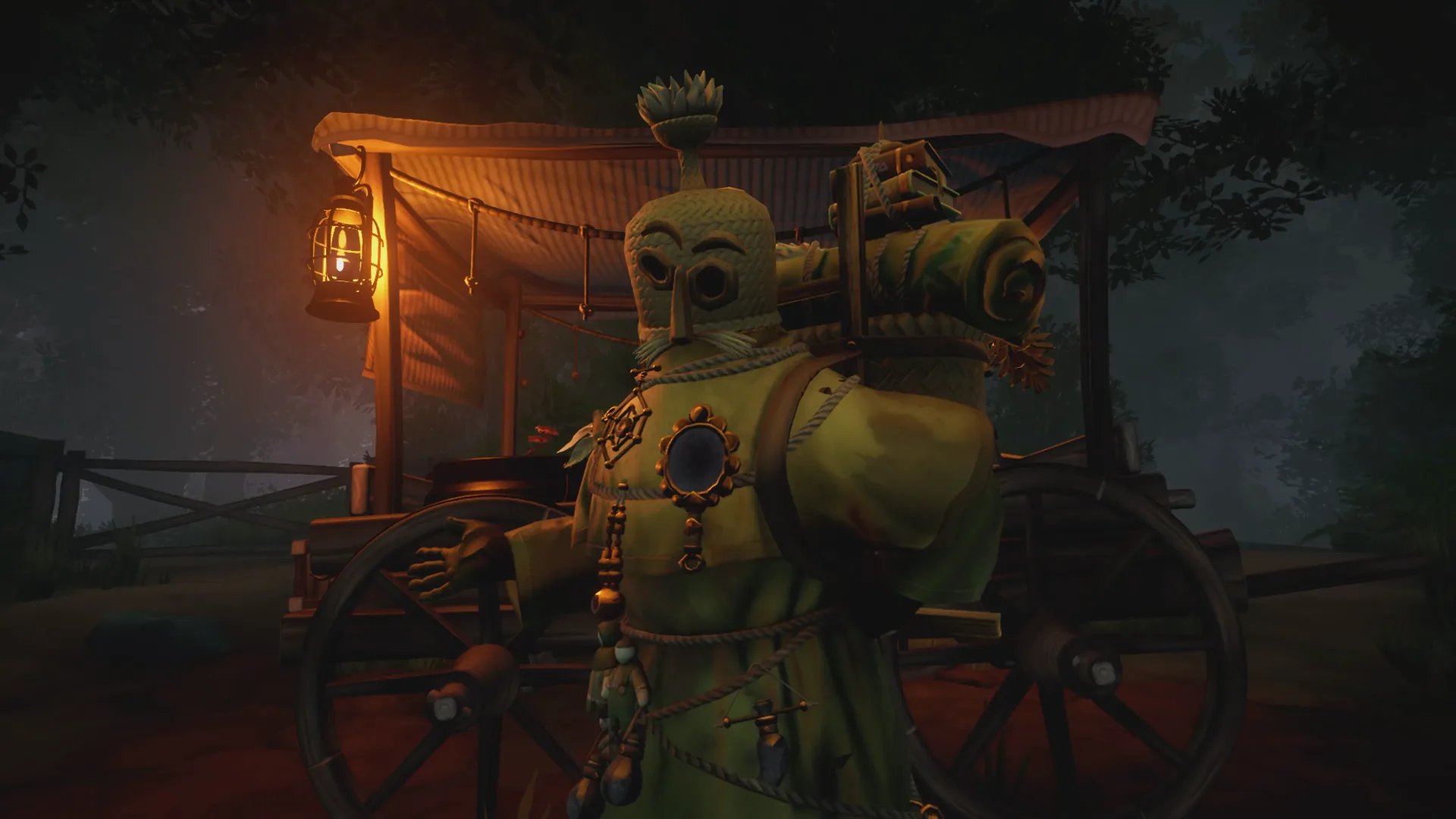
Twin Swans says Hunter’s Moon includes more than 100 fully voice-acted characters. That is a notable figure for a story set around one rural village and its outskirts, because it supports the idea of a social web rather than a small cast divided neatly into friend and foe.
Voice acting has particular value in a game that explicitly asks players to eavesdrop. If information is delivered through overheard exchanges, performance can communicate tension, certainty, gossip, reluctance or panic in ways plain text cannot. It can also make a village feel unstable: people may share the same fear while expressing it differently. The game’s premise depends on the weight of communal belief, so a broad voiced cast potentially gives that belief many individual faces and voices.
There is no information yet here on the game’s total length, the number of endings, the structure of its choices or whether every character has an extensive role. The confirmed point is simply the scale of the fully voiced cast. Players should not read the character count alone as confirmation of branching paths or a particular amount of replayability.
Stylised art and an original score
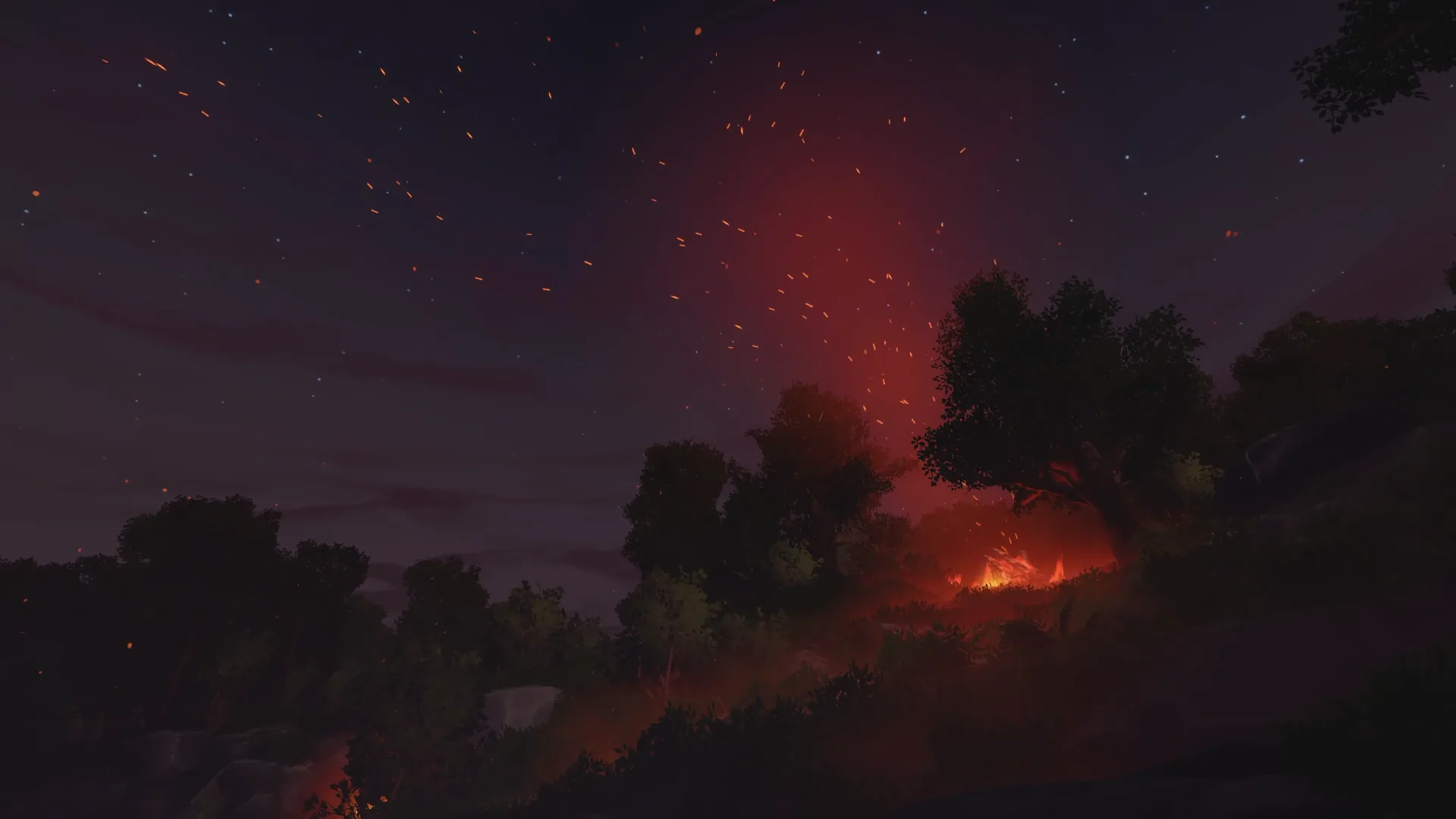
Hunter’s Moon uses hand-crafted stylised art rather than being described as a strict visual reconstruction of 17th-century England. That choice can serve historical fiction well: stylisation can focus attention on silhouette, texture, lighting and emotion while still drawing from a real period and place. Here, it sits alongside the studio’s stated goal of historical realism, suggesting a game that wants its social circumstances and atmosphere to feel authentic without presenting itself as a documentary recreation.
The score is composed by Resina. Music is often a decisive part of folk horror’s atmosphere, especially when an experience moves between a village and less protected terrain such as forests and moors. However, no details have been provided about the score’s instrumentation, musical themes or implementation, so those elements remain unknown.
The credited development team includes artists and developers with work on The Stanley Parable, The Dark Pictures Anthology: Little Hope, The Witcher 3: Wild Hunt and Signalis. Those credits indicate experience across narrative games and horror, but they should not be taken as a statement that Hunter’s Moon plays like any of those projects. The confirmed connection is the team members’ prior credits, not a shared feature set, tone or design blueprint.
Why the historical framing is the key detail
Historical horror can use the past merely as decoration: old buildings, period clothing and a few ominous rituals. Hunter’s Moon is positioned differently. Its central premise draws on a history in which accusations had terrible material consequences, and its creative lead stresses that the pursuers’ humanity is precisely what makes the situation disturbing.
That framing gives Lillith’s escape a sharper emotional context. She is not described as an adventurer entering a cursed village by choice. She is an accused woman attempting to get out alive. The village’s secrets may broaden the mystery, but the immediate power imbalance is already clear: she is pursued by an authority figure and surrounded by a fearful community.
It also creates a useful tension for players. The announced systems encourage gathering information from villagers, yet villagers are part of the social environment that has turned hostile. Listening closely may be necessary for safety, while being close enough to listen may carry its own risk. The details of how Twin Swans balances those elements will depend on the finished game, but the premise gives stealth a narrative purpose beyond simply avoiding an enemy patrol.
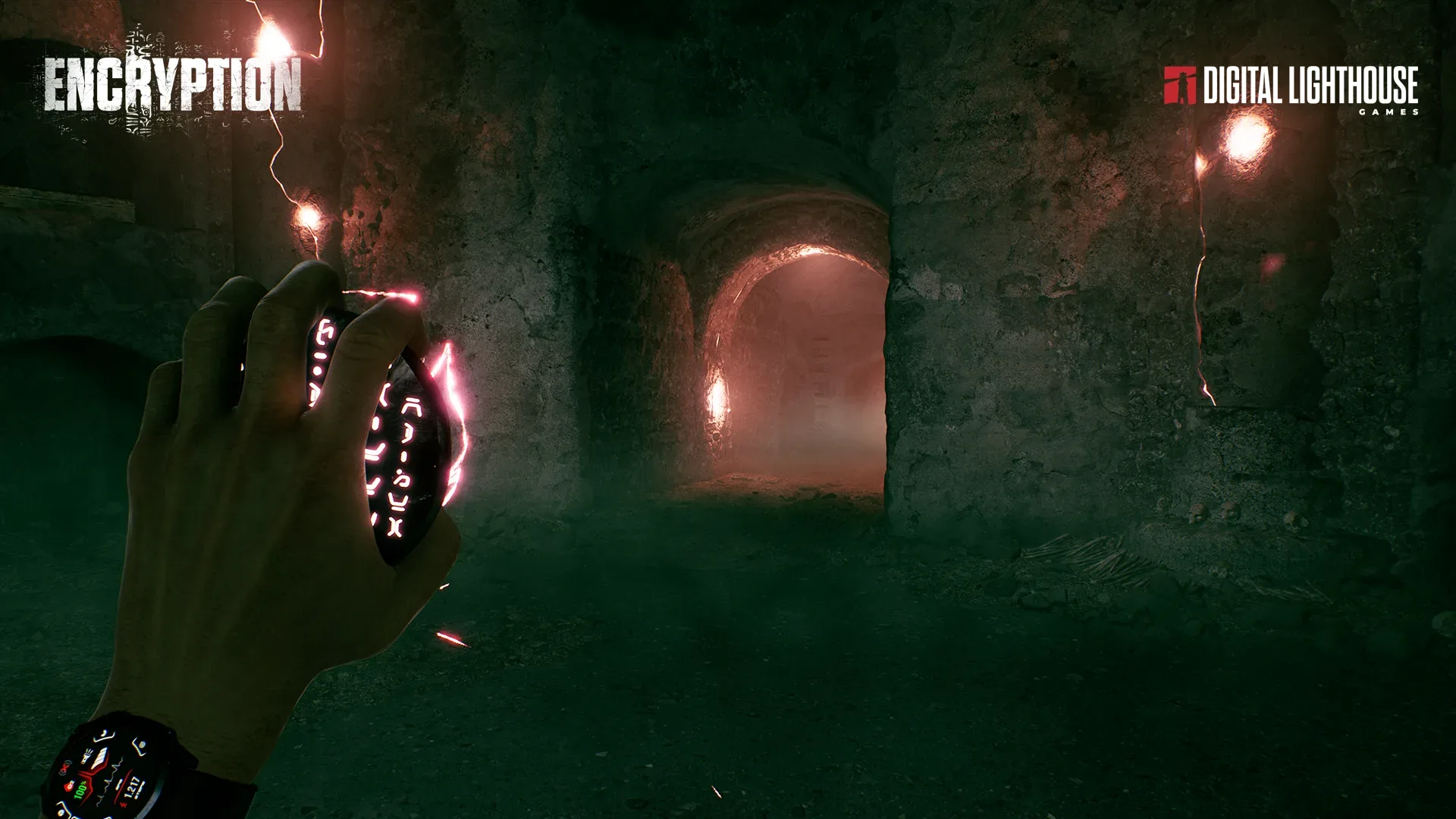
For players following recent horror releases, Hunter’s Moon joins a genre space that continues to draw on intense psychological pressure and environmental storytelling. For another example of a horror project built around a different kind of crisis setting, see the wildfire-shadowed psychological horror of Encryption. Hunter’s Moon’s distinction is its specific focus on an English witch-hunt setting and the threat of a community persuaded by fear.
Platform and availability
Hunter’s Moon is available now on PlayStation 5, with PS5 described as its exclusive platform. Twin Swans developed the game, Alicia Contestabile wrote and directed it, and Resina composed the original score.
The game’s stated ambition is compact but weighty: turn one fateful night into a first-person escape through a village where terror is generated by accusation, rumour and conviction. Its horror is not presented as distant or abstract. It is built from people deciding that another person must be feared—and from Lillith’s struggle to survive what follows.