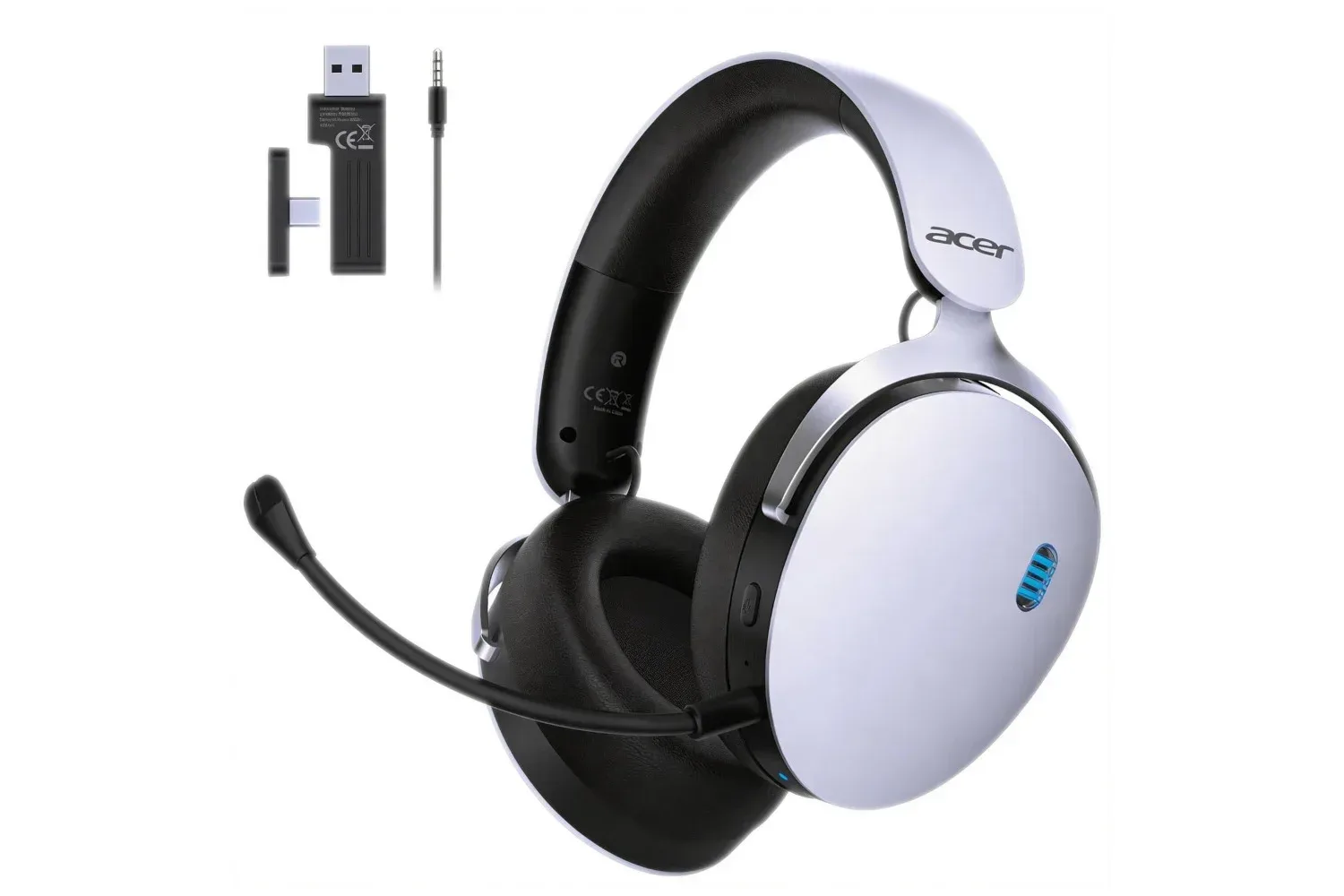
Acer’s wireless gaming headset is listed at $40 in a limited promotion described as a 50% discount. That is the central reason to pay attention here: a headset is one of those gaming purchases that can quietly solve several everyday annoyances at once, from hearing teammates clearly to avoiding a desk crowded with separate headphones and microphones.
The headset is presented as compatible with PC, Nintendo Switch and PlayStation 5, and its specification list is unusually broad for a budget-oriented deal. It offers 2.4GHz wireless, Bluetooth 5.3 and a wired connection, alongside a detachable flexible microphone, 50mm drivers, memory-foam ear cups, directional audio and a claimed 40-hour battery life.
As always with a time-sensitive retail promotion, the listed price and stock can change. A 50% headline is useful only if the current checkout price is still $40 and the model offered matches the features a buyer actually needs. The sensible move is to verify both before treating this as a must-buy rather than merely a potentially good value.
Why the connection options matter more than they first appear to
Headset shopping gets confusing because “wireless” describes a category, not a single behavior. This Acer model’s three connection methods are important because they suggest different practical uses rather than three versions of the same experience.
2.4GHz wireless refers to a dedicated wireless connection operating in the 2.4GHz radio band. In gaming headsets, this is commonly the mode people look for when they want the convenience of going cable-free while retaining a connection built around active play. The supplied details identify 2.4GHz wireless support, but do not specify the connection hardware, platform-by-platform setup, latency measurements or range. Those are details worth checking on the individual product listing, especially for console buyers.
Bluetooth 5.3 is the headset’s other wireless option. Bluetooth can be useful for general device flexibility, particularly in a room where a player may rotate between a computer and other compatible hardware. Bluetooth also means the headset is not restricted to one use case simply because its styling is gaming-focused. However, a buyer should not assume identical microphone behavior, audio features or compatibility across every Bluetooth-enabled device without confirmation.
Then there is the old reliable answer: wired use. A physical cable can be valuable when charging is inconvenient, when wireless conditions are crowded, or when a player simply prefers the predictability of a direct connection. The source material confirms a wired option but does not identify the cable type or connector, so shoppers should check that point against their intended PC, Switch or PS5 setup.
This three-way design is the strongest practical argument for the headset. It gives a prospective buyer a fallback. A headset that can continue working in a wired mode when the battery is low is potentially less disruptive than one limited to a single wireless method. Likewise, several connection paths may make it easier to fit the same headset into different rooms or gaming habits.
Related coverage includes Acer Wireless Gaming Headset Drops to $40 in Limited 50% Deal.
Platform support is useful, but check the exact setup
PC, Switch and PS5 compatibility makes this deal relevant to households that do not game in only one place. Instead of buying a dedicated headset for every machine, one unit may cover a desktop session, a console game and portable Switch play—provided the specific connection method works as expected on each platform.
That last qualification matters. “Compatible with” is not always a complete buying guide. For example, buyers should establish which connection mode they plan to use most often, whether they require voice chat, and whether a wired fallback suits their particular device arrangement. The provided information does not spell out feature parity among PC, Switch and PS5, so it would be unwise to infer it.
For PC players, an all-in-one headset can also be simpler than assembling separate headphones and a standalone microphone. That does not automatically make it superior to a dedicated audio setup, but it can reduce desk clutter and setup friction. Someone who only occasionally joins multiplayer chat may value a detachable boom mic precisely because it can be removed when voice communication is not needed.
For console and Switch players, the versatility has a different appeal: the headset has been positioned as an option for the platforms they already use. Yet a shopper with one primary platform should still prioritize that platform’s requirements over the sheer number of connection modes printed on the box.
What the audio and microphone claims mean
The headset is described as using 50mm drivers. Drivers are the components inside headphone ear cups that convert an electrical audio signal into sound. The 50mm figure tells buyers the stated diameter of those drivers; it does not, by itself, guarantee that a headset will sound better than another model. Sound quality also depends on tuning and other design choices that are not detailed here.
The supplied description emphasizes bass and directional audio. Directional audio is the ability to perceive where sounds are coming from in a game, such as a nearby footstep or an effect approaching from one side. That is a meaningful feature category for competitive and cooperative games alike, because sound cues can be part of how players communicate and react. But there are no performance measurements or game-specific comparisons included, so the appropriate reading is that the headset is marketed with directional audio—not that its positional performance has been independently established here.
Voice communication is another core part of the package. The microphone is said to focus on the user’s voice, is flexible for positioning, and can be removed. A flexible boom is practical because moving a mic closer to or farther from a mouth can help a user find a comfortable position. A removable mic is equally practical for solo games, music or video, where an attached boom can be unnecessary.
Players who regularly game with friends may appreciate the convenience. Players who avoid open lobby chat may appreciate that the microphone does not have to stay on the headset at all. In both cases, the point is control: the hardware supports communication when wanted without requiring a permanently attached mic.
Comfort and battery claims should be read in context
A headset can have the right feature list and still be a poor fit if it is uncomfortable. Acer’s model is described as lightweight with memory-foam ear cups. Memory foam is commonly used to help ear pads conform around the listener, while a lower overall weight can matter over longer sessions. These are encouraging design claims, but comfort remains personal. Head shape, glasses, heat buildup and clamping preference all affect the experience, and none can be settled by a specification list.
The stated battery life is up to 40 hours. That is a substantial claim for a wireless headset, though it should be treated as a maximum rather than a personal guarantee. Real-world endurance can depend on the selected connection mode and usage pattern, neither of which is broken down in the supplied details. The useful takeaway is not that every player will get the same number, but that the model is positioned for extended use between charges.
Who should consider the $40 deal?
- Multi-platform players: PC, Switch and PS5 support, plus several connection choices, are the clear draw.
- Players replacing a basic chat headset: A detachable mic and 50mm drivers make this a more full-featured proposition than a bare-bones voice accessory, based on the stated specs.
- People who want a simpler PC setup: One combined headset and microphone can be easier to manage than separate gear.
- Buyers who want an emergency wired option: The ability to use a cable may be useful when wireless is not the right answer.
It may be less compelling for someone who already owns a headset they find exceptionally comfortable, someone who needs confirmed advanced features not listed in the deal, or anyone whose main device setup needs a particular connector that has not been verified. A low price makes compromises easier to accept, but it does not make compatibility questions disappear.
At $40, the Acer headset’s appeal is less about one spectacular specification than the combination: stated support for three gaming platforms, multiple ways to connect, a detachable mic, 50mm drivers, memory-foam cups and a 40-hour battery claim. Buyers looking at broader PC-gaming hardware discounts can also compare the value logic with this look at a discounted QD-OLED gaming monitor. In this case, however, confirm the live price, model details and preferred platform connection before checking out—because limited deals have a habit of vanishing faster than a teammate who hears the words “escort mission.”
Shop the products
Check current price, model and availability at the retailer.