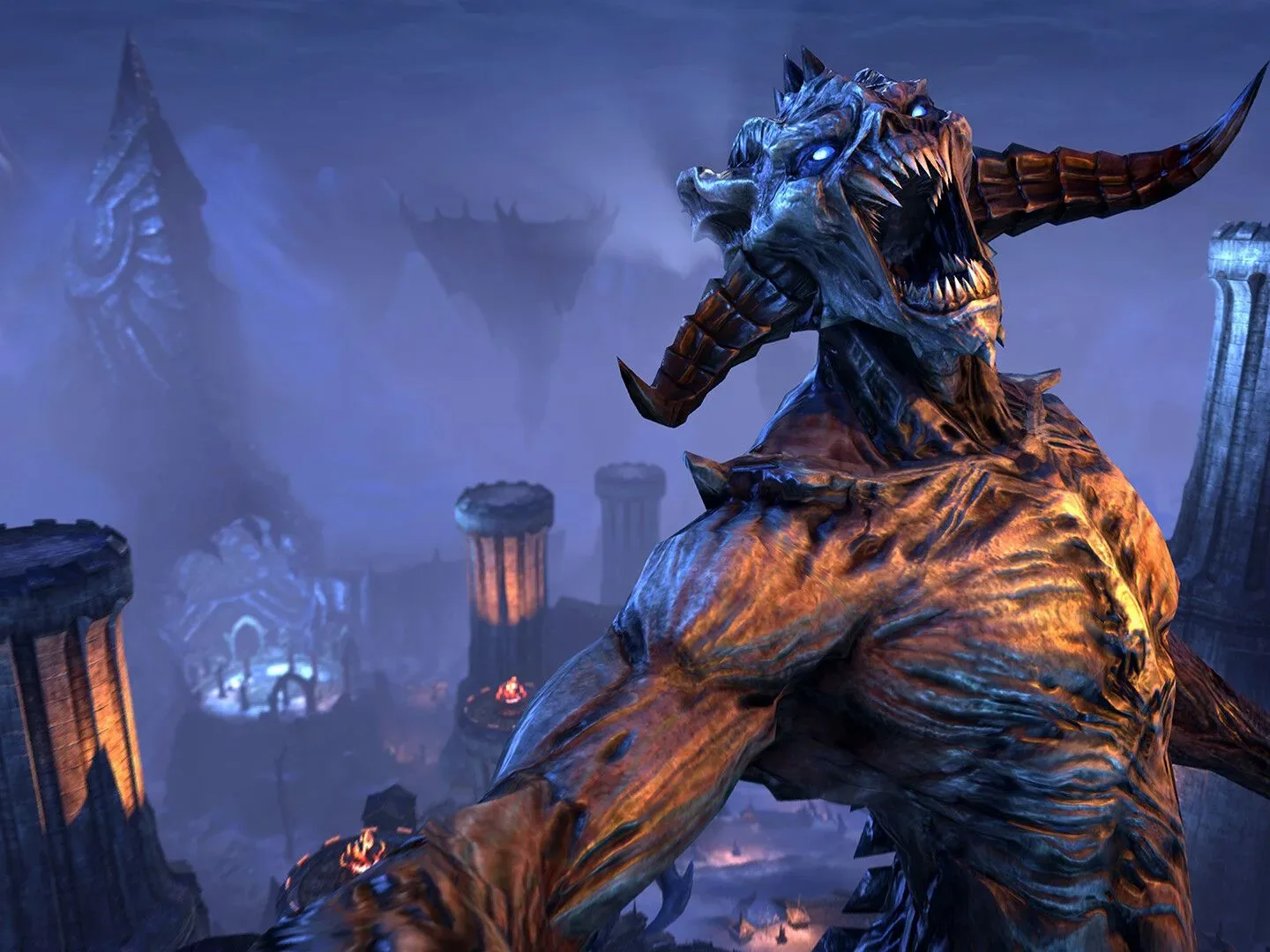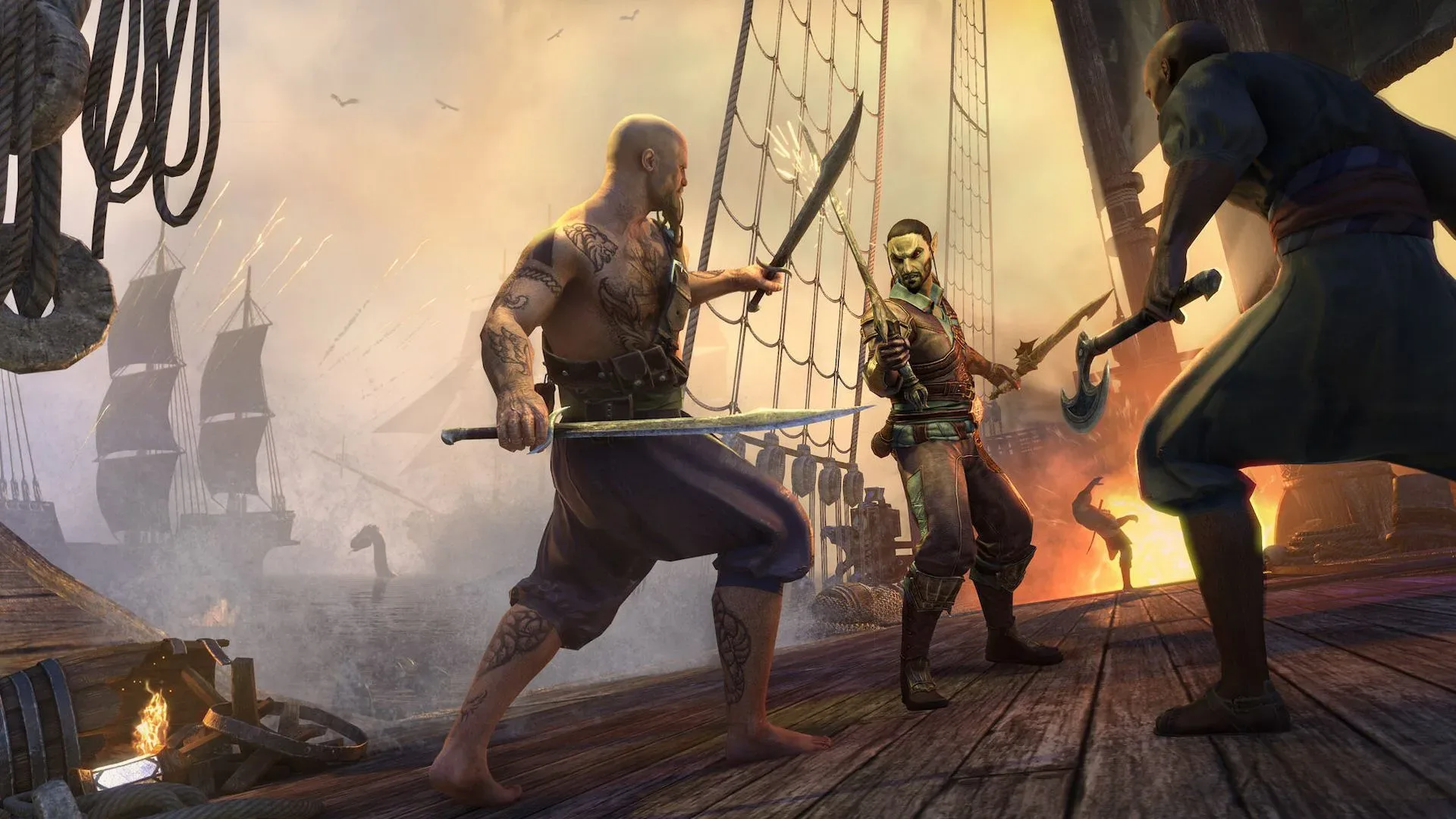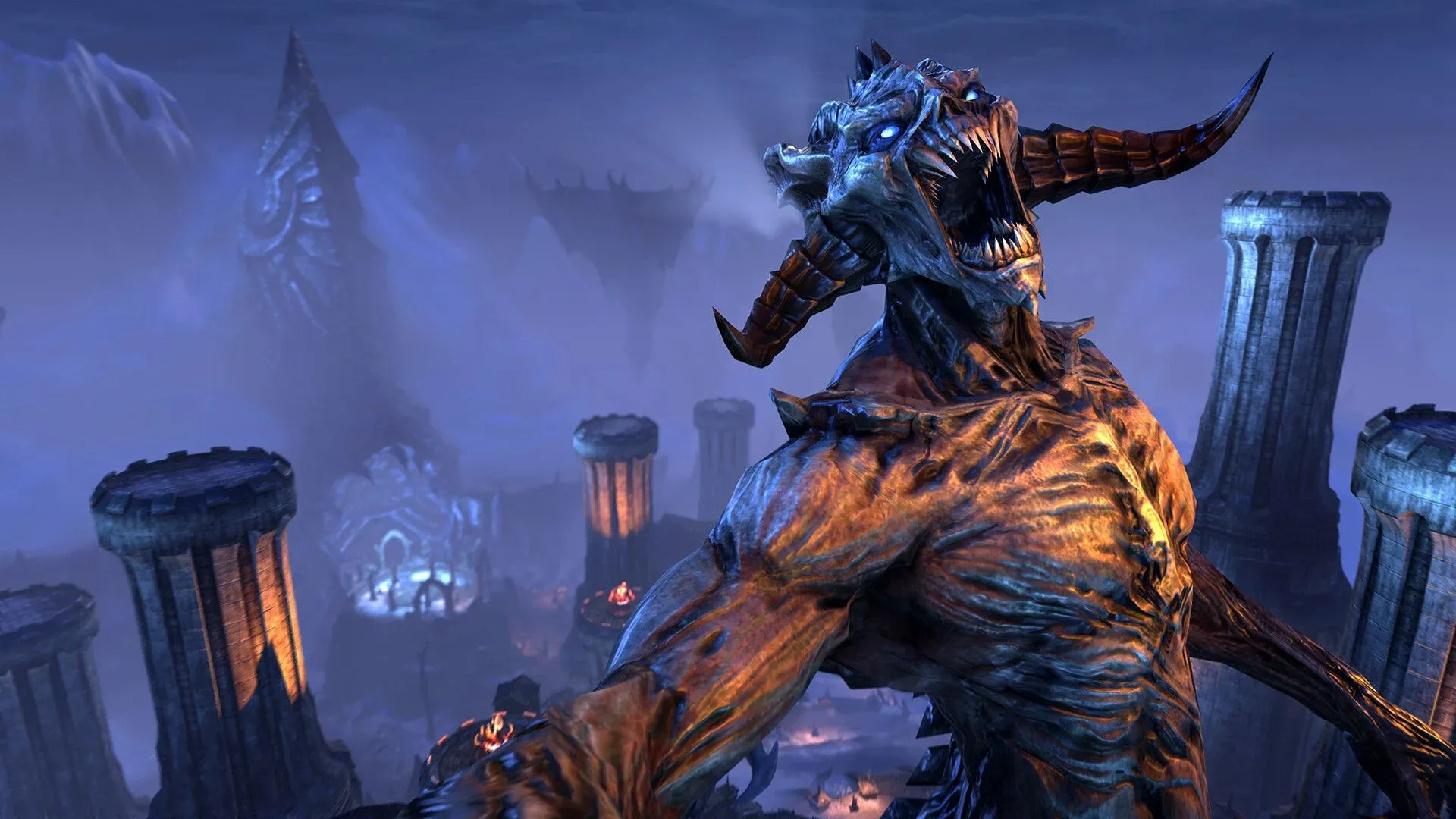
The Elder Scrolls Online is shifting some of its attention away from combat as the primary measure of challenge and toward exploration, puzzles and secrets that ask players to investigate the world for themselves. The change is tied to a broader refresh of the long-running MMO’s content approach, including its season system, the Nowhere Vault, Rumors and the High Seas of Tamriel event.
The important distinction is that combat is not being discarded. Veteran difficulty, trials and other demanding encounters remain part of ESO’s identity. Instead, the studio’s stated goal is to create more activities where curiosity, observation and player-led problem-solving are the main engines of engagement. In practical terms, that means content designed to make players examine environments closely, compare clues and test theories rather than simply clear enemies as efficiently as possible.
A broader definition of challenge
Associate design director Jason Barnes described the direction as creating experiences that let people work things out on their own. That is a meaningful change in emphasis for an MMO, a genre often structured around familiar loops: accept an objective, fight through a location, defeat a powerful enemy and collect rewards.
Combat-led progression can still produce memorable stories, particularly when a group overcomes a difficult boss or improves enough to handle Veteran content. But it also establishes a high practical threshold for some players. Mechanical execution, character builds, equipment, group coordination and repeated attempts can all determine whether someone gets to see a piece of content.
Puzzle- and exploration-oriented activities create another route into the game. The test is less about rapid reactions or damage output and more about noticing details, drawing connections and being willing to search. That does not necessarily make the content simple. A mystery can be difficult without asking players to master a punishing combat rotation.
“People love secrets,” Barnes said, framing discovery itself as a key motivation.
That observation gets at why this format can work especially well in a shared online world. A secret is not only an answer waiting to be found; it is an invitation for players to compare what they saw, wonder whether a strange detail matters and keep looking after an apparent solution. The pleasure lies partly in uncertainty. An unexplained object, phrase or route can turn an ordinary space into somewhere worth revisiting.
The Nowhere Vault points to the intended experience
The Nowhere Vault is the clearest named example of the new approach. During playtesting, Barnes said engagement was extremely high as participants searched every corner and questioned the meaning of what they encountered. That response is significant because it reflects voluntary attention rather than attention driven solely by a combat encounter or a prominently marked objective.
Related coverage includes The Elder Scrolls Online Looks Beyond Combat With a New Focus on Secrets and Exploration.
“Looking in every nook and cranny” is not just a description of scavenging. In this context, it describes a style of play in which the environment may be part of the challenge. Players are encouraged to ask whether an unusual detail is decoration, a clue or an opening to something else. The content becomes more satisfying when it supports that suspicion with discoveries worth finding.
ESO’s leaders are positioning that kind of engagement as something for a wide range of players, not exclusively those who identify as casual. The new activities may feature combat that is not especially severe, but the goal is still to keep participants mentally involved. The difficulty shifts from execution to interpretation.
That difference matters. A combat challenge generally asks, “Can you perform under pressure?” An exploratory puzzle instead asks questions such as:
- Did you notice the relevant detail?
- Can you determine what information is meaningful?
- Have you considered another route, interpretation or interaction?
- Can you connect one clue to something seen earlier?
Neither form is automatically better, and players can enjoy both. The opportunity here is variety. A player who has spent an evening learning a difficult encounter may want a different kind of activity next time. Another player who does not pursue high-level combat can still take part in a communal mystery without feeling that the content was built for somebody else first.
What “Morrowind-style” exploration means here
The comparison to The Elder Scrolls III: Morrowind is about the feeling of discovery rather than a claim that ESO is becoming that game. The reference evokes a style of Elder Scrolls adventure in which players engage more directly with the world, investigate leads and accept that not every answer is immediately handed over through a straightforward path.
Rumors is particularly aligned with that idea. Its name suggests information that players may need to evaluate rather than follow as a fully resolved instruction. Rumors can encourage exploration because they create possibilities: perhaps there is something to investigate, perhaps a detail points elsewhere, perhaps the player needs to decide what is credible or important.
For a live-service MMO, content that values investigation has another potential advantage: it can give players reasons to talk to one another that are not limited to asking for combat help. Communities can trade observations, debate interpretations and steer friends toward a lead without necessarily supplying every answer. That is a healthier fit for a secret than instantly publishing a complete solution, although players will naturally choose how much help they want.
It also helps preserve a sense of place. When people search an area carefully because they think it might conceal meaning, the setting is doing more than serving as a corridor between fights. Environmental details, layout and atmosphere become part of the activity. That is the core appeal behind the push for more content that invites investigation.
Seasons and events create room to experiment
The seasonal structure, along with the High Seas of Tamriel event, signals an attempt to move beyond the expectation that the game’s major rhythm must always center on annual expansions and challenging combat. ESO is not abandoning those traditions on the evidence available. Rather, the team is adding formats that can support other kinds of participation.
An event can bring a large portion of the player base into the same theme at once, while a mystery-oriented feature can give those players different ways to engage with it. Some may be determined to uncover every detail. Some may join friends, follow community discussion or simply enjoy an accessible activity that has enough intrigue to hold their interest.
That flexibility is useful for an MMO with a varied audience. Not every player arrives with the same amount of time, experience or interest in demanding group encounters. Building activities around investigation gives the game another way to create shared moments without making mastery of difficult combat the only passport to participation.
There is also a creative upside for future updates. If the Nowhere Vault, Rumors and High Seas of Tamriel are a foundation, as Barnes indicated, later content can build on the basic premise rather than repeat it unchanged. The team has said it already has further ideas, but has not detailed them. It would be premature to assume what those plans are. The important confirmed point is that the current pieces are being treated as the beginning of an expandable direction, not as isolated experiments.
Combat still has a place in ESO’s future
Players who enjoy difficult dungeons, trials and Veteran-level activities should not read this shift as an announcement that ESO no longer values combat. The stated aim is to make something that everyone can invest in. That phrasing is broader than replacing one audience with another.
In fact, non-combat-forward content may complement ESO’s combat activities. A game with only one dominant kind of challenge can make a player’s time in it feel narrow, regardless of how good that activity is. Alternating between a hard encounter and an atmospheric investigation can make each feel fresher. It can also let groups with mixed skill levels share time in the same game more comfortably.
For veteran players, the appeal of a secret may not be lower difficulty at all. It may be the chance to confront uncertainty on different terms. Expertise in a damage rotation does not necessarily reveal the answer to a puzzle. A player who knows every combat mechanic still has to inspect, infer and experiment when the challenge is constructed around discovery.
For newer or more time-limited players, the benefit is clearer: they can participate in content built around attention and persistence without first needing to meet the same combat demands as an endgame group. That does not eliminate all barriers, but it broadens the kinds of accomplishment ESO can recognize.
A long-term commitment amid a difficult year
The evolving content plan arrives during a difficult period for ZeniMax Online Studios and the wider Xbox organization. Microsoft’s planned cuts of more than 3,200 Xbox employees were underway, while Bethesda union representatives reported that dozens of programmers, artists, designers and testers had been lost.
Against that backdrop, game director Nick Giacomini said ESO is “here to stay,” with additional support from Bethesda. That reassurance gives added weight to the discussion around seasons and foundations. A living MMO depends on continued development, and players evaluating a new direction will naturally care whether the game has the support needed to carry it forward.
There are still unanswered questions. The further ideas Barnes mentioned have not been revealed, so the size, cadence and exact form of future exploration-focused content remain unknown. The return to Skyrim has also been described as mysterious, leaving little firm information to analyze. It is best to treat both as areas to watch rather than promises with defined features attached.
What is clear is the intended philosophy: ESO wants more room for players to be curious. The Nowhere Vault and Rumors point toward content that rewards searching and thinking, while High Seas of Tamriel represents the wider event side of the strategy. For an Elder Scrolls game, making the world feel worth investigating is a natural ambition—and for an MMO, it could make discovery a more central social activity than it has been under a mostly combat-shaped model.
Players keeping an eye on the wider Elder Scrolls future can also revisit our coverage of how platform plans can leave fans looking for clearer answers. In ESO’s case, the clearest answer so far is a directional one: expect more opportunities to search, speculate and find the hidden seams in Tamriel.