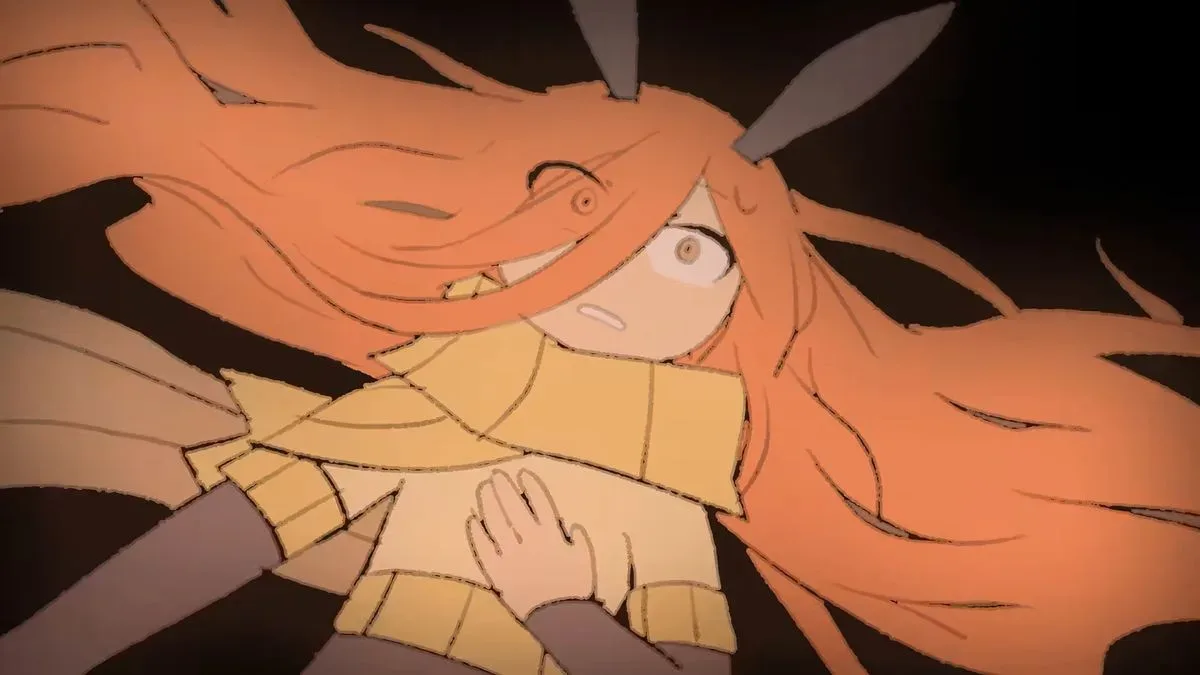
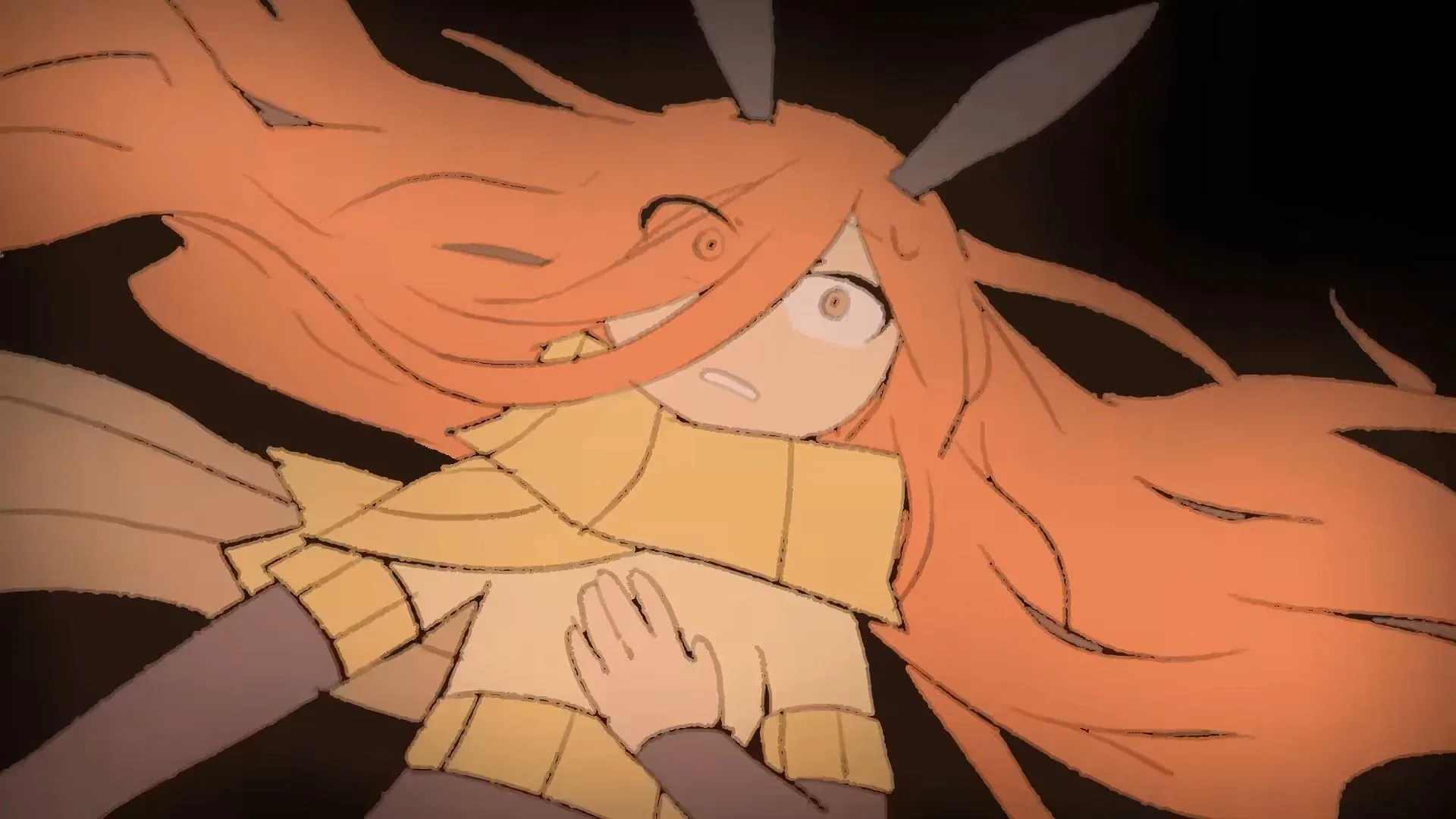
Temmie Chang has released Of the World, the third entry in a personal trilogy of pixel-art games that sits apart from Undertale and Deltarune. The new game follows Escaped Chasm and Dweller’s Empty Path, and Chang recommends playing those earlier titles first.
Of the World is playable in a web browser through Itch.io. Chang also recommends downloading it rather than relying exclusively on the browser version, because a downloaded copy is intended to keep progress safe if future updates affect the web build.
The release has drawn unusually large attention for a small, personal project. Chang’s reveal post recorded 1.8 million views through the platform’s displayed metrics, while the game’s trailer had passed 330,000 YouTube views at the time those figures were noted. Chang responded with gratitude, while acknowledging some discomfort with the scale of the spotlight.
“Thank you for taking an interest in my little game!!” Chang wrote in an update, adding that the attention was appreciated even if it felt a little embarrassing.
A trilogy with a recommended order
The most useful starting point for curious players is straightforward: begin with Escaped Chasm, continue with Dweller’s Empty Path, then move to Of the World. Chang explicitly presents the first two games as recommended preparation for the new release.
Escaped Chasm is described as a small RPG Maker game about a lonely girl connected to another world she sees in dreams. “RPG Maker” refers to a development toolkit commonly used to create role-playing games, often with tile-based environments, menu-driven interactions, and pixel-art presentation. That label tells players something about the framework, not necessarily the scale or structure of the experience.
Dweller’s Empty Path is characterized as a similarly styled game whose focus falls largely on walking around and speaking with non-player characters and examining objects. NPC, short for non-player character, means a character controlled by the game rather than by the person playing. In practical terms, that description suggests observation and conversation are central to the second game’s rhythm.
The available description of Of the World points to continuity rather than a sharp visual departure. It retains recognizable pixel art and exploration, while appearing to introduce more complicated combat systems. That makes the third game notable not just as a closing chapter, but as a possible expansion of the series’ mechanical ambitions.
Related coverage includes Temmie Chang Releases Of the World, Completing a Personal Three-Game Series.
What “more complex combat” means here—and what it does not
The supplied details support a careful reading: Of the World appears to have deeper combat than its predecessors, but no specific battle rules, progression systems, enemy types, or difficulty options have been established here. Players should avoid treating “more complex” as confirmation of a particular style of combat.
Still, the phrase matters in context. The earlier games are introduced through their mood, traversal, dialogue, and interaction with the world. If the third entry gives combat a larger or more involved role, that may change the balance between exploration and encounters. It could also make the recommended play order more valuable, since players can experience the progression from the trilogy’s earlier approach before reaching its newest form.
Pixel art is another term worth separating from genre. It describes an intentionally low-resolution visual style built from visible pixels, not a promise that a game will play like any one classic RPG. Chang’s games may share an immediately recognizable look with other pixel-art releases, but the cited descriptions emphasize their own atmosphere and exploratory focus.
Chang’s work beyond the trilogy
Chang is well known for contributions to Undertale and all five currently available chapters of Deltarune. That association helps explain why a standalone release can quickly reach a sizeable audience, but Of the World is not presented as an extension of either RPG series. It is a separate project and the conclusion to Chang’s own three-game run.
Toby Fox is credited for melodies in these games, preserving a creative connection without changing that distinction. A melody is the sequence of notes that forms the recognizable main line of a piece of music; a credit for melodies does not, by itself, define the full scope of anyone’s role in a game’s development.
The separation is especially relevant now because Deltarune remains active. Chapter 6 has been described as structurally complete, while work on Chapter 7 has begun. “Structurally complete” should not be read as a release date or a declaration that every final element is finished. It indicates that the chapter’s core structure is in place, while leaving room for work that may still be needed before the chapter is ready for players.
Fox has also said that Chapter 6 will turn toward the RPG’s principal mysteries after the series’ more overtly silly detours. Meanwhile, Deltarune has accumulated 131,300 Steam reviews with 98% marked positive. Those numbers underline the substantial audience around the broader creative circle, but they should not obscure the more personal scale Chang has ascribed to Of the World.
Why the download recommendation matters
Browser games offer an immediate route in: no traditional installation is required before beginning. The trade-off is that a browser build can be affected by updates, browser data settings, or how a site handles stored progress. Chang’s recommendation to download Of the World is therefore practical rather than merely optional. A downloaded version is the preferred choice for anyone who wants the best chance of retaining their save as the game changes.
That advice is particularly useful for players approaching the trilogy as a sequence. Starting with the first game and progressing in order turns the project into more than a quick visit to a single new release. It gives players room to follow the continuity of its characters, setting, and design choices before reaching the entry that appears to make combat more involved.
There is also a broader reminder here for people following small PC releases: platform and build details can be as important as the game’s premise. Recent PC news has included projects at very different stages, from public testing to full releases; for example, Wyrmspan’s public Steam playtest illustrates how access arrangements can shape what players should expect. In this case, Of the World is available to play in-browser, but its creator’s guidance is clear that downloading is the better route for preserving progress through future updates.
A small game with a very visible arrival
The contrast at the center of this release is hard to miss. Chang calls attention to a “little game,” yet the announcement has produced millions of social views and hundreds of thousands of trailer views. That response reflects interest in Chang’s body of work, but it also creates an opening for a trilogy that might otherwise be discovered more quietly.
For newcomers, the clearest expectation is not that Of the World is a new Undertale or a hidden Deltarune chapter. It is a separate closing installment with its own recommended lead-in: two earlier pixel-art games, then a finale that retains exploration while apparently broadening its combat. For returning players, the immediate decision is equally simple—use the download version if preserving progress matters, and follow the trilogy in the order Chang recommends.