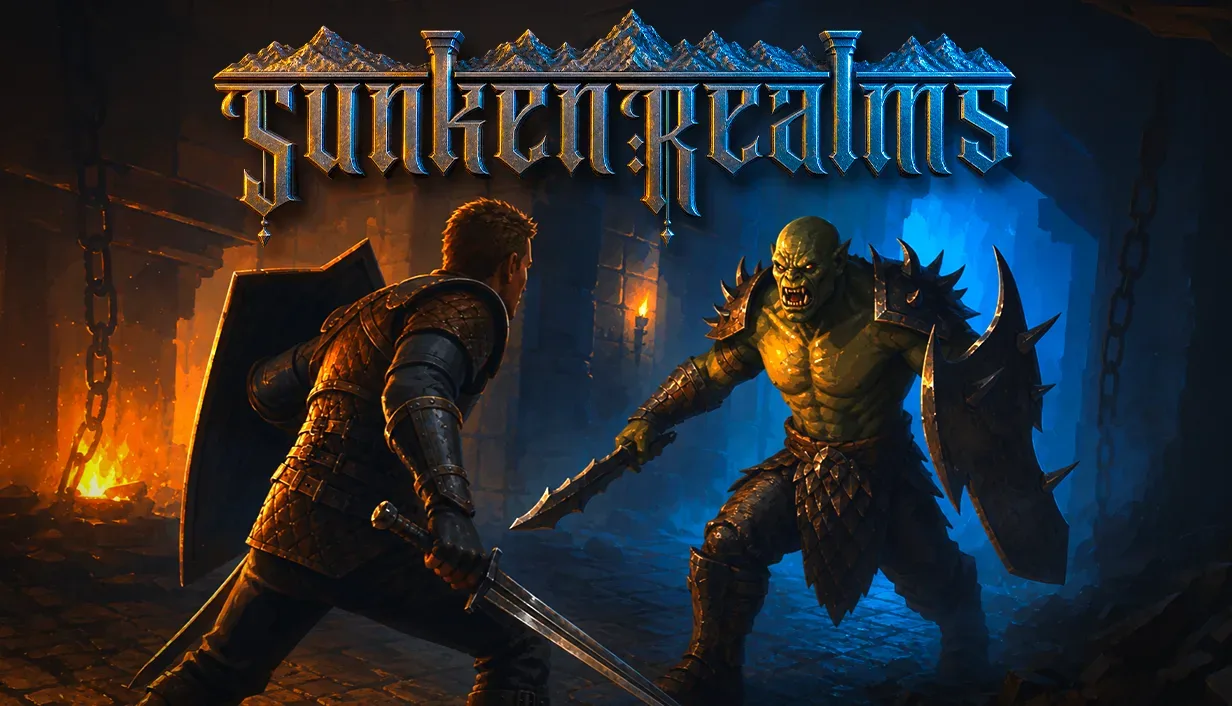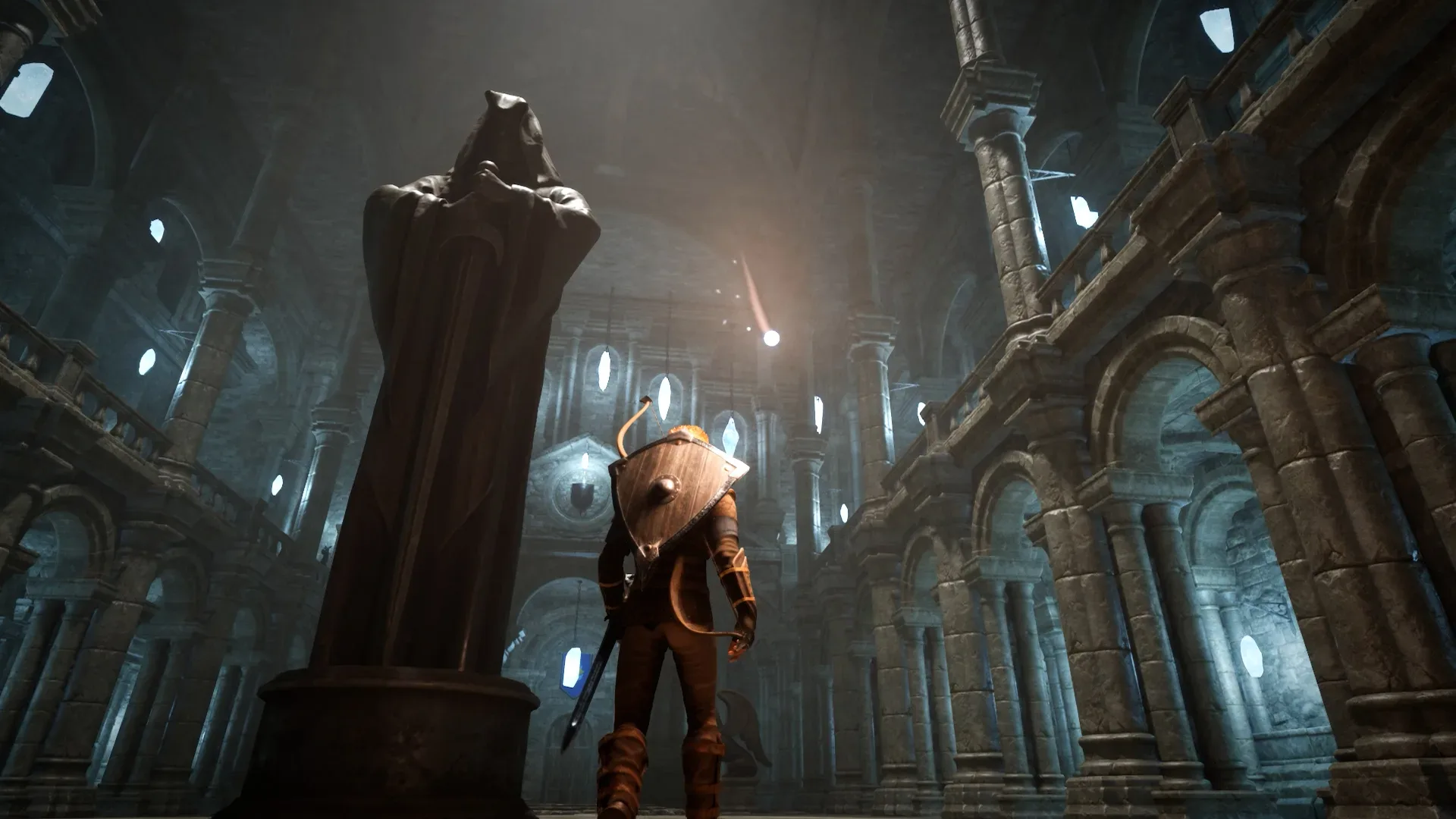
Sunken Realms, the action RPG dungeon crawler from solo developer Brad Warren’s Magic Puncher Games, launches on Steam on September 18, 2026 after six years in development. The game is priced at $16.99 / £13.99 / €16.99, with a 10% launch discount running for its first two weeks.
Players still deciding whether to descend into its cursed underground city can try the demo through September 21. The game arrives with 45,000 wishlists logged, a notable level of pre-launch interest for a project made by a single developer.
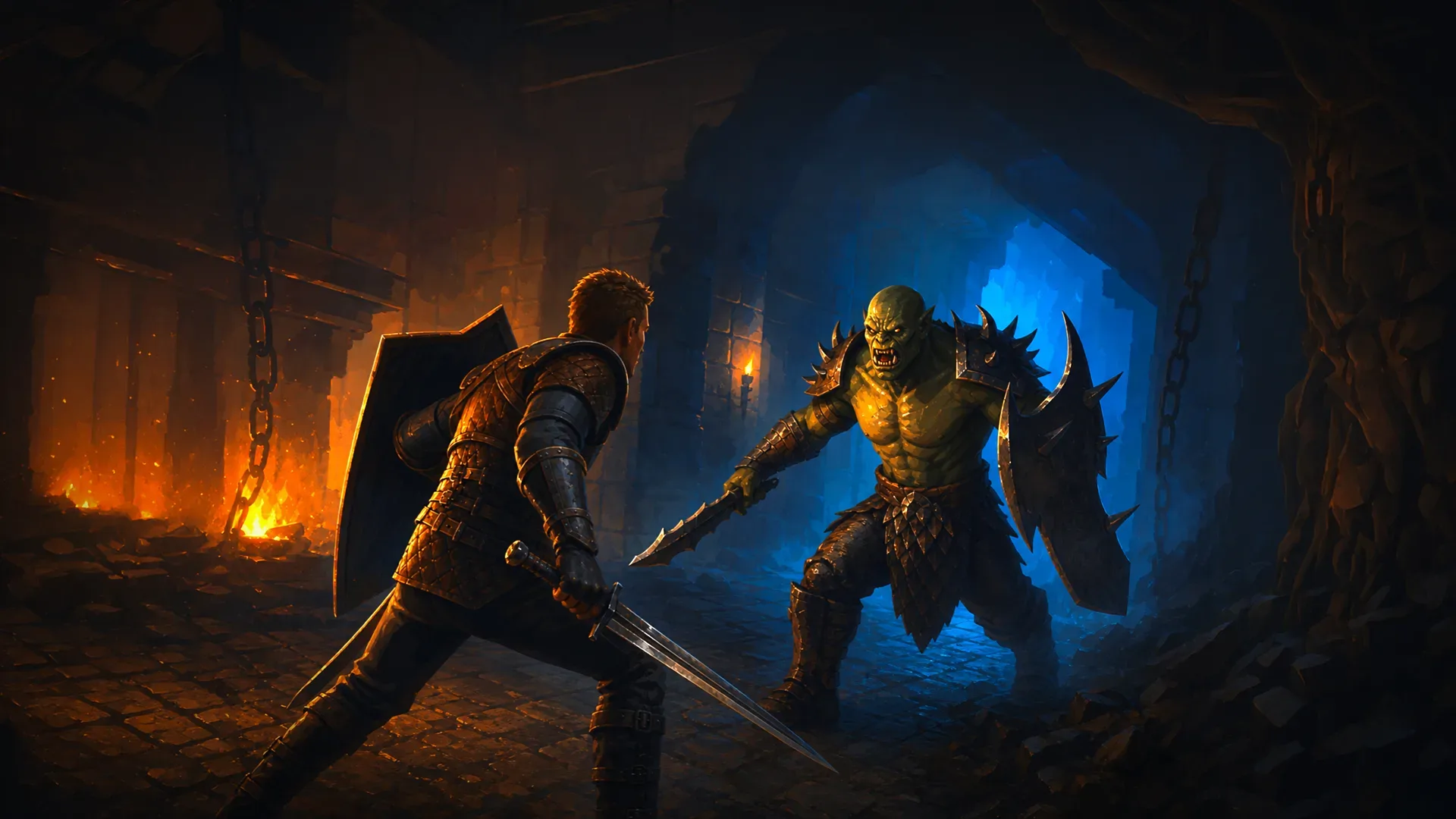
Its central proposition is deliberately focused: enter the ruins of Aedaria, fight through a dungeon that rearranges its authored rooms from run to run, grab what supplies and treasure can be carried out, then regroup above ground to prepare for another descent. That structure places Sunken Realms somewhere between a traditional action RPG and a rogue-lite dungeon crawler, without suggesting that either label tells the whole story.
A cursed city and a personal reason to go below
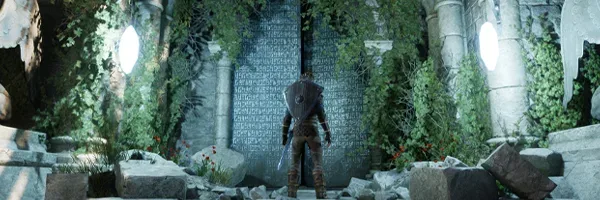
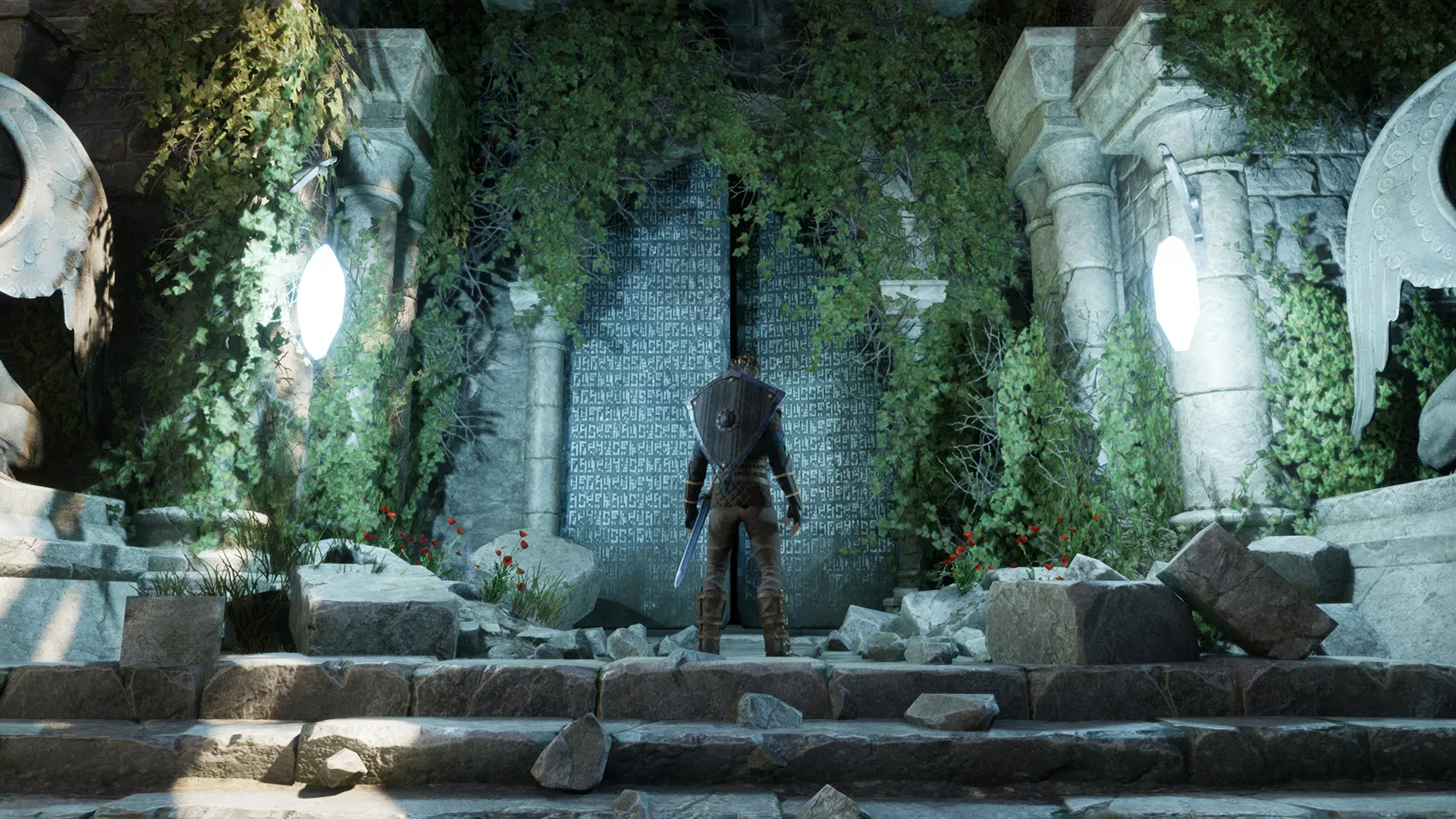
Aedaria was once a great underground city, but the game’s premise says it was cursed by the gods and consumed by darkness decades before the events of the story. Its gates have gained a deadly reputation: people who venture inside are said to disappear. Yet rumors of wealth and the pull of the unknown continue to attract adventurers.
The player follows Alric, who is not descending only for loot. He is trying to learn what happened to his father. That personal objective gives the expedition loop an explicit narrative thread, while the quieter material is set at camp between runs. Magic Puncher describes those scenes as a heartfelt story between two friends around the campfire.
That distinction matters. Dungeon games can use repeated attempts purely as a mechanical cycle of defeat, upgrades and another attempt. Here, the surface camp is also presented as the place where the story moves forward. In practical terms, players who want a campaign alongside repeatable dungeon runs should have a reason to pay attention both above and below ground.
What “hand-crafted, procedurally rearranged” means here
Sunken Realms has 109 hand-crafted rooms spread across six distinct sections of Aedaria. Rather than promising an unlimited supply of wholly random spaces, it uses a defined collection of designed rooms and rearranges them procedurally on each run.
Procedural rearrangement means the game assembles or orders pre-built content according to systems rather than using one fixed dungeon layout every time. The rooms themselves are authored, but their sequence and arrangement can change. The likely appeal is a middle ground: deliberate encounter spaces and visual environments can retain an intentional design, while repeated descents are less dependent on memorizing a single map.
It is also worth being precise about what has and has not been stated. The confirmed figure is 109 rooms across six sections, and those rooms are rearranged each run. No claim has been made that every element of every room is randomly generated, nor that every run will be completely unrecognizable. For players weighing up the game, the clearest expectation is variation within a hand-built dungeon framework.
That setup is particularly suited to a game about returning to the same lost city. Aedaria can remain a place with recognizable regions and authored identity, but each expedition can still ask for fresh route-reading and adaptation. The goal remains straightforward: explore the ruins, defeat enemies, search for loot and make it back out alive.
Combat, magic and the return-to-camp loop
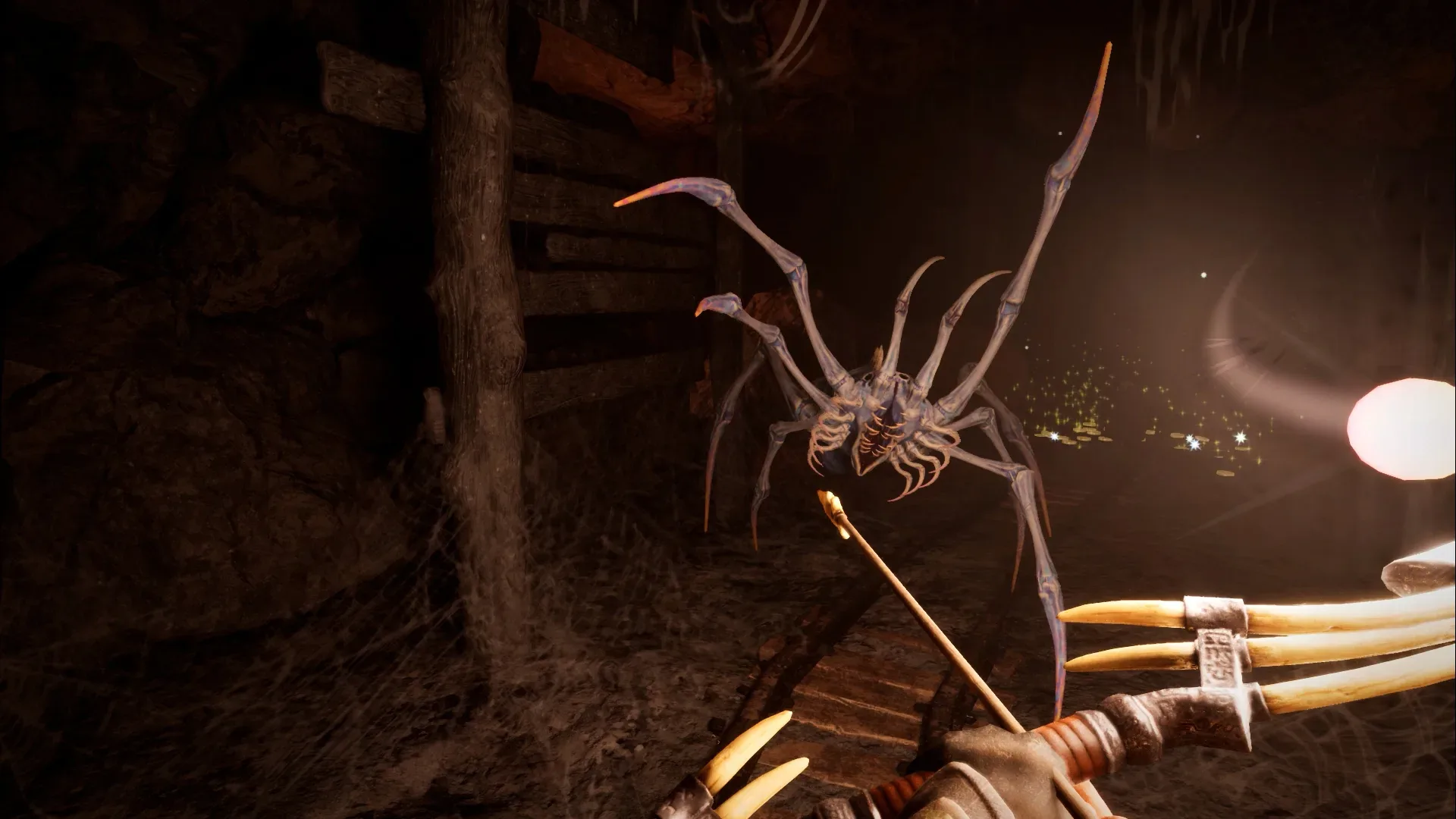
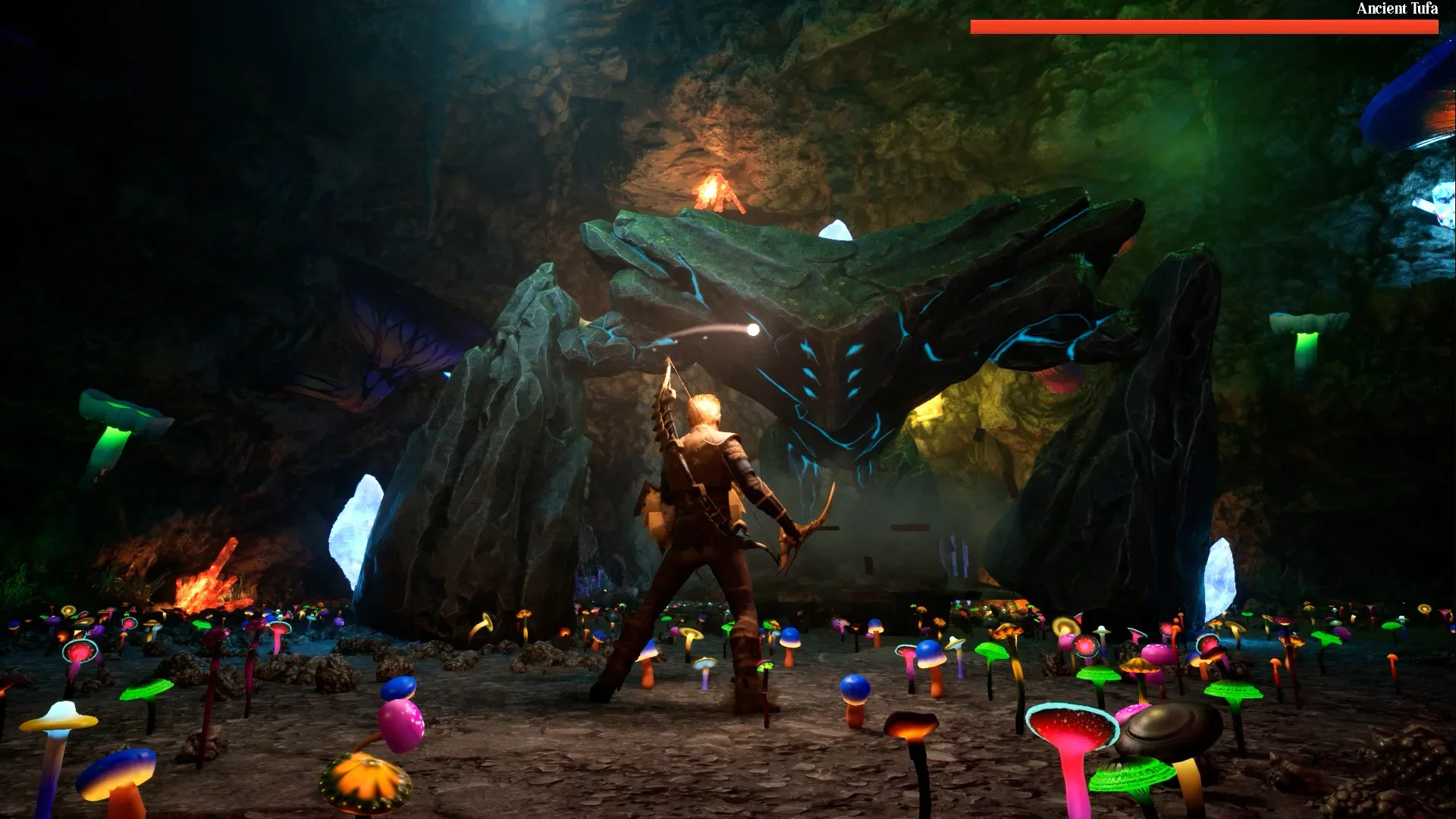
Combat includes both melee and ranged options, alongside spells that Alric can learn and use. The game describes its combat as fluid, though players will have to determine for themselves how the systems feel in practice; a description of a feature is not the same thing as a hands-on verdict.
Enemies and treasure chests yield gold and crafting materials. Those resources feed into the surface-camp loop, where players can craft weapons and armor, brew potions, prepare food and trade. Character growth also includes stat upgrades through the Soul Forge.
ARPG is short for action role-playing game. In this context, the label points to direct combat combined with character progression, equipment and resource-driven preparation. The game’s crafting, weapons, armor, potions and stat upgrades all fit that side of the formula, while melee, ranged attacks and spells provide the action-facing side.
Rogue-lite, meanwhile, is commonly used for games built around repeated attempts that change from one run to another, often with some form of ongoing advancement or preparation between trips. The term can mean different things from game to game, so the announced systems are more useful than treating it as a guarantee of any particular death penalty or progression model. In Sunken Realms, the concrete elements are the rearranged dungeon, the return to camp, and the ability to strengthen equipment and character preparation before going back down.
The option to select a higher difficulty ties risk directly to reward. Tougher fights offer better loot, meaning progression is not simply a matter of making every subsequent trip easier. Players can choose to raise the stakes when they believe their equipment, supplies and build are ready. That is a meaningful decision point for an expedition-focused RPG: the same base systems can support cautious preparation or a more ambitious hunt for stronger rewards.
A game shaped by adventure rather than a copied template
Warren has identified Outward as the game that prompted him to make his own project, specifically pointing to its sense of adventure and the unknown. He also stressed that Sunken Realms developed in its own direction over time.
“Sunken Realms went in its own direction over time, but I hope it kept that same spirit,” Warren said.
That is useful context, but not a feature comparison. The confirmed details of Sunken Realms are its descending-and-returning structure, the Aedaria setting, six dungeon sections, 109 rooms, combat choices, spells, crafting and camp progression. The stated inspiration speaks to the intended feeling of an uncertain journey, not to a promise that the two games share particular systems.
For an independent game built over six years by one developer, that focused scope may be as important as any individual bullet point. Instead of presenting a world with countless unrelated activities, the game centers its systems on the rhythm of preparing at camp, venturing into a dangerous underground city and extracting enough value to improve the next attempt. The original score is another announced part of that effort to make Aedaria feel like a distinct place rather than a collection of disconnected combat arenas.
What prospective players can evaluate in the demo
The demo’s availability until September 21 gives interested players a short window to assess whether the game’s priorities match their tastes. With no need to infer unannounced systems, the most sensible things to look for are the basics the game explicitly foregrounds: the rhythm of melee and ranged combat, the role of spells, the readability of dungeon exploration and the balance between combat rewards and camp preparation.
Players drawn to repeatable action RPG runs may also want to consider how much authored variety they prefer. A dungeon made from 109 designed rooms will offer a different kind of replayability from one that creates every chamber from scratch. The potential advantage is purposeful room construction; the trade-off, for anyone seeking endless novelty above all else, is that the underlying room pool is finite. Neither approach is inherently better, but they serve different appetites.
The higher-difficulty option is another notable factor. Better loot behind harder fights can make the decision to push deeper or raise the challenge a core part of the game’s long-term loop. Meanwhile, the presence of food, potions, crafted gear, trading and Soul Forge upgrades indicates that preparation is meant to matter before the next expedition begins.
For a very different RPG-scale discussion involving a major upcoming release, see our coverage of Final Fantasy 7 Revelation’s reported download requirement. Sunken Realms, by contrast, is presenting a compact, repeatable dungeon-crawling premise built around one city and its dangerous depths.
Sunken Realms launch details
- Platform: Steam
- Launch date: September 18, 2026
- Price: $16.99 / £13.99 / €16.99
- Launch offer: 10% off for the first two weeks
- Demo: Available through September 21
- Developer: Magic Puncher Games, led by solo developer Brad Warren
- Dungeon structure: 109 hand-crafted rooms across six sections, procedurally rearranged each run
With Aedaria now open, the question for players is not whether there is another dungeon to enter. It is whether they can turn each dangerous trip below into enough gear, materials, knowledge and progress to come back prepared for an even harder one.