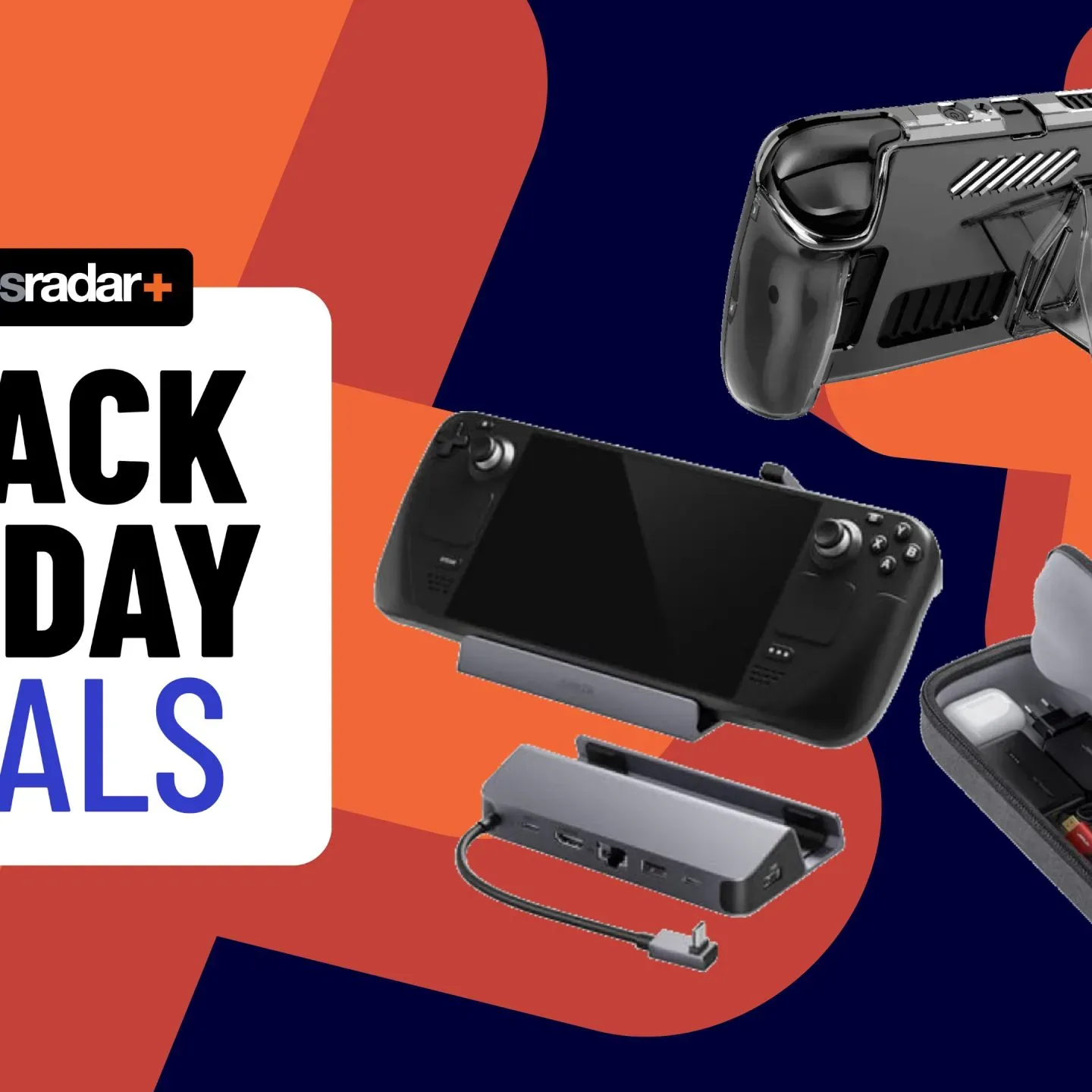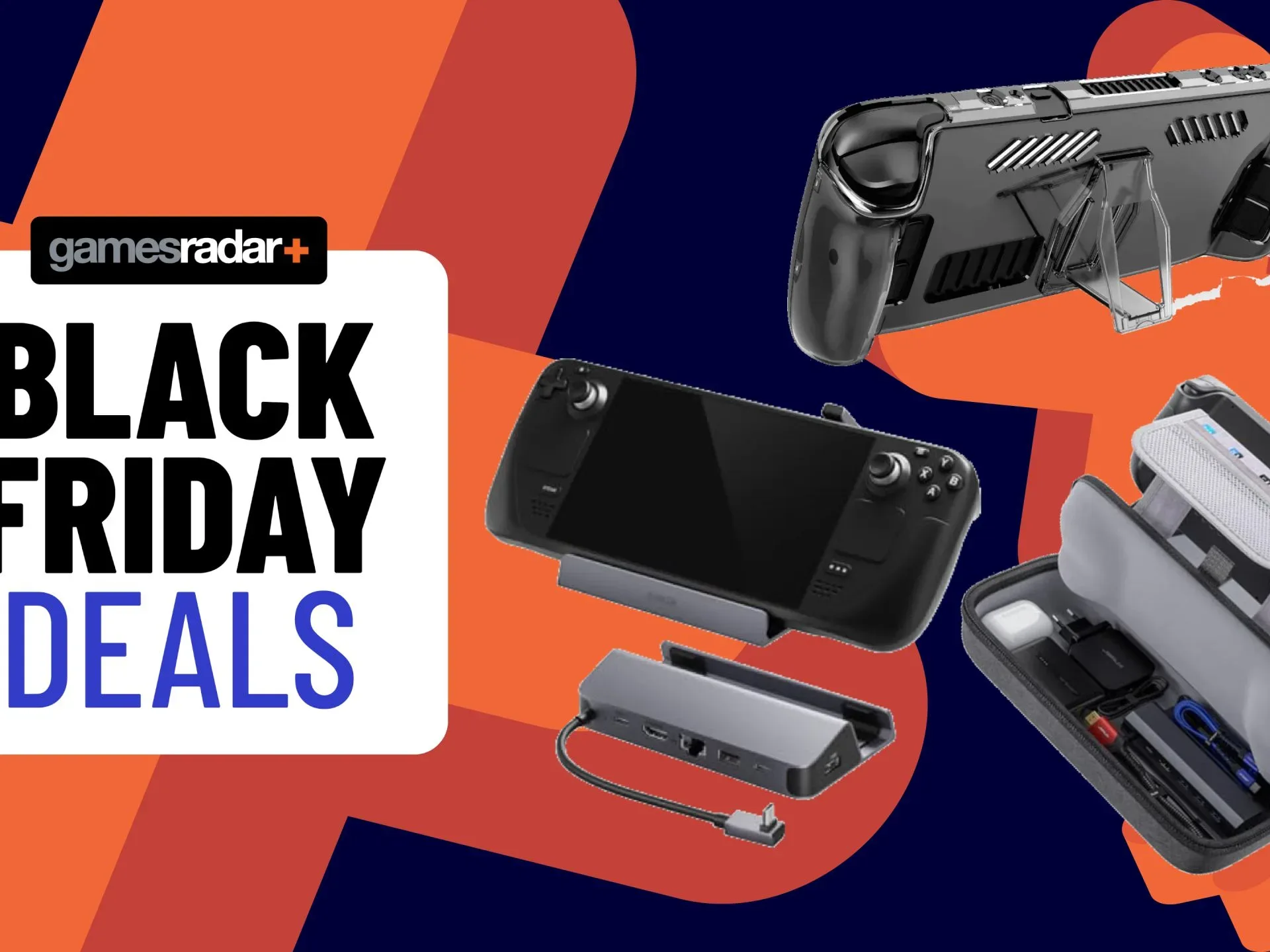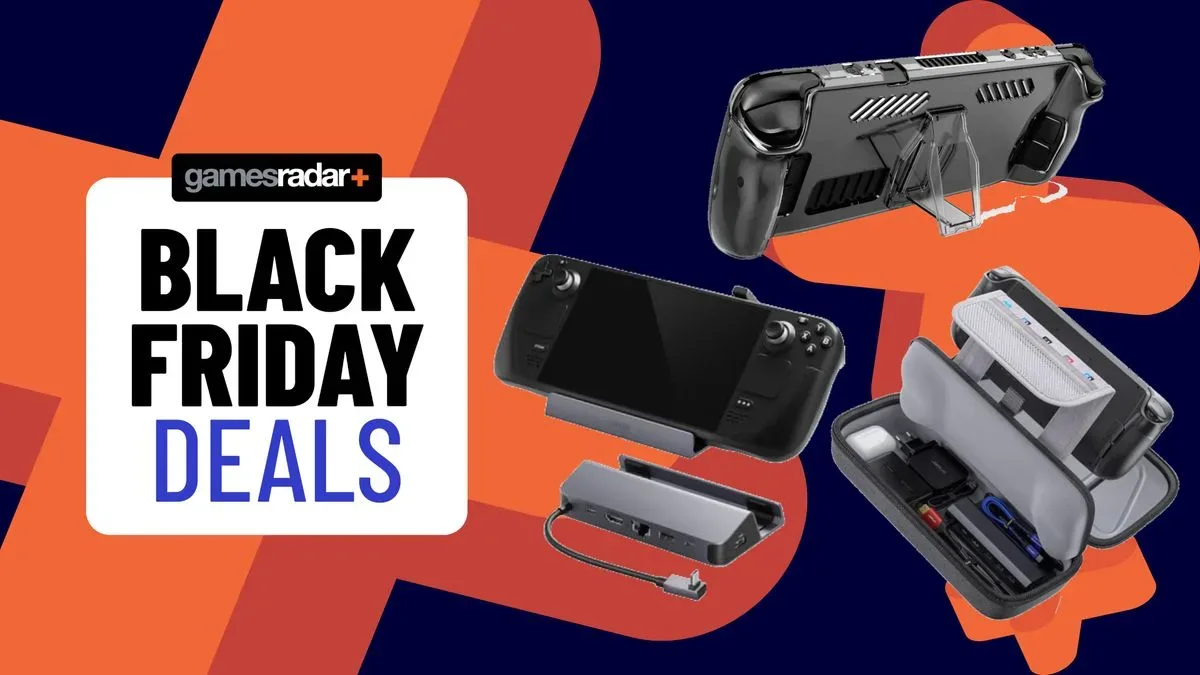
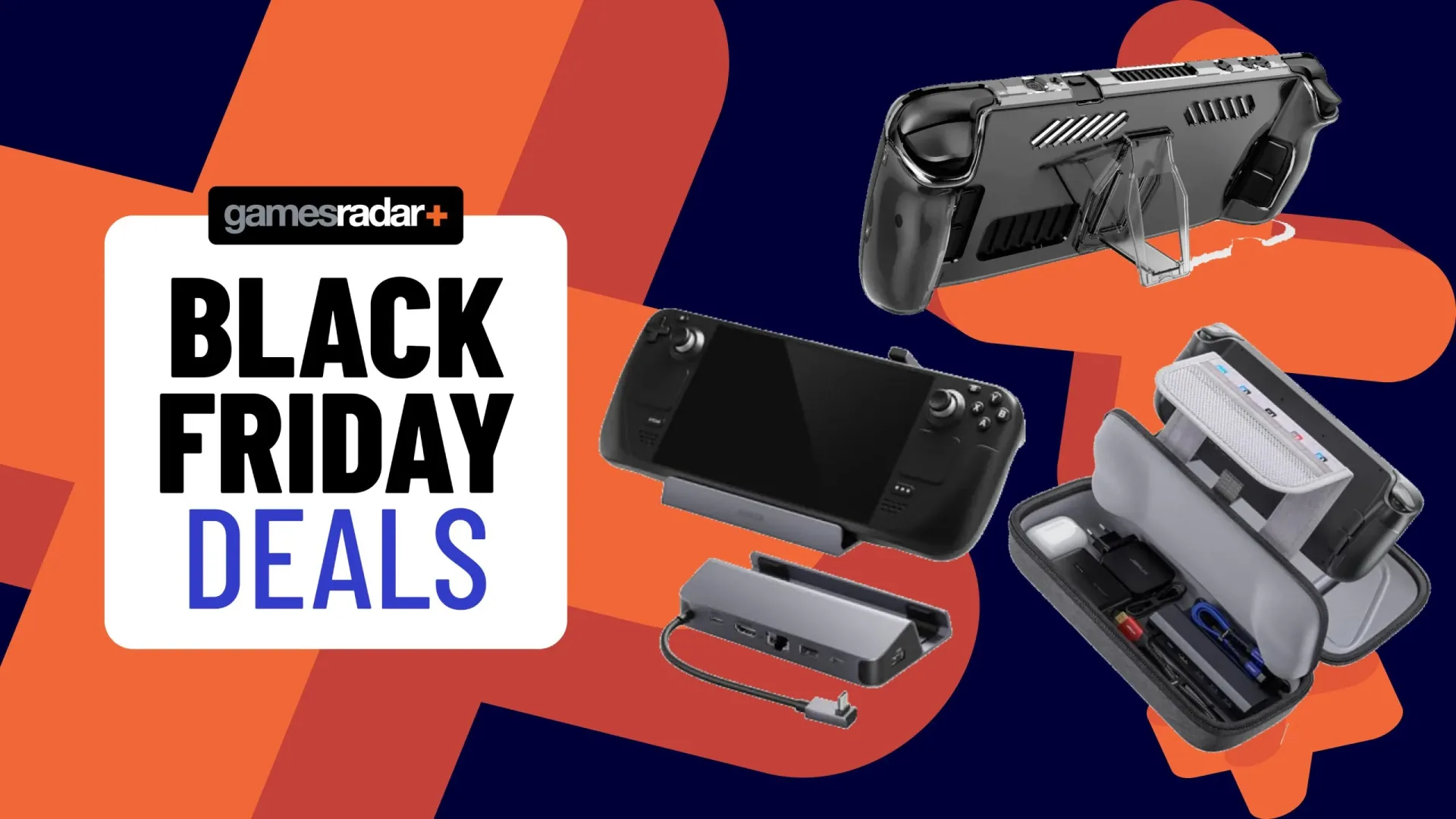
Black Friday accessory sales are already arriving ahead of November 27, with Steam Deck add-ons among the discounted gaming gear. The offers described span carry cases, hard shells, screen protectors, docks, stands and a controller aimed at docked use. That is a more useful spread than a random pile of peripherals: each category addresses a different way the handheld might fit into somebody’s routine.
The key is not to treat every discount as an automatic upgrade. A Steam Deck owner who mainly plays away from home has a different priority from someone who leaves the system beside a monitor or television. Protection can be more valuable than extra desk hardware for the first person; a dock and controller can make more sense for the second.
Several of the reductions focus on JSAUX protection products, including a carry case, a hard shell, a case with a kickstand and screen protectors. An Anker dock is also among the cheaper dock options highlighted, while a newly released GameSir controller designed with docked Steam Deck play in mind has received an early price cut. The offers are positioned as Black Friday promotions rather than permanent price changes, so the practical question is what job an accessory solves before its sale label gets the credit.
Start with the way the Steam Deck is actually used
For portable play, the strongest case for an accessory is simple: avoid damage while the device is moving between rooms, bags and trips. A carry case gives the handheld a dedicated place alongside accessories, while a hard shell is intended to guard against knocks. Those are related products, but they do not necessarily do the same work.
A carry case is about transport and organization. It can keep the Steam Deck and accompanying items together rather than loose at the bottom of a bag. A hard shell is about putting a protective layer around the device itself. Someone who frequently travels could reasonably see value in both, whereas a player who rarely takes the Deck outside may only need one type of protection.
The source material notes that the JSAUX carry case has reached its lowest observed price by more than $2, while a hard-shell deal saves $18, described as roughly 40% off. Those figures are useful as signals of relative value, but they should not replace a fit check. A low price is not much help if the chosen case does not accommodate the way a player stores their accessories or if it adds protection they will never use.
Screen protection is a narrower decision
Screen protectors are the most specialized of the listed protection accessories. Their purpose is to help avoid scratches or cracks on the display. The referenced JSAUX set is only marginally below its earlier low price—by $0.50—but a small saving does not automatically make it a bad purchase. It instead means shoppers should decide based on whether display protection is a genuine concern, not on the size of the discount.
That distinction matters during large sales. A percentage reduction can make a bigger, more expensive product look compelling, while a low-cost item may be the one that addresses the owner’s actual concern. For a Steam Deck that spends time in a crowded bag, a screen protector and a transport case tackle separate risks. For one that stays on a stand at home, the same purchases may be less urgent.
Related coverage includes Steam Deck Black Friday Accessory Deals Focus on Protection, Docks and Storage-Ready Travel Gear.
One listed case also includes a built-in kickstand. A kickstand is a support that holds the handheld upright on a surface, rather than requiring the player to hold it throughout a session. That makes the case a hybrid accessory: it is presented as protection, but it can also change how the Steam Deck is positioned while in use. The reduction itself is described as modest, so its appeal rests on wanting both of those functions in a single item.
Docked play changes the shopping list
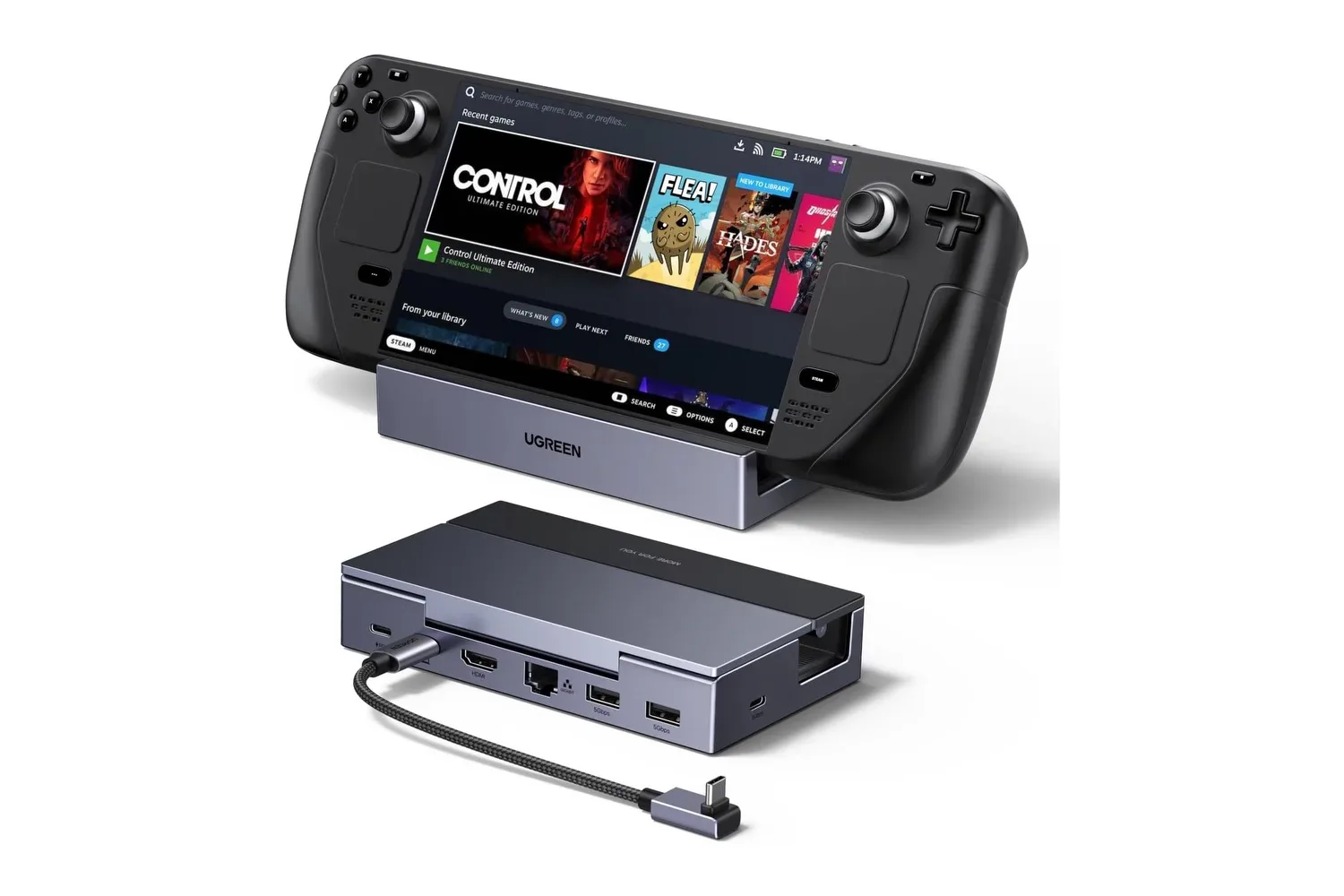
Docking is the other major use case in these sales. In plain terms, using a handheld docked means setting it up to work with another screen and adding connections or controls through the dock. The source describes the Anker model as a way to interface the Steam Deck with a PC while gaining additional tools, and notes that it is among the lower-priced docks currently available.
That makes a dock a more consequential purchase than a simple case. It is not merely protective storage; it is part of a desk or living-room arrangement. Buyers should therefore think through the entire setup they want, including the screen they intend to use and whether they need other connected equipment. The supplied information does not establish the full specification or compatibility details of the specific Anker dock, so it would be unwise to assume a particular port selection or capability from the sale description alone.
A controller is the logical companion for players who prefer this arrangement. The GameSir model in the promotion is said to have been designed with docked Steam Deck use in mind and includes a touchscreen for switching control schemes. It had been available for only about two weeks when the offer was noted, making the discount unusually early in its lifespan. That is interesting, but early discounts are not a substitute for deciding whether a separate controller will actually see regular use.
For a player who already likes the Steam Deck chiefly as a handheld, a controller-and-dock combination can become an unnecessary second way to play. For somebody who routinely sets it up at a larger screen, the pair may be the purchase that changes the experience most. The distinction is more valuable than the deal’s headline.
How to judge these deals without buying duplicate solutions
There is a recurring trap in accessory sales: several products appear to solve the same concern, even when their roles differ. Cases, shells, stands and docks can all make a Steam Deck feel more usable or secure, but they do so at different moments. Before checking out, it helps to identify the single friction point in the existing setup.
- The Deck travels often: prioritize a carry case, then consider whether separate device protection or a screen protector addresses a risk the case does not.
- The Deck is handled at home but needs safer placement: a protective shell or a case with a kickstand may be more relevant than a travel-focused bag.
- The Deck is regularly used with another screen: examine a dock first, then decide whether a controller completes the arrangement.
- The Deck is already comfortable to use: do not let a shallow discount create an accessory problem that did not exist before.
This approach also makes gift buying easier. Rather than selecting the biggest apparent markdown, ask whether the recipient uses the Steam Deck in hand, carries it around, or keeps it docked. The answer points toward protection, transport, or setup expansion without requiring guesswork about their library or preferences.
Be cautious with the more elaborate accessory claims
One piece of promotional copy in the deal material describes a collectible wearable gaming monitor themed around “MW4,” with a 59-degree field of view, a claimed virtual screen size of up to 307 inches, 3DoF hardware and quad speakers co-tuned by Bang & Olufsen. It also claims a display that stays positioned in place without processing load on a console, PC or handheld.
Those are highly specific manufacturer-style claims, but the material does not clearly identify the product, its price, retailer or a confirmed connection to the Steam Deck deal roundup. It should therefore not be treated as a confirmed Steam Deck accessory recommendation on the information available. It is a useful reminder to separate a sale listing’s clearly identified products from stray promotional copy—especially when deciding on a purchase intended to be practical rather than purely novel.
Price context still matters
The reported historical lows provide some context for the JSAUX carry case and screen-protector set, while the hard shell’s $18 reduction is characterized as substantial. Elsewhere, however, the details are deliberately less concrete: the kickstand case is down only a few dollars, the dock is described as relatively inexpensive, and the controller has an unexpectedly early discount. Without complete live prices, exact model details and retailer terms, shoppers should regard these as leads rather than final buying instructions.
That does not diminish the broader usefulness of the sales. A Steam Deck is an expensive piece of gaming hardware, and the accessory categories here align with the clearest ownership needs: preventing physical damage, making transport less awkward, supporting hands-free positioning, and building a docked setup. Just keep the purchase tied to a real habit. A protective case can have more lasting value than a flashy add-on that never leaves its packaging.
PC gaming deals can also affect the software side of a handheld setup. For a separate example of how Steam-market news can be framed around numbers and claims, see the report on Slotbound’s reported Steam sales and first-week gross.
Shop the products
Check current price, model and availability at the retailer.