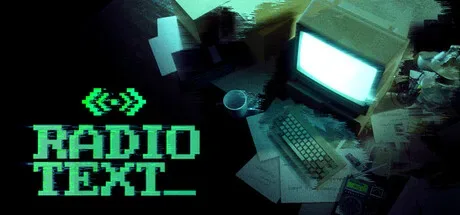
Radiotext is now available on Steam, inviting players into a compact cyberpunk RPG framed through a forgotten communications network. It is priced at £9.99, $11.99, or €11.99, with a 30% launch discount running for its first two weeks.
The game begins with a suitably suspicious bit of street-level fiction: a USB stick received in a quiet alley. Its contents are Radiotext, software said to have been built in the 1990s to let people communicate through radio waves. From there, the player enters an old, fragmented network populated by strangers, damaged presences and entities that may not be living at all.
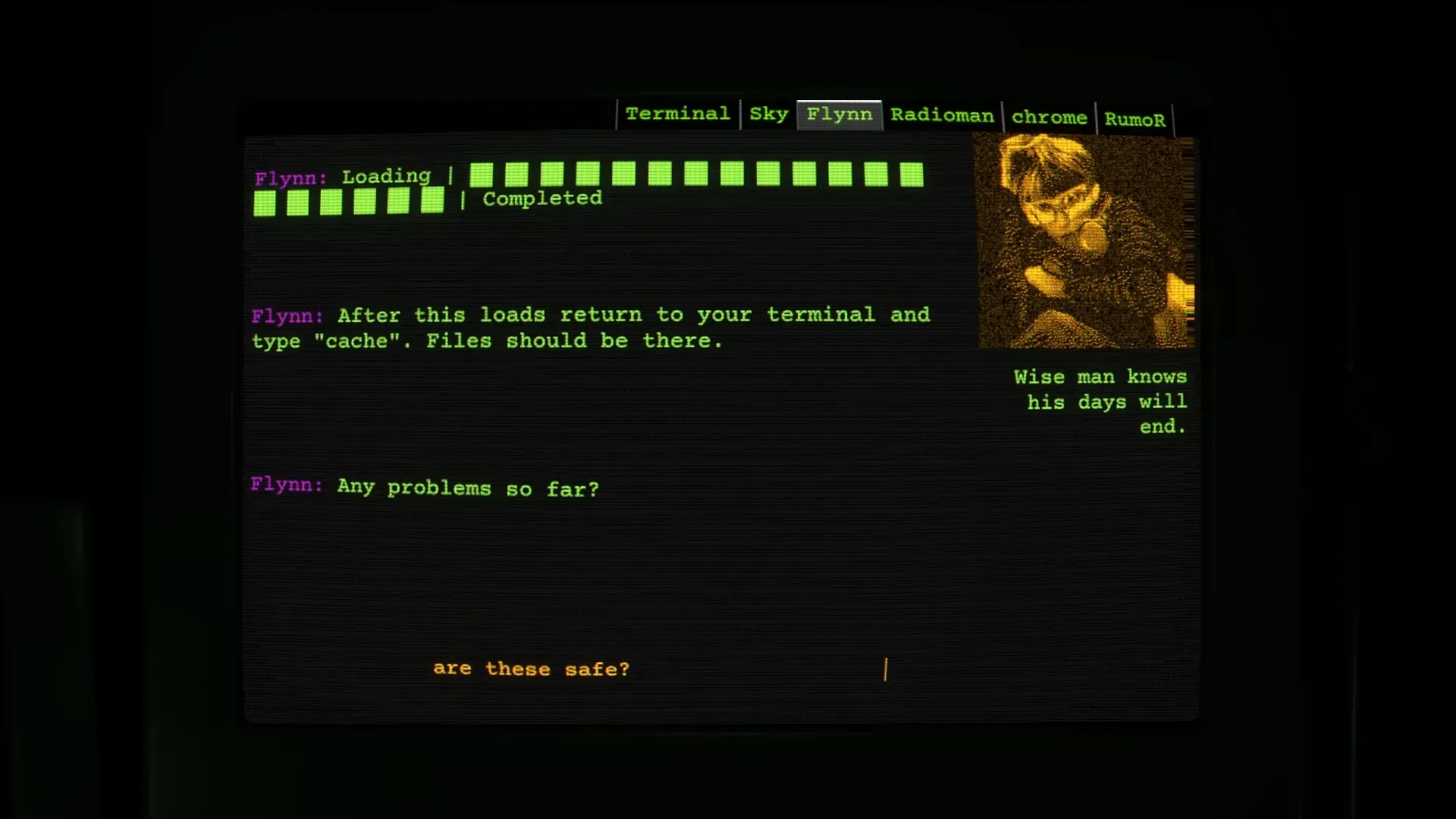
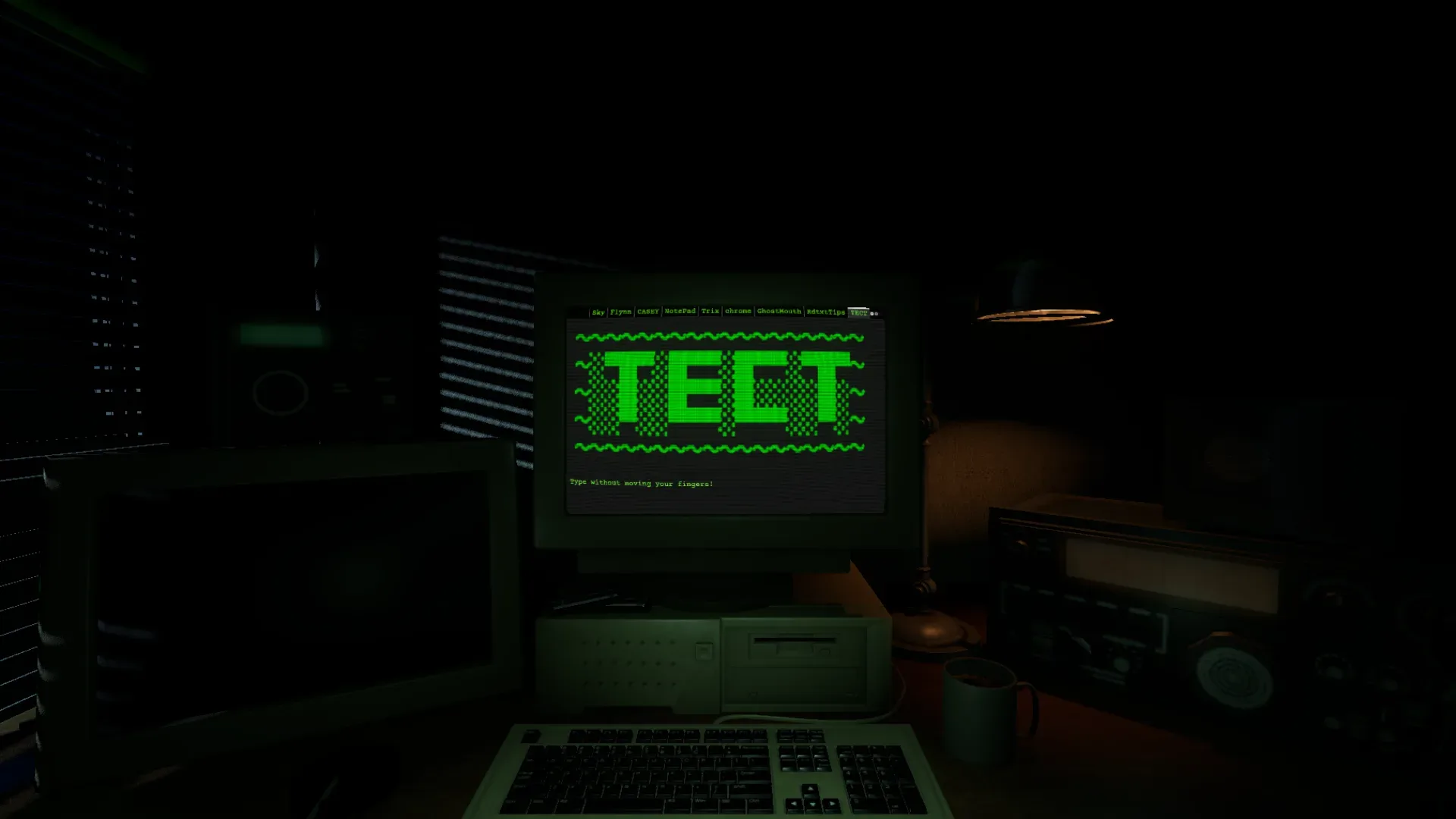
Rather than presenting hacking as a sequence of abstract minigames or a test of real-world technical expertise, Radiotext appears to use a retro terminal interface as the language of its role-playing and investigation. Players communicate with network users, reconnect channels, assemble an account of past events and become involved in a cyber-activist movement opposing corporate power.
Its setup places it in the same broad terminal-driven space as Duskers, Hypnospace Outlaw and S.P.L.I.T., while its emphasis is on a mysterious social network and the consequences of interaction within it. The result is positioned as a focused narrative game rather than a huge open-ended simulation: a standard completion is expected to take roughly three to four hours.
A terminal interface with a social layer
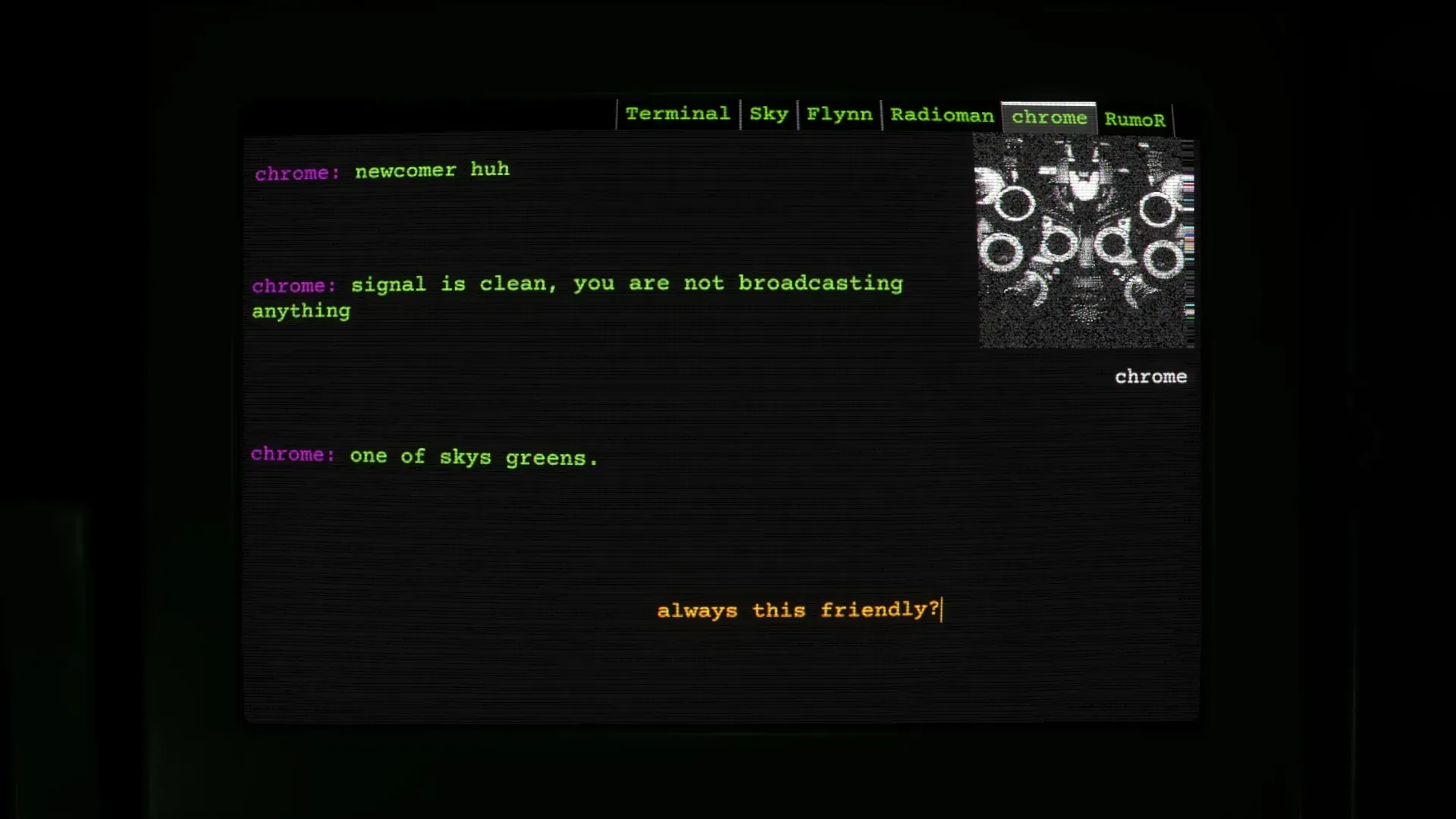
Radiotext’s central idea is not merely that the player accesses an old network, but that the network has a culture of its own. The player is a newcomer. Learning what happened therefore means learning how people on the system talk to one another, which channels matter, what information has become distorted over time and whom to trust.
That distinction is important for a game built around an interface. A terminal interface is a text-led computer environment, generally organized around commands, files, channels and messages rather than direct manipulation of a fully visual world. In games, the format can turn reading, searching and connecting disparate clues into the core activity. Radiotext adds a social dimension: its in-game feed combines posts from players with posts from NPCs.
NPCs, or non-player characters, are characters run by the game rather than another person. Mixing their posts into a player-facing feed is meant to make the network feel occupied rather than like a static archive of clues waiting to be opened. The feed is described as asynchronous and persistent, meaning activity does not depend on every participant being online at the same moment and the network continues to exist beyond a single immediate exchange.
That structure has a clear thematic fit. The premise concerns technology from an earlier era, but the story is not only about digging through digital ruins. It is also about arriving late to a community with its own memories, frictions and vocabulary. Friendly exchanges, broken encounters and eerie non-living presences are all part of the journey, and player choices are intended to reverberate across the network.
Related coverage includes Radiotext Brings a Lost Radio Network to Steam.
Branching routes in a concise RPG
Radiotext includes branching paths, hidden choices and multiple endings. In practical terms, a branching path is a point where a decision, discovery or relationship can change which scenes, information or outcomes become available later. Hidden choices suggest that not every consequential option is necessarily announced in an obvious dialogue wheel or mission prompt; observation and experimentation may matter.
The promised three-to-four-hour length gives those features a particular role. It signals an experience that can tell a complete story in a few sittings, while still leaving space for different routes through the network. Multiple endings do not automatically mean every variation will be radically different, but they do establish that a single playthrough is not positioned as the sole definitive route through its events.
For players interested in narrative games, the useful expectation is that Radiotext is built around interpretation and decisions more than scale. The stated goal is to piece together a past uprising and make connections among forgotten channels. Its replay value, if players pursue it, is likely to come from alternate choices and concealed possibilities rather than an enormous map or a long checklist of combat encounters.
The evolving network also provides a reason for the story world to outlast the main plot. That does not necessarily mean a conventional live-service model or endless campaign. What is established is narrower: the in-game network persists beyond the main narrative, while the feed combines player and NPC activity asynchronously. For a game about entering an inherited digital space, that continuing presence could make completion feel less like switching off a solved machine and more like leaving a community still in motion.
Why the low system footprint matters
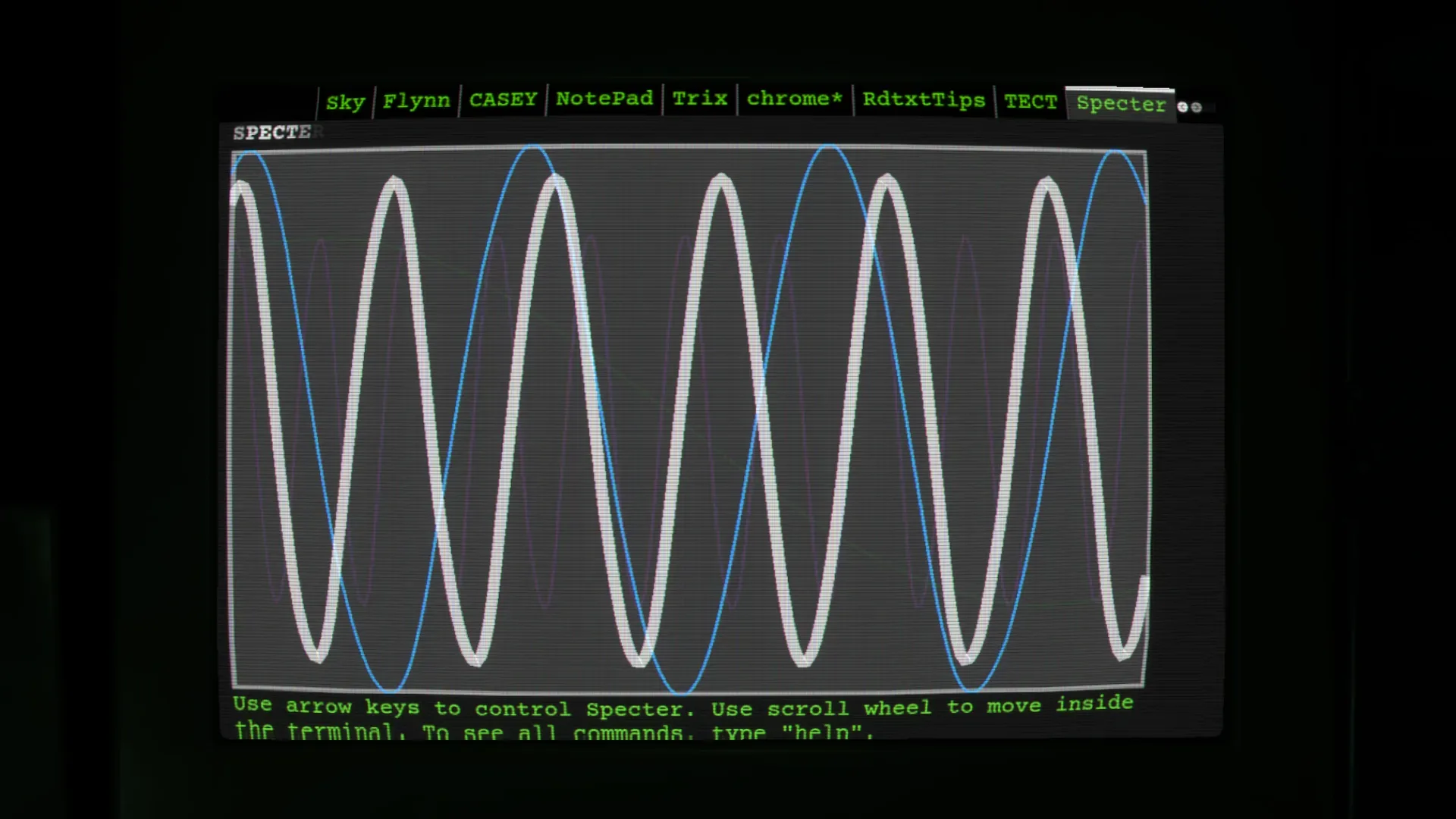
One of Radiotext’s more unusual technical claims is that it presents a world with a 3D appearance while running in 2D. The purpose is efficiency: the game is designed to keep its download size and use of RAM and VRAM low, at around 200MB even at 4K.
RAM, or system memory, is the fast working memory used by programs while they are running. VRAM is memory used by a graphics processor for visual data. Both can be important limitations on lower-specification systems, particularly when several applications are open or when a game uses high-resolution assets. A 4K display has a substantially higher pixel count than standard 1080p, so a claim of approximately 200MB at 4K is notable as a design target for an interface-heavy game.
The key point is not that 2D technology is inherently better than 3D technology. It is that the game’s visual illusion and technical structure are being treated separately. A scene can look spatial and dimensional without requiring every object to be represented and processed as a fully 3D asset. For Radiotext, that approach supports its low-resource ambition while retaining the mood of entering a three-dimensional place through an old terminal.
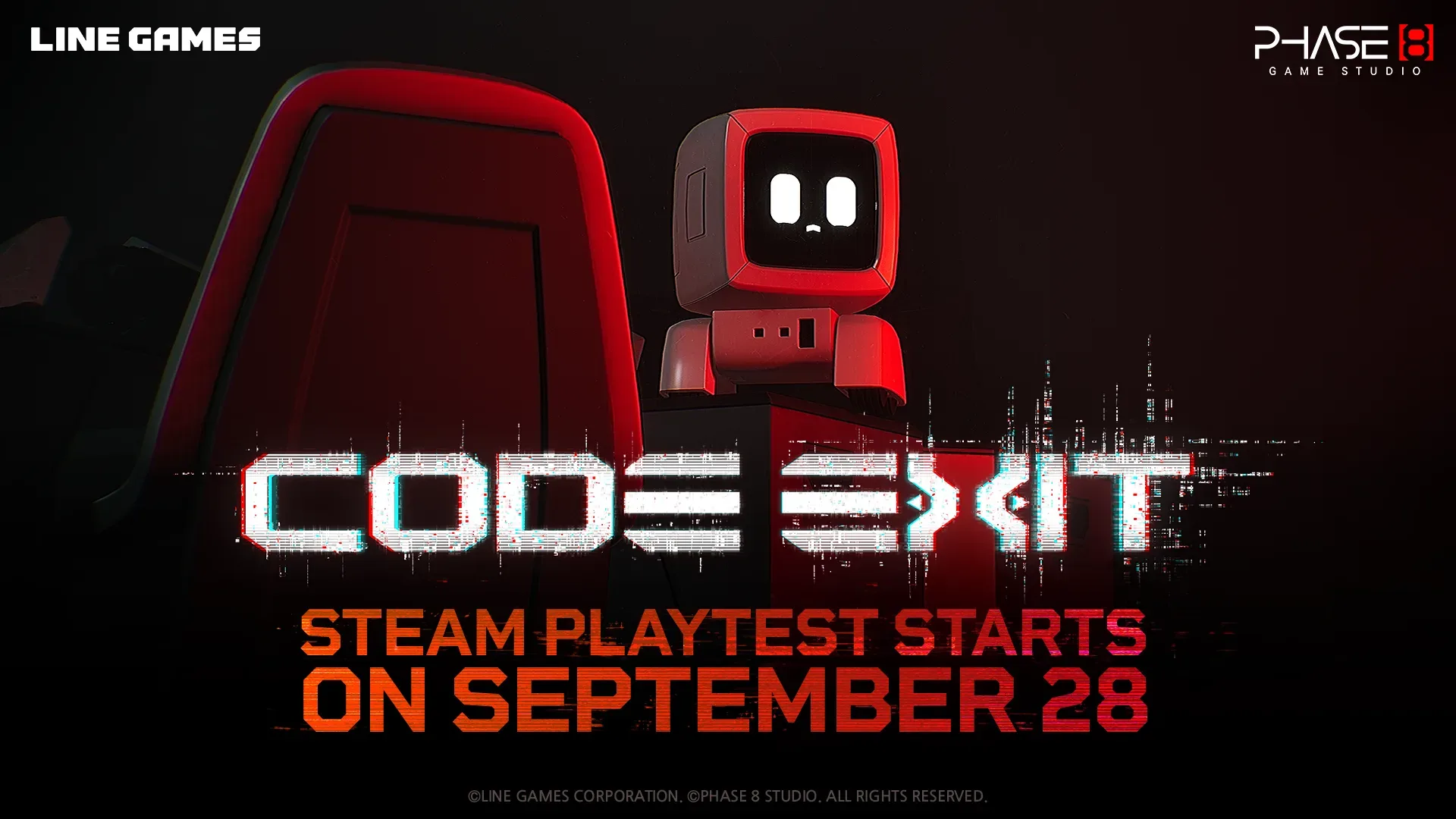
This may be particularly relevant for people using modest PCs, handheld setups or computers where they prefer to keep system demands light. It also aligns with the fiction: a game about lean, old-fashioned communication software benefits from not requiring extravagant hardware just to render its digital backrooms. Elsewhere in PC-focused news, CODE EXIT’s live playtest offers a very different kind of computer-bound tension, centered on adaptive AI horror rather than a retro radio network.
Modding support is part of the package
Radiotext is also being released with modding in mind. Both the Steam demo and the full game include a modding guide intended to help people create their own stories, NPCs and puzzles.
A mod, short for modification, is player-made content or an alteration to a game. The extent of modding support can vary widely. In this case, the stated guide covers the components that define Radiotext’s identity: narrative material, characters and puzzle content. That makes the game’s terminal-and-network framework potentially useful as a storytelling format in addition to a self-contained release.
The inclusion of the guide with the demo matters because it lets curious creators inspect the intended process before deciding whether to buy the full game. It also suggests that the game’s authors expect its systems to be understandable enough for community-made scenarios, rather than being exclusively locked to the original storyline.
There is a thematic resonance here, too. Radiotext is about joining an old network and participating in its culture. Mod support extends that notion outside the fiction by allowing players to make new things for the framework. The supplied details do not establish how large that community may become or what individual mods will look like, but the tools are positioned as a meaningful feature rather than an afterthought.
Who Radiotext may suit
Radiotext is likely to appeal most directly to players who enjoy games where interfaces are part of the fiction. Its reference points—Duskers, Hypnospace Outlaw and S.P.L.I.T.—help set expectations for people familiar with those titles: the attraction is the feeling of operating within a peculiar computer system, with the mystery delivered through what the system reveals and how the player learns to use it.
- Players seeking a short cyberpunk narrative rather than a lengthy RPG may appreciate the estimated three-to-four-hour structure.
- Fans of terminal aesthetics, radio technology and fictional online communities have a clear reason to investigate its premise.
- People who like revisiting a story to uncover alternate routes may find value in its branching paths, hidden choices and multiple endings.
- Prospective creators can use the included guide in the demo or full game to explore making stories, characters and puzzles.
- Players concerned with resource use may be interested in the approximately 200MB 4K memory target.
There is a playable Steam demo for anyone who wants to sample its interface and atmosphere before committing. The developer’s previous work includes the tabletop RPG sourcebook Historica Arcanum: Serenade for the Damned, a background that fits a project built around setting, characters and player-led narrative discovery.
Radiotext’s strongest hook is the combination of form and subject. Its story concerns an obsolete-looking communication system, but the game asks the player to inhabit that system: to read it, talk through it, repair links inside it and decide what kind of participant to become. For a modestly sized release, that is a focused proposition—one where the terminal is not just a visual filter over the story, but the place where the story happens.