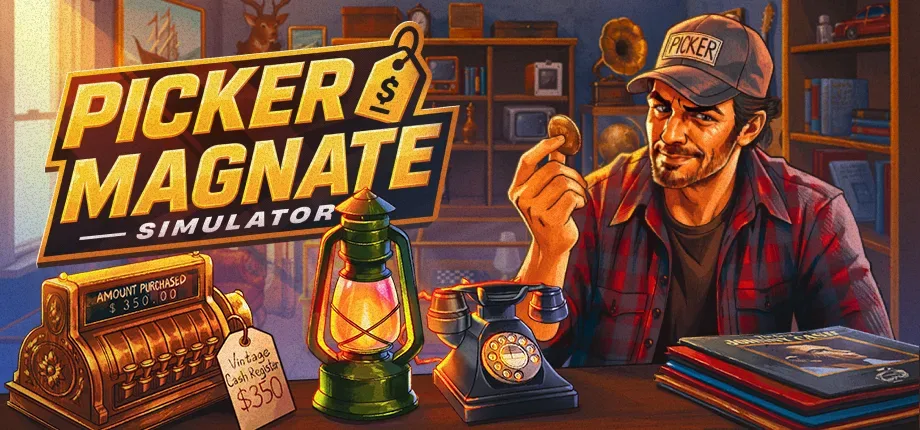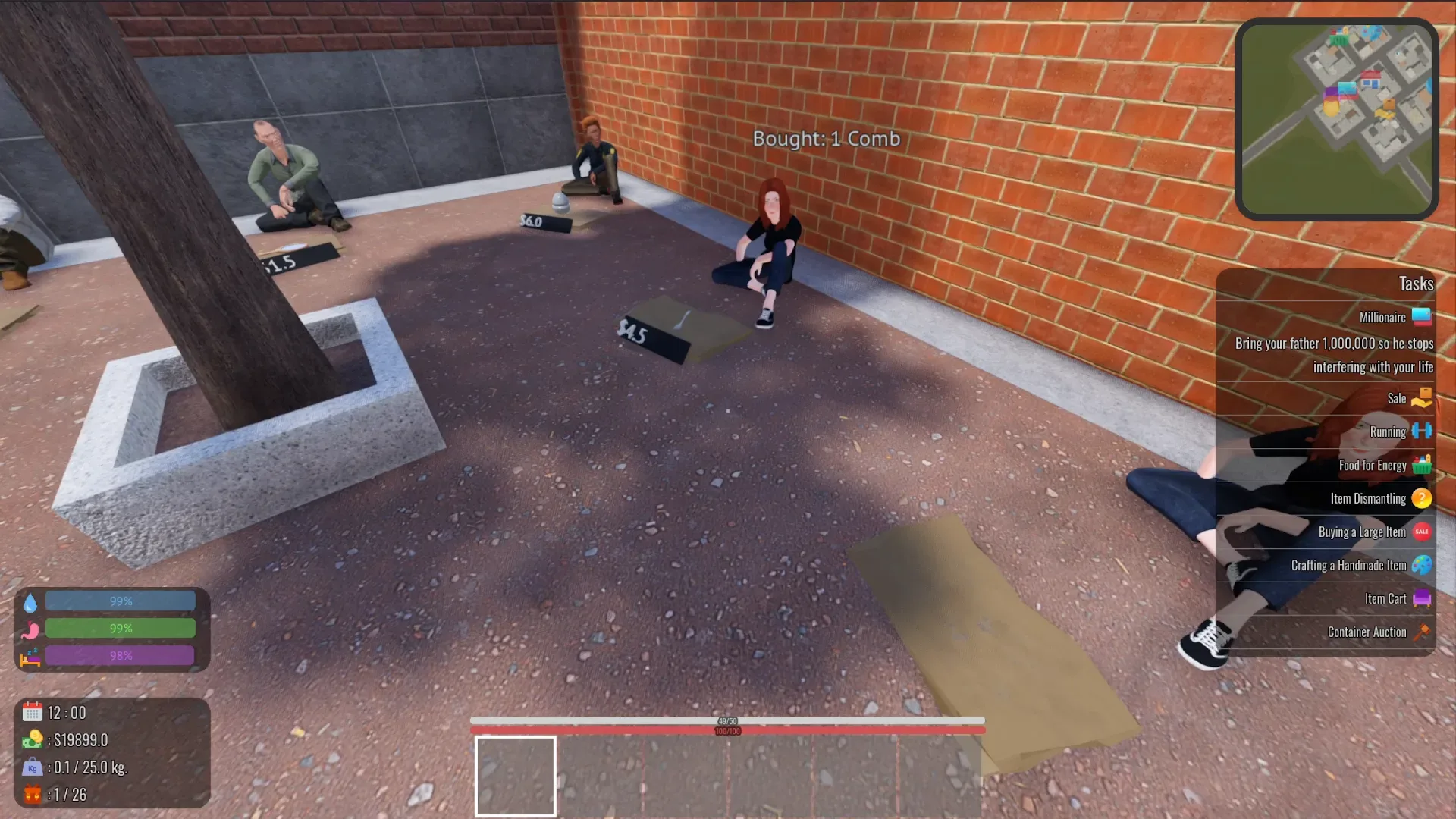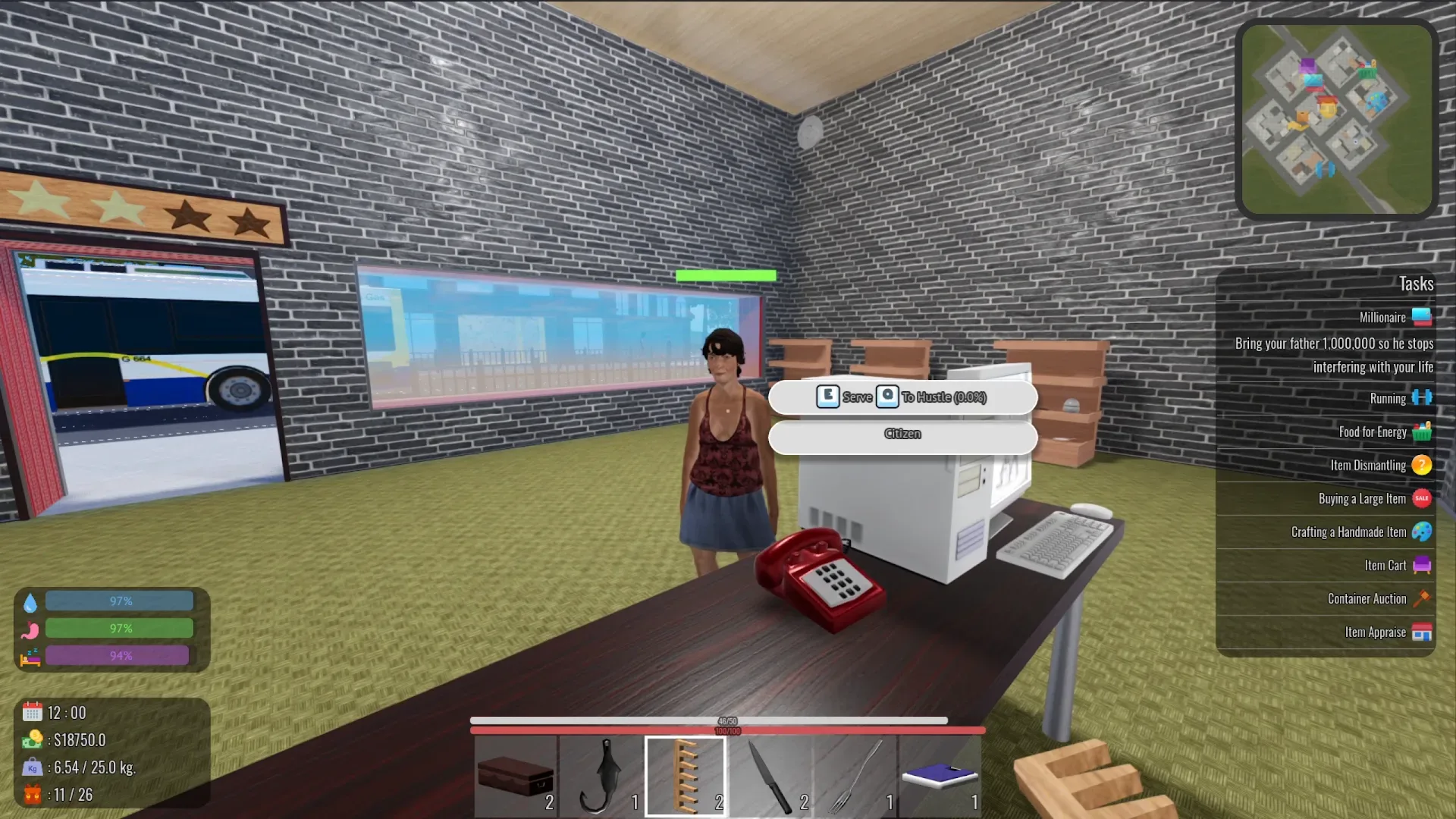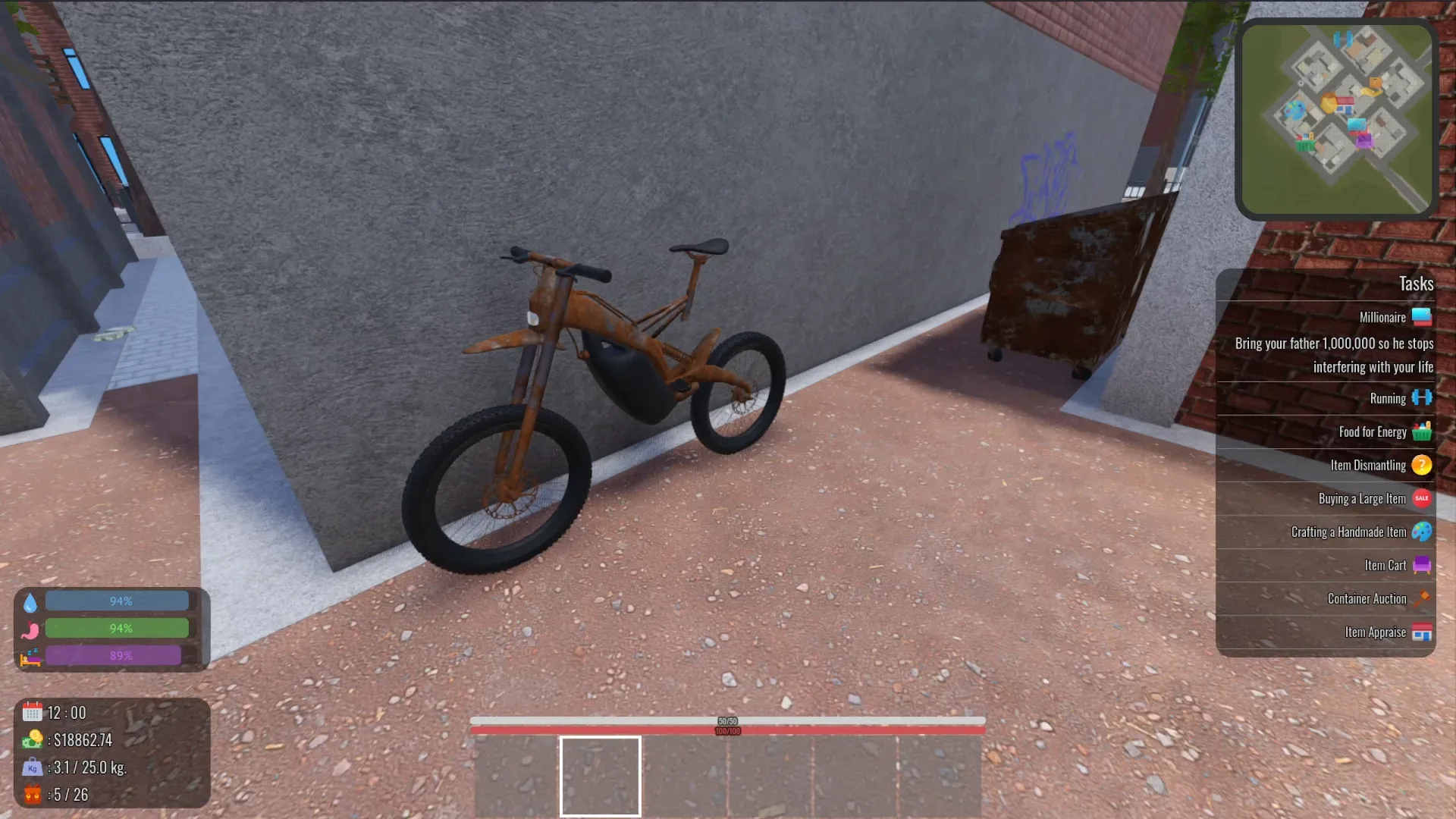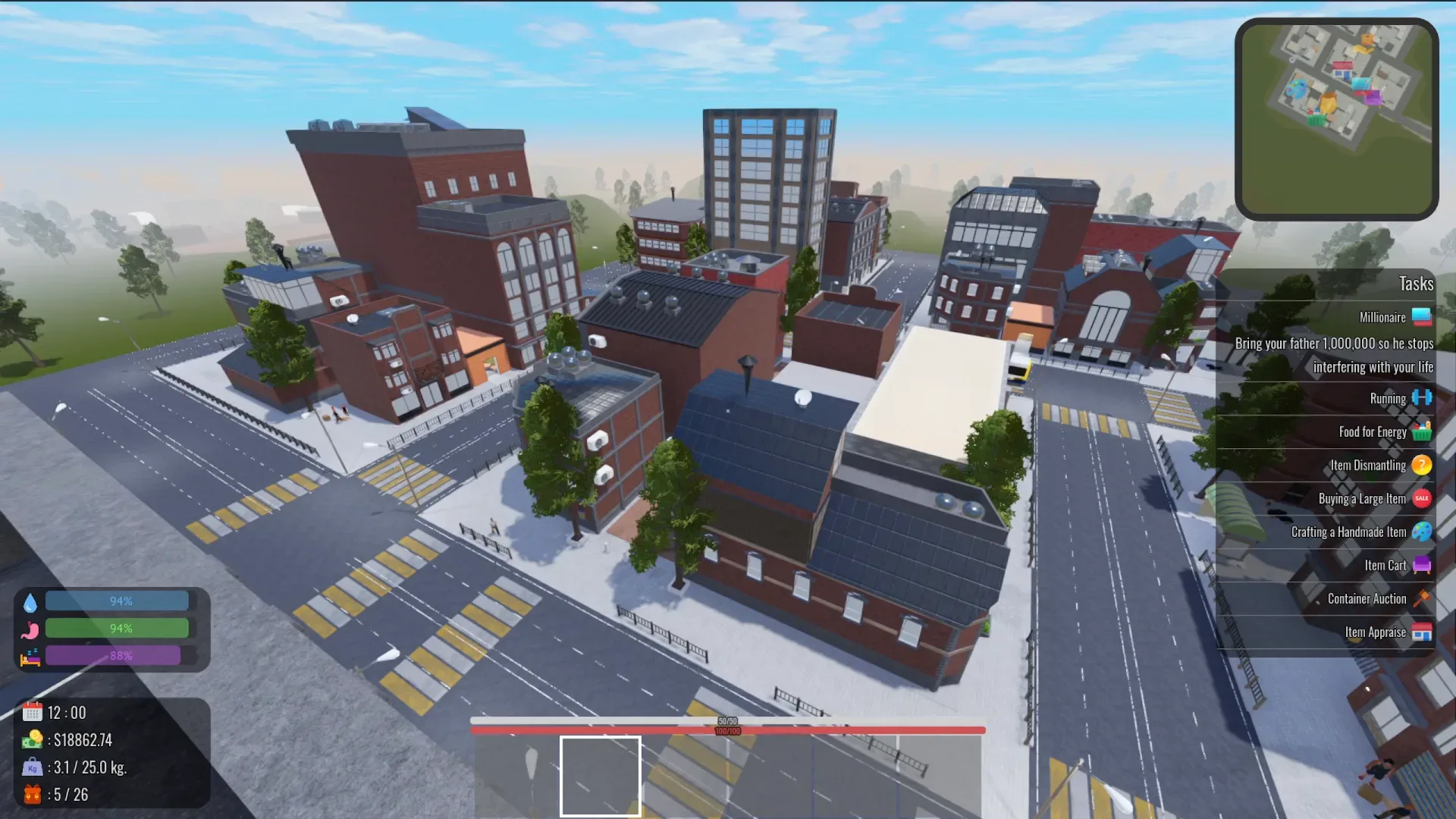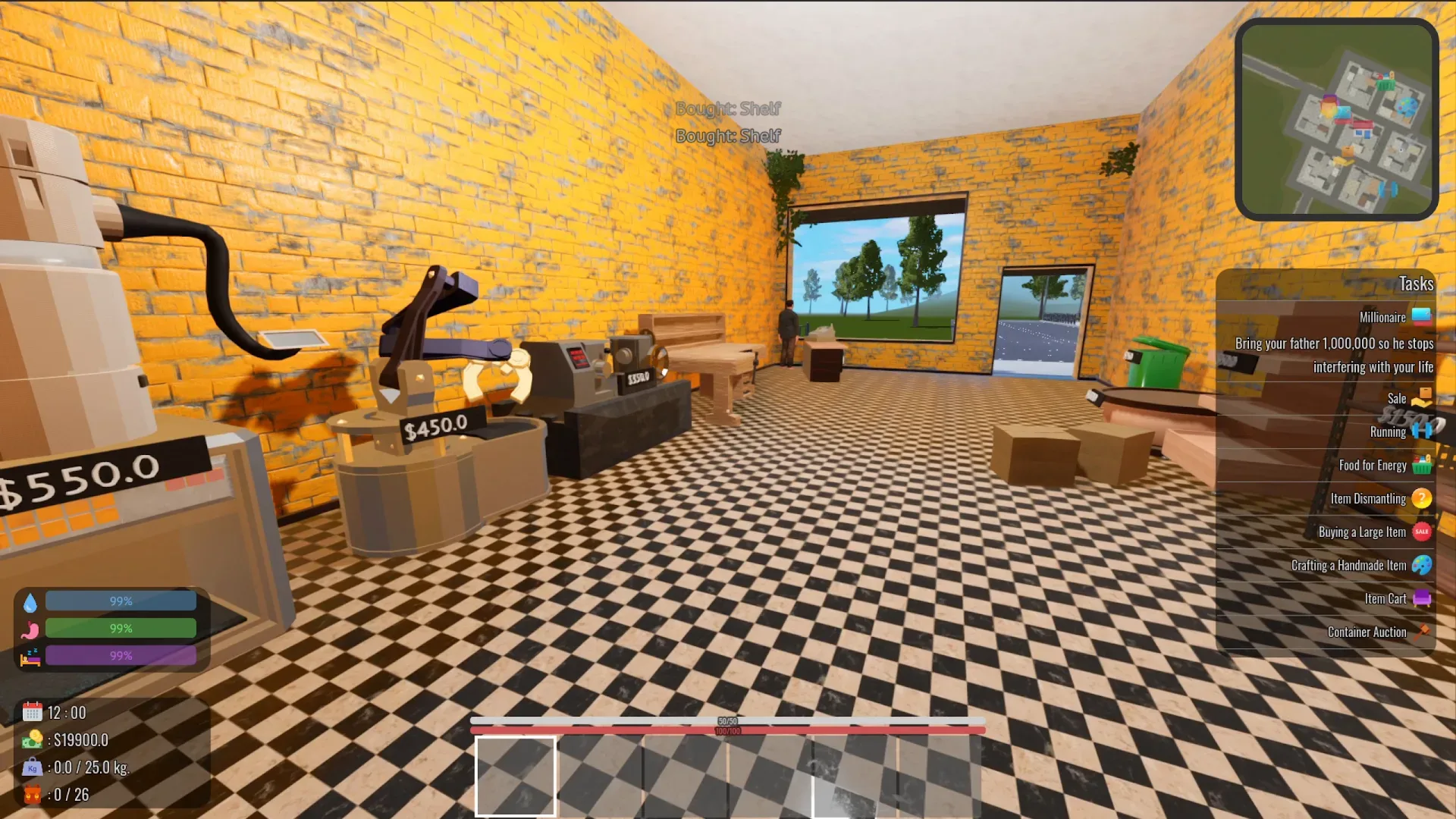
Picker Magnate Simulator now has a playable Steam demo, offering a first look at a single-player game about turning discarded stock and bulk purchases into a growing resale business. The planned full release is slated for PC in Q1 2027, with Windows and Linux/SteamOS listed as platforms.
The premise starts deliberately small: the player begins at a market stall, acquires junk in bulk, searches for worthwhile pieces, then sorts, repairs, crafts and sells inventory on the way to operating a thrift shop. It is a business-management loop, but one whose core commodity is uncertainty. A purchase is not simply a line item to flip; it may require inspection, work and a decision about whether the eventual return justifies the effort.
That distinction gives the game’s resale theme more texture than a straightforward buy-low, sell-high system. Picker Magnate Simulator is set to ask players to deal with condition and materials, choose how stock is handled, and build a retail operation around the results. The demo is the available way to see how much of that proposed loop is currently playable, while the Q1 2027 window applies to the full game rather than confirming every promised feature is in the demo.
From market stall to thrift-shop operation
The central progression is a familiar small-business arc: begin with limited space and limited means, then reinvest earnings to expand. In this case, the early market stall leads toward ownership of a successful thrift shop. Store management is expected to include designing a shop’s layout, deciding on the mix of stock, hiring workers and putting profits back into growth.
Each of those parts affects a different layer of the simulation:
- Layout concerns how a store is arranged, making the shop itself part of the player’s management decisions rather than just a menu.
- Stock mix means selecting what kinds of merchandise the business emphasizes, a useful lever when the inventory pipeline includes both bulk lots and individual finds.
- Workers point to an operation that can grow beyond doing every task personally.
- Reinvestment establishes the main economic cycle: profits are not only an end result, but the means of expanding the business.
The stated goal is not merely a larger pile of items. It is a more capable retail operation: one that can take in stock, prepare it for sale and make decisions about how to allocate time, labour and cash. That can make a low-value item relevant even when it is not a treasure on its own. A broad mix of inventory, repairable gear or material for handmade products could all have a role in a developing shop, though the specific balance of these systems remains to be seen in the demo and final release.
The picker loop: acquisition, evaluation and repair
“Picking” generally describes the act of sourcing second-hand goods with the hope of finding resale value. Picker Magnate Simulator builds that idea into its basic sequence. Players can purchase lots or locate unique pieces, then sort their findings based on condition and material.
Condition is an especially important term here. It refers to the state an item is in before any intervention: something worn, broken or otherwise imperfect may call for repair, while better-preserved merchandise may be ready for sale sooner. Material sorting, meanwhile, suggests the game will distinguish what an object is made from as part of processing inventory. Both systems make the act of receiving stock more involved than immediately assigning an asking price.
Repair is presented as a choice. Players will be able to fix gear themselves or outsource the job. In practical management terms, that creates a potential trade-off between retaining direct control over an item’s preparation and delegating work. The announcement does not specify costs, timing, success rates or the full consequences of that decision, so it would be premature to assume a detailed repair simulation. What is clear is that maintenance is positioned as a meaningful step between acquisition and resale.
This is also where the game’s theme can support a satisfying rhythm. Sorting a pile of junk is an act of evaluation; repairing a promising find is an investment; displaying the result is the commercial payoff. If the systems are well connected, players will be continually deciding what deserves attention rather than treating every item identically. The demo’s significance is that it gives prospective players an opportunity to assess whether that rhythm lands before the full game’s planned 2027 release.
Crafting adds another route to value
Items are not limited to being sold in their found or repaired form. Picker Magnate Simulator also lists handmade crafting, allowing players to craft goods by hand and sell them at a premium. A premium is simply a higher selling value attached to an item, and its inclusion implies crafting is intended as a value-adding route rather than a cosmetic side activity.
The supplied details do not identify recipes, required materials, specific crafted products or how much control players have over the process. Still, the function within the wider design is easy to understand: inventory can potentially be transformed rather than only cleaned up and resold. That gives players another way to respond when an item is not immediately attractive in its original state.
Crafting also complements the stated material-sorting feature. Sorting inventory by material may be relevant to how goods are assessed and prepared, although the game’s details do not explicitly confirm a particular material-to-recipe pipeline. The important confirmed point is more modest: acquisition, sorting, repair and handcrafted products are all named components of the intended business loop.
RPG progression is tied to shop-floor problems
Alongside store systems, Picker Magnate Simulator incorporates RPG-style progression. Here, RPG progression means a character improvement system: players level up attributes that make them more effective at particular activities. The listed attributes are strength, speed and bargaining.
- Strength is tied to carrying more.
- Speed is one of the character attributes that can be levelled up.
- Bargaining is tied to negotiating better prices.
The connection to the wider simulation is unusually concrete. Strength has an immediate relationship to hauling inventory, while bargaining feeds into sourcing and purchasing. Rather than making progression an isolated combat-style stat sheet, the game uses it to frame the ordinary physical and financial pressures of running a resale operation.
Vehicle ownership addresses that physical pressure from another angle. Players will be able to buy transportation to avoid heavy hauling. The announcement does not establish what vehicles are available, how they are purchased or whether they add storage, speed or other advantages beyond skipping the burden of carrying stock. But the purpose is plainly stated: transport is a practical upgrade for a business whose inventory may be cumbersome.
Combined, personal attributes and vehicles could provide two distinct forms of advancement. One improves what the character can do directly; the other changes how the business handles logistics. That is a sensible fit for a game where objects have to be acquired and processed rather than appearing magically on shelves.
A solo developer with prior Steam releases
Picker Magnate Simulator is being made by Yuliy Oneshko under the S-Grade Games name. It is described as a solo-developed project. Oneshko previously released Trailer Park Tycoon: Raccoon Ranch, which has sold more than 8,000 units, and Dog Brew, which has sold more than 31,000 units on Steam.
Those sales figures provide some concrete context for the developer’s earlier work, but they should not be read as a forecast for Picker Magnate Simulator. They do show that this is not presented as a first release from an unknown studio: the developer has already shipped games on Steam and reached documented sales milestones with them.
The solo-development angle also makes the demo particularly useful as a status marker. For smaller teams and individual creators, a playable build gives audiences a clearer reference point than a feature list alone. It does not settle how the final game will evolve, but it establishes that players can examine the project’s current form ahead of its planned launch window. For broader context on how team structure can shape game development, see our look at leaner game teams and industry pressures.
What is confirmed, and what players should verify in the demo
The confirmed facts are straightforward: the Steam demo is playable; the game is single-player; it is planned for Windows and Linux/SteamOS; and the full release is targeted for Q1 2027. Its advertised systems cover shop design, inventory sourcing and sorting, repairs, crafting, hiring, reinvestment, character upgrades and vehicles.
What remains unconfirmed in the available details is equally important. There is no stated price, no exact full-release date, no detailed list of demo content, and no explanation of the depth or limits of the management, crafting, repair or vehicle systems. There is also no indication that every listed feature is necessarily available in the demo today.
For players interested in the concept, the most useful questions to bring to the playable build are practical ones: Does evaluating inventory feel satisfying? Are repairs and outsourcing meaningfully different choices? Does shop growth make the player reconsider how stock is handled? And do strength, bargaining and transport feel connected to the business rather than like separate checklists? Those are the details that will determine whether the game’s appealing resale premise becomes a durable management loop.
For now, Picker Magnate Simulator’s pitch is clear: find value where others see clutter, then turn that judgement and effort into a bigger shop. The demo offers the first opportunity to see the stall-to-thrift-store model in motion before the full PC release currently planned for Q1 2027.