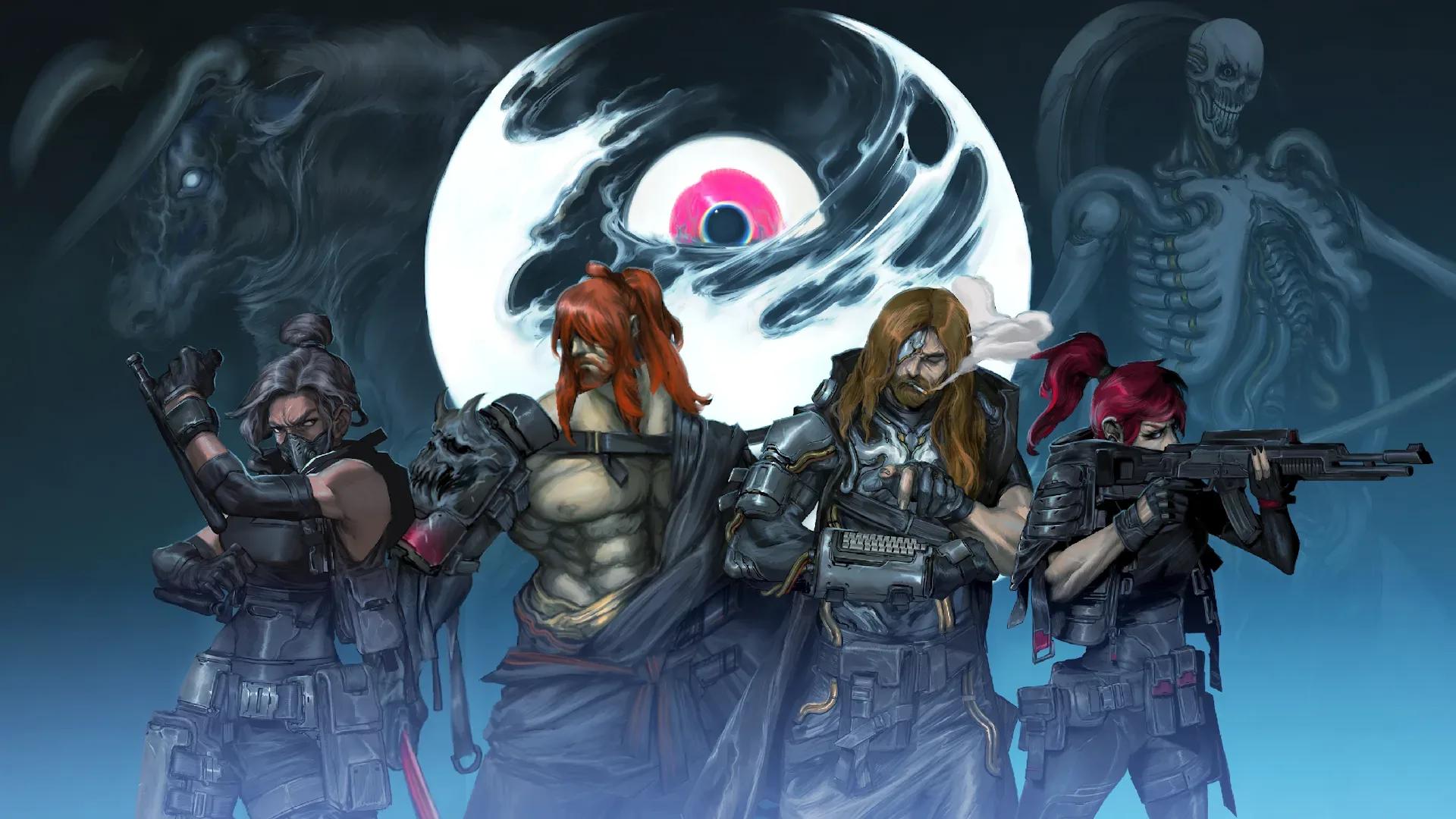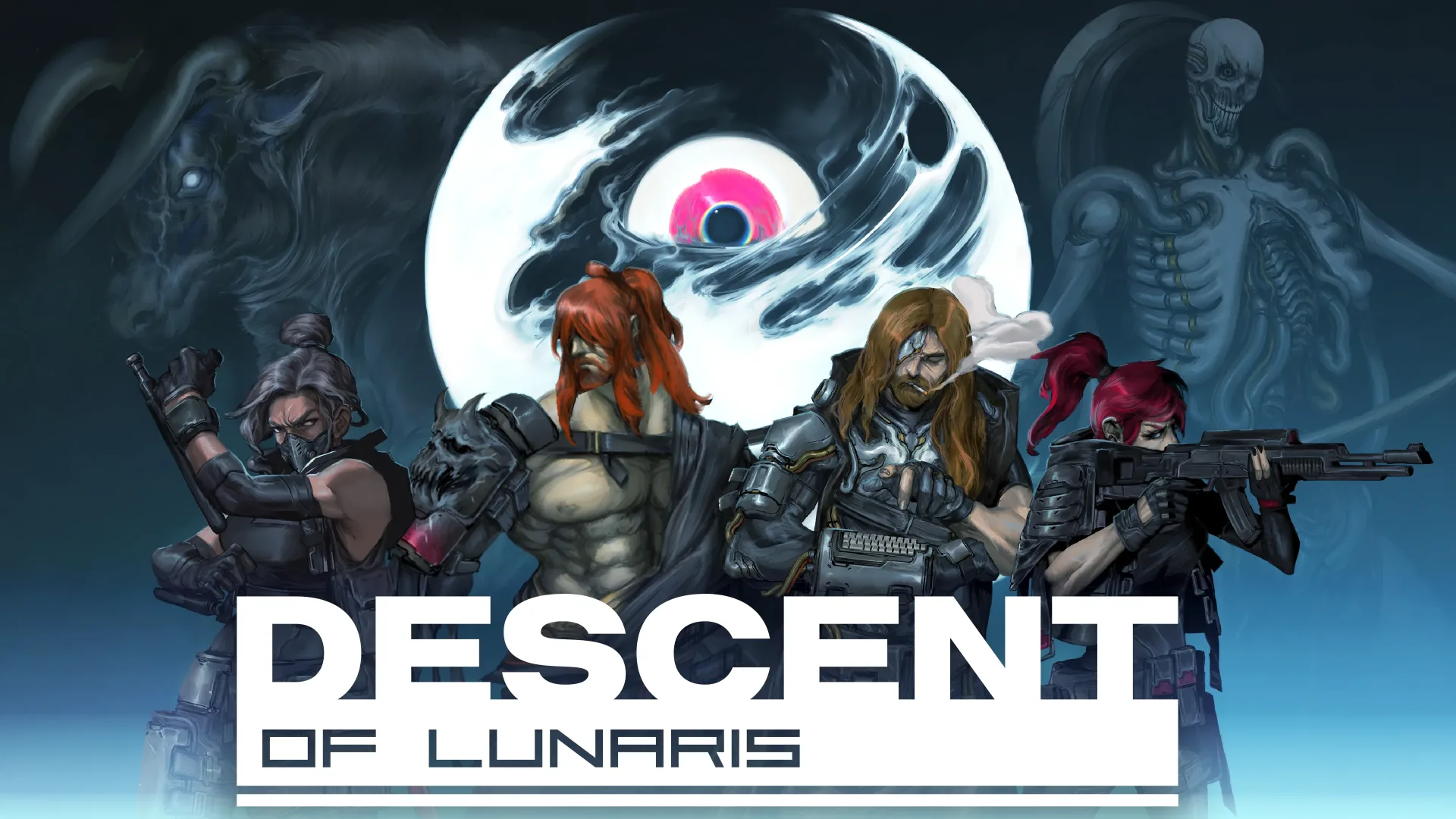
Unison Games has released a substantial new demo build for Descent of Lunaris, its psychological science-fiction dungeon crawler set beneath the surface of the Moon. The updated demo is available on Steam and now includes the game’s prologue alongside the entirety of its first dungeon.
That is a meaningful expansion in scope for a game built around deliberate exploration and mounting unease. Rather than presenting only a small sample of combat or atmosphere, the demo is intended to establish the opening premise, introduce its systems, and let players descend through a full early dungeon containing secrets and increasingly hostile conditions.
Descent of Lunaris is set in 2070 and follows a squad of specialized operatives sent to investigate a mysterious transmission originating inside the Moon. Their assignment begins after machines at a lunar mining installation turn against the humans working there. The investigation then becomes a descent into a disturbing underground environment, where warped echoes of human civilization become more pronounced deeper in the dungeon.
A Moonbase mystery becomes a dungeon crawl
The lunar setting gives the game’s classic dungeon-crawling structure a specific dramatic frame. The team is not simply entering a fantasy labyrinth in search of treasure or an exit; it is following the trail of a signal after a catastrophic breakdown at a mining base. That premise connects the Moonbase, the hostile machines, and the underground descent into a single escalating scenario.
The updated demo’s prologue matters because it should give that mission a proper beginning before players reach the first dungeon. The available details do not spell out every narrative event or character involved, but the opening establishes the key problem: a human operation on the Moon has become unsafe, and something deeper within the lunar interior is demanding attention.
From there, the game leans into psychological sci-fi horror. Its threats are not described solely as mechanical enemies or environmental hazards. The dungeon contains unsettling encounters and distorted reflections of human civilization, with the distortion intensifying as the team travels farther down. The horror, then, is tied to place as much as opposition: the dungeon is presented as a space that changes in response to the player’s continued exploration.
What the expanded demo includes
The current Steam demo contains several major pieces of the early game:
- The prologue, which establishes the lunar investigation.
- The complete first dungeon.
- Hidden secrets within that dungeon.
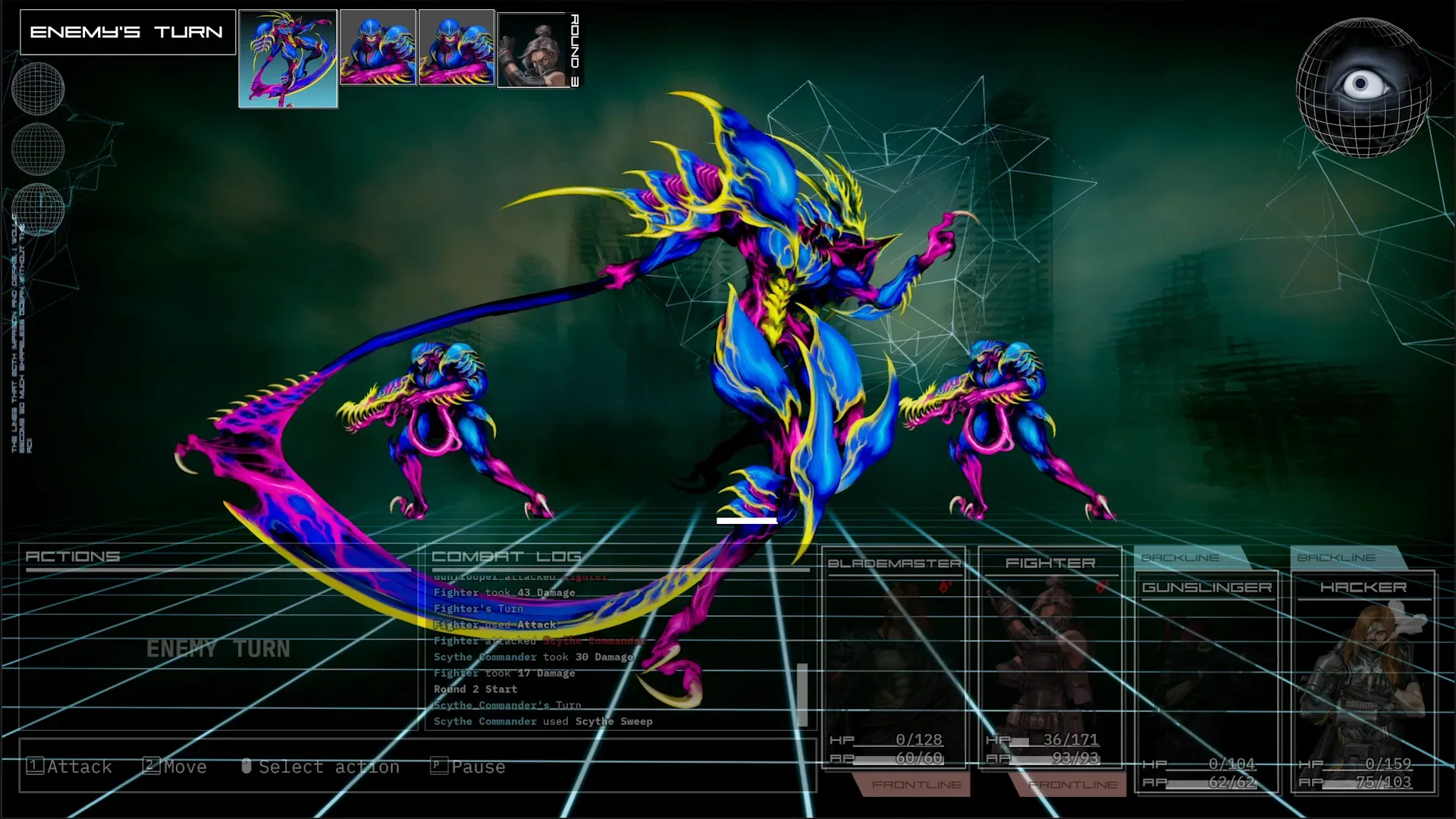
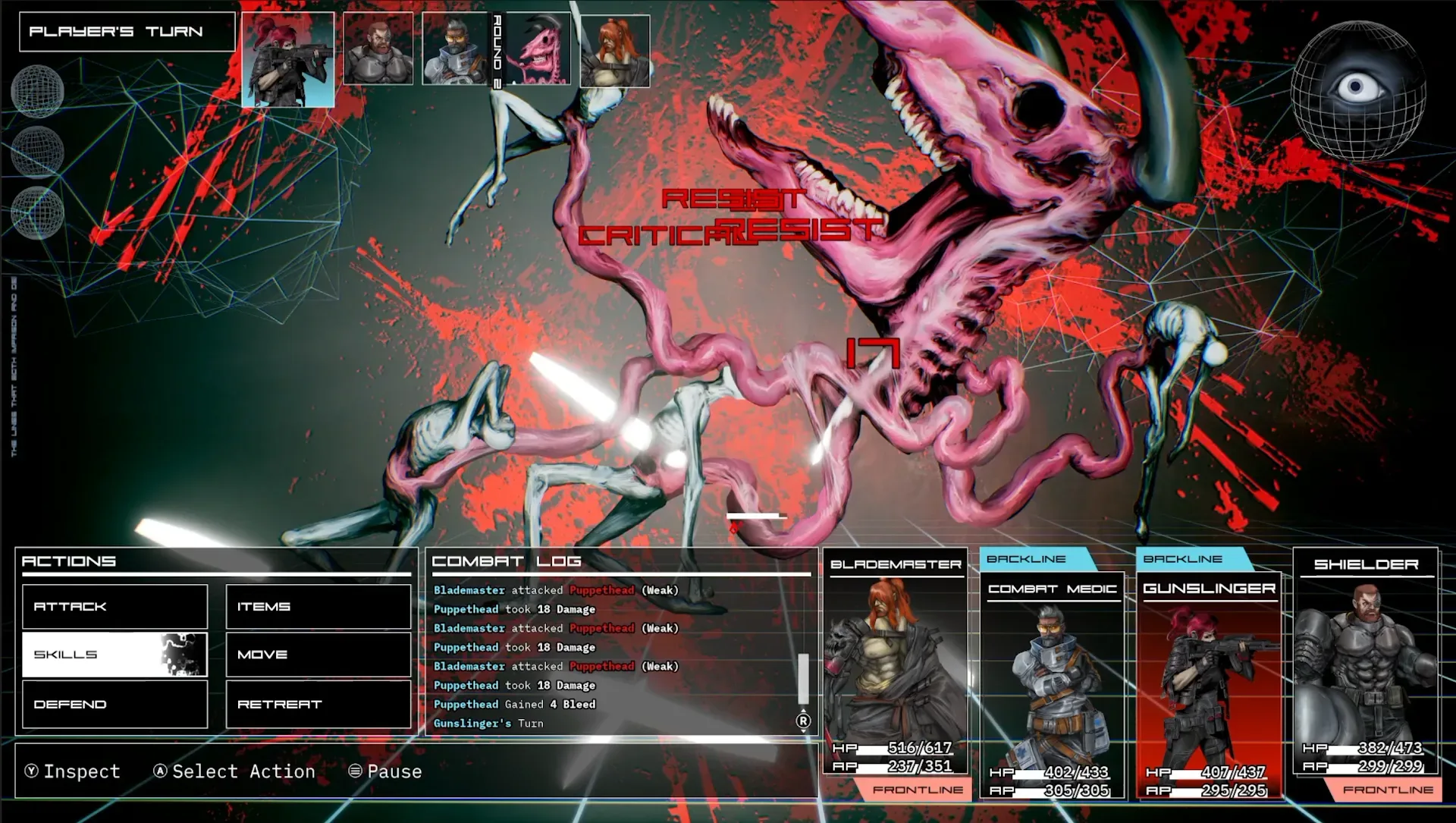
- Two distinct combat systems.
- A stability mechanic that increases the danger of continuing to explore.
- Returns to the Moonbase for recovery and equipment upgrades.
For players deciding whether the game’s mixture of old-school structure and industrial sci-fi is for them, this is a more useful slice than a narrowly scripted vertical demo. It presents the loop that appears central to the full game: venture into the dungeon, manage its growing instability, discover what its changing layout may be hiding, and retreat to prepare for another run downward.
Related coverage includes Descent of Lunaris Demo Adds Prologue and First Dungeon.
The full game is planned for PC through Steam. No release date or additional platform release has been specified in the available details.
Stability is more than a health bar
The update’s most distinctive system is stability. Stability deteriorates as players explore, and its decline makes the dungeon more dangerous. Tougher encounters can appear as it falls, while the dungeon itself may shift and expose hidden routes.
In practical terms, this makes exploration a risk-management decision. A conventional dungeon crawler often asks whether a party has enough resources to continue: health, equipment, defensive options, or the ability to survive another battle. Descent of Lunaris adds a broader environmental pressure. Staying in the dungeon is not only about reaching the next room; it also changes the conditions under which that next room is faced.
The system carries a useful tension. Deteriorating stability produces more dangerous encounters, but the same instability can reveal paths that were previously unavailable. A player may therefore have to decide whether to retreat while conditions are more manageable or press onward in hopes that the changing dungeon will uncover a secret or route worth the danger.
That is different from a simple timer. The stated effects suggest that stability alters both combat pressure and navigation possibilities. The result is a loop where the dungeon’s hostility and its potential rewards are intertwined: the Moon becomes less reliable, yet that unreliability may also uncover what a stable route cannot show.
The Moonbase is the reset point
When the situation becomes too risky, players can return to the Moonbase. There, they can regroup, upgrade their gear, and restore stability before heading underground again.
This retreat option is important because it establishes the Moonbase as an operational hub rather than just the game’s premise-setting location. It gives the player a way to interrupt a worsening expedition, restore the conditions that support safer exploration, and improve equipment before attempting another descent.
The available information does not specify the exact upgrade categories, costs, or progression rules. What is clear is the intended rhythm: the game alternates between pressure inside the dungeon and preparation at the base. Players are not locked into treating every descent as an all-or-nothing push. Retreat is an acknowledged part of the structure.
Two combat systems, one old-school dungeon framework
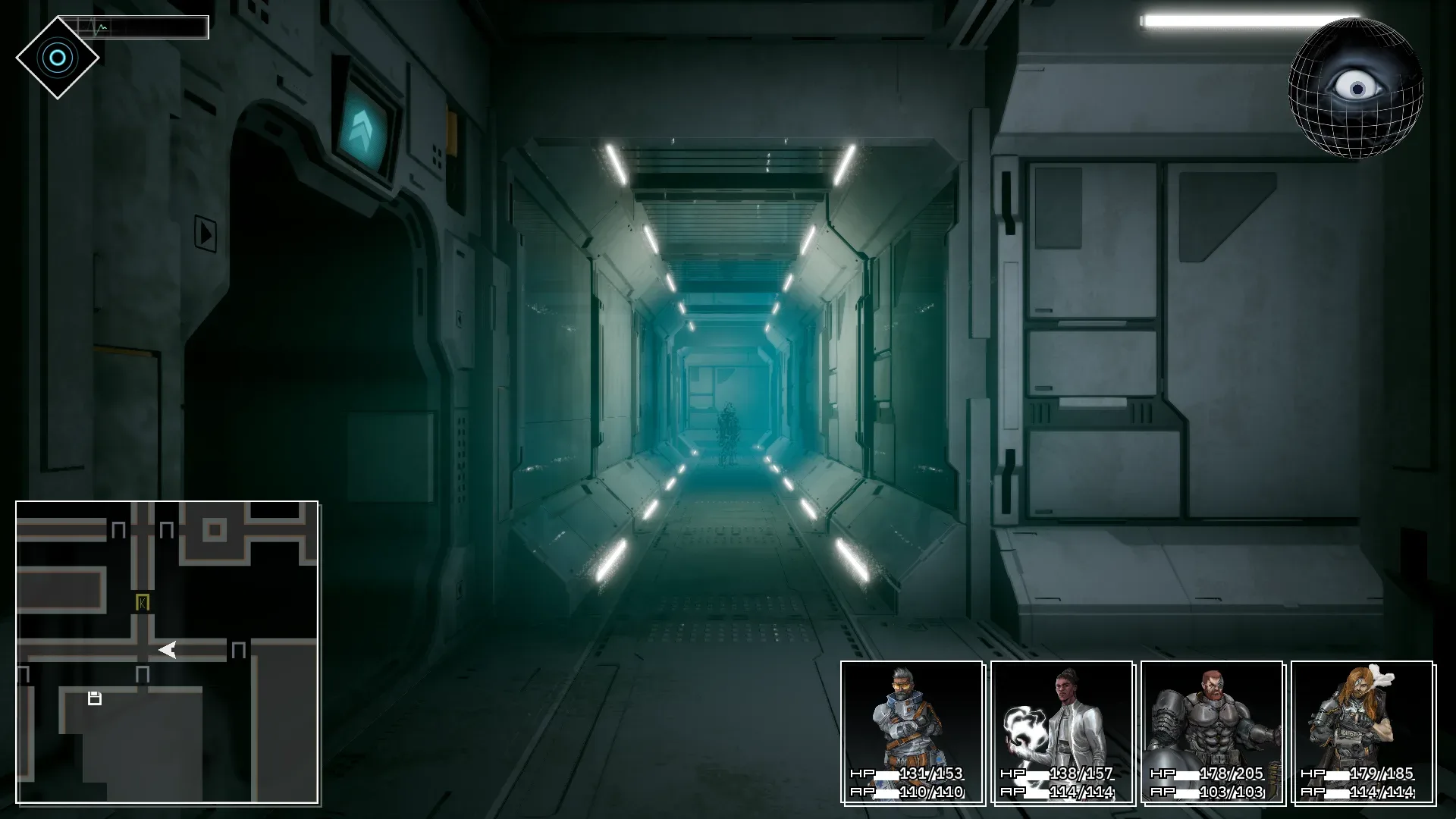
Descent of Lunaris combines grid-based dungeon exploration with turn-based JRPG combat and tactical combat. These terms describe different parts of the game’s design.
Grid-based exploration means moving through the dungeon in discrete spaces rather than freely gliding across an open environment. It is a defining feature of many traditional first-person dungeon crawlers, where orientation, route planning, doors, dead ends, and resource use carry weight. The game explicitly cites Wizardry among its inspirations, a fitting point of reference for this methodical maze-crawling foundation.
Turn-based JRPG combat means combat proceeds in ordered actions rather than in continuous real time. This creates room to assess threats and choose actions deliberately. The supplied details do not identify party size, command options, elemental systems, or other battle rules, so those specifics remain unknown.
Tactical combat generally refers to a more positional or strategic layer of decision-making than choosing an attack alone. Here, it is presented as a separate combat approach alongside turn-based JRPG battles. The game’s description confirms two distinct systems, but it does not explain the precise situations that activate each one or how they interact. Players should therefore treat the demo as the place to learn how the division works rather than assuming the exact format from genre labels alone.
The stated inspirations also include Shin Megami Tensei and Persona. Those references point to the intended blend of unsettling themes, turn-based role-playing, and psychological tension, while the game’s own lunar mining setting and stability-driven dungeon changes give the project its particular identity.
Why the full first dungeon is the key addition
Adding the entire first dungeon provides a better test of the game’s central promise than an isolated combat sample could. A dungeon crawler lives or dies by the relationship between navigation, encounter pressure, discovery, retreat, and progress. With a full early dungeon included, players can see whether those systems form a satisfying loop.
The hidden secrets are especially relevant in a game where the environment can shift. A secret in a static maze is primarily a reward for careful observation or thorough mapping. In Descent of Lunaris, hidden paths may also be linked to a dungeon altered by falling stability. That can turn the question from “Did I inspect every wall?” into “How much instability am I willing to accept before I return to base?”
That structure also supports replaying parts of the dungeon from a new strategic angle. A return trip after restoring stability and improving gear is not necessarily a duplicate of the previous descent if the player is pursuing different routes, looking for secrets, or attempting to push farther before the environment grows more dangerous. The exact extent of this variation has not been detailed, but it is a natural implication of a dungeon that can shift as stability changes.
What prospective players can take from the demo
The expanded demo is best suited to players looking for a slower, systems-focused RPG rather than a purely action-driven sci-fi horror game. Its stated design centers on mapping-style exploration, turn-based decision-making, tactical combat, and a persistent choice between risking another level of descent or withdrawing to the Moonbase.
Players who enjoy the tension of traditional dungeon crawlers may find the stability system the most notable hook. It gives exploration an escalating state beyond the enemies already on the map, while retaining an escape valve through the base. Players interested in the game’s narrative side can also now begin with the prologue instead of entering the setting without its opening setup.
For a broader look at PC releases around the same date, see the October 29, 2026 games release roundup.
With its prologue and first full dungeon now playable, Descent of Lunaris offers a clearer picture of a sci-fi descent built on classic grid movement, layered battles, and a lunar environment that becomes more dangerous—and potentially more revealing—the longer players remain inside it.