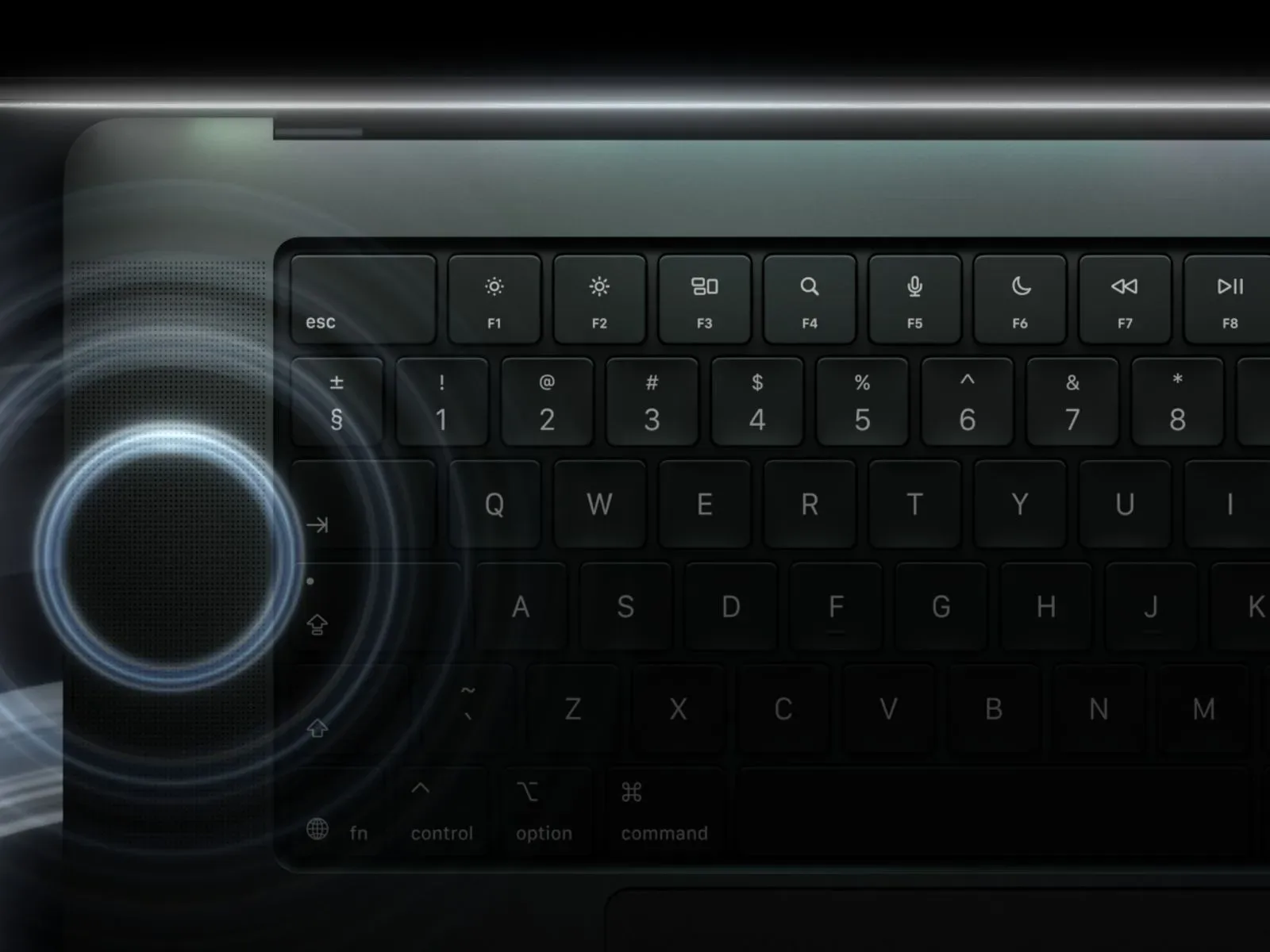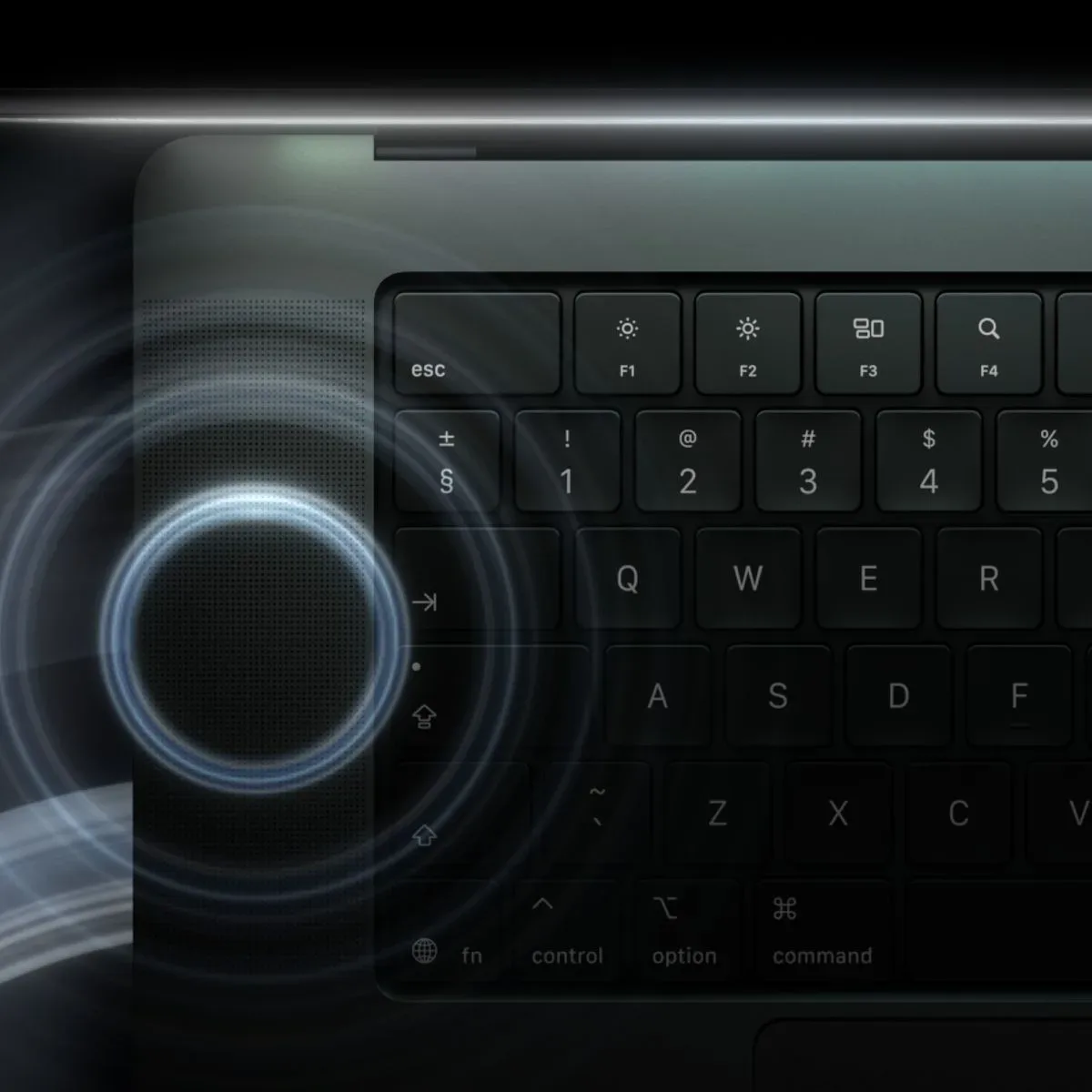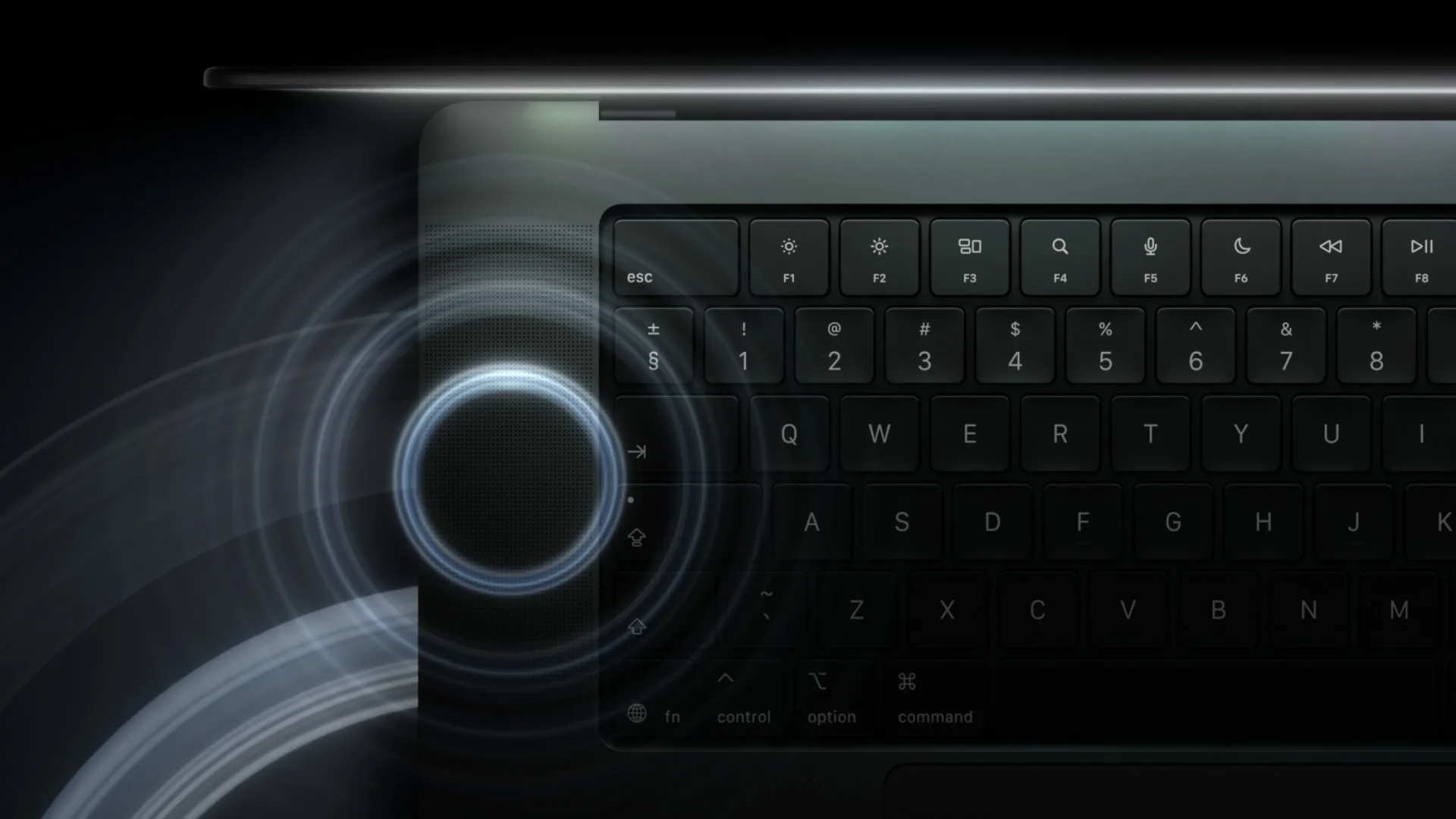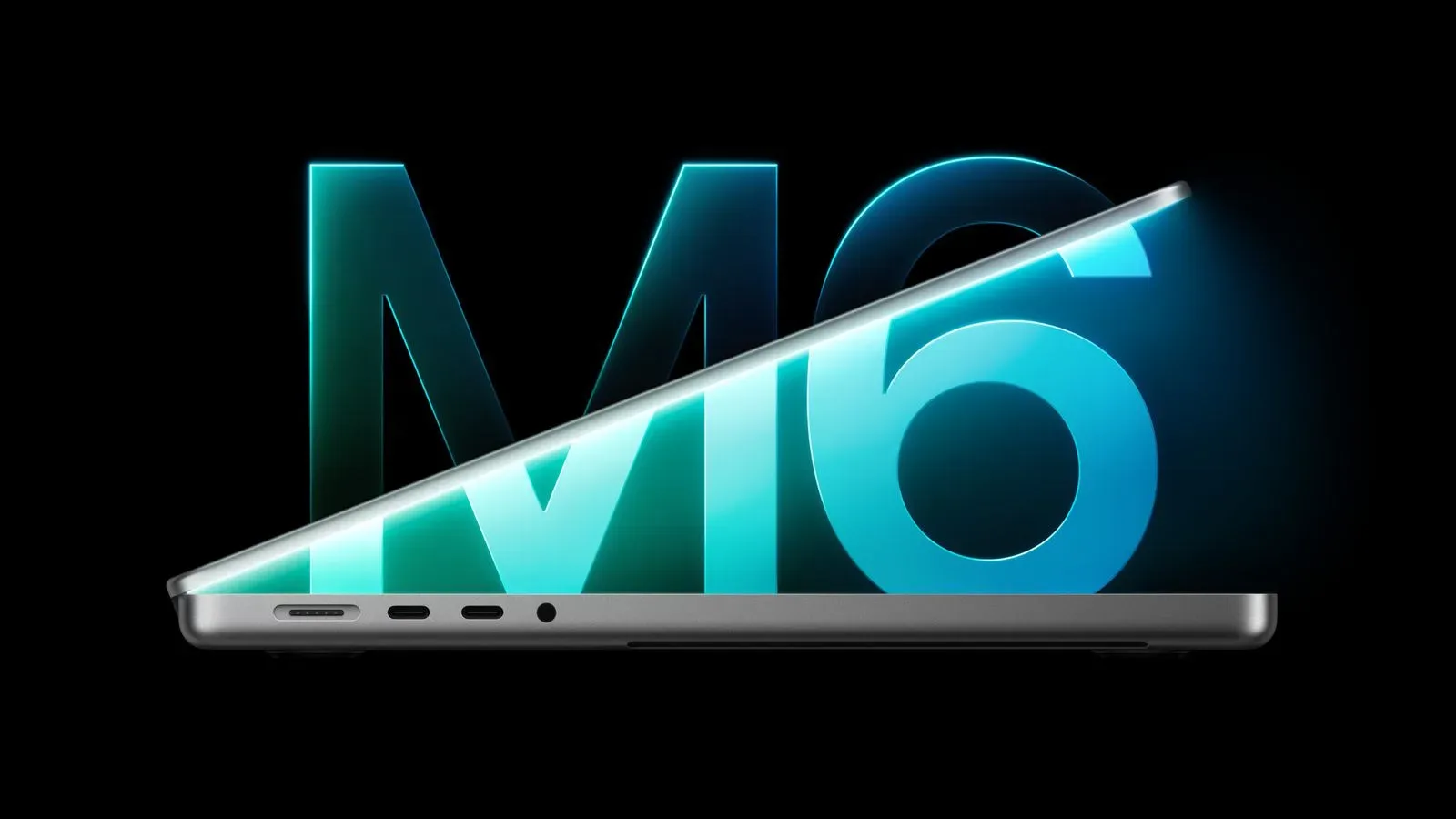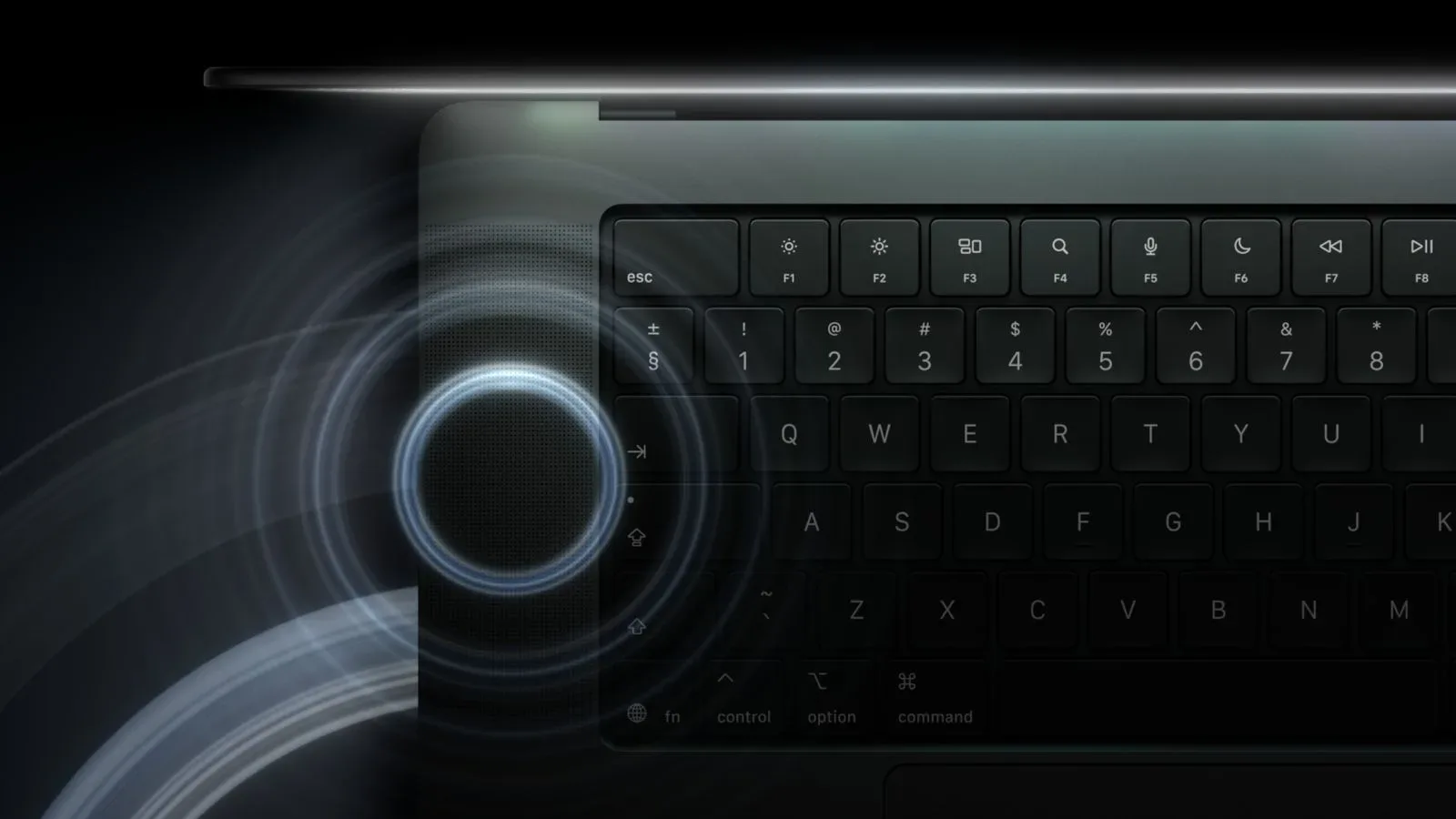
Apple’s new 14-inch and 16-inch MacBook Pro models place an unusually direct emphasis on the part of a laptop that is easy to overlook on a spec sheet: the speakers. Both models include an upgraded six-speaker system with redesigned woofers and tweeters, and Apple says the new design produces 50% deeper bass while improving clarity from the tweeters.
The more intriguing addition is not simply the revised hardware. Apple has introduced dedicated tuning for using the MacBook Pro with its lid closed. That means the built-in speakers are intended to sound better when the laptop is connected to an external display in a desk-based setup, rather than treating closed-lid operation as an audio afterthought.
Pre-orders are open now. The new models launch on November 6, starting at $2,899 for the 14-inch MacBook Pro and $3,399 for the 16-inch version.
What is changing in the six-speaker system?
Apple describes the update as a redesign of both the woofers and tweeters in the MacBook Pro’s six-speaker array. These two component types have different jobs.
- Woofers reproduce lower-frequency sound, including the weight of bass instruments, deep percussion, rumbles and the low-end effects that can give game, film and music audio more physical presence.
- Tweeters handle higher-frequency content. In practical listening terms, that can include detail in voices, percussion, musical texture and the upper range of sound effects.
The company’s headline claim is that the revised woofers deliver 50% deeper bass. It is important to read that as a manufacturer claim rather than a complete performance measurement: no frequency figure, test method, loudness level or comparison condition has been provided here. “Deeper bass” generally refers to reproducing more of the low-frequency range, but the supplied details do not establish exactly how Apple arrived at the 50% figure.
That caveat does not make the update meaningless. It simply defines what is and is not known. The confirmed change is redesigned woofer hardware, paired with Apple’s claim of substantially deeper bass. Whether that improvement will be most noticeable with music, movies, games, spoken media, or all of the above will depend on real-world use and further testing that has not been provided.
Why tweeter dispersion matters
Apple also says the tweeters have been redesigned to improve clarity by shaping how sound disperses. Sound dispersion is the way audio spreads outward from a speaker rather than travelling in one perfectly narrow path.
For a laptop, this matters because people do not always sit at precisely the same spot in front of the screen. A speaker system with better-controlled dispersion can, in principle, produce clearer or more consistent high-frequency sound across a listening position. Apple’s wording specifically connects its tweeter redesign with clarity, not with a stated volume increase or a new surround-sound format.
The distinction is useful. Louder is not automatically clearer, and more bass is not automatically better balanced. Apple is presenting the redesign as a combination of low-end extension from the woofers and more controlled high-frequency presentation from the tweeters.
Closed-lid audio is the unusual desktop-focused feature
The first-time addition of dedicated closed-lid audio tuning is arguably the more practical update for people who use a MacBook Pro as both a portable computer and a desktop machine.
A closed-lid configuration typically means connecting the notebook to an external display, then using it with the MacBook’s screen shut. It can be a tidy way to keep a desk centered on a larger monitor while retaining the performance and ports of the laptop. Until now, the built-in speakers were still physically present in that arrangement, but Apple is now explicitly saying it has tuned audio for it.
The promise is better sound quality from the MacBook Pro’s own speakers while it is attached to an external display. That potentially matters for users who want straightforward desk audio without immediately reaching for separate speakers or headphones. It could be relevant for watching video, listening to music, voice calls, and games played from a monitor-based setup.
There is a practical limitation worth keeping in mind: dedicated tuning is an improvement to the laptop’s internal audio behavior, not an announcement of external speaker hardware. Buyers who already rely on headphones, a soundbar, studio monitors, or another separate system should not assume this feature replaces their existing setup. Instead, it makes the built-in speakers a more deliberately supported option when the MacBook’s display is not in use.
Spatial Audio with Dolby Atmos remains supported
The upgraded speaker system continues to support Spatial Audio with Dolby Atmos. Spatial Audio is a way of presenting compatible audio with a more dimensional sense of placement than conventional left-and-right stereo. Dolby Atmos is a format associated with object-based audio, where sounds can be positioned within a broader audio space rather than being restricted only to fixed channels.
Support is not the same thing as a guarantee that every track, film, stream or game will use the format. Compatible content is still required. But the continued inclusion of Spatial Audio with Dolby Atmos means the revised speaker system retains a feature that can matter to people who use compatible media.
For prospective owners, the overall picture is straightforward: Apple is not framing this as an isolated bass boost. It is positioning the new models’ audio around redesigned speaker components, clearer dispersion from the tweeters, preserved spatial-audio support, and a new mode of tuning tailored to an external-monitor workflow.
What buyers can confirm now
The available information supports several firm points:
- The new MacBook Pro line includes both 14-inch and 16-inch models.
- Each has an upgraded six-speaker audio system.
- Apple says the woofers and tweeters have been redesigned.
- Apple claims the woofer design enables 50% deeper bass.
- The tweeters are intended to improve clarity through shaped sound dispersion.
- Spatial Audio with Dolby Atmos remains supported.
- Dedicated tuning for closed-lid use has been added for the first time.
- The machines can use their built-in speakers in an external-display desktop arrangement, with Apple promising improved sound quality in that setup.
- They launch November 6, with starting prices of $2,899 for 14 inches and $3,399 for 16 inches.
What has not been detailed is equally important for a purchase decision. The supplied information does not specify frequency-response ranges, speaker output levels, supported external-display configurations, or how the closed-lid tuning is activated. It also does not offer comparative technical data against earlier MacBook Pro speakers beyond the stated deeper-bass claim.
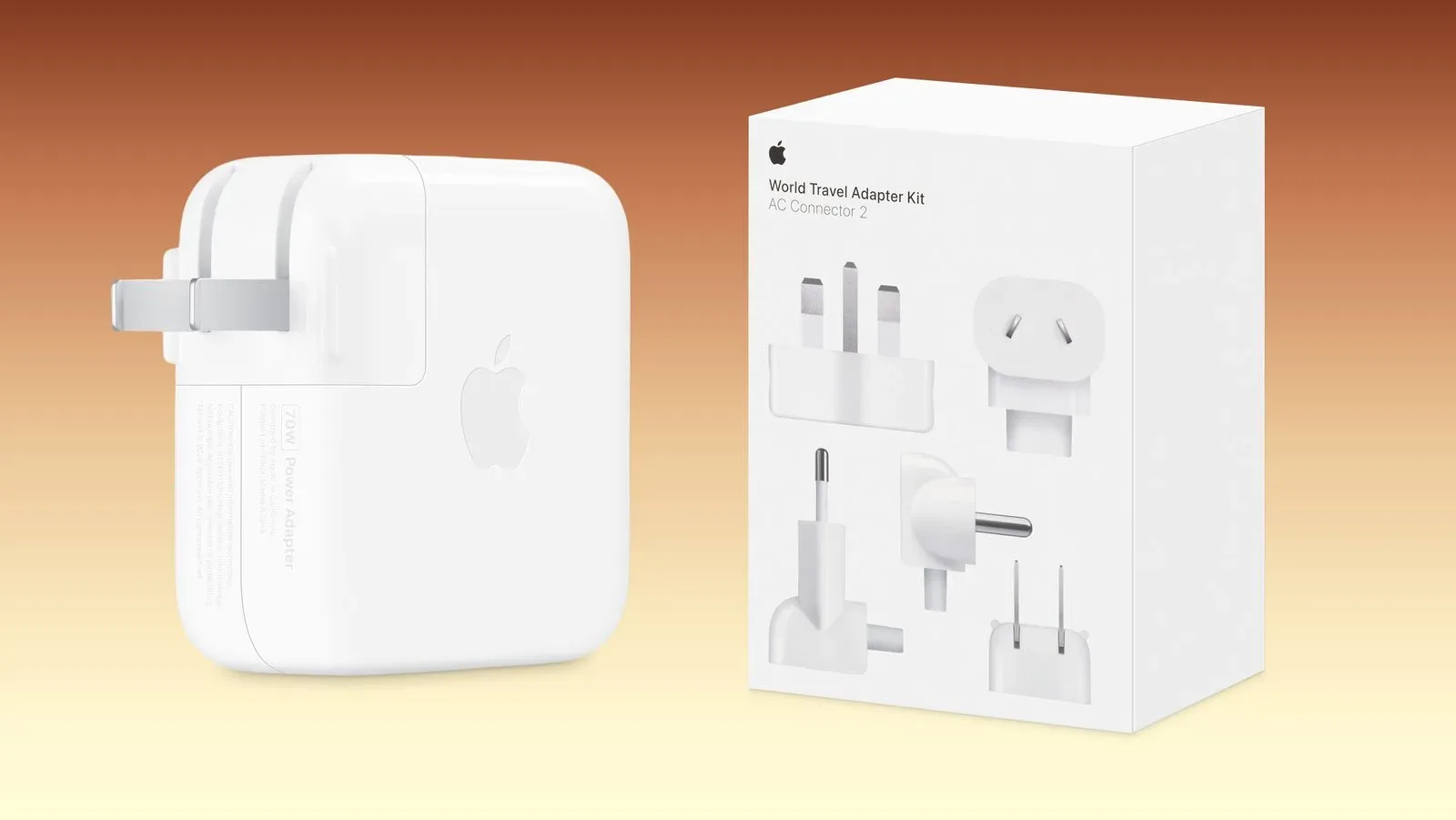
Those looking at the new notebooks as desk machines may also want to consider the surrounding setup rather than speakers in isolation. Power and accessory choices can shape how cleanly a laptop-based workspace comes together; Apple has also updated its related charging accessories, as covered in this overview of its revised 70W and 140W chargers, extension cable and travel kit.
A meaningful quality-of-life focus, not a standalone audio replacement
There is a sensible middle ground in interpreting Apple’s announcement. Integrated laptop speakers have clear physical limits compared with dedicated desktop audio equipment, and none of the supplied details claim otherwise. But many people use a laptop’s internal speakers every day because they are immediate, cable-free and already available.
The new MacBook Pro audio work is therefore most meaningful as a quality-of-life refinement. Deeper bass could add more body to low-frequency content. Better-controlled treble dispersion could improve perceived clarity. Most notably, closed-lid tuning acknowledges that a premium laptop is often used below or beside a monitor, not only open on a table.
At these starting prices, the speaker changes alone are unlikely to be the sole reason to choose either size. Yet they are a relevant part of the total experience, particularly for someone who wants the convenience of built-in audio when moving between portable use and a fixed external-display desk. Apple’s new audio approach gives that scenario explicit attention rather than leaving it to whatever sound emerges once the lid comes down.