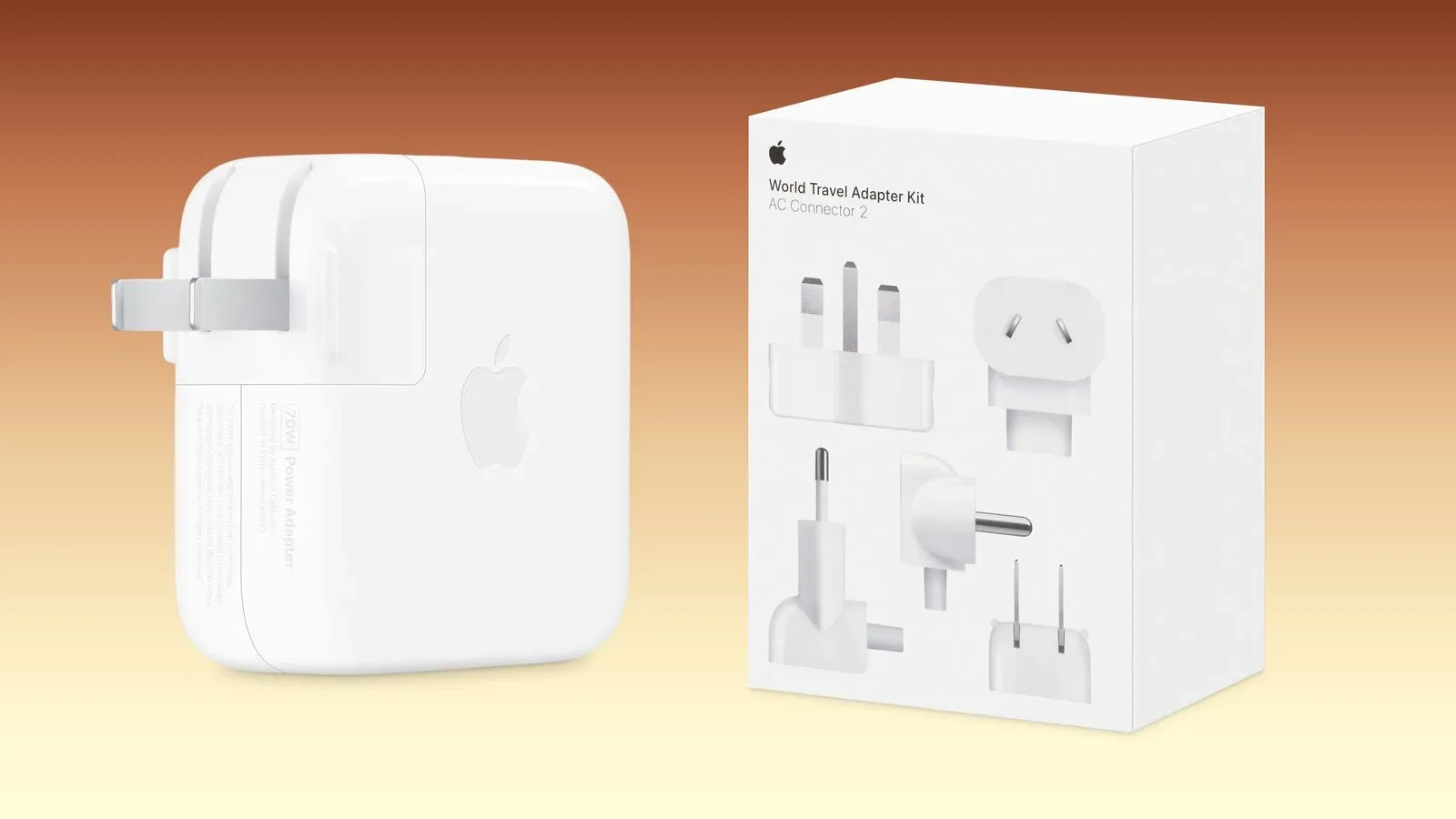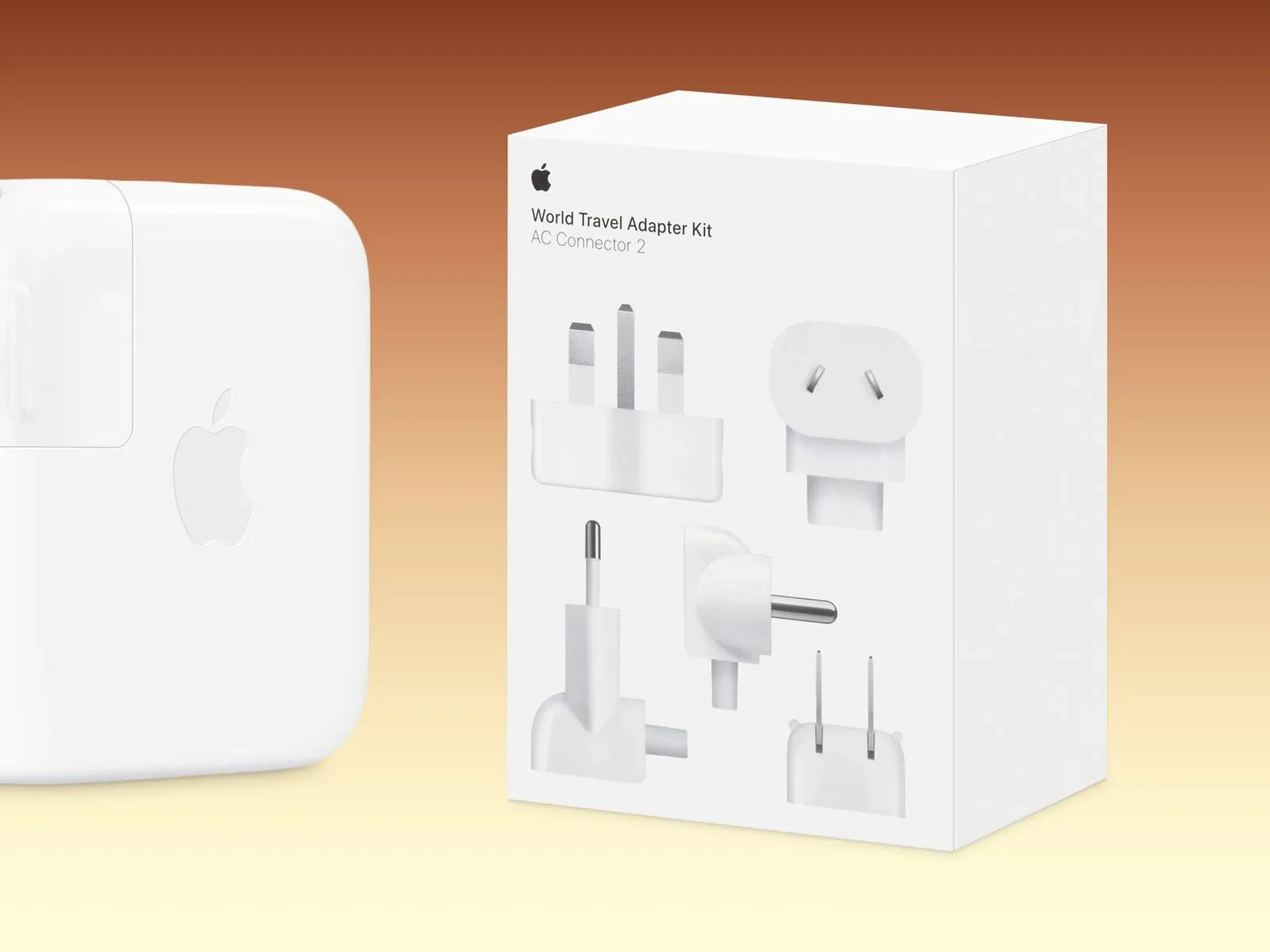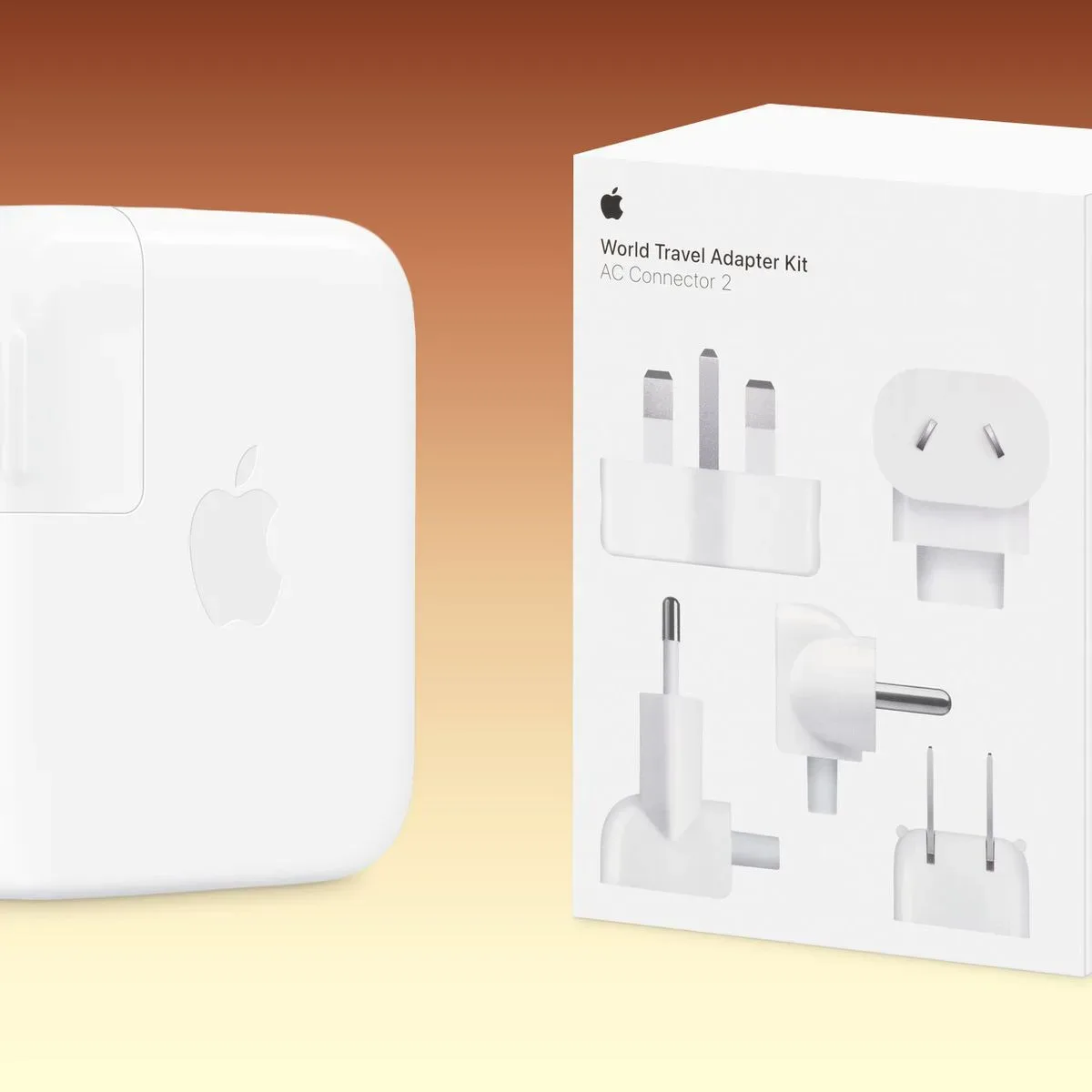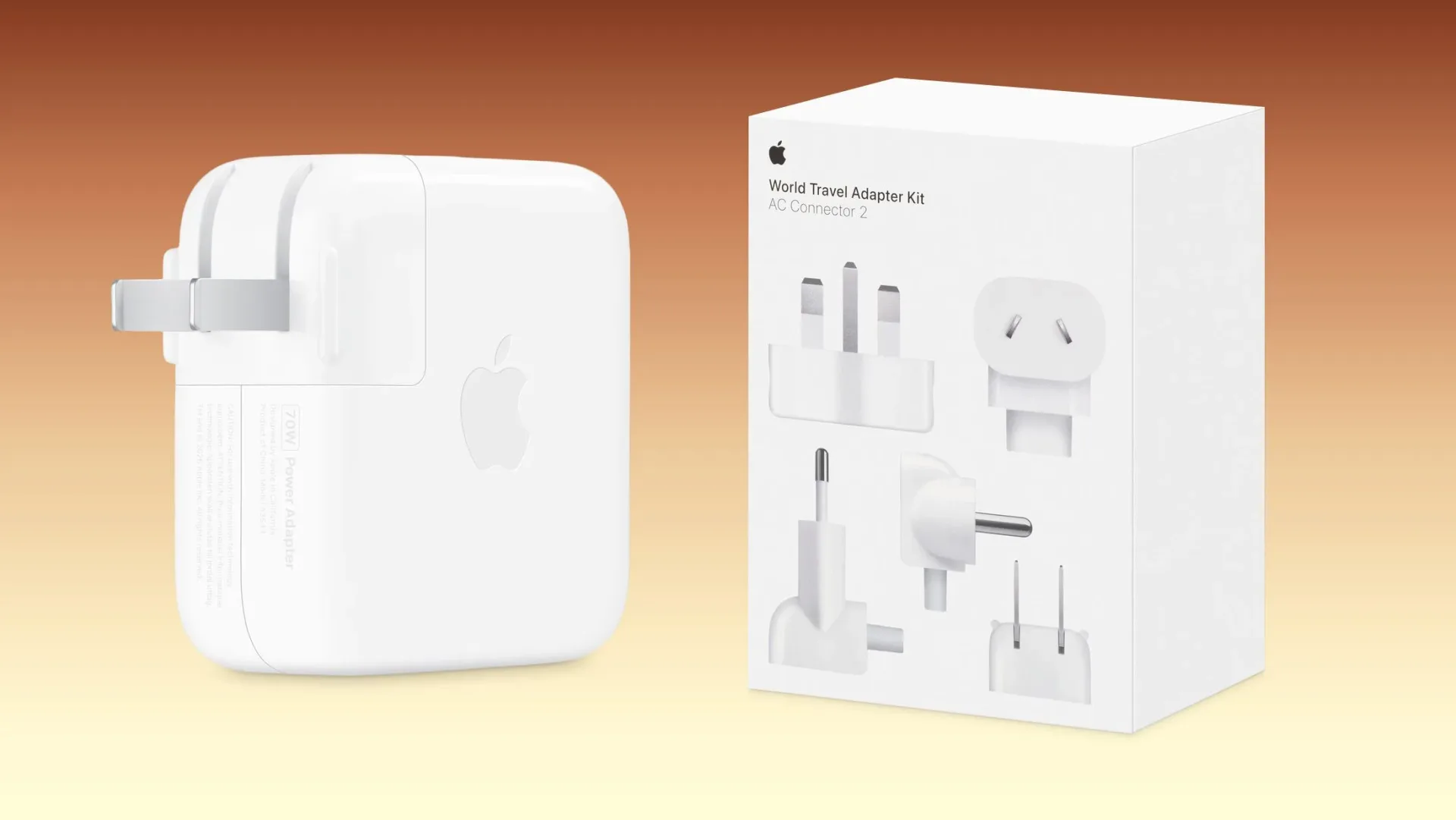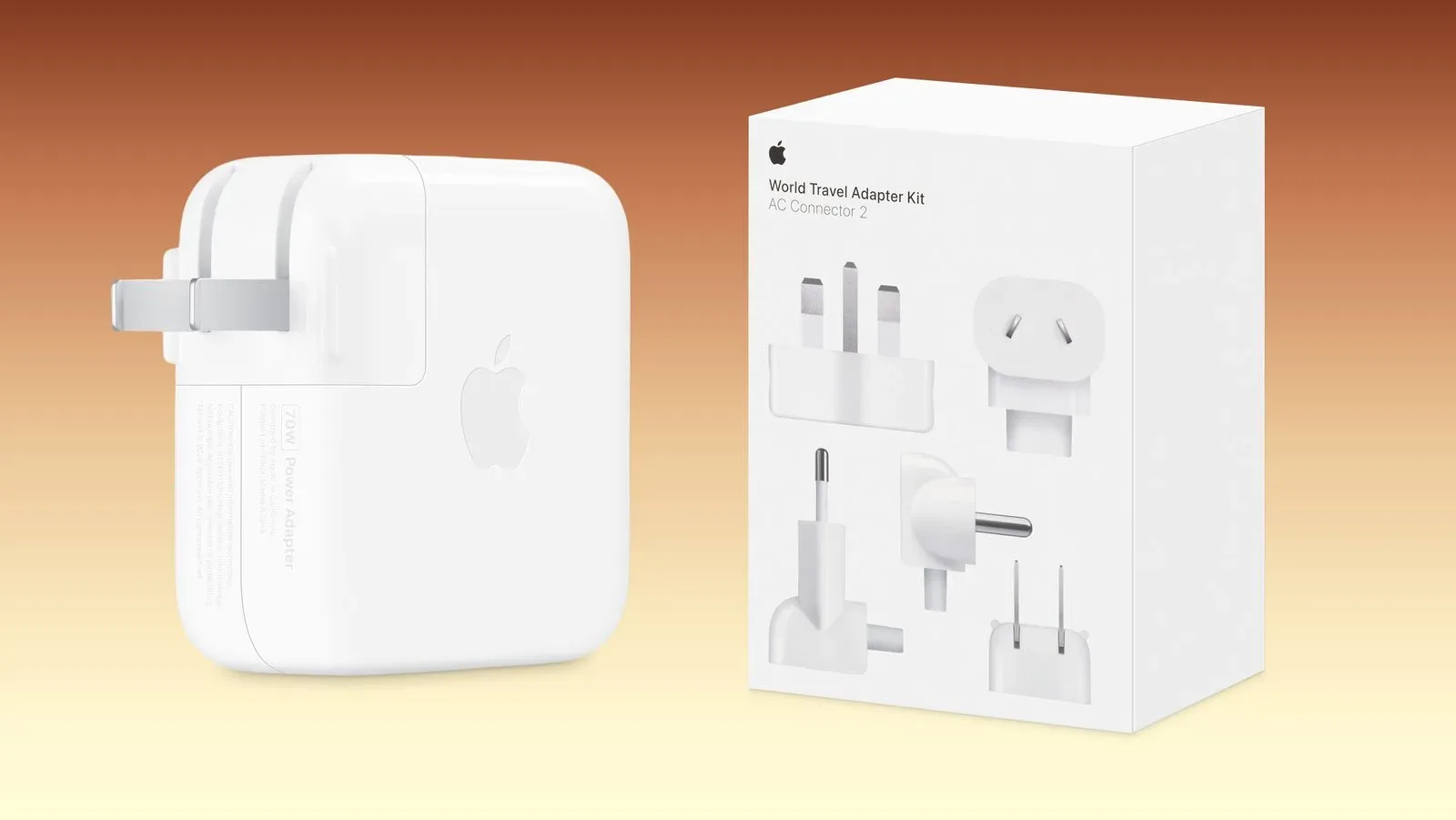
Apple has begun selling revised versions of its 70W Power Adapter, 140W Power Adapter and Power Adapter Extension Cable, all built around a redesigned removable-plug interface called AC Connector 2. The company has also returned its World Travel Adapter Kit to sale with the same updated connector across every plug in the box.
It is a small physical change with a notably practical consequence: the removable wall plugs, travel plugs and extension cable heads are parts of a shared ecosystem. When one portion changes shape, owners cannot automatically assume that an older component will fit a newer adapter, or vice versa. Apple says the revised interface is intended to comply with updated regulations, while the updated lineup also resolves compatibility concerns that arose when AC Connector 2 reached some countries earlier in the year.
The updated accessories are listed through Apple’s online store in the United States and in many other markets. In the U.S., the refreshed World Travel Adapter Kit is priced at $39.
A new connector shape, not just a new name
Apple’s power adapters use a detachable AC plug: the portion that goes into a wall outlet can be removed from the charging brick. That design supports two useful setups. A user can place the compact wall plug directly on the adapter, or attach a longer extension cable between the adapter and the outlet. It also allows a travel kit to swap in a plug intended for another region without replacing the power adapter itself.
AC Connector 2 changes the mechanical profile at that attachment point. Apple describes the new connector as pill-shaped. The preceding AC Connector 1 has a notched design. Those descriptions are more useful than they might first appear: they give buyers a simple visual way to distinguish the generations before attempting to mix parts.
“Connector” in this context does not mean the USB-C port used to connect a cable to a Mac or another device. It means the AC-side attachment system where the wall plug or extension cable meets the power brick. That distinction matters because a charger can still have familiar device-facing ports while its removable mains-plug component has changed.
The company’s stated rationale is regulatory compliance. The supplied information does not specify which regulations changed, which territories prompted the redesign, or whether the new shape alters charging speed or power delivery. The confirmed change is the physical AC Connector 2 interface and the accessory refresh built around it.
Why compatibility became the main issue
Apple had begun introducing AC Connector 2 in a limited number of countries earlier in 2026. That staggered rollout created an awkward overlap: newer adapters could appear alongside older extension cables and older World Travel Adapter Kit plugs. Customers reported compatibility problems as a result.
The revised extension cable and travel kit matter because they fill the matching-accessory gap. Rather than leaving users of newer adapters with a changed plug interface and only legacy add-ons, Apple now offers corresponding AC Connector 2 versions of the extension cable and the international plug set.
That does not mean every existing Apple charging accessory should be treated as interchangeable. The visible difference between the notched AC Connector 1 and pill-shaped AC Connector 2 designs is a reason to check the connector generation before making a purchase, packing a trip kit, or combining loose accessories that have accumulated over several years.
What to check before buying an add-on
- Look at the adapter’s removable-plug connection: Apple identifies the newer AC Connector 2 by its pill-shaped design and the earlier version by its notch.
- Match the generation: An extension cable or travel plug should be selected for the connector used by the adapter, rather than assumed compatible based on its general Apple branding.
- Check what is actually being replaced: A wall plug, an extension cable and a charging brick are separate pieces. Replacing only one may not solve a mismatch between generations.
- Plan travel accessories as a set: If a trip depends on interchangeable plugs, confirming the plug-kit generation before departure is more sensible than discovering an incompatible fit at the outlet.
This is especially relevant for people who share adapters between home, work and travel bags. Removable accessories are convenient precisely because they can be separated, but that also makes it easy for parts from distinct generations to end up in the same drawer.
The World Travel Adapter Kit is back
Apple’s updated World Travel Adapter Kit had previously disappeared from its online store in 2025. Its return brings five interchangeable AC plug types, now all using AC Connector 2. The package is designed around regional outlet standards rather than around a single destination, and its included plugs cover the following locations:
- Type A: North America and Japan
- Type C: Continental Europe and Brazil
- Type D: India
- Type G: the United Kingdom, United Arab Emirates, Saudi Arabia and Singapore
- Type I: Australia and New Zealand
A travel adapter plug changes the physical fit between an appliance and a regional socket. It should not be confused with a claim about what voltage a given device accepts; no voltage-conversion details are provided here. The practical point of this kit is the plug format, and its significance in this update is that all five included formats now attach through Apple’s newer connector shape.
For Mac owners, that makes the kit most straightforward when bought alongside—or specifically for—an AC Connector 2 power adapter. Readers tracking Apple’s laptop hardware can also see how the company’s accessory revisions sit alongside its recent MacBook Pro developments. The charger change is less dramatic than a new notebook, but it can determine whether a familiar travel or desk setup remains usable as intended.
Which adapters have been refreshed
The updated charging bricks are Apple’s 70W Power Adapter and 140W Power Adapter. The available information identifies them by their wattage ratings but does not attach specific Mac models, supported device lists or altered charging behavior to this refresh.
Wattage is a measure of power capacity. It helps distinguish the two adapters as different classes of power hardware, but the connector revision should not be read as evidence of a new performance tier. Apple has described the new AC Connector 2 in terms of its design and regulatory purpose, not as a speed upgrade.
That is an important buying distinction. Someone who already has the right wattage for their use may be looking at this update primarily because they need a compatible extension cable or travel plug. Someone buying a new adapter may instead want to account for the likely need to use current-generation add-ons from the start.
The sensible takeaway for current owners
There is no supplied indication that owners must replace older, functioning equipment simply because AC Connector 2 exists. The immediate concern is compatibility when accessories cross generations. If an existing adapter, plug and extension cable already fit together, the reported issue does not by itself establish a need to replace them.
The calculation changes when purchasing an extra extension cable, restoring a travel setup, or pairing an adapter bought in a country that has already moved to AC Connector 2 with parts acquired earlier. In those cases, identifying the connector profile first can prevent a deceptively minor purchase from becoming an unusable one.
Apple’s simultaneous update to the 70W adapter, 140W adapter, extension cable and travel kit is therefore the meaningful part of the news. A connector standard only becomes convenient when the surrounding accessories move with it. With matching new plugs and cable hardware now available, the newer pill-shaped system has a complete first-party path for desktop extension and international travel.