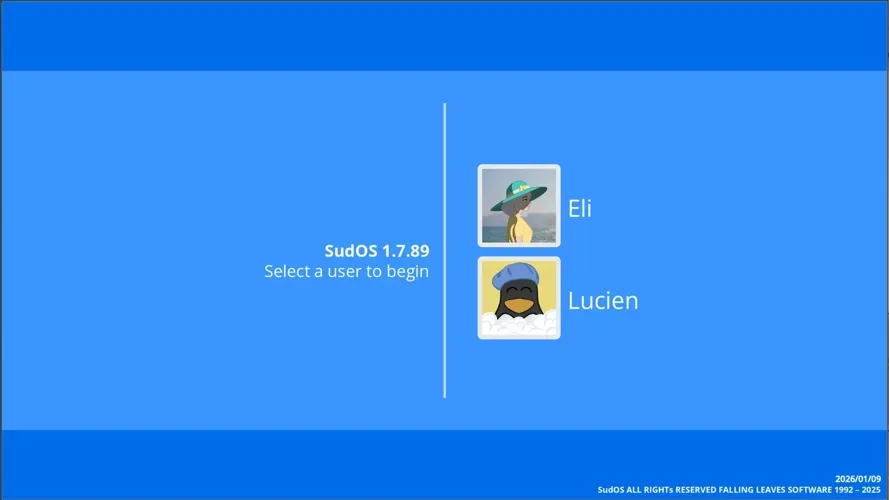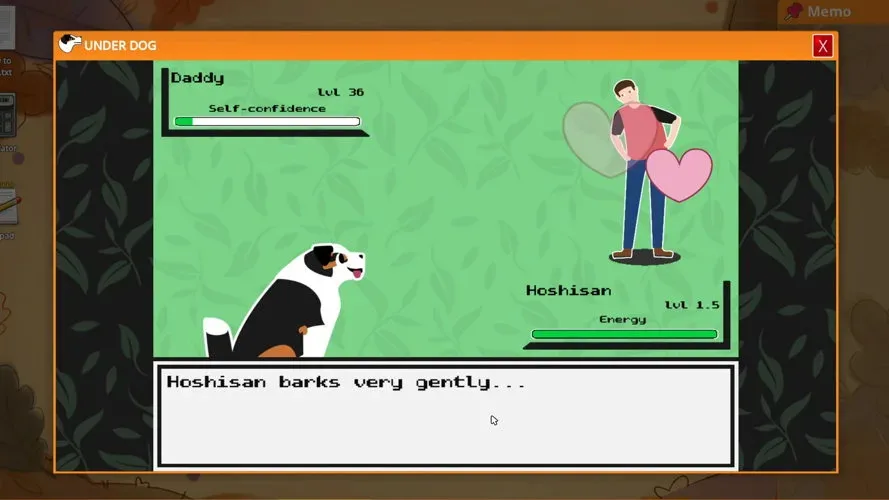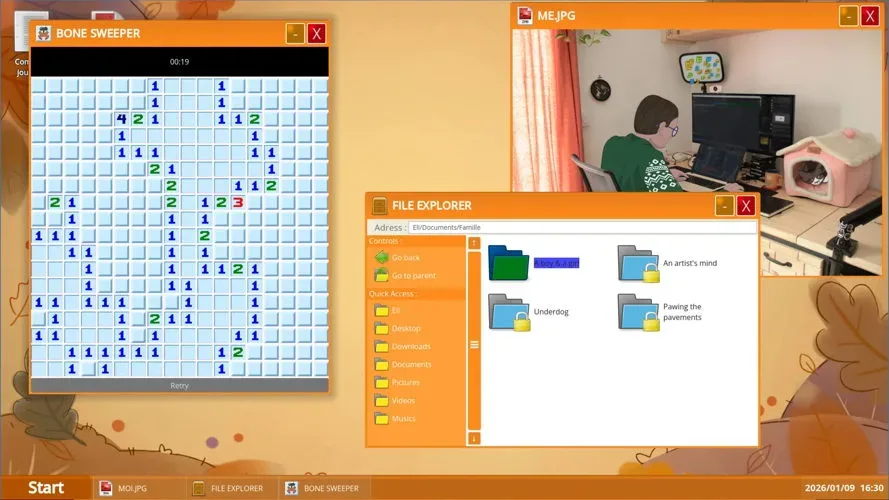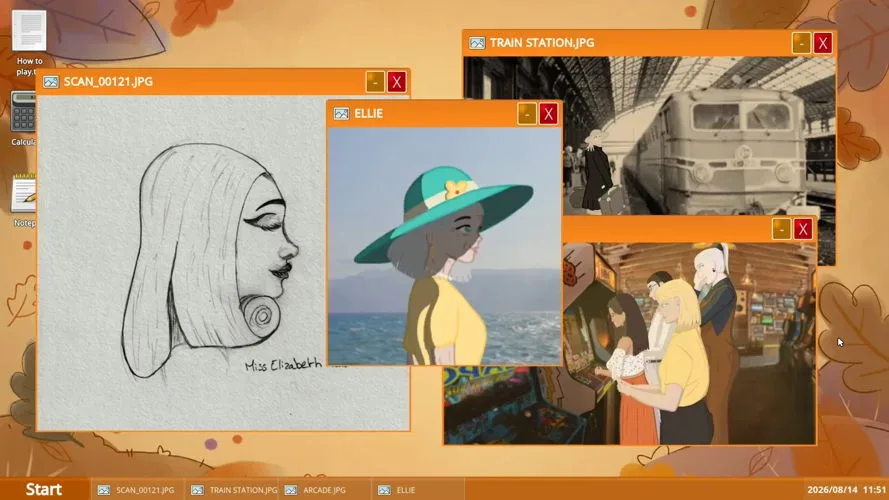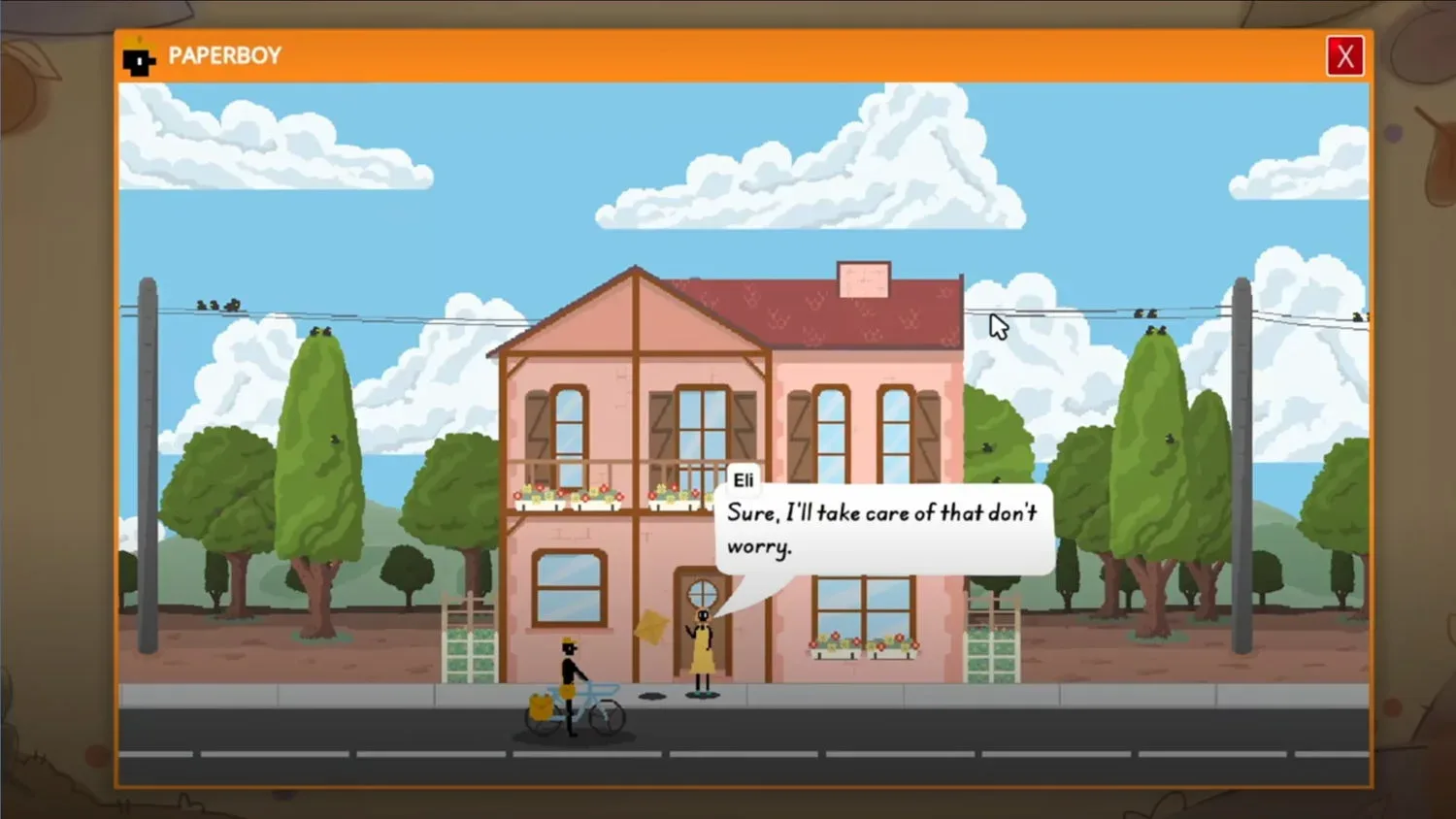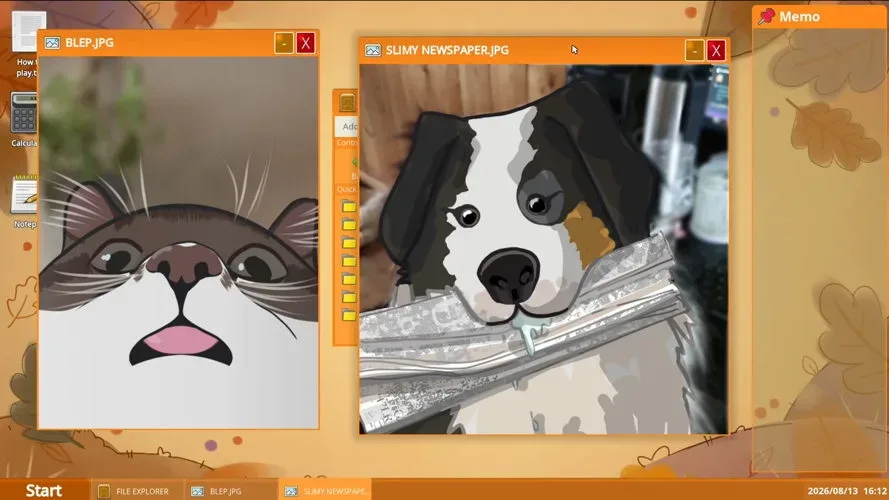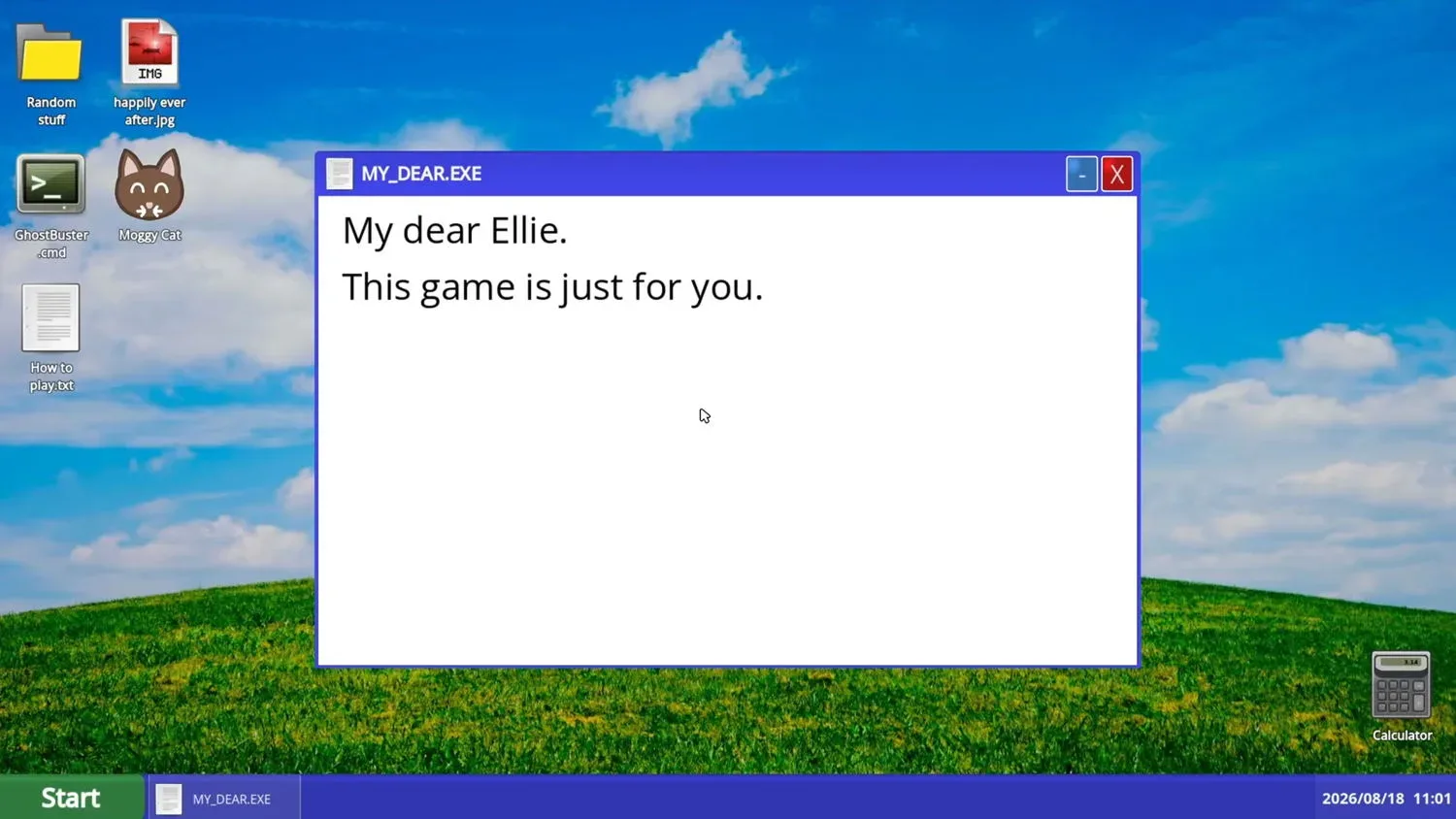
MyDear.exe, the first game from Bordeaux-based developer Falling Leaves Studio, is scheduled to launch on November 2, 2026 for Steam and the Epic Games Store. It is a deliberately small-scale game with an unusually intimate premise: players explore the folders of an old computer to piece together the life shared by Ellie and Lucien.
The studio calls the project an “Interactive Love Letter”, while its more playful genre label is “Foldervania.” The latter describes a structure that borrows from Metroidvania games—nonlinear exploration, connected spaces, and progress through puzzles—but places that design inside a carefully constructed faux Windows XP-era operating system rather than a conventional fantasy map or sci-fi facility.
That pitch gives MyDear.exe a potentially distinctive hook. Computers routinely hold fragments of a person’s life: photos stored in odd places, messages kept long after their immediate purpose has passed, and folders whose names mean something only to the person who created them. Here, that familiar digital archaeology is not merely background dressing. It is the game’s world, its interface, and apparently its central storytelling device.
A relationship told through an old desktop
MyDear.exe centers on Ellie and Lucien, a couple said to have loved each other unconditionally for 57 years. Lucien has prepared puzzles for Ellie, and players work through them using the digital and personal remnants placed across the computer: souvenirs, photographs, notes, and narrative-focused mini-games.
The setup points toward a story told indirectly. Instead of treating memories as a sequence of cinematic flashbacks, the game appears to let players encounter them as files and objects with context to uncover. A note may illuminate a photograph; a souvenir may become useful in a puzzle; an apparently insignificant folder may lead to a new path through the system. The supplied details do not establish the exact order in which these discoveries occur, but the nonlinear format suggests that finding and connecting pieces of a shared history is part of the intended experience.
That makes the “folder” portion of Foldervania more meaningful than a visual pun. In a traditional Metroidvania, a player often revisits a location after gaining a new ability or insight. In MyDear.exe, the equivalent could be returning to a directory, file, or desktop element once a different clue changes how it is understood. The game has not detailed its progression systems, so players should not assume literal ability upgrades. Still, its use of nonlinear exploration indicates that moving through the PC is meant to involve more than simply opening files in a fixed sequence.
What “Foldervania” means here
Metroidvania is a broad term for exploration-driven games built around interconnected areas and gated progress. Players generally discover routes gradually, often revisiting earlier spaces after acquiring something that opens a new possibility. MyDear.exe uses the phrase “Foldervania” to adapt that framework to an operating-system setting.
It is important not to read more into that label than the game has promised. The available description supports nonlinear, Metroidvania-style exploration and puzzle-solving within folders on a fake retro OS. It does not identify combat, platforming, character-stat systems, or any of the other features that may appear in larger games associated with the genre. This sounds closer to a compact, interface-led adventure with an exploratory structure than a conventional action Metroidvania.
Related coverage includes MyDear.exe Sets November 2, 2026 Release for Steam and Epic Games Store.
The faux Windows XP-inspired presentation is central to that idea. An operating-system interface normally exists to make information accessible; MyDear.exe turns interface conventions into a place to investigate. Folders, windows, images, and desktop-like elements can carry both gameplay and emotional significance. The game’s materials describe the OS as carefully recreated, suggesting that the retro-computing aesthetic is intended to be an active part of the illusion rather than a superficial desktop skin.
For players, the practical appeal is easy to understand. A fictional computer offers a familiar visual language—files, directories, and windows—while giving the developer room to bend that language for puzzles and storytelling. It can also make discoveries feel personal. Opening a folder is a mundane action in real life, but in this context it may be the route into a memory, joke, message, or new challenge.
A short game built around variety
Falling Leaves Studio describes MyDear.exe as roughly a two-hour experience. That estimated length sets useful expectations: this is not being positioned as a sprawling genre epic, but as a focused narrative game designed to be completed in a single sitting or a small number of sessions.
The game is also described as fully voiced, with silly mini-games, varied puzzle mechanics, and collectibles tied to memories. “Fully voiced” means spoken performances are planned for the game’s narrative rather than text-only presentation. In a story built around a long relationship, voice work could provide an important human counterweight to the deliberately artificial computer setting, though the available information does not specify the cast, languages, or the extent of individual characters’ dialogue.
The mini-games are described as silly, a detail that suggests MyDear.exe is not aiming for an unbroken solemn tone. That tonal flexibility matters for a narrative about decades of love and memory. A game can acknowledge sentiment without making every interaction heavy, and humorous diversions may help make its fictional computer feel like a lived-in space rather than a museum exhibit. At the same time, no individual mini-games have been identified, so it remains unclear how extensive they are or whether they function mainly as narrative interludes, puzzle components, or optional activities.
Memory-filled collectibles are another notable feature, but they should be understood in their narrative context. These are in-game discoveries connected to Ellie and Lucien’s history, not physical collectibles or a real-world collecting product. Players interested in exploring every corner of the faux desktop may find them especially appealing, while those chiefly seeking the central story will want to wait for clarification on whether all such items are required for completion.
The demo offers an early look
A demo is already available through Steam. The game’s materials report that it has received a 100% positive review result there. That is a promising early signal, but it is also a snapshot of feedback for a pre-release demo rather than a substitute for the finished game’s reception. Demo response can indicate whether players connect with an idea, interface, and tone; it cannot settle how well a complete narrative lands across its full runtime.
For anyone curious about the Foldervania concept, the demo is the clearest available way to assess whether its blend of retro-OS navigation, exploration, and puzzles suits them. It should also help establish how much the Windows XP-inspired presentation functions as atmosphere versus direct interaction. Since the full game is only expected to run around two hours, the opening experience may be particularly important in showing whether the game’s mechanical ideas feel clear and inviting.
There is a growing appetite for games that use familiar digital spaces as the frame for unusual ideas, whether the focus is mystery, nostalgia, or character-driven storytelling. MyDear.exe’s approach is narrower and more personal: its computer is not presented as a technical simulation for its own sake, but as the container for a relationship. Readers following other small PC projects and their demos may also want to see Teamcrafter’s Steam demo and its build-focused roguelite concept.
Studio background and the road to release
MyDear.exe is Falling Leaves Studio’s debut release. The project is led by developers who previously worked on The Rogue Prince of Persia, although the supplied information does not specify their individual roles on that title. That background establishes prior experience within a game-development production environment, but it should not be taken as a promise that MyDear.exe will resemble that earlier game. The concepts presented for the two projects are plainly quite different.
The game was also shown at the InterfaceX26 showcase. Its November 2, 2026 release date now gives the project a defined endpoint after that appearance and the active Steam demo period. It will arrive on two PC storefronts: Steam and the Epic Games Store. No console versions, pricing, system requirements, preorder details, or launch-time features have been specified in the information available.
What has been established is a clear creative proposition. MyDear.exe is a short, voiced puzzle adventure that asks players to navigate the remnants of a 57-year relationship from inside an invented old computer. Its faux Windows XP presentation, non-linear folder exploration, memory-oriented collectibles, notes, photos, and playful mini-games all serve that shared premise.
For a debut title, the focus is unusually concise. Rather than promising a vast digital world, Falling Leaves Studio is making the contents of one old PC its entire emotional landscape. Whether the Foldervania label catches on may be beside the point; the more immediate question is whether MyDear.exe can make that desktop feel like a convincing place where a life was lived. Players will be able to find out when it reaches Steam and Epic Games Store on November 2, 2026.