PC players have three sharply different ways to spend a weekend without buying a new game: build a medieval dynasty in Crusader Kings 3, brave multiplayer extraction runs in Mistfall Hunter, or wash ashore in the pirate fantasy of Mark of the Deep. The common denominator is the price for a limited time. Everything else—from pacing and structure to the kind of frustration each game can produce—is distinctly different.
There is also an important practical distinction in these offers. Crusader Kings 3 and Mistfall Hunter are described as free to play through November 23. Mark of the Deep, meanwhile, is free to claim through November 26. Those are not interchangeable phrases, so anyone interested should check the relevant store listing and act before its stated deadline rather than assume all three offers work the same way.
For players looking beyond the year’s largest releases, these are three useful reminders that a PC weekend can support radically different appetites. More games worth trying beyond the biggest blockbusters may help fill out a backlog, but this trio already covers a lot of ground: political planning, tense combat-led multiplayer, and a focused single-player adventure built around exploration and fights.
Crusader Kings 3: a dynasty story disguised as grand strategy
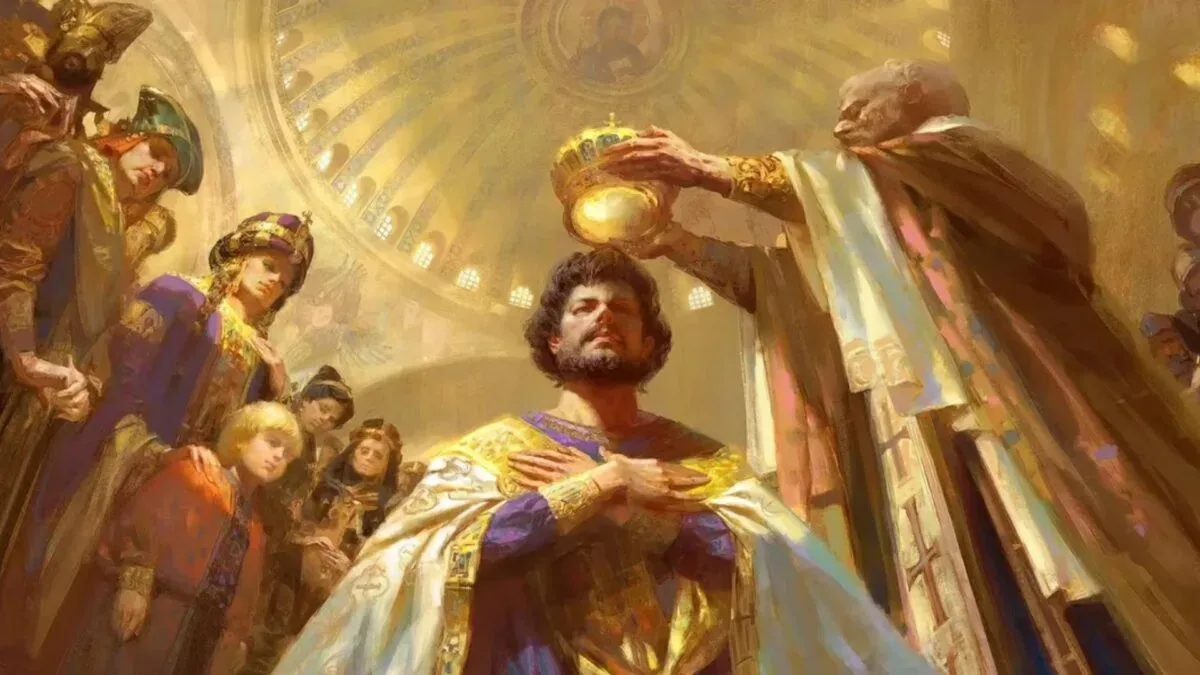
Crusader Kings 3 is the clearest choice for somebody who wants a game that can absorb an entire weekend at once. It is a grand strategy game set in the Middle Ages, but its premise is not simply moving armies across a map. The player is working toward imperial influence through diplomacy, marriage, personal development, and economic expansion, while dealing with the legacy and story of an individual character.
That mixture is key to what makes the game different. Grand strategy generally means managing broad political and economic systems rather than controlling a single character in immediate combat. Here, those systems are tied to personal relationships and succession. A marriage is not merely a background detail; it can be a political tool. Diplomacy is not only a menu selection; it is part of deciding how a ruler maintains power. Scheming offers another route when conventional statecraft is not enough.
The result has been likened to fantasy-football-style management applied to geopolitics, with the personal lore and character progression carrying some of the appeal associated with a visual novel. That is a useful description because it sets expectations: the pleasure is in weighing possibilities, watching plans collide with personalities, and deciding which risk is worth taking. A player who wants immediate action may find the pace deliberate. Someone who enjoys seeing a chain of social, economic, and political decisions create an unexpected dynasty story may find the hours vanish very quickly.
Who should start here?
This is the best fit of the three for players who enjoy planning ahead, reading systems, and accepting that a setback can become part of the story rather than an instant failure state. The game’s medieval setting is not just scenery. It frames the tools available: dynastic marriage, courtly maneuvering, territorial ambition, and the constant question of how a character’s reign will shape those who follow.
Its free-play period runs through November 23, so it is sensible to begin early enough to learn its core loop rather than leave it as a last-minute download. It is also the offer most likely to reward setting aside a meaningful block of time. This is not presented as a quick match-based diversion. It is a sprawling strategic sandbox whose strongest hook is the way large-scale decisions and personal drama overlap.
Mistfall Hunter: melee extraction with an uneven reception
Mistfall Hunter takes medieval fantasy in a much more immediate direction. It is a dark-fantasy extraction ARPG with co-op and PvP multiplayer, and it emphasizes melee combat rather than the firearms that define many games in the extraction space. It normally costs $25 and is free to play through November 23.
“ARPG” is shorthand for action role-playing game: a format where direct combat and character growth are both central. In this case, the reported appeal lies in physical, melee-focused encounters and an upgrade system, rather than in a shooter’s usual focus on aiming and gunplay. The co-op and PvP labels mean that players can encounter both cooperation and competition: co-op refers to playing alongside others, while PvP means player-versus-player conflict.
The term extraction is equally important for setting expectations. An extraction game is built around entering a session, confronting dangers and other players, and trying to get out successfully. That broad structure can make each decision feel consequential. The appeal is often in balancing ambition against caution: push farther for better opportunities, or leave before a promising run turns into a loss. Here, the same tension is filtered through dark fantasy and close-quarters weapon play.
Players considering Mistfall Hunter should also go in with measured expectations. It launched with a 55% positive Steam review rating, though that response has been improving gradually. Feedback has singled out the combat and upgrade systems as strengths. At the same time, complaints have included balance problems and server issues. Those are not small caveats in a multiplayer game. Balance can affect whether weapons, approaches, or encounters feel fairly tuned, while server problems can undermine the consistency needed for an online session to feel reliable.
A free weekend is a useful test, not a guarantee
The limited offer makes Mistfall Hunter an easy candidate for players who are curious about a melee-first alternative to shooter-heavy extraction games. But it is also the one of the three where prospective players should be most prepared for friction. The mixed response does not establish a universal verdict—one player’s satisfying, difficult combat can be another’s unpleasant experience—but it does show that the game has not landed cleanly for everyone.
A practical approach is to focus first on the parts people have praised: learn the core combat feel and see whether the progression and upgrades provide a reason to keep playing. If technical issues or balance concerns quickly overwhelm those positives, the trial has still done its job. A time-limited free period is especially valuable for a multiplayer game with a still-developing reputation because it gives players room to judge the fundamental loop for themselves without the usual $25 entry price.
Players who mainly want a solo, predictable campaign should probably place Mistfall Hunter after the other two. Its identity is tied to online co-op and PvP, and its extraction structure is designed for uncertainty. Conversely, friends seeking a fantasy multiplayer game may find its melee angle exactly what separates it from more familiar genre options.
Mark of the Deep: shipwrecks, secrets, and unlimited dodge rolls
Mark of the Deep shifts again, this time to a pirate-themed, isometric soulslike metroidvania. Its protagonist is shipwrecked on a magical island and searches for a missing crew while battling skeletons, monsters, and other dark creatures. It is free to claim through November 26 on the Epic Games Store.
Its genre labels convey a lot. Isometric refers to a viewpoint that looks down on the game world from an angled perspective, giving areas and fights a broad, readable view. A soulslike generally signals demanding combat, dangerous enemies, and an expectation that players will learn through repeated encounters. A metroidvania centers on exploration, connecting areas, and gradually opening paths through the world. Combining those ideas suggests an adventure where combat skill and curiosity are both expected.
The game points toward the style of Death’s Door and Tunic, though it has not been received as reaching the same high points. Criticism has focused on difficulty that can feel arbitrary and occasional movement bugs. The first concern matters because difficult games depend on a sense that failure teaches something useful. When a challenge feels arbitrary, players may feel that their loss was not clearly tied to a decision or mistake they could reasonably correct. Movement bugs are particularly unwelcome in a game involving exploration and combat, where positioning and responsive controls matter constantly.
There is, however, one immediately friendly mechanical detail: no stamina bar restricts dodging. A stamina bar is a resource meter that commonly limits repeated actions such as attacking, blocking, sprinting, or evading. Without one governing dodge rolls, players can evade repeatedly rather than having to reserve a finite resource for a critical moment. That does not erase the game’s reported difficulty, but it changes the rhythm of combat. Movement and escape are less constrained, which may appeal to players who prefer aggressive repositioning to carefully rationed defensive options.
The offer with the longest deadline
Mark of the Deep’s November 26 claim deadline comes after the November 23 free-play windows for the other two games. That makes it sensible to secure first if a player is trying to manage limited time across all three offers. The phrase “free to claim” is worth treating carefully: visit the Epic Games Store listing, complete the claim before the deadline, and review the listing’s terms rather than presume that it matches a free-play event.
Of the three, Mark of the Deep is probably the most direct option for someone wanting a defined fantasy journey rather than a vast strategy simulation or competitive online extraction format. The shipwreck-and-rescue premise gives the exploration a clear narrative purpose, while the magical island supplies the hostile creatures and mysteries needed for its dark pirate setting. The caveat is that its challenge and movement issues may not suit everyone. Still, the lack of a dodge stamina bar could be a meaningful advantage for players who value mobility in a difficult action game.
How to choose before the deadlines
These offers are best understood as three different commitments rather than three versions of the same free weekend. Crusader Kings 3 is for systemic storytelling: diplomacy, dynasties, economic growth, and scheming on a medieval stage. Mistfall Hunter is for players who want close-quarters multiplayer risk, character upgrades, and extraction-game tension, with the caution that reviews have raised balance and server concerns. Mark of the Deep is for action-exploration players drawn to pirate fantasy, an isometric view, difficult encounters, and an evasive style not limited by a stamina meter.
- Choose Crusader Kings 3 if a ruler’s personal story, political maneuvering, and long-term planning sound like the ideal weekend sink.
- Choose Mistfall Hunter if co-op, PvP, melee combat, and the risk-reward structure of extraction games are more appealing than a polished solo campaign.
- Choose Mark of the Deep if you want a pirate adventure built around exploration and demanding action, and are comfortable with its reported rough edges.
There is no need to force a single winner from such different games. The relevant deadlines are simple: Crusader Kings 3 and Mistfall Hunter are free to play until November 23, while Mark of the Deep can be claimed through November 26. The better question is what kind of game you want occupying your time: a kingdom’s complicated legacy, a risky online hunt, or a haunted island full of monsters and dodge rolls.