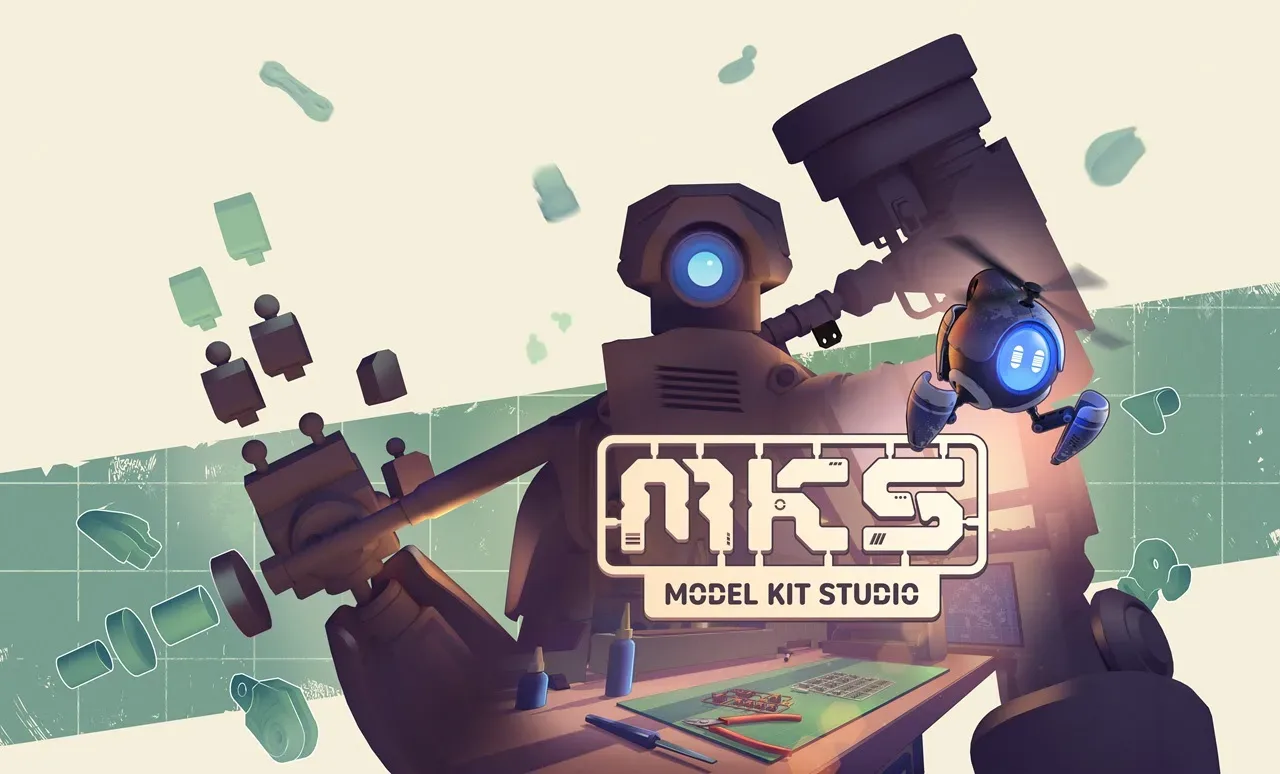
Model Kit Studio now has a playable Steam test, offering a focused early look at its digital hobby-bench approach to mecha building. The playtest is available until November 16, while the full game is planned for Steam in 2027.
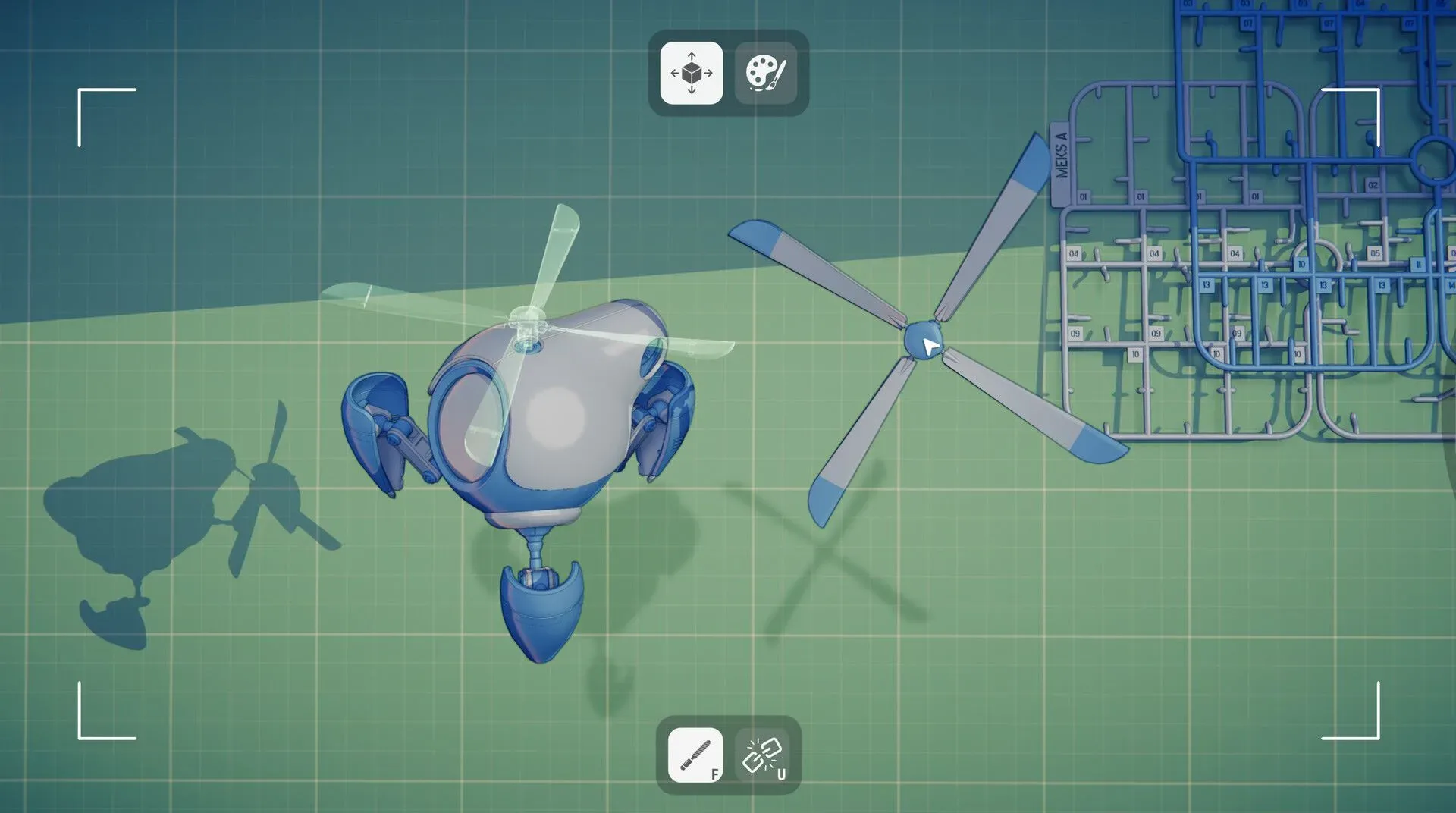
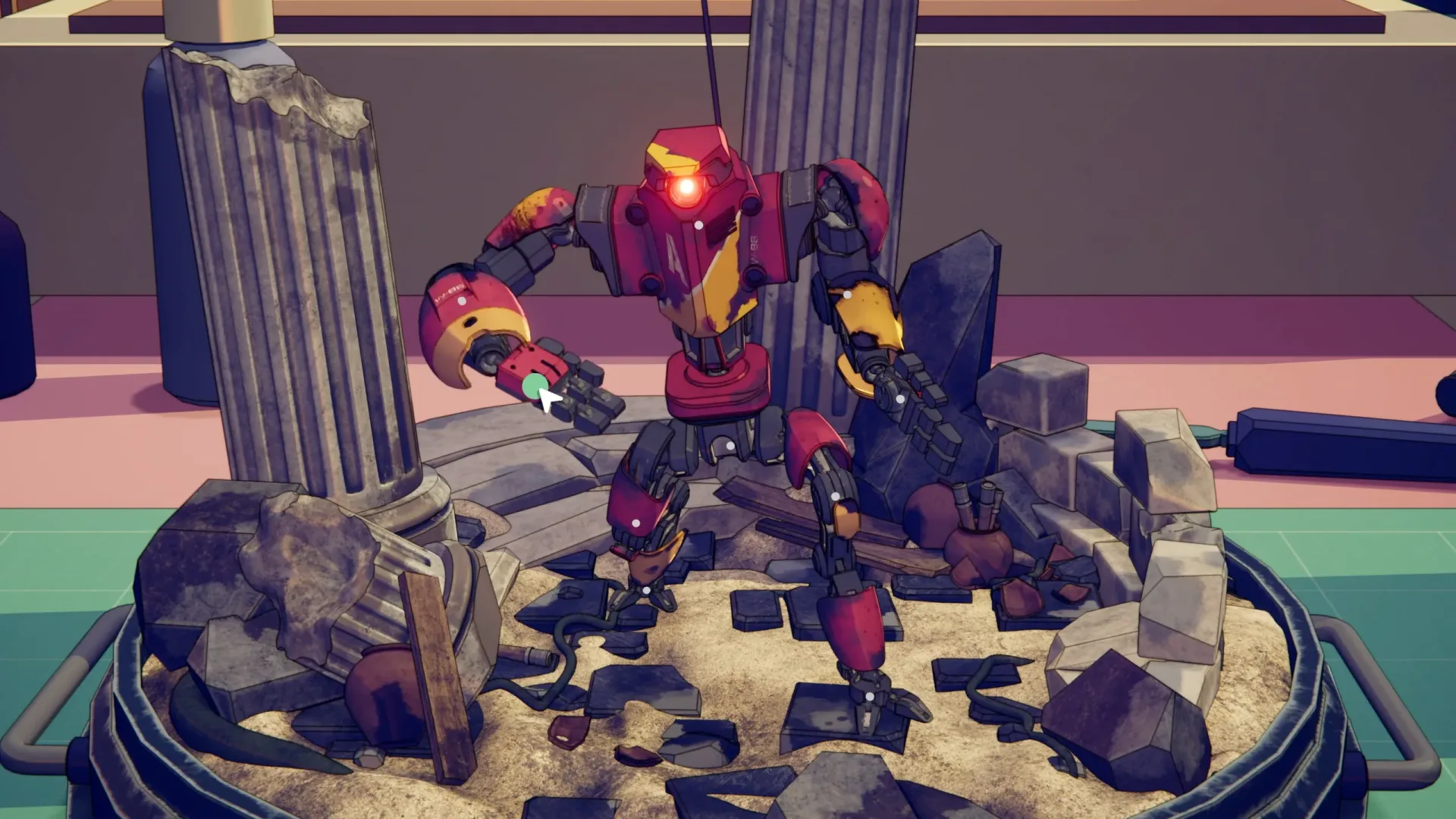
Developed by Spooky Rabbits and published by Mythwright, Model Kit Studio places the tactile rituals associated with model-kit assembly at the center of a low-pressure game space. Rather than presenting a broad catalog during this test, it gives players two distinct kits to construct, decorate and display: MeKS, a flying robotic sidekick, and Excavaclaw, a mining mecha intended for excavation work on planets and asteroids.
The playtest’s limited kit selection is useful context for anyone deciding whether to download it. This is an opportunity to see the game’s basic assembly and personalization loop, not a confirmation of the full game’s eventual model count, features or scope. The most concrete promise here is the chance to cut out parts, follow assembly directions, paint the results, apply decals and tidy the work area afterward.
What players can build in the playtest
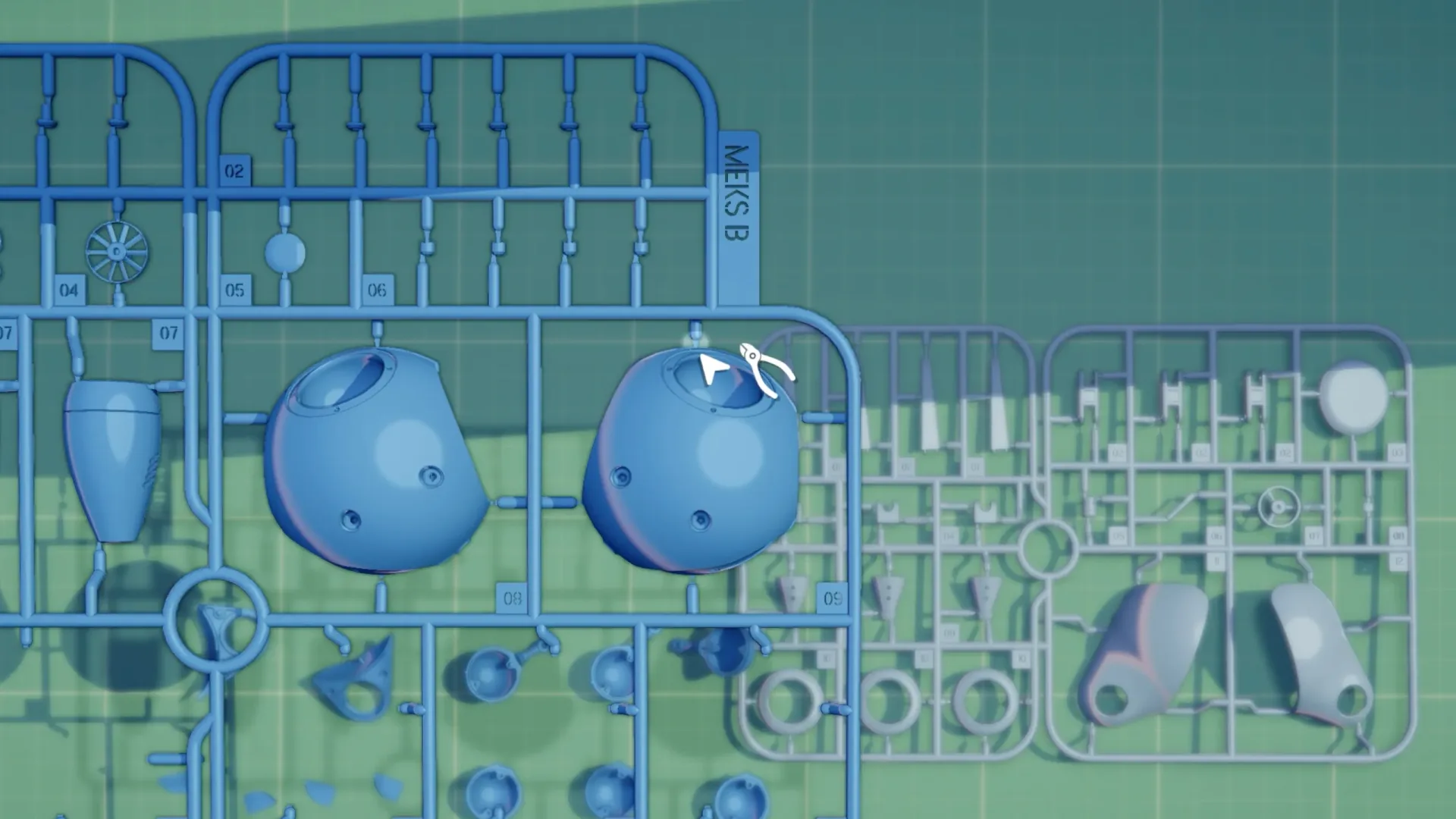
Model Kit Studio frames its core activity around building a kit piece by piece. Players cut and assemble components by following the game’s instructions, making the assembly process itself an important part of the experience rather than simply selecting a finished robot from a menu.
The two available models suggest different creative starting points. MeKS is described as a flying robo-sidekick, a role that points to a compact, characterful companion design. Excavaclaw is a purpose-built industrial machine: a mining mecha for planetary and asteroid excavation. That distinction gives the test two different science-fiction concepts without claiming that either one has a particular combat role, story function or set of gameplay statistics.
For newcomers to physical model kits, the word nubs refers to the small leftover points where plastic parts were connected to their frame before being cut free. Model Kit Studio includes a hand vacuum for cleaning those remnants from the virtual workstation. It is a small feature, but it signals that the game is interested in the cleanup stage as part of the hobby’s rhythm, not only in the dramatic reveal of a completed model.
Painting, decals and personal presentation
Once a model is assembled, the playtest lets players change its appearance with brushes, airbrushes and decals. Those tools are the clearest expression of Model Kit Studio’s creative side.
- Brushes provide a direct painting option for applying color by hand.
- Airbrushes offer a separate paint tool, giving the game another approach to surface finishing.
- Decals let players add graphic markings and details to a completed build.
The supplied details do not specify paint palettes, decal libraries, layers, sharing tools or whether a player’s creations can be saved or exported. Those are sensible questions for a future update, but they should not be treated as confirmed features of either the playtest or the planned full release. What is confirmed is a straightforward customization set built around painting and markings, with two mecha subjects on which to use it.
That distinction matters because model-building games can mean very different things. Some treat customization as a quick color swap; others make it the main attraction. Model Kit Studio’s announced tools indicate that finishing a model is meant to be an active, hands-on stage. The available information does not establish how deep that stage will become, but the inclusion of both brushes and airbrushes suggests the game wants the act of painting to feel more deliberate than a single preset choice.
A studio designed for unwinding
Assembly is not the only activity in the playtest. The game situates its workbench inside a stylish workshop apartment, creating a setting intended to support a relaxed pace. Players can interact with several domestic details: make a hot coffee, water the plants and use a jukebox for a soothing soundtrack.
There is also a pet cat named Donut. The cat, coffee and plants are not presented as mechanical objectives or progression systems. Instead, they help establish the apartment as a place to spend time between—or alongside—construction tasks. In practical terms, the appeal appears to be the combination of structured model assembly and a quieter virtual room in which to do it.
This is an important tonal difference from a game that uses mecha merely as vehicles for battles. The announced playtest materials emphasize workshop routine: preparing parts, building the kit, applying a finish, cleaning up and lingering in the room. The robots provide the subject matter, but the central fantasy is that of maintaining a personal creative space.
What a Steam playtest can reveal
A playtest is a pre-release build made available for players to try before the finished game arrives. It can give interested players a direct sense of the interface, pace and foundational activities. It should also be approached with appropriate caution: availability is temporary, and playtest content is not necessarily a complete representation of a final product.
For Model Kit Studio, the deadline is clear. The Steam playtest is playable through November 16. Anyone primarily interested in the construction flow, the two supplied kits or the painting tools will need to try it within that window rather than assume it will remain available until the game’s planned 2027 release.
It is also worth separating what the test confirms from what remains open. It confirms a Steam build centered on two mecha kits, assembly instructions, brushes, airbrushes, decals, a cleanup vacuum and an explorable workshop apartment. It does not establish a launch date within 2027, additional platforms, a price, the final model lineup or the exact extent of the game’s non-building activities.
Why the small details are the point
Model Kit Studio’s announced elements form a coherent loop. A player begins by cutting and assembling a model, moves into paint and decal work, clears away the leftover nubs, and then inhabits the same apartment workshop with coffee, plants, music and Donut close at hand. Each detail reinforces the idea that finishing a kit is not a race to an endpoint.
That makes the playtest particularly relevant to people who enjoy the process around a creative project as much as the final display piece. The available description emphasizes intuitive instructions, which may make the build sequence easier to approach for players unfamiliar with model-kit terminology. At the same time, the named finishing tools and cleanup touchpoints give people who recognize the hobby’s rituals something more specific than a generic craft-game premise.
Steam continues to host projects across very different genres and scales; for another upcoming PC release on the platform, see Death at Fleming Manor’s Steam plans. Model Kit Studio occupies a notably calmer corner of that range, with its current test built around making miniature machines rather than solving a mystery or winning a fight.
For now, the key facts are modest and appealing: two mecha models, several personalization tools, a workshop apartment to explore, and a limited opportunity to see whether its slow, detail-oriented routine clicks. The full Model Kit Studio is planned for Steam in 2027, but the playtest is the immediate chance to inspect its model-making foundation.