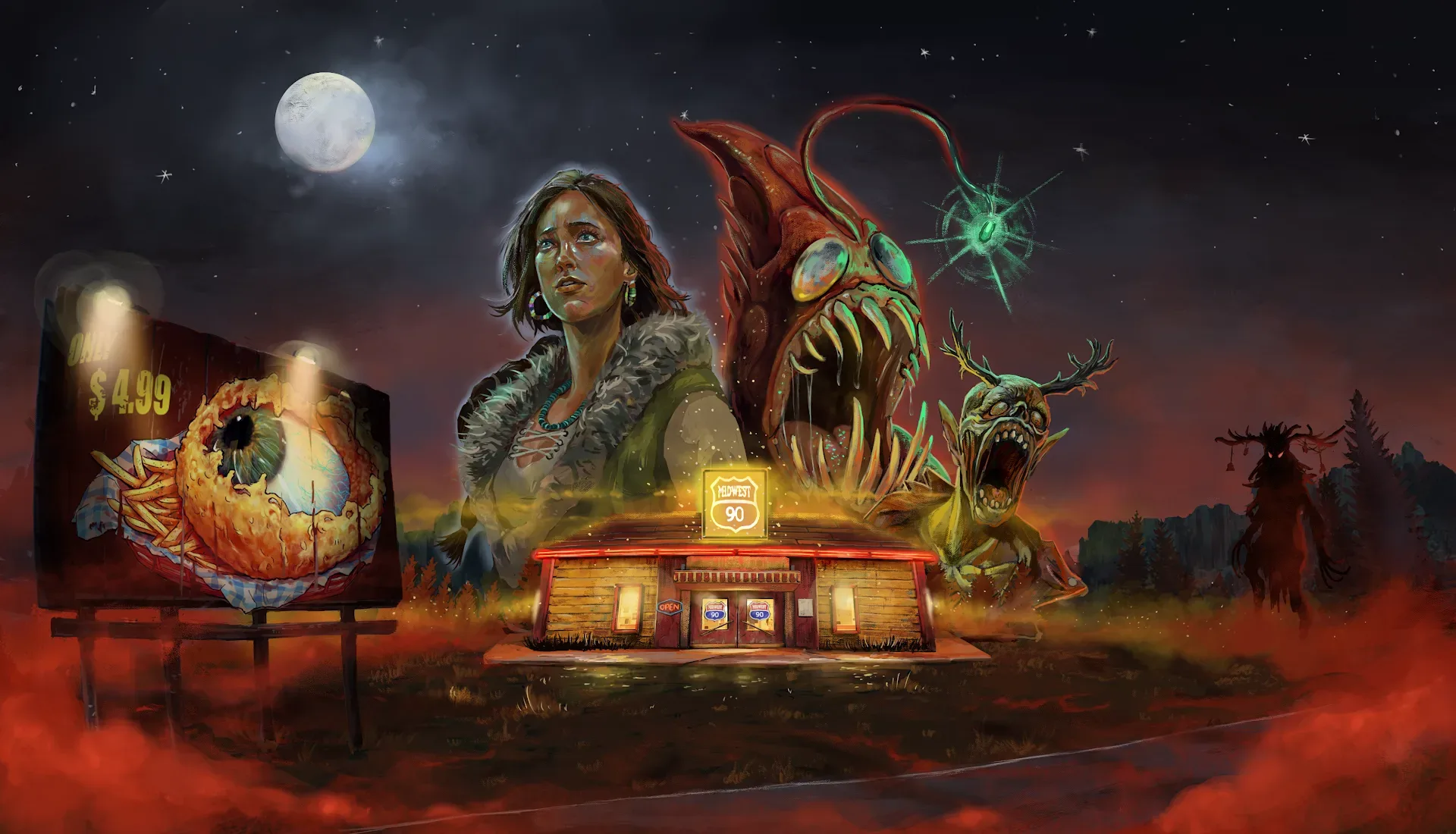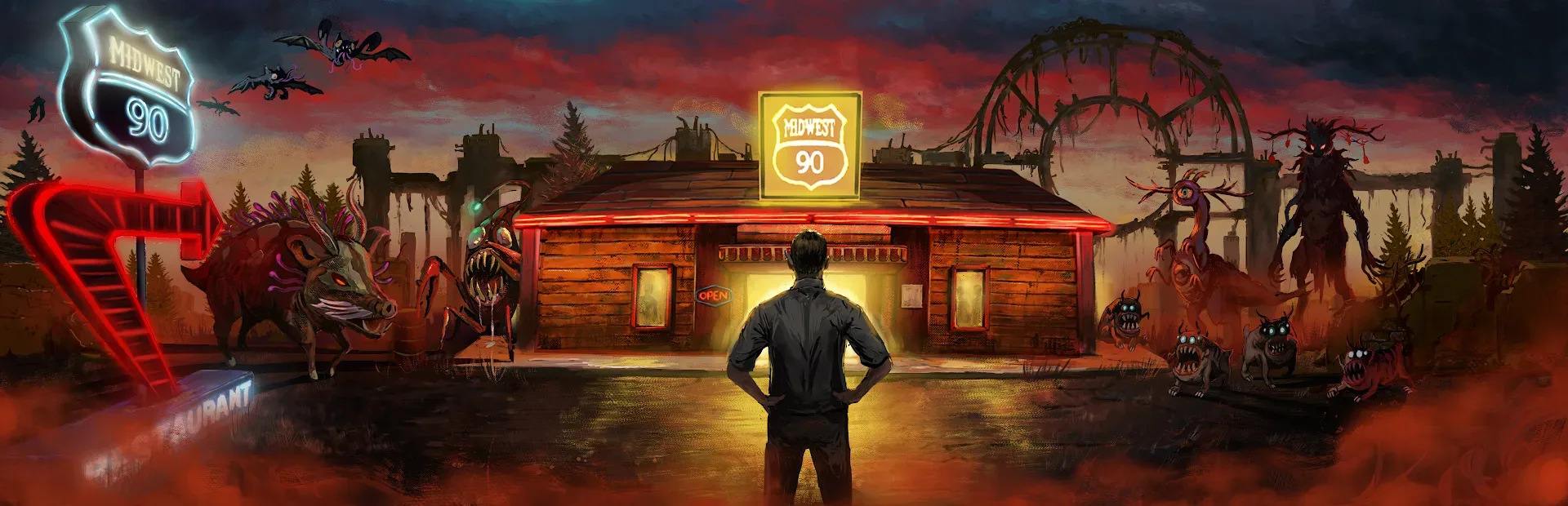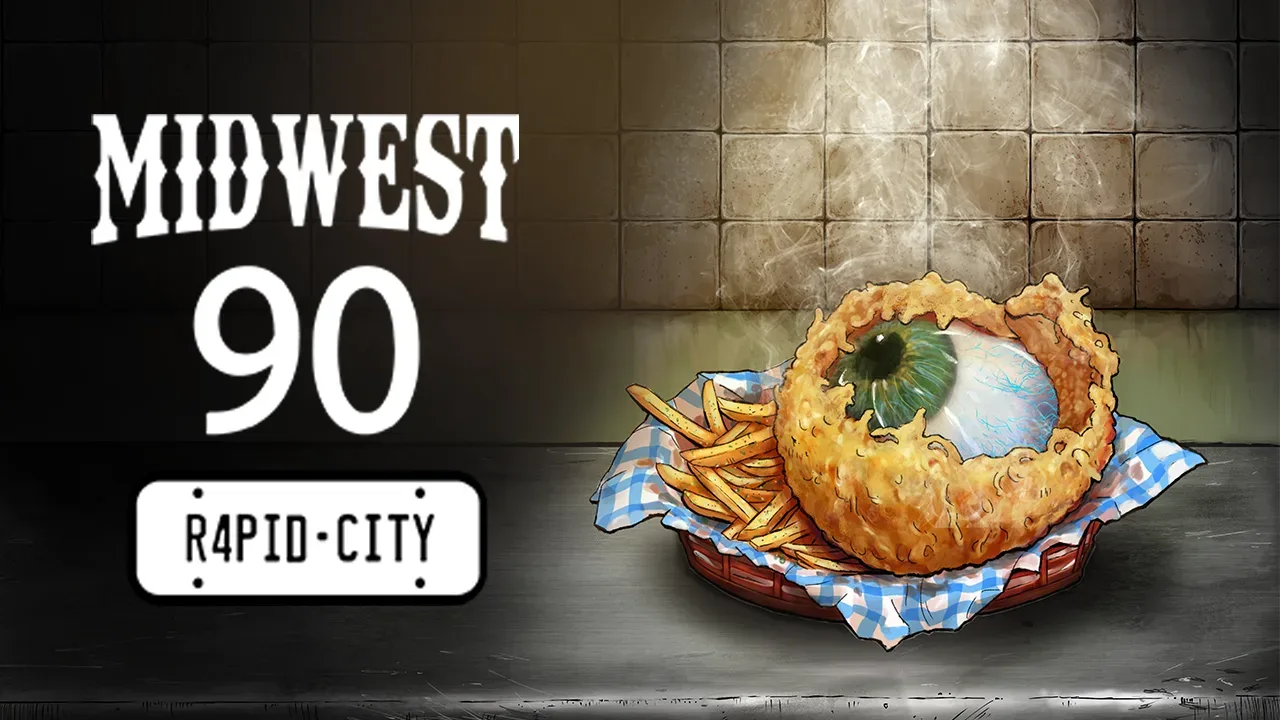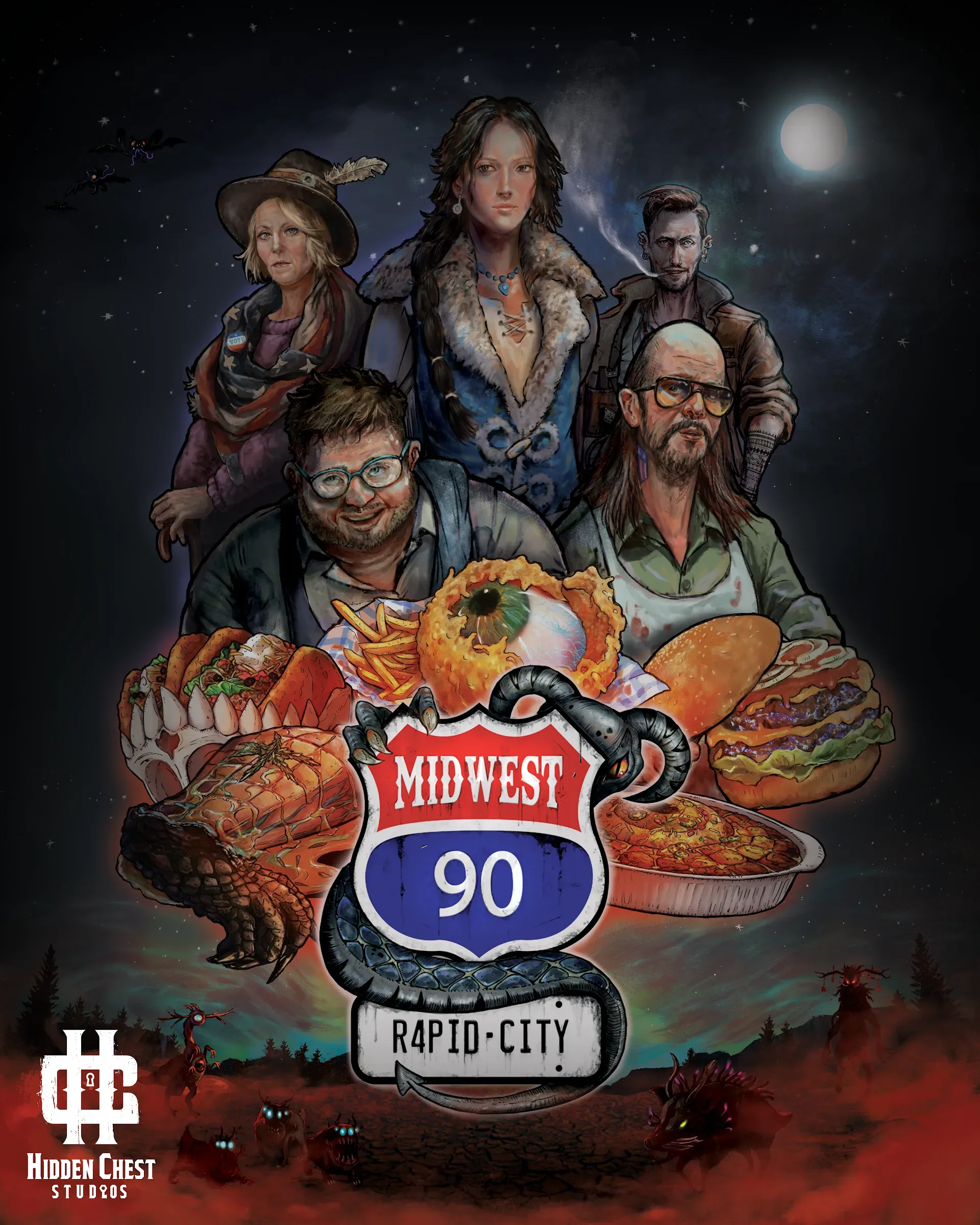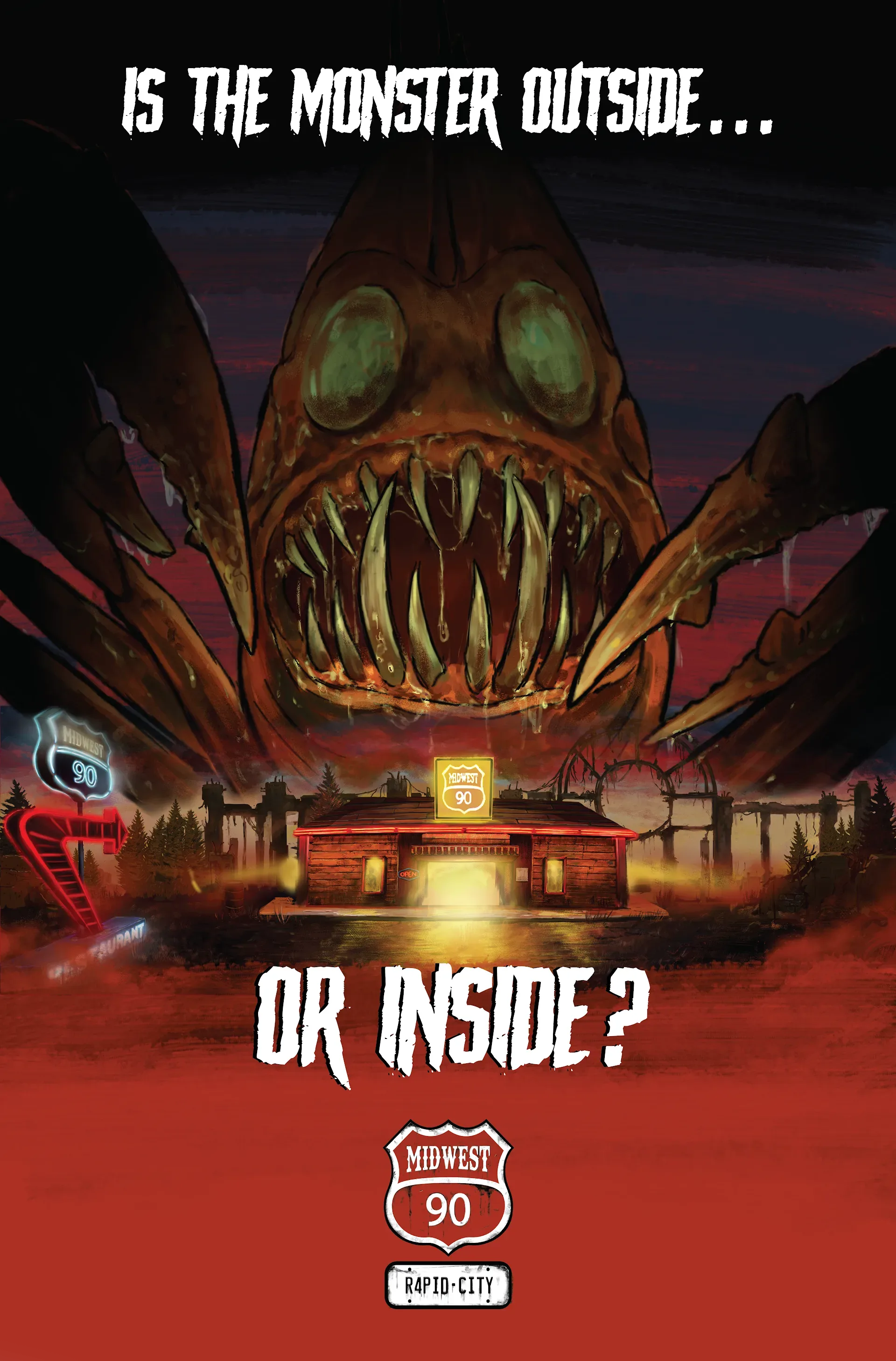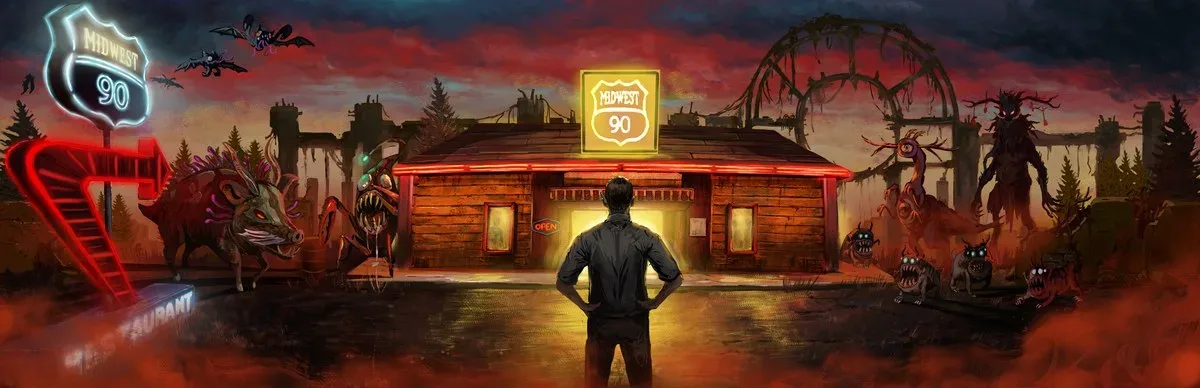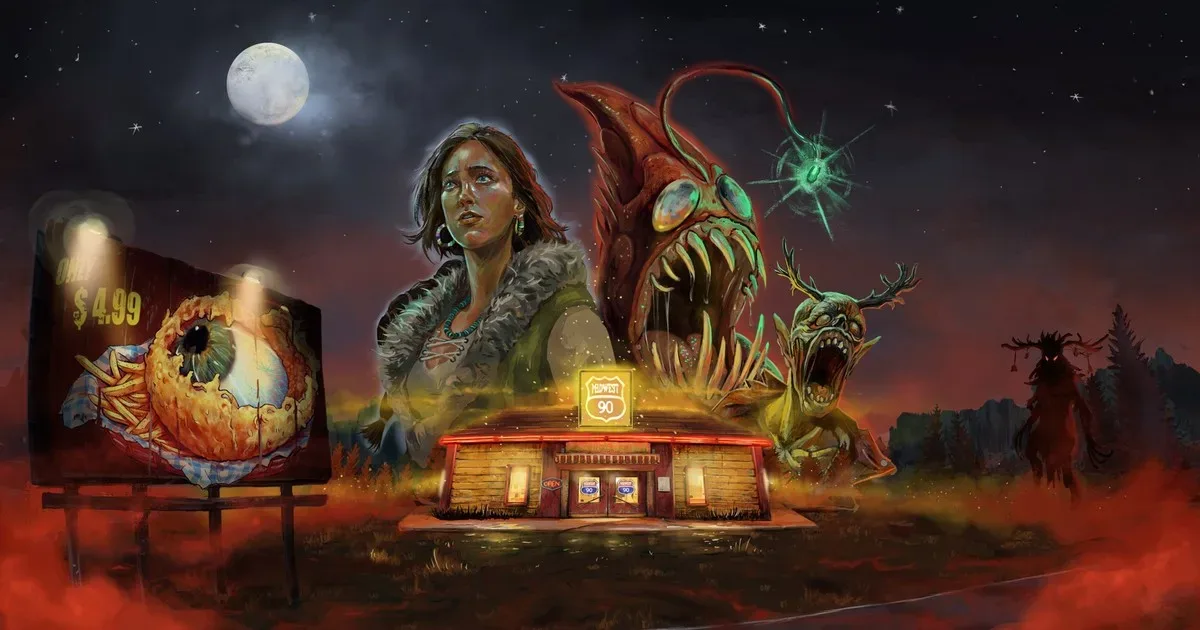
Midwest 90: Rapid City, the upcoming diner-management game with monsters on both the menu and the other side of the barricade, has been selected for Unity’s G-STAR 2026 Indie Showcase. Hidden Chest Studios’ game is one of 30 indie titles chosen for the event, ahead of its Steam Early Access launch on November 10, 2026.
Published by Rising Tide, the game places players in Rapid City, South Dakota, in 2034. Its fictional setting has been devastated by a “New Great Depression,” while monsters roam the area. The central twist is an unusually literal take on restaurant supply logistics: the monsters threatening the diner are also a source of ingredients for it.
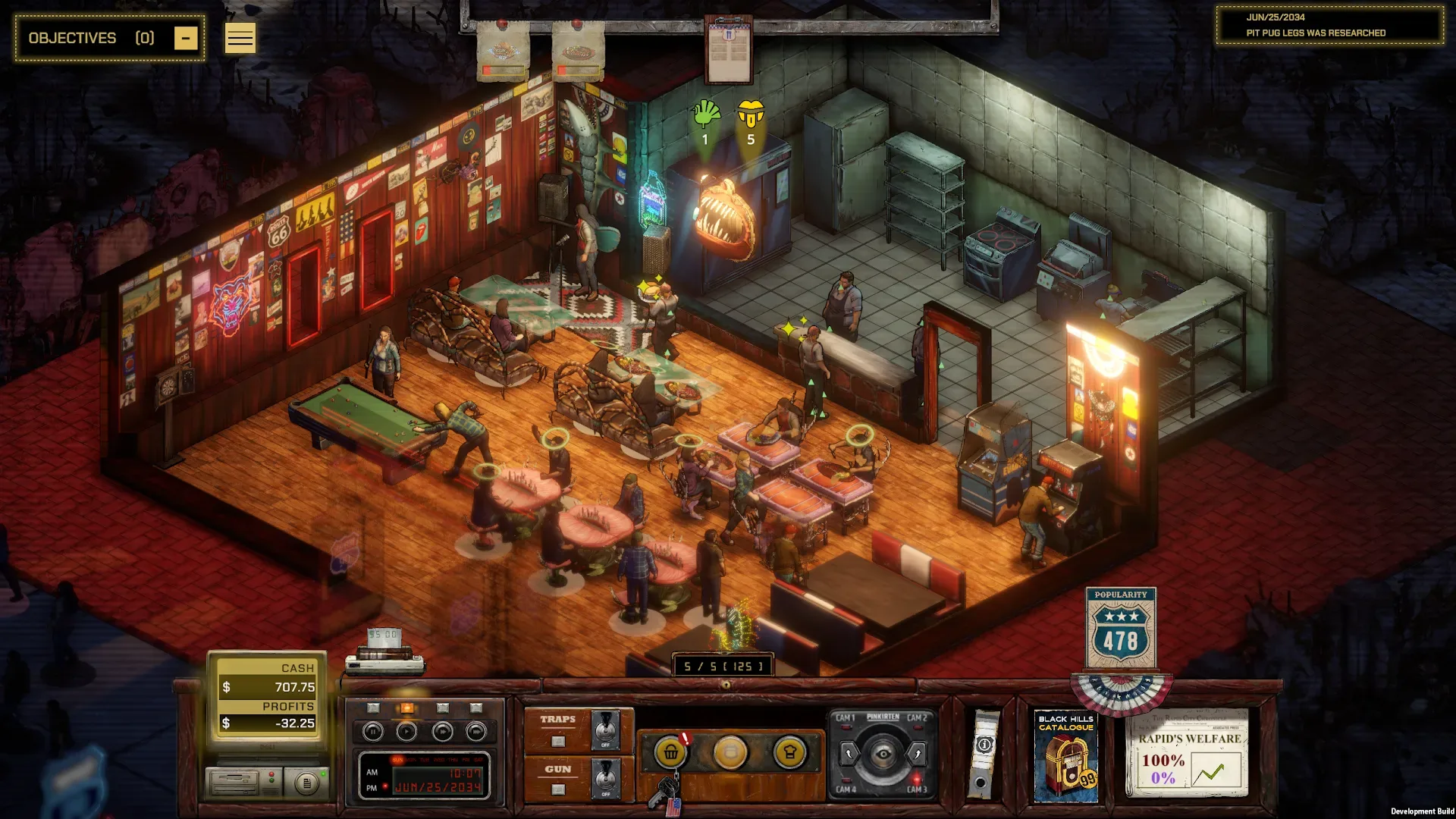
That premise makes Midwest 90: Rapid City sound less like a conventional restaurant sim and more like a survival-management game built around difficult trade-offs. A player will not simply be deciding what to serve. The available Early Access feature list indicates they will be managing recipes, daily specials, staff, defensive equipment and a firearm, all in a setting where keeping the diner operating is inseparable from surviving the surrounding danger.
A diner sim where the supply chain bites back
The game’s announced day-one Early Access material includes a Prologue, Chapter 1 and an Endless Mode. In practical terms, that gives the initial build both authored story content and a repeatable play format.
A prologue is typically an introductory portion of a game that establishes its setting, characters or initial systems. Chapter 1 suggests a larger narrative structure is planned beyond the opening. Endless Mode, meanwhile, generally describes a mode designed to continue without a final story endpoint, placing emphasis on sustaining a run, adapting to escalating pressure or pursuing a high score rather than reaching a closing sequence.
The announced systems point toward a diner operation that is intentionally unstable. Players will have access to monster recipes and daily specials, along with dish traits and an item or substance called Missourite. The only confirmed detail on Missourite is that its side effects vary, leaving its exact function unclear. It may affect the diner’s food or operations, but that is not yet specified and should not be treated as a confirmed mechanical explanation.
Dish traits are another notable term. A trait system normally means that prepared dishes can have distinct properties beyond their basic recipe identity. Whether those properties alter customer response, player status, profit, combat readiness or something else has not been detailed. What is clear is that the game intends food preparation to be more than a cosmetic list of meals.
There is an equally direct tension between service and security. The Early Access build will let players hire a crew, with “slapping optional,” and buy bear traps and barricades. Those defenses are listed at prices from $10 to $150. A shotgun is also available for emergencies.
Related coverage includes Midwest 90: Rapid City Joins Unity’s G-STAR 2026 Indie Showcase Ahead of Steam Early Access.
The wording leaves many operational questions unanswered: whether the dollar values are the game’s internal currency, how frequently threats occur, how staff contribute to diner management, and whether defenses can be upgraded or replaced. But the inclusion of fixed listed prices matters because it establishes that protection will be part of the business calculation. Resources spent making the diner safer may be resources that cannot be used elsewhere.
What the Early Access plan currently promises
Midwest 90: Rapid City is scheduled to enter Early Access on Steam on November 10, 2026. The day-one package is set to include:
- Endless Mode
- The Prologue and Chapter 1
- Monster recipes and daily specials
- Dish traits and Missourite, with variable side effects
- Crew hiring
- Bear traps and barricades priced from $10 to $150
- A shotgun for emergency situations
Early Access is a release model in which a game becomes playable before its creators consider the full version complete. The model can give players an earlier way to engage with a project while the developers continue building chapters, systems or other planned content. It also means prospective players should distinguish clearly between what is available at launch and what is still scheduled for later.
For Midwest 90: Rapid City, the stated post-launch roadmap is unusually specific in broad timing, though not in content detail. A “surprise drop” is planned for December 31. Chapter 2 is planned as a free addition on January 28, and the full release is targeted for March 2027. The announced plan says that full release will be free for everyone who entered through Early Access.
That last point is especially relevant to players evaluating the initial version. The first Early Access build is not presented as the complete game: its story content stops at Chapter 1, with Chapter 2 due later. The proposed March 2027 full release is also a target rather than a completed launch, so the presently confirmed information is best understood as a development roadmap, not a guarantee that every item will arrive unchanged.
The game’s scheduled December 31 update is deliberately described only as a surprise. It would be inaccurate to infer a new chapter, mode, monster type, recipe group or system from that phrasing. For now, its date is known; its contents are not.
G-STAR showcase puts the game in Busan
Before the Steam launch, Hidden Chest Studios and Rising Tide are set to bring Midwest 90: Rapid City to G-STAR 2026 in Busan, South Korea. The game will be part of Unity’s Indie Showcase, which includes 30 selected games.
The presentation is planned for the Unity Zone at BEXCO Exhibition Center 2, also identified as BTC Hall. It runs from November 19 through November 22, with daily hours listed as 10:00 to 18:00. The teams will present a small Midwest 90 diner at the venue, extending the game’s roadside-restaurant framing into the event space.
Being selected for a platform-holder showcase does not by itself reveal how the game will play, how much content will be available after Chapter 1, or how its systems will balance out. It does, however, give the project a defined public showcase setting shortly after its November 10 Early Access debut. That sequence makes the G-STAR appearance a potential opportunity for the developers to demonstrate the diner-and-defense loop to attendees after the initial Steam version is live.
The selection also places the game in a larger independent-development setting. Visibility can matter substantially for games with a hybrid pitch, especially when their appeal depends on quickly communicating multiple systems at once. Midwest 90: Rapid City has to convey a diner, monster harvesting, recipes, staff management, traps, barricades and emergency combat without making any one of those components seem disconnected from the others.
Community attention can become part of the conversation around game-industry visibility, as seen in other cases where audiences have organized campaigns around the games they want noticed. Fan-led efforts to draw attention to major game franchises illustrate the broader value placed on being seen, though Midwest 90: Rapid City is taking the more traditional showcase route through G-STAR.
Why the premise has room for real pressure
The stated ingredients of Midwest 90: Rapid City imply a loop where the player’s economy and safety are connected. Monsters are a threat, yet they are also part of the supply chain. That framing has the potential to make risk management more meaningful than simply fending off enemies between cooking tasks.
If ingredients are tied to dangerous monsters, every successful meal could be associated with exposure to that danger. If defenses cost money, then the diner’s financial side could feed directly back into its ability to withstand attacks. Staff hiring further suggests that labor is another resource to manage. These are implications of the announced premise and systems, rather than confirmed details of their exact implementation.
The $10-to-$150 trap and barricade range is one of the few concrete numbers attached to the in-game economy. It indicates that defensive purchases are not treated as a single all-purpose item. There may be inexpensive and costly options, though the differences in their effectiveness or use have not been provided. A player’s decision could therefore involve choosing between immediate low-cost protection and more expensive preparation, but the game has not yet outlined the economy sufficiently to say how difficult those choices will be.
The shotgun is framed as an emergency tool rather than as the whole game’s identity. That wording is important. It suggests combat is part of the diner’s crisis-management toolbox, sitting beside traps and barricades, instead of replacing the restaurant-management premise. Whether ammunition, durability, upgrades or other limitations apply has not been announced.
Even the lighter detail about optional slapping adds to the project’s apparent tone: bleak economic collapse and dangerous creatures are paired with an irreverent, rough-edged workplace sensibility. One early reaction described the experience as having “an absolute whale of a time,” but that is an individual opinion rather than a substitute for a complete assessment of the forthcoming Early Access build.
Key dates for Midwest 90: Rapid City
- November 10, 2026: Steam Early Access begins.
- November 19-22, 2026: Unity Zone presentation at G-STAR 2026 in Busan, scheduled 10:00 to 18:00 each day.
- December 31, 2026: A currently unspecified “surprise drop” is planned.
- January 28, 2027: Chapter 2 is planned as a free update.
- March 2027: Full release is targeted, free for Early Access players.
For now, the most concrete picture is of a game arriving with an initial narrative chapter and repeatable mode, then expanding on a stated timetable. Its standout idea is not simply that there are monsters in a diner. It is that the diner needs those monsters, creating an economic problem, a cooking problem and a survival problem at the same time.
Players interested in the game should keep the distinction between its confirmed day-one features and its planned future updates in view. The Steam Early Access launch will establish the first playable version; the G-STAR showcase will put its roadside diner concept before an event audience; and the promised Chapter 2 and full-release milestones will determine how fully the 2034 Rapid City scenario develops.