Microsoft appears to be putting the Copilot+ PC label on the shelf, at least for its newest Surface hardware. The company’s latest Surface Pro and Surface Laptop were shown without Copilot+ branding, despite meeting the hardware threshold previously associated with the program.
That distinction matters because Copilot+ was not merely a loose marketing phrase. It was Microsoft’s banner for a class of AI-focused PCs, tied to a stated baseline for an NPU: a neural processing unit capable of at least 45 TOPs of AI compute performance. The newly shown Surface machines clear that former bar, but Microsoft Surface corporate vice president Brett Ostrum said they are not being called Copilot+ PCs.
Microsoft has not publicly explained why it is moving away from the name. What is clear is that dropping a label is not the same thing as dropping the strategy behind it. The company remains committed to putting Copilot and AI services across devices and work tasks, while the implications for Xbox remain more complicated—and, for now, comparatively restrained.
What changed with Copilot+?
Copilot+ arrived around two years ago as Microsoft’s effort to establish an identifiable AI-PC category for mainstream buyers. The new Surface Pro and Surface Laptop are now a curious exception to that effort: they apparently satisfy the previous technical standard, yet do not wear the badge.
That makes this less a story about a dramatic reduction in hardware capability than a change in product positioning. Buyers should not read the missing name as proof that the new devices lack the dedicated AI hardware Microsoft previously highlighted. On the information available, the opposite is true: the systems meet the older Copilot+ requirements.
What remains unknown is whether the branding is gone permanently, being revised, or simply absent from this particular Surface generation. Microsoft has not provided a reason, so claims that it reflects one precise cause—consumer pushback, a strategic reversal, or a technical change—would be speculation.
NPU and TOPs, explained
An NPU, or neural processing unit, is a processor component designed to handle AI-oriented workloads. In the Copilot+ context, it was the key hardware qualification rather than a vague promise that a laptop could run AI software.
TOPs means trillions of operations per second, a measurement used here to describe AI-compute throughput. Microsoft’s earlier Copilot+ threshold was 45 TOPs. It is useful as a minimum hardware yardstick, but it is not a plain-language score for how good every AI feature will feel in everyday use. The feature itself, the software implementation, and the task all still matter. In this case, its immediate importance is straightforward: the current Surface systems reportedly meet the level that used to be central to Copilot+ eligibility.
Related coverage includes Microsoft Drops Copilot+ Branding From New Surface PCs, but Its AI Strategy Is Still Growing.
Why Copilot+ became contentious
From the beginning, Copilot+ was tied to highly visible changes in Windows hardware and software. Manufacturers were asked to alter keyboard layouts to include a dedicated Copilot key, intended to open an AI chatbot. That is an unusually tangible statement of priorities: one of the limited number of keyboard keys was assigned to an AI service.
The more controversial example was Copilot Recall in Windows 11. Recall was introduced as a tool that continuously takes screenshots of activity on a PC, allowing a user to search back through that activity with AI to locate past work. The intended appeal is easy to understand: instead of remembering which app, document, site, or moment contained something important, a person could potentially retrieve it by describing what they remember.
But the same description also explains why the feature drew concern. A system that continuously records screen activity raises immediate questions about privacy, security, control and whether a convenience feature is worth the data it retains. Those concerns are especially relevant to people who use one PC for a mixture of personal accounts, work, private messages, finances and games.
The disappearance of a marketing label does not itself settle any of those questions. Nor does it tell us whether Microsoft is abandoning the features associated with its AI-PC campaign. It does, however, remove one prominent shorthand that bundled dedicated hardware, a Copilot key and a broader AI-forward Windows pitch into a single consumer-facing identity.
A branding retreat, not an AI retreat
Microsoft’s broader direction is not subtle. CEO Satya Nadella has described the company’s aim as building Copilot into a new operating system for work that spans models, form factors and tasks. Whether or not that vision resonates with every PC buyer, it makes one point clear: a missing Copilot+ badge should not be interpreted as Microsoft backing away from AI.
Instead, the situation points to a potential separation between the company’s overall AI agenda and the specific Copilot+ hardware identity used to sell it. That can be important for consumers. A product category label can promise a neat line between compatible and incompatible devices, but it can also become baggage when the features connected to that label are divisive.
For Microsoft, continuing to expand Copilot while quietly narrowing or retiring the Copilot+ name would preserve the AI direction while avoiding some of the category’s most loaded associations. That is analysis rather than a stated explanation, and Microsoft has not confirmed it. Still, it is consistent with the available facts: the company is apparently declining the brand even on hardware that meets its old definition, while leadership continues to advocate an expansive Copilot future.
What the shift means for PC and gaming buyers
For someone shopping for a Surface PC, the practical lesson is to look beyond the logo. The presence or absence of Copilot+ branding alone is no longer a reliable way to infer whether a device reaches the former 45-TOPs NPU requirement. The new Surface Pro and Surface Laptop demonstrate exactly why: they qualify under the prior hardware bar without using the name.
That does not mean shoppers should assume every advertised AI capability is identical across machines. The source material establishes the former threshold, not a full feature-by-feature comparison between devices. It is safest to evaluate the particular model and the specific functionality a buyer cares about rather than treating an AI-PC label as a complete specification sheet.
For PC gamers, dedicated AI hardware may be adjacent to gaming rather than the deciding specification. A gaming purchase still involves the broader balance of components and intended use. But AI features are increasingly part of the Windows environment surrounding games, work, chat and capture. The debate therefore extends beyond whether AI creates a new in-game visual effect or performance tool. It also concerns how much AI is integrated into the operating system experience and what level of data collection users are comfortable with.
Anyone uneasy about systems such as Recall should focus on the settings and behavior of the relevant Windows features rather than assume a rebrand changes their existence or their operation. The name may be disappearing from Surface marketing; Microsoft’s stated interest in a pervasive Copilot experience is not.
Xbox is not being ordered to use AI—at least on the evidence so far
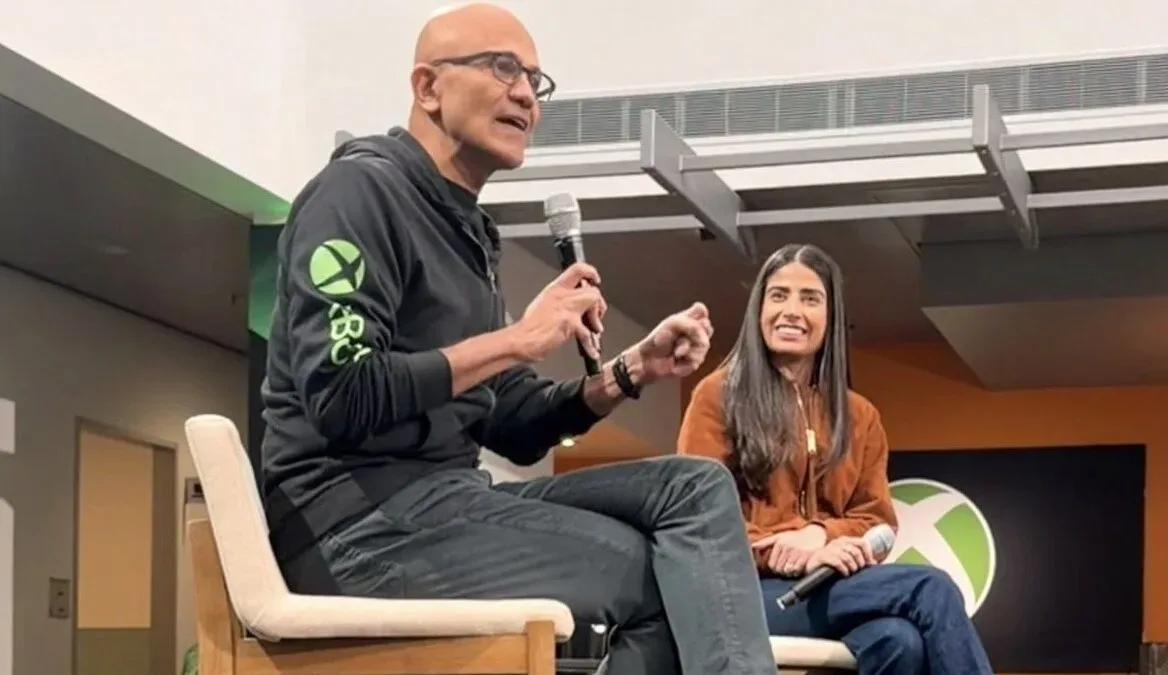
The AI conversation has naturally reached Xbox because Microsoft owns the platform, but the available message to game developers is notably narrower than the company’s PC-wide AI ambition. Xbox CEO Asha Sharma said in February that Microsoft would not force studios to use the technology.
That reassurance is meaningful because game creation is not a single task. Studios make choices across writing, art, audio, quality assurance, tools, accessibility, localization and player support, and each potential AI use carries different creative, technical and labor implications. A mandate would be very different from giving individual teams the option to explore a tool.
At the same time, “not forced” is not the same as “absent.” Microsoft has continued to seek patents involving AI that could show advertising during games and even play games for users. A patent application is not a product release, a confirmed feature, or a promise that players will see it. It indicates an area the company is investigating or seeking to protect legally, not a finalized Xbox policy.
That distinction is essential. The present evidence supports concern and scrutiny of the ideas described in those patents, but it does not support saying that ads are currently being inserted into games by AI or that Microsoft has launched a system that plays games for customers.
Microsoft’s current position therefore has two tracks. On one, Copilot is still central to the company’s wider strategy despite Copilot+ branding disappearing from new Surface devices. On the other, Xbox studios have been told they will not be compelled to adopt AI, even as the company explores patents with potentially disruptive applications for games. That tension will remain important as players and developers watch whether “choice” continues to define the practical implementation.
Why the label’s disappearance is worth watching
There is a temptation to treat product branding as superficial, especially in a story involving a technical requirement like a 45-TOPs NPU. But branding decides what customers are asked to notice and trust. Copilot+ made AI capability a front-and-center purchasing category, complete with dedicated hardware criteria and visible Windows integrations. Taking that name off new flagship Surface devices changes the message, even if the silicon standard remains intact.
For now, the safest reading is limited but significant: Microsoft’s latest Surface Pro and Surface Laptop are not being branded Copilot+ PCs, despite meeting the prior qualification bar. The company has not explained the change. Its broader Copilot ambitions continue, Windows AI remains a meaningful privacy and usability conversation, and Xbox’s relationship with AI should be judged by actual product decisions rather than branding alone.
For more on how Microsoft’s corporate direction intersects with its gaming business, see our coverage of Xbox’s reset amid streamlining and growth targets.