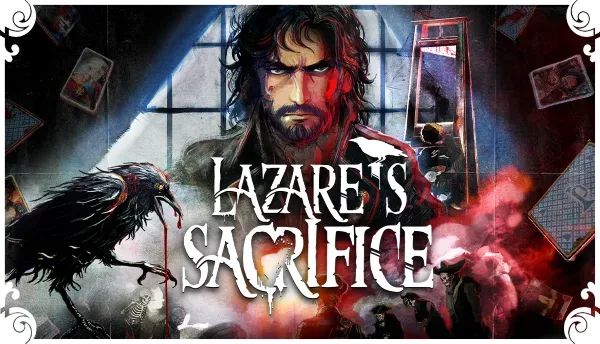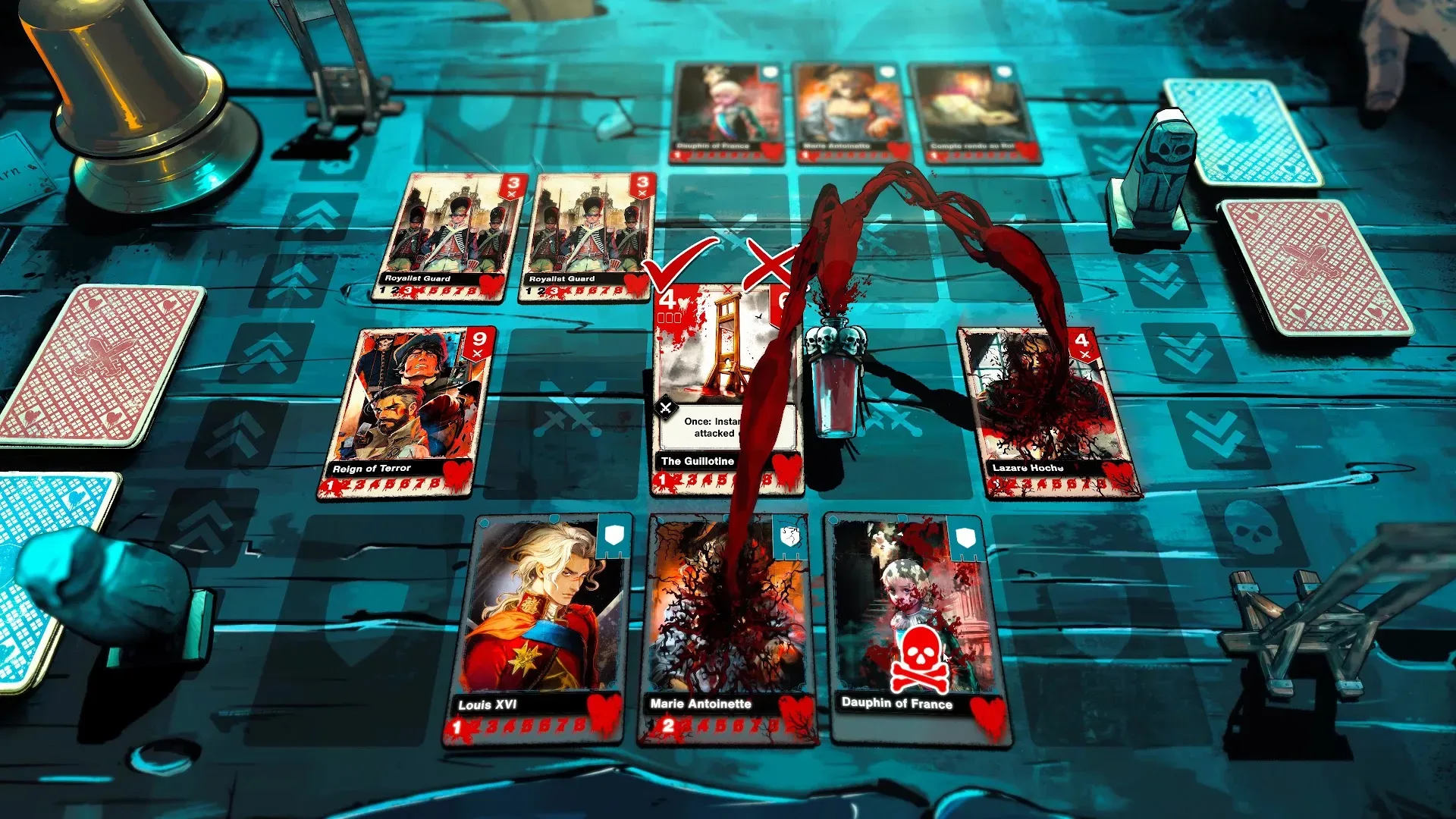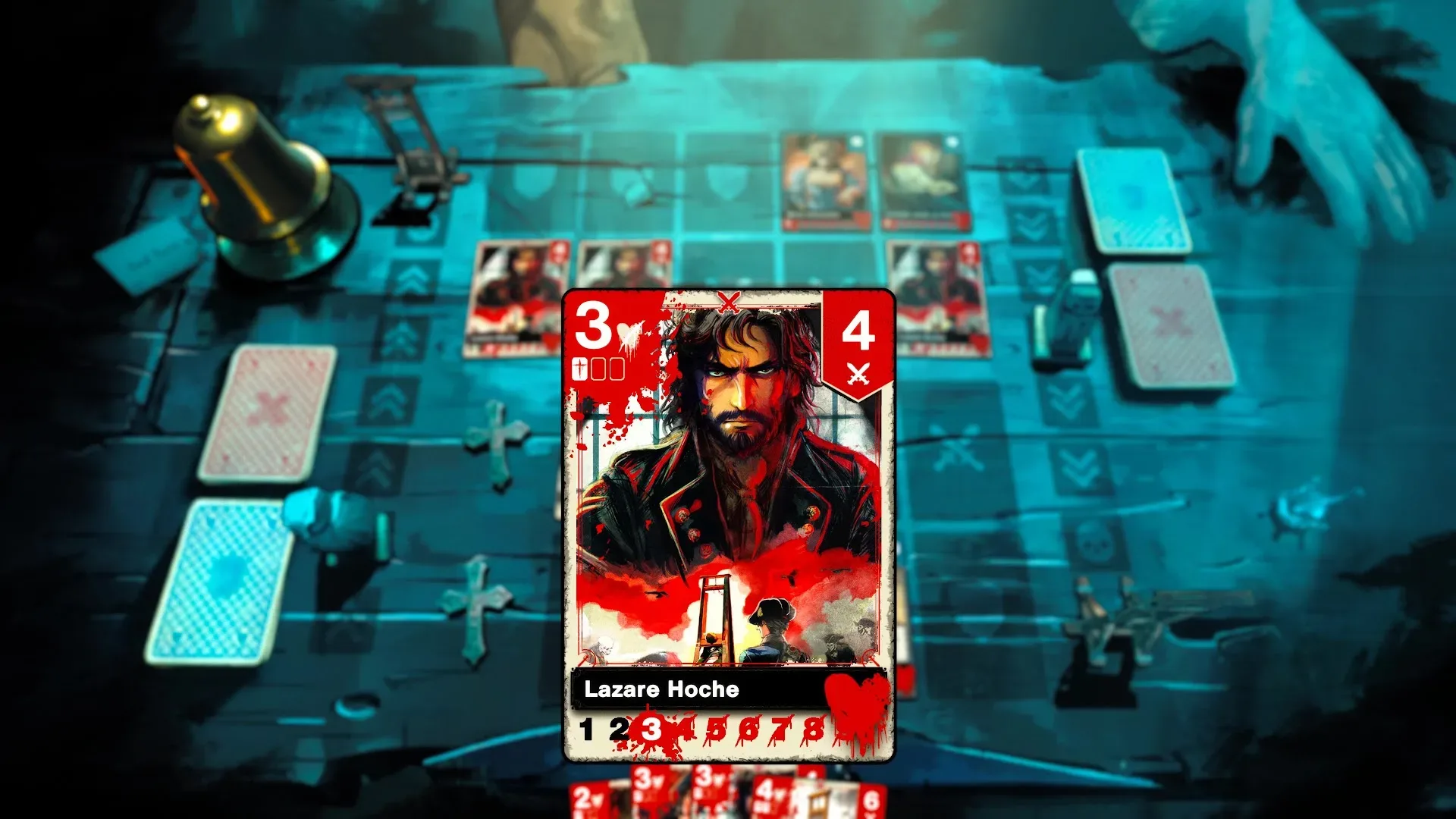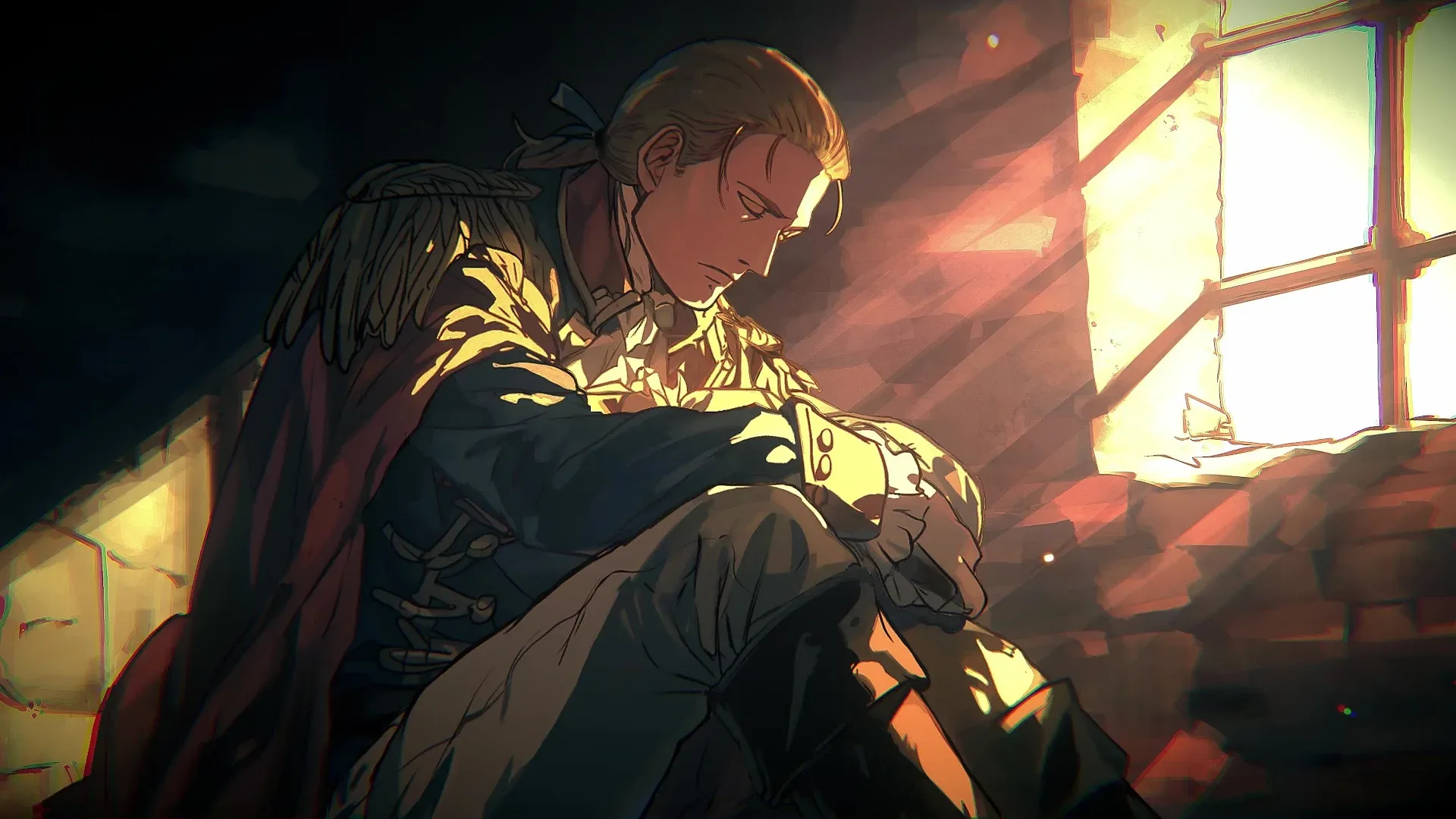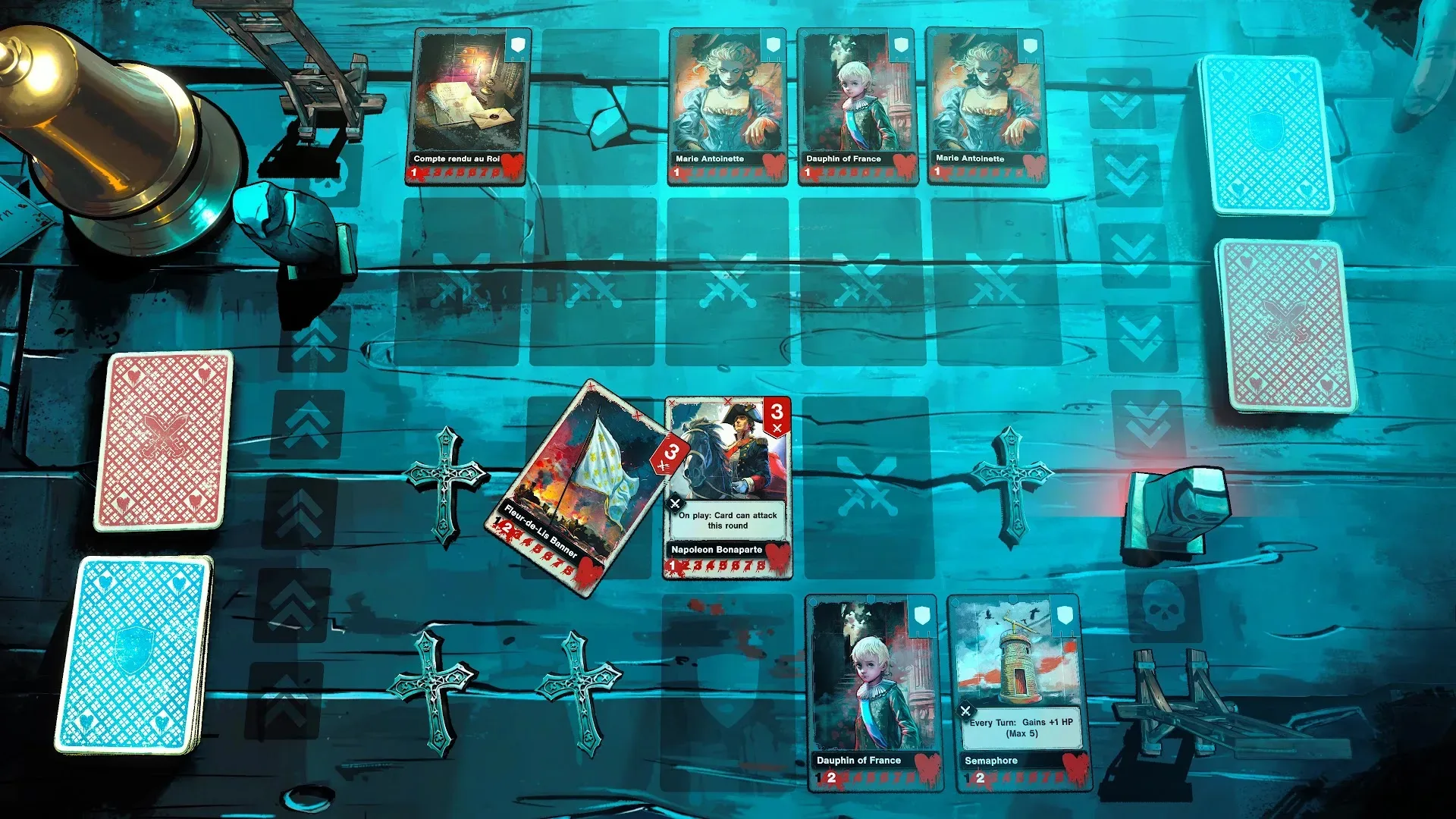
Dream Reality Interactive and Curve Games have announced Lazare’s Sacrifice, a narrative-led deck-building game planned for PC in spring 2027. Revealed on October 8, 2026, the game places a deadly card contest inside Carmes Prison during the French Revolution, with survival through the night—and escape from the guillotine—hinging on the player’s choices at the table.
The central hook is not simply building a stronger deck. Lazare’s Sacrifice asks players to spend what they might normally protect: cards in hand or deck, room on the board, and even their own health. Those sacrifices can summon more powerful forces and fuel severe attacks, but each one may leave the player with fewer options for the next turn or encounter. It is a harsh premise for a harsh setting, and one that could make even a seemingly routine play feel like a visit to the financial adviser from hell.
A prison mystery built around card battles
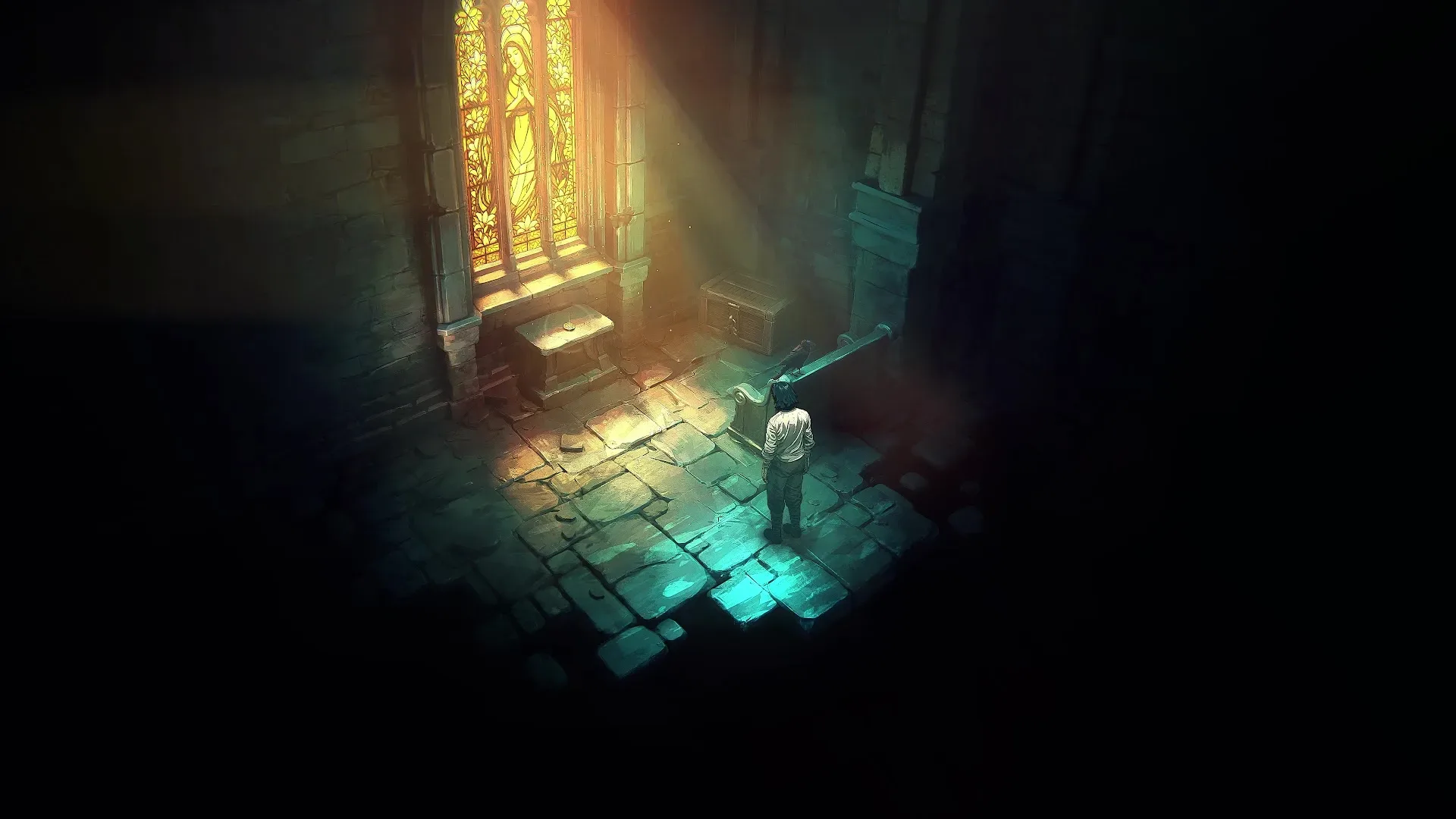
Players take the role of Lazare Hoche and explore Carmes Prison through a narrative exploration mode alongside the strategic card battles. The announced setup frames the prison as more than a backdrop: it is the site of the game’s mystery, its life-or-death contest, and the place where secrets tied to its inhabitants can be uncovered.
The opponents include twisted versions of historical figures from the Revolution. Each is said to have an individual playstyle and secrets for players to discover. That wording suggests battles are intended to do double duty: they are tactical obstacles, but also part of the path through the game’s narrative. The announcement does not specify the characters involved, their exact mechanics, or how discoveries will alter the story, so those details remain to be revealed.
The game is co-designed with Damien Monnier, identified as the creator of Gwent. That is meaningful context for the project’s card-game credentials, though it should not be read as a promise that the two games will play alike. The confirmed design direction for Lazare’s Sacrifice is its own sacrifice-driven loop, built around decisions that trade safety and resources for greater immediate force.
What the sacrifice mechanic means
In a deck builder, players generally expand and shape the group of cards available to them, looking for combinations that make future decisions more effective. Lazare’s Sacrifice will let players scavenge to broaden that deck. The unusual pressure comes from the stated costs attached to stronger plays.
- Surrendering cards: Giving up cards can reduce the tools available for later turns or encounters, even if it enables a powerful move now.
- Giving up board slots: A board slot is a place where a player can establish a force or play. Losing one can limit how much can be committed to the table at once.
- Bleeding health: Health is the margin for error between a risky plan and defeat. Using it as a resource can create dramatic opportunities, but also makes the consequences of a misread much steeper.
Those are three different types of cost. Cards affect flexibility, board space affects tactical capacity, and health affects survival. The important design implication is that the player is not always choosing between “good” and “bad” cards; they may be choosing which kind of future problem they are willing to create. A hand depleted for a major summon may be the right move against one opponent and a disaster against another. Sacrificing board space might be sensible if it ends a threat immediately, but less so if an opponent’s style rewards a long game.
That is an interpretation of the announced systems rather than a confirmed rule set. Specific turn structure, card types, faction identities, encounter length, and the permanence of individual sacrifices have not been detailed. Still, the established concept is clear: power is not free, and the game aims to make the bill painfully visible.
“Every strategic choice has a weight to it,” Dream Reality Interactive CEO Dave Ranyard said of the game’s approach.
That stated emphasis fits the announced mechanics. A sacrifice system only lands if an expensive option feels tempting enough to use and dangerous enough to regret. If players can always recover the spent resource easily, the decision loses its sting. If costs are too punishing, the strongest-looking tools become traps. Finding that tension will be central to how Lazare’s Sacrifice feels when it arrives.
Four factions and two planned modes
The announcement confirms four factions to master. In card games, a faction commonly denotes a distinct pool of cards, themes, or strategic identity. Here, the names, visual styles, and mechanical distinctions of the four factions have not yet been shared. Nor has it been confirmed whether players select one faction at a time, combine factions, or encounter them chiefly through opponents. What is known is that faction mastery is a major part of the game’s planned strategic framework.
There will also be two modes:
- Story Mode, the narrative-driven route through the mystery of Carmes Prison.
- Tower Mode, described as a custom-deck gauntlet.
A gauntlet generally means a succession of challenges rather than a single standalone match. The phrase “custom deck” indicates Tower Mode is intended to put player-built decks to the test, but the announcement does not define its progression, rewards, challenge modifiers, or whether it connects to Story Mode. It does, however, point to a structure beyond the campaign: players who want to focus on testing construction choices should have a dedicated arena for doing so.
The division is sensible on paper. Story Mode can give the prison setting, historical figures, and secrets room to unfold, while Tower Mode can concentrate on repeatable strategic pressure. Whether they are tightly interwoven or mostly separate will matter, but that is a question for later reveals rather than something the announcement answers today.
Why the setting suits the design
Using the French Revolution and Carmes Prison gives the game a natural atmosphere of instability, fear, and impossible choices. The announcement’s premise does not present the era as a straightforward historical simulation. Instead, it uses a stylised, deadly card game and altered historical figures to build a narrative mystery. That distinction matters for expectations: the confirmed focus is a dramatic fictional card-battling experience set against revolutionary turmoil, not a lesson in historical reconstruction.
It also allows the card mechanics and story premise to speak the same language. A player trying to survive until morning, facing the guillotine, and forced to discard resources for a chance at overpowering an enemy is dealing in escalating compromises. The setting therefore appears designed to reinforce the gameplay’s pressure rather than merely decorate it.
For PC players tracking projects due next year, another 2027-bound PC card-game-adjacent release is already drawing attention. Lazare’s Sacrifice, however, is currently defined less by broad genre labels than by the particular resource gamble at its core: play it safe and perhaps lack the force to survive; spend too freely and potentially sacrifice the very means to recover.
What is confirmed—and what is still unknown
Dream Reality Interactive is developing the game, with Curve Games publishing. It is announced for PC, and its launch window is spring 2027. The confirmed feature set includes strategic card battling, narrative exploration, scavenging for deck expansion, four factions, Story Mode, and Tower Mode.
There is no announced release date within that seasonal window, no listed console version, and no detail yet on pricing, storefronts, system requirements, accessibility options, localization, multiplayer, or post-launch plans. The announcement likewise does not provide a full breakdown of how deck construction works, how factions differ, or how the narrative branches, if at all.
Curve Games VP of Publishing Rich Keen said the publisher was looking forward to bringing the title to players in spring 2027. Until more is shown, the most compelling confirmed idea remains the basic bargain at the center of the game: the cards that can save Lazare may require him to give up something that was supposed to keep him alive.