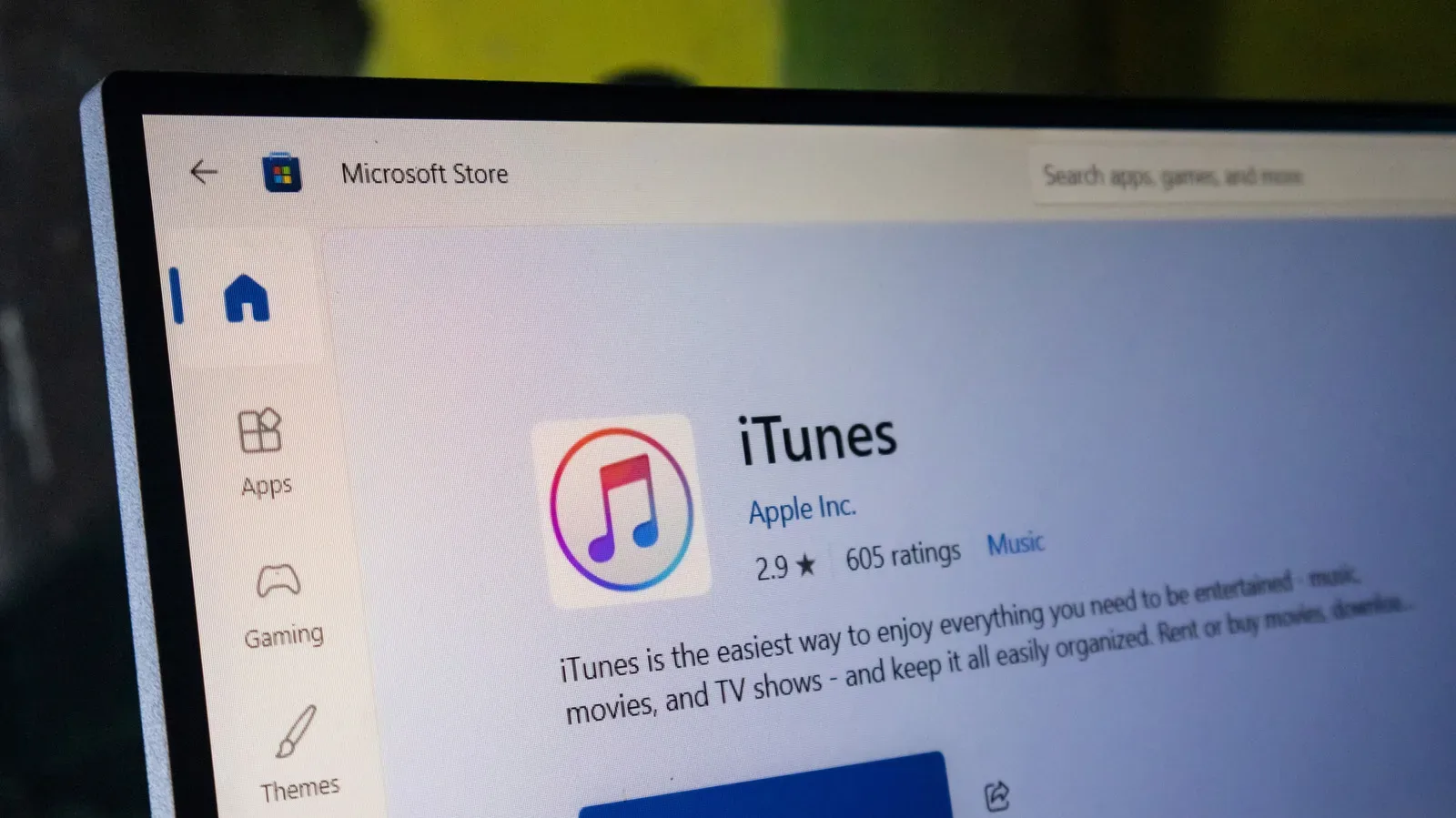
There was a time when opening iTunes felt like entering Apple’s entire digital empire through one unusually crowded door. Music collection? In there. Ripped CDs? In there. Movies, television, podcasts, audiobooks, apps, device backups and the ritual of connecting an iPhone with a cable? Also in there, presumably behind one of 47 tabs.
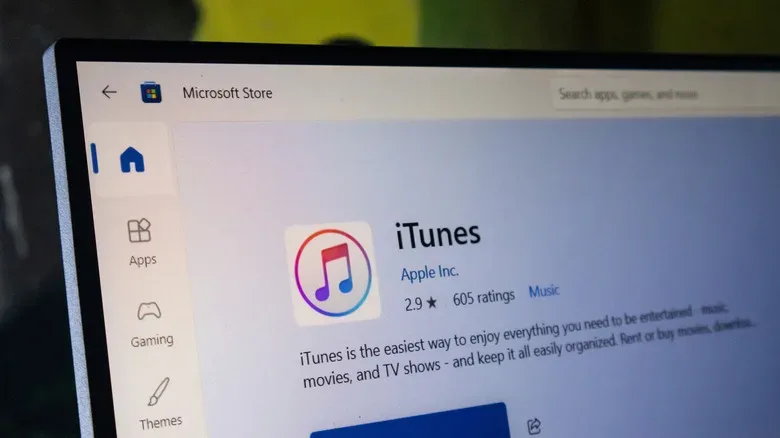
In 2026, iTunes is still alive, but it has been pared down so thoroughly that calling it a single, universal Apple hub would be wildly misleading. The name survives, the store survives in several forms, and years of purchases can still follow an Apple Account. The huge desktop application that once tried to organize nearly every kind of media and every connected device, however, has mostly been broken apart.
That distinction matters for anyone with an old personal music library, a stack of CDs they spent years importing, downloaded albums purchased one track at a time, or a Windows PC that still has the familiar iTunes icon on it. It also matters to collectors and retro-minded media fans: files bought in the download era have not automatically disappeared merely because streaming became the dominant way to listen.
From music manager to oversized command center
Steve Jobs announced iTunes more than a quarter-century ago. At its best, the original software had a fairly clear mission: help people play, sort and manage their own music. That was especially valuable in an era when building a digital library meant importing CDs, tagging tracks, assembling playlists and deciding exactly which files belonged on a portable player.
iTunes later grew far beyond that original job description. It became an Apple storefront and management suite for a long list of categories, including music, movies, TV shows, podcasts, books, apps, backups and syncing. Convenience came with baggage. What had begun as a personal music tool gradually developed into a dense interface where unrelated tasks were piled together.
For a period, iTunes was a major force in paid downloads. At its high point, it accounted for roughly 63% of the United States’ paid digital-download market. But the industry’s shift toward subscriptions changed the equation. Services such as Apple Music and Spotify made enormous on-demand catalogs available for recurring fees, rather than asking listeners to buy each album or song individually. The old download-store model did not vanish, but it stopped being the default cultural destination for many listeners.
Apple’s answer was not simply to kill iTunes and leave a blank space. It distributed the duties. This was less a dramatic disappearance than a digital garage sale where each former responsibility received its own labeled box.
Where the old iTunes jobs went
On modern Macs, the clearest successor for music is the Music app. Movies and television programming moved to the TV app, while podcasts live in Apple Podcasts. Device administration is no longer part of the classic Mac iTunes workflow either. On macOS releases after Mojave, plugging an iPhone or iPad into a Mac for a wired sync, backup, restore or software update is handled through Finder.
That division may be less nostalgic, but it is easier to understand than the old arrangement. Someone who wants music can open Music. Someone who needs to restore an iPhone can go to Finder. The iTunes-era instinct to look for every Apple-related task in the same window is now more historical habit than current guidance.
- Music app on Mac: organizes and plays personal music, including purchases and imported files.
- TV app on Mac: handles film and television purchases.
- Apple Podcasts: is the dedicated podcast destination.
- Finder on modern macOS: manages wired iPhone and iPad syncing, backups, restores and updates.
- Apple Devices on Windows: takes on device management duties on PCs.
The result is a platform that treats media and device maintenance as separate jobs. That is a far cry from the era when a single app was expected to be a jukebox, store, backup utility and the answer to nearly every “where did Apple put that?” question.
Your purchases are tied to your Apple Account
The important reassurance for longtime users is that old iTunes purchases are connected to the Apple Account used to acquire them. Apple ID was renamed Apple Account, but the account relationship is what matters: purchased music, films, TV seasons, audiobooks and other eligible bought content remain associated with that login.
In practical terms, the original iTunes account label has changed over time, but the library does not need a separate “iTunes account” to continue existing. Remembering the correct Apple Account credentials is the crucial part. For people who bought music over many years, that continuity is considerably more useful than preserving the look and feel of an early-2000s desktop program.
Music purchases can coexist with a much older collection. An album bought in 2026 may sit beside tracks imported from a CD in 2004. The Music app can organize and play purchased songs, DRM-free audio and imported files, including MP3, AAC and ALAC formats. This is the part of the iTunes legacy that remains especially relevant for listeners who prefer a library they actively maintain.
An Apple Music subscription is not required to play the music files a person already owns. The subscription adds access to a streaming catalog and cloud-library features, but it is distinct from keeping local files, listening to ripped CDs or downloading purchases. Put more simply: subscribing can be useful, but it is not a toll booth placed in front of a pre-existing personal collection.
The iTunes name may endure as shorthand for Apple’s media-store history, but a personal collection can still be a personal collection without turning into a streaming subscription.
Windows is the biggest remaining iTunes holdout
Traditional iTunes remains available for Windows users. On a PC that has not installed Apple’s newer Windows apps, it can still be used for compatible media and access to the iTunes Store, preserving more of the familiar older experience than Mac users receive today.
Even there, however, the split has arrived. Once Apple Music or Apple TV is installed on a Windows computer, those applications take responsibility for music, movies and television shows. Apple Devices handles syncing and other device-related tasks. iTunes remains useful for audiobooks and free podcasts.
That makes the Windows version something of a legacy bridge rather than a triumphant restoration of the old all-purpose application. It can be relevant to a user’s existing setup, particularly if they have not moved to the newer apps, but its responsibilities are narrower in an Apple ecosystem that now favors specialized software.
The iTunes Store still has a role for people who buy downloads
Buying media has not been erased by streaming. On iPhone and iPad, the iTunes Store app remains the place to purchase music, movies and TV shows for people who would rather buy downloads than rely entirely on monthly access. It is separate from the Music app, which is a key point for anyone looking for an ownership-oriented option rather than simply browsing a subscription catalog.
On a Mac, music can still be purchased from the iTunes Store through the Music app. TV and movie purchases are now found through the TV app. The iTunes label is therefore still present at the storefront level even when the old desktop app is not the front door.
For gaming and pop-culture collectors, this difference is familiar. A subscription offers access while it lasts; a purchase is added to a library connected to an account. Neither model is identical to holding a cartridge, disc or vinyl record, and digital purchases bring their own account and platform considerations. Still, the ability to maintain downloaded music for a road trip, an offline stretch or simply a carefully curated library remains meaningfully different from pressing play on an all-you-can-listen service.
That changing relationship with media ownership also echoes a broader digital preservation conversation relevant to games. As platforms reorganize stores and apps, the interface may change dramatically while personal libraries remain central to why users care in the first place. That tension is visible across PC gaming too, where the industry continues to weigh access, infrastructure and long-term costs, as explored in the debate over data centers and gaming’s cost crunch.
A surviving brand, not the old software kingdom
It would be inaccurate to say iTunes has completely disappeared. Windows users can still use the traditional app in certain setups. The iTunes Store remains a buying option. The Apple Account still connects users to purchases made during the software’s long lifespan. And the Music app retains the core appeal of the original concept: a place for music people have bought, imported and organized themselves.
It would be equally inaccurate to treat iTunes as the command center it once was. On modern Macs, Finder handles devices. Dedicated apps divide music, video and podcasts. On Windows, Apple Devices has inherited syncing responsibilities, while Apple Music and Apple TV can take over their respective media categories.
So iTunes in 2026 is best understood as a surviving name attached to a scattered legacy. Its most durable idea is not the old tab-heavy application. It is the notion that a listener’s collection—purchased tracks, CD imports and carefully preserved files—can remain available alongside newer ways of consuming media. The software empire has been dismantled. The library, assuming the account details are intact, is still very much in the building.