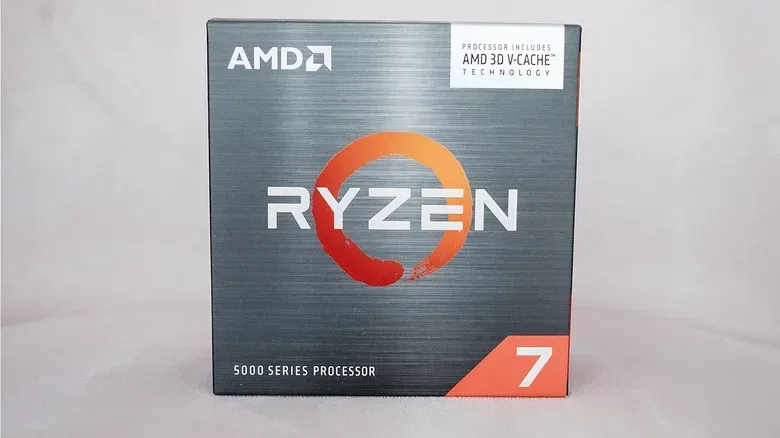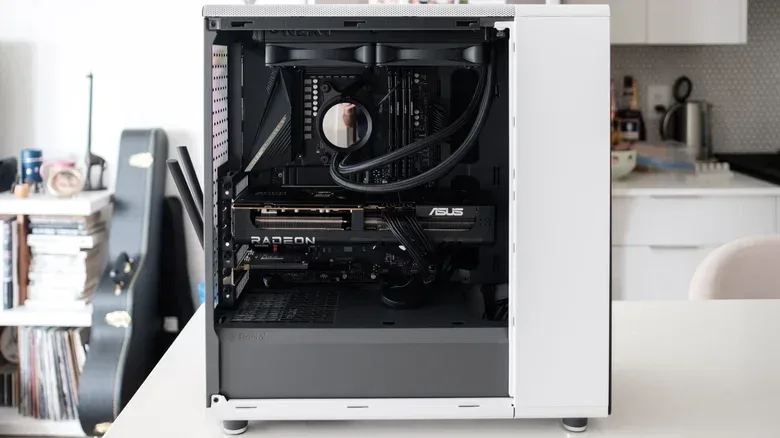
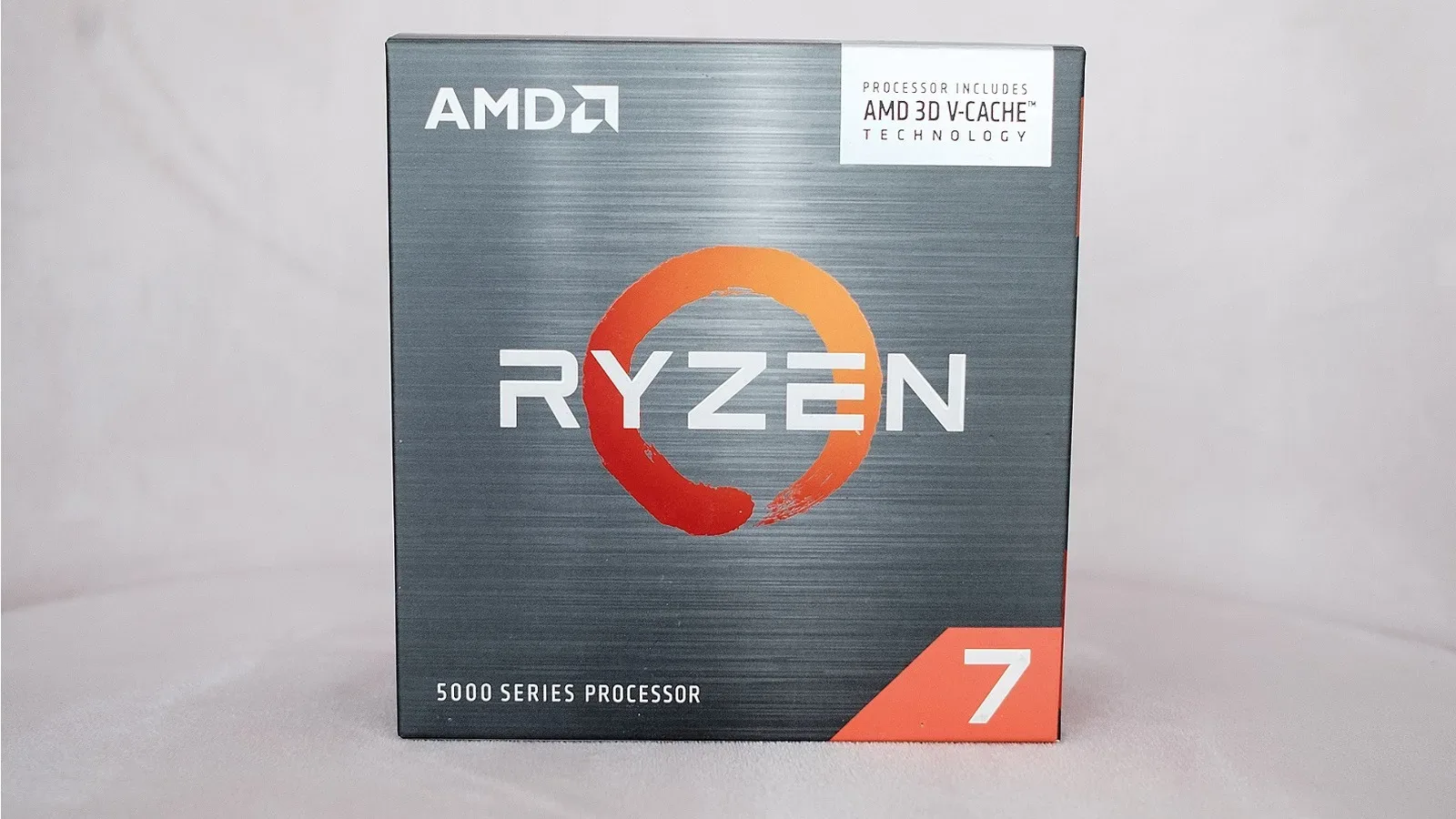
The Ryzen 7 5800X3D occupies a strange and unusually relevant spot in 2026 PC gaming. It is a four-year-old processor on AM4, a socket that is now a decade old and has no further performance upgrades ahead. Yet it has returned as a premium option at a time when building on current DDR5 platforms has become dramatically more expensive.
That makes the question less about whether the 5800X3D is fast—it still clearly is—and more about what problem a buyer is trying to solve. For some AM4 owners, it can deliver a major improvement without replacing motherboard and RAM. For others, $349 is too much to spend on the final high-end stop of a retired platform, particularly when less expensive Zen 3 chips or a graphics-card upgrade could produce a better overall result.
In short: the 5800X3D is still a serious gaming processor, but it is no longer an uncomplicated value pick.
Why an old AM4 chip is back in the conversation
Normally, a player considering a substantial CPU upgrade would be pushed toward a new platform. AMD’s AM5 and Intel’s LGA 1851 platforms offer a path to more current components and potential future upgrades. An AM4 CPU upgrade does not: the 5800X3D is effectively the ceiling for the platform, and there are no newer, more powerful AM4 processors expected.
But a platform change means more than buying a CPU. It generally involves a motherboard and DDR5 memory as well. Memory costs have transformed that normal advice into a much tougher financial decision. At the time considered here, 16GB of DDR5 could cost as much as $300, while a 32GB Corsair DDR5-6000 CL30 kit was listed close to $600. Those figures make the ability to keep existing DDR4 memory far more meaningful than it would be in a normal market.
For an AM4 owner with capable DDR4 already installed, a processor swap can avoid the most painful part of a modern rebuild. That is the central case for the 5800X3D: it buys more gaming life from hardware that is otherwise still perfectly serviceable.
The wider effect of high component pricing on gaming upgrades is worth keeping in view. AI’s memory appetite is also putting pressure on the PC GPU market, so there may be no cheap, obvious path for someone whose entire system needs attention. An AM4 drop-in upgrade is appealing precisely because it narrows the shopping list.
What makes the 5800X3D valuable for games
The “X3D” label refers to AMD’s added 3D V-Cache. Put simply, cache is very fast memory located on or extremely close to the processor. It gives the CPU a place to keep frequently needed data close at hand rather than repeatedly waiting on slower system memory. Games do not all benefit in the same way, but titles that are especially CPU-limited can gain meaningfully from this larger cache pool.
This matters most when the processor is responsible for a crowded or simulation-heavy game scene: many characters on screen, complex world activity, intensive draw-call workloads, or a high-end graphics card capable of rendering frames faster than the CPU can prepare them. It can also matter when chasing consistently high refresh-rate performance rather than merely a respectable average.
CPU bottleneck is the term for this mismatch. If the processor cannot feed the graphics card quickly enough, the GPU spends part of its time waiting. Turning down visual settings may not cure that limitation, because the game is held back by CPU work rather than raw graphics rendering. A stronger CPU can improve both average frame rate and the consistency of frame delivery.
One practical example comes from The Witcher 3: Wild Hunt — Remastered. Its newer graphics options include ray tracing and Ultra+ settings intended for newer hardware. The “number of background characters” setting is especially demanding in Novigrad, the game’s largest city, because it raises the number of non-player characters the CPU must help manage and the game must render.
With a Ryzen 7 5800X3D and Radeon RX 9070, 1440p play with ray-traced global illumination and ambient occlusion enabled reportedly held around 80 to 90 frames per second in that setting without frame generation. The reported 1% lows did not fall below 70 fps across several hours in Novigrad.
1% lows are an important benchmark measure. Instead of describing the overall average, they represent the performance of the slowest one percent of recorded frames. A high average can look impressive while brief but recurring slowdowns make a game feel rough. Better 1% lows generally suggest more stable motion and fewer noticeable hitches.
The 5800X3D has also been used successfully with recent demanding games including Kingdom Come: Deliverance 2, Marathon, and Assassin’s Creed Black Flag Resynced, reaching or approaching the limits of a 165Hz display in those experiences. That does not make it universally equivalent to a current high-end platform; game performance always depends on the graphics card, settings, resolution, engine, and scene. It does establish that AM4 is not automatically obsolete as a gaming platform.
The $349 problem
Performance is not the 5800X3D’s weakness. Pricing is.
At $349, the processor costs substantially more than several competent AM4 alternatives: the Ryzen 5 5500, Ryzen 5 5600X, and Ryzen 7 5700X can be found below $150. That gap changes the recommendation. The 5800X3D may be the fastest gaming chip available for an AM4 board, but fastest and best-value are not interchangeable.
Its price also looks awkward in light of its history. Before it was initially discontinued, the chip could sometimes be found at $300 or less. Paying $349 now means paying a premium for an older product because it occupies a rare position: a high-performing endgame CPU that works with DDR4 and a mature, widely used socket.
Buyers should resist treating the processor as a mandatory upgrade simply because it is AM4’s champion. The real decision should be based on the current CPU, graphics card, game library, and the cost of alternatives.
Check the GPU before buying a CPU
For many gaming PCs, the graphics card remains the part most likely to have the largest impact on visual quality and frame rate. If a system is mainly GPU-limited—common at higher resolutions and demanding settings—a CPU change may yield less improvement than a better GPU.
A GPU upgrade has another advantage: it can travel into the next PC. An RX 9060 XT or RX 9070 purchased for an existing AM4 machine could be moved to a future AM5 or LGA 1851 build. The 5800X3D cannot; it only has a home in AM4 systems.
That does not mean any graphics card makes sense with any CPU. Pairing an RTX 5080 with a Ryzen 5 3600, for example, risks a significant mismatch in CPU-heavy scenarios. But it does mean an older processor should not automatically receive all the blame for weak gaming results. Identifying the bottleneck first is the sensible move.
The available guidance also favors care with graphics-card choice on a lower-powered CPU. NVIDIA cards can demand more CPU resources through Game Ready driver overhead relative to AMD alternatives, which can affect how fully a modest processor gets to use the GPU. That is not a rule that decides every purchase, but it is a meaningful consideration for someone extending an older AM4 build rather than rebuilding the entire system.
Cheaper Zen 3 upgrades can still transform an old PC
The best argument against automatically buying the 5800X3D is not that CPU upgrades are unnecessary. It is that AM4 owners have a broad range of cheaper upgrades that can be substantial.
Testing comparing a Ryzen 5 5500 with the older Ryzen 5 2600X illustrates the point. Paired with an RX 9070 in Cyberpunk 2077: Phantom Liberty, the 5500 achieved a 102 fps average and 72.9 fps 1% lows. The 2600X with the same GPU averaged 85.7 fps, with 1% lows of 55.8 fps.
That difference in the lows is especially revealing. Moving from 55.8 fps to 72.9 fps in the slowest moments is not just a number for a spreadsheet; it can be the difference between uneven movement and a game that feels reliably smooth during its busiest sequences. The Ryzen 5 5500 may not have the cache advantage of the 5800X3D, but it demonstrates the broader point that an aging AM4 system can benefit greatly from an affordable Zen 3 replacement.
For owners of a Ryzen 5 2600X or Ryzen 5 3600, then, there are two valid routes. The 5800X3D delivers the largest CPU upgrade and may be ideal when paired with a powerful GPU. The 5500, 5600X, or 5700X can offer a much lower-cost lift, leaving hundreds of dollars available for the graphics card that may matter more to the overall build.
Who should actually buy the 5800X3D?
The strongest use case is specific. The 5800X3D makes the most sense for an AM4 owner who already has 32GB of fast DDR4—particularly 3200MHz or 3600MHz memory—and wants to avoid DDR5 and motherboard costs. Replacing that capacity with comparable DDR5 can cost $500 or more in the current pricing environment, putting the $349 CPU in a different light.
It also makes sense for someone who already owns a high-end GPU, such as an RTX 5070 Ti or RTX 5080, but has paired it with a materially weaker AM4 processor. In that situation, the 5800X3D can help the graphics card reach closer to its potential in CPU-constrained games.
It is harder to justify for a player with a mid-range GPU such as an RTX 5060 Ti or RX 9060 XT. Spending $349 on the CPU while retaining that tier of graphics performance is often a lopsided allocation of money. A lower-cost Zen 3 chip and a future GPU fund are likely to be the more balanced strategy.
- Good fit: You have 32GB of quick DDR4, a compatible AM4 board, and a high-end GPU or a clear CPU limitation.
- Good fit: You want to keep the current system through the present GPU generation rather than undertake a platform rebuild.
- Consider cheaper Zen 3: You are moving from a 2600X or 3600 but use a mid-range GPU and need to control spending.
- Consider a GPU first: Your games are primarily graphics-limited, or your current graphics card is the clear weak point.
- Consider a new platform later: You value a future CPU upgrade path more than extracting the last major upgrade from AM4.
A last great AM4 upgrade, not a new beginning
The Ryzen 7 5800X3D is still capable of excellent gaming results in 2026, including in CPU-heavy scenes and demanding modern games. Its cache design remains meaningful, and its ability to reuse DDR4 makes it unusually practical while current memory prices are high.
But it should be treated as a targeted solution rather than a default recommendation. AM4 has reached its endpoint, the chip’s $349 asking price is steep, and cheaper Zen 3 options can provide a very large improvement from older Ryzen processors. A better GPU may also have a greater effect and will remain useful when the time comes to leave AM4 behind.
For the player sitting on 32GB of solid DDR4 and a powerful graphics card, the 5800X3D can be a remarkably effective way to keep an old platform fighting fit. For everyone else, the smarter purchase may be the one that leaves more budget for the next upgrade battle.