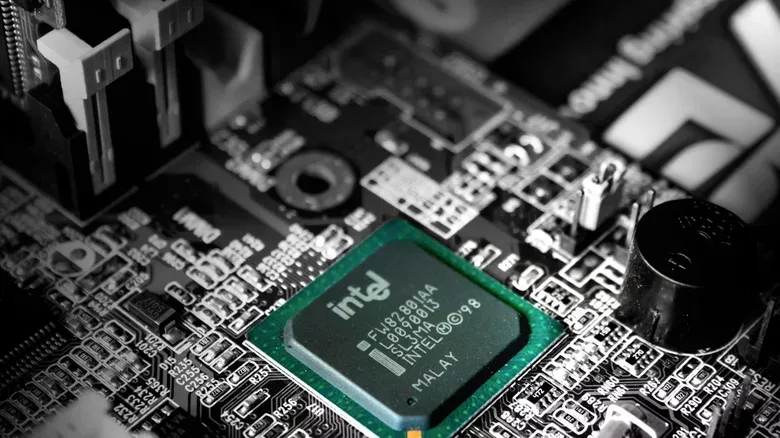
Intel may be preparing to give one of its longest-serving recent desktop platforms an unexpected extra life. Gigabyte has indicated that new Intel processors built for the LGA 1700 socket are on the way, raising the prospect of further Alder Lake and Raptor Lake refreshes that can work with comparatively inexpensive DDR4 memory as well as DDR5.
Nothing here amounts to a full Intel product announcement, and the exact processors, specifications and release timing have not been confirmed. But the report matters to PC gamers because the familiar “new platform means new parts” upgrade path can become brutally expensive when memory is the bottleneck. LGA 1700 supports motherboards designed for either DDR4 or DDR5, and that flexibility could suddenly be much more valuable while RAM costs are elevated.
The basic appeal is straightforward: a reported 32GB DDR4 kit can be found at around $210, while a 32GB DDR5 kit can cost more than $480. Those are example prices rather than a promise of what every retailer or region will charge, but the gap illustrates why an older memory standard remains attractive. A CPU refresh compatible with DDR4 could allow a builder to put more of a fixed budget toward the graphics card, storage, cooling or simply keep the total cost under control.
Why an old socket could become the practical option
A CPU socket is the physical and electrical interface that connects a desktop processor to its motherboard. LGA 1700 debuted in 2021, which makes it mature territory in a component market that regularly promotes new sockets and standards. In ordinary circumstances, the age of a socket might be viewed as an argument to move on. In a period of sharply higher memory prices, it can instead mean access to hardware choices that are already widely understood and potentially cheaper to configure.
That does not mean every LGA 1700 motherboard takes both kinds of RAM. A board is built for either DDR4 or DDR5; buyers cannot insert one type into a board made for the other, and the memory is not interchangeable. The platform supports both standards across different motherboard models. Anyone considering this route needs to match three things carefully: the specific processor, the motherboard’s listed CPU support and the board’s DDR4 or DDR5 memory type.
Intel’s vice president Robert Hallock has said Raptor Lake chips will remain available for “years to come,” pointing to continued DDR4 interest as an important reason. His assessment was concise: LGA 1700 remains a viable socket, and Intel intends to keep offering products because many people still want DDR4. That public position does not confirm a particular unrevealed chip, but it supports the wider idea that DDR4 is not being treated as an immediate dead end.
The underlying pressure is commonly described as an AI-driven RAM shortage or “RAMpocalypse”: memory prices have climbed as demand changes the economics of the market. For a gaming PC buyer, the important result is less dramatic than the nickname and more annoying at checkout. A component that was once a fairly routine line item can consume a much larger slice of the build budget.
What DDR4 versus DDR5 means for gaming
DDR refers to double data rate memory, the system RAM that holds data the CPU needs to access quickly. DDR5 is the newer generation and is faster than DDR4. That technical lead is real, but it should not be simplified into a claim that DDR4 makes current games unplayable or that DDR5 transforms every PC in the same way.
Related coverage includes Intel May Keep LGA 1700 and DDR4 Alive as Memory Costs Rise.
The reported testing range puts DDR5’s gaming advantage at roughly 1% to 10% frames per second, with the outcome depending heavily on the selected resolution and graphics card. Frames per second, or FPS, measures how many images the system produces each second. More FPS can make motion look smoother and improve responsiveness, but a percentage gain needs context. A small improvement may be meaningful to a player targeting a particular high-refresh-rate threshold; in another setup, it may be hard to notice or may not justify hundreds of dollars in additional memory cost.
Resolution and GPU matter because they help determine which component is limiting performance. At settings where the graphics card is doing most of the work, faster system memory may have a smaller effect. In circumstances where the processor is more constrained, memory performance can matter more. The reported 1% to 10% range is therefore a reminder not to buy on a single benchmark headline. It is not a universal guarantee for a particular game, resolution or graphics card.
For the vast majority of contemporary PC games, DDR4 remains described as sufficient. That is the crucial distinction in the alleged LGA 1700 strategy. Intel would not be presenting DDR4 as the performance pinnacle; it would be providing an option for people who value workable gaming performance and a lower entry cost over the extra speed of the newer standard.
That budget calculation could be especially relevant to someone assembling a gaming machine rather than upgrading a single component. A cheaper RAM-and-motherboard pairing may leave room for parts that have a clearer impact on a particular build. Conversely, someone already committed to a DDR5 motherboard and DDR5 memory has little reason to pursue DDR4 merely because it is cheaper in isolation. The value proposition is strongest when choosing the whole platform.
Potentially good news for upgraders, with important caveats
Existing LGA 1700 owners should resist assuming that any future Intel release will automatically drop into their current motherboard. Socket compatibility is only one layer of compatibility. Motherboard firmware, often called the BIOS, may need an update to recognize a newer processor. Manufacturers also have to add and validate that support for each board model. Until Intel and motherboard makers publish official CPU-support lists, a rumored refresh should not be treated as a guaranteed upgrade for a specific system.
For new builders, the report encourages a more careful comparison than simply “DDR5 is newer, therefore buy DDR5.” A useful process would be:
- Set the complete budget first. Include the CPU, motherboard, memory, graphics card, storage, power supply, case and cooling rather than judging RAM cost alone.
- Decide whether an LGA 1700 build will use DDR4 or DDR5. The motherboard choice locks in that decision.
- Check official compatibility information. Confirm the processor is supported by the exact board and determine whether a BIOS update is required.
- Compare gaming priorities. If the target game settings and GPU make graphics performance the primary constraint, a large premium for DDR5 may deliver limited benefit.
- Account for uncertainty. The prospective chips remain reported rather than fully specified, so do not purchase around capabilities that have not been formally detailed.
The existence of current Intel processors that can already be configured with DDR4 makes the possibility of additional LGA 1700 products less unusual than it first sounds. The broader platform has long offered a bridge between memory generations. What has changed is the financial incentive to use that bridge.
A mature platform can be a feature, not a compromise
There is a tendency in PC hardware coverage to frame older platforms only as obsolete. That is not always how buyers experience them. A mature socket can mean a broad selection of boards, established setup knowledge and the ability to reuse compatible components. When the newest memory standard commands a steep premium, those traits can become a practical advantage rather than mere nostalgia for older hardware.
There are trade-offs. DDR5 remains the faster technology, and a buyer who prioritizes the newest standard or has workloads that benefit from higher memory performance may reasonably prefer it. The reported gaming gains also show that DDR5 is not irrelevant. But “faster” and “better value for every build” are different claims. Intel continuing an LGA 1700 and DDR4 path would acknowledge that difference at a moment when component pricing makes it unusually visible.
It also places attention on a less glamorous part of a gaming rig. Graphics cards and processors tend to take center stage, while memory is often selected late in the process. With the reported difference between 32GB DDR4 and DDR5 kits reaching hundreds of dollars, RAM deserves to be a first-order budget decision. For readers following the wider PC release slate, including the latest PC game announcements, the hardware lesson is simple: the cost of getting into new games may be shaped as much by the memory standard behind the motherboard as by the game itself.
For now, the sensible reading is conditional. Gigabyte’s indication and Hallock’s comments suggest Intel sees ongoing demand for LGA 1700 and DDR4 configurations. They do not establish final model names, prices, performance figures or a firm schedule. If the reported refreshes materialize, their most compelling feature may not be a headline-grabbing architectural leap. It may be the option to build a capable modern gaming PC without paying the current premium for DDR5.
Shop the products
Check current price, model and availability at the retailer.