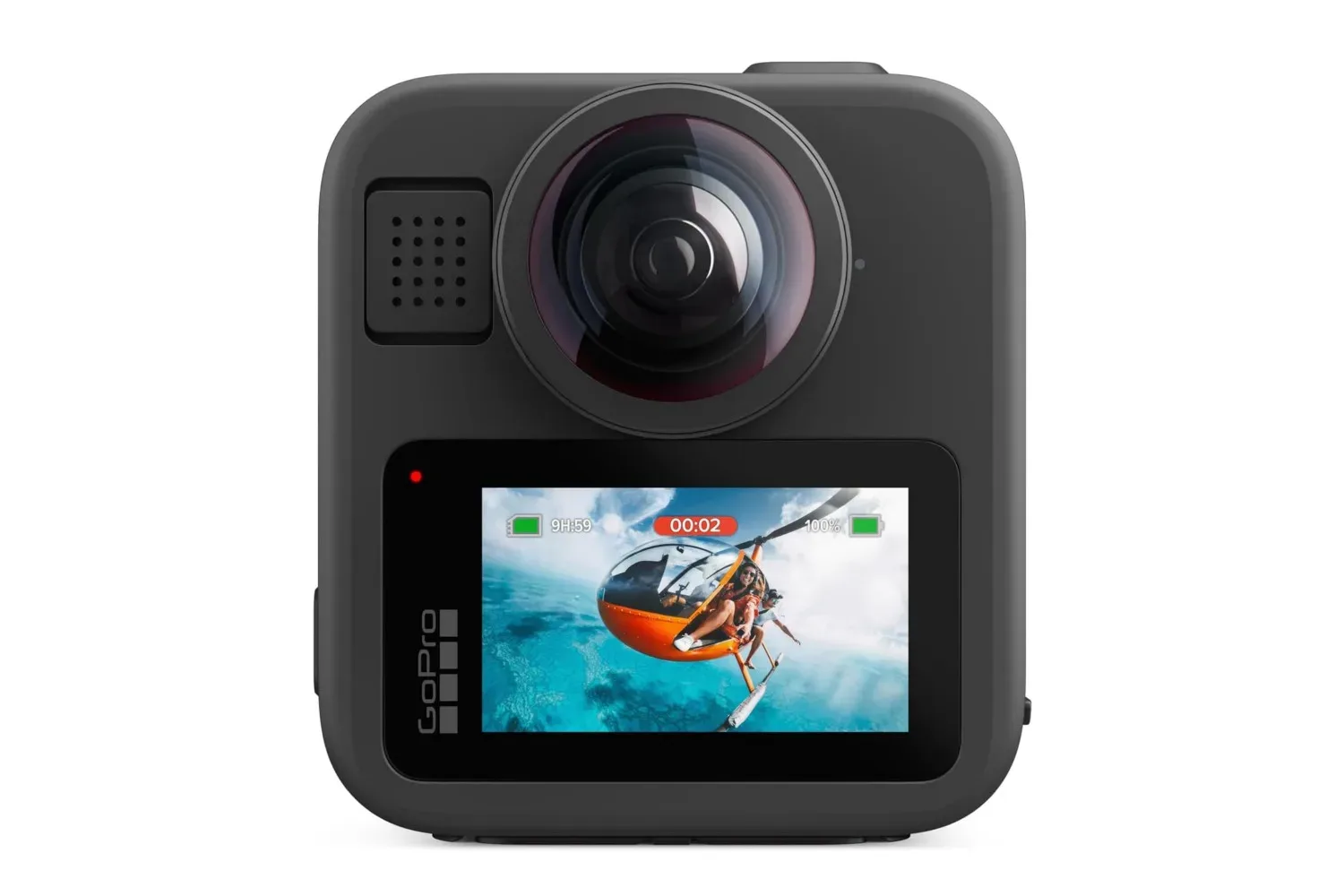
GoPro’s Max 2 is listed at $300 in a reported Amazon promotion, a $200 reduction from its stated $500 regular price. That is a 40% cut for a compact, waterproof 360-degree action camera whose central appeal is not simply recording in high resolution, but giving creators flexibility after the moment has passed.
The promotion also lists a $25 Amazon credit and a three-month trial of Amazon Music Unlimited alongside the camera purchase. Those extras can have their own eligibility terms, and limited-time retailer offers can change or end without notice, so the listed price, credit qualification and trial details are worth confirming on the product page before checkout.
For players, streamers, convention-goers and anyone who occasionally wants footage beyond a static desk webcam shot, the more interesting part of the Max 2 is its 360-video workflow. Rather than deciding on one narrow camera angle before pressing record, the camera captures a much wider surrounding view. The supplied GoPro Quik app can then turn that recording into a conventional 4K video by selecting and reframing the portion of the scene that matters.
That makes the $300 price meaningful in a fairly specific way: it lowers the cost of buying latitude. A creator can start with a broad recording, then decide later whether the finished clip should follow the person, the surroundings or a particular moment happening off to the side.
A deal centered on post-capture choices
The Max 2 is described as recording up to True 8K 360 video. In practical terms, 360 video captures the full environment around the camera instead of committing the recording to a single forward-facing composition. The resulting footage needs another step before it resembles the familiar horizontal or vertical video people share online: the creator chooses a view from within that larger captured space.
Reframing is that selection process. It means creating a traditional flat video from a chosen slice of the 360-degree recording. The Max 2’s Quik app is described as allowing reframes into standard 4K videos in a few taps. That can be useful when one clip needs to serve multiple formats: a wide landscape edit, a vertical social clip, or a tighter view of one subject.
This does not mean every recording instantly becomes a polished multi-angle production. Reframing remains an editing decision, and the choice of where to point the final view still affects what viewers see. The advantage is that the decision happens after recording rather than entirely before it. For someone filming a fast-moving activity alone, that can reduce the chance that the action takes place just outside a fixed camera’s frame.
The supplied information also says the Max 2 offers a wider field of view than many traditional action-camera shots and claims nearly 21% more resolution than most comparable competitors. That comparison should be read as a product-positioning claim rather than a universal measure of image quality; resolution is one specification among several that affect a finished video. But the stated 8K 360 capture gives the camera more image area to work with before a reframed 4K clip is exported.
Stabilization and Horizon Lock explained
GoPro’s workflow also matters because the Max 2 lets users adjust stabilization and Horizon Lock after recording. Video stabilization is processing intended to smooth the visual effect of camera shake or movement. Horizon Lock aims to keep the horizon level in the finished shot even when the camera itself tilts or rotates.
Those tools are especially relevant to action footage, but the benefit is not limited to extreme sports. A walking shot across a gaming event, a costume showcase, a controller-collection tour, or a behind-the-scenes clip of setting up a gaming area can all become harder to watch when the frame bounces or leans unexpectedly. Being able to revise stabilization and horizon behavior later offers room to choose between a more natural sense of movement and a more level, controlled presentation.
It is important, though, not to treat stabilization as magic. It can improve the presentation of moving footage, but it does not change what was recorded in the first place. Planning a safe, secure mount and keeping lenses clean are still basic parts of capturing usable video.
The disappearing-pole effect is a compositional tool
One of the Max 2’s more distinctive uses is pole-mounted filming. The supplied details say the pole can disappear from the footage, producing a third-person-looking perspective without requiring another person behind the camera. This can create the impression of a floating camera following the subject.
That is potentially useful for solo creators who want a more cinematic-looking record of an activity while keeping their hands free. It can also help produce a wide environmental shot that includes both a subject and their surroundings. The effect is not merely a novelty: it changes the apparent position of the camera, letting a single person capture footage that might otherwise require a second operator.
There are practical limits worth remembering. A pole still needs to be handled and mounted responsibly, especially around crowds, moving traffic, water or valuable equipment. The camera being waterproof supports outdoor use, but waterproofing does not eliminate the need to check all mounting and accessory conditions appropriate to a shoot.
Replaceable lenses could matter more than an included cloth
The Max 2’s lenses are described as durable enough for everyday wear and tear, with replacement possible if they are damaged. That is a notable detail for a 360 camera because its lenses need an expansive view and can be more exposed than a lens recessed behind a large protective body.
For a buyer, replaceable lenses may be a more practical consideration than it first sounds. An accident involving a lens does not necessarily mean replacing the whole camera. That does not make damage inconsequential, and the source material does not provide replacement-lens pricing or the terms of the replacement process. Still, serviceability is relevant when a device is designed to be taken outside, mounted on equipment and used in environments where bumps and scratches are possible.
The included microfiber cloth is modest but useful in the same context. Smudges and debris are especially unwelcome on a camera expected to record a broad view of a scene. Lens caps and routine cleaning are sensible parts of protecting image quality before software enters the workflow.
What comes in the package
The reported bundle includes the Max 2 camera, two protective lens caps, a 1,960mAh Enduro battery, a curved adhesive mount, a mounting buckle with thumb screw, a USB-C cable and a microfiber lens cloth.
- Two protective lens caps: basic protection when the camera is not being used.
- 1,960mAh Enduro battery: the included power source for getting started; the supplied information does not state recording-time estimates.
- Curved adhesive mount: a mount intended for a curved surface, useful where that shape fits the planned setup.
- Mounting buckle and thumb screw: hardware for attaching the camera to compatible mounting arrangements.
- USB-C cable: a current common connector for charging or data use, depending on the setup.
- Microfiber lens cloth: an accessory for keeping the camera’s lenses clear.
The presence of mounting hardware means a buyer is not starting with the camera alone. However, the box contents should be matched against the actual shot being planned. A curved adhesive mount addresses one kind of attachment, while the third-person pole effect described above would require a pole or compatible setup not listed among the included items.
Who the reduced price suits—and who should pause
At the stated $300 price, the Max 2 looks best suited to people who specifically want 360 capture and the freedom to reframe afterward. Solo video makers, outdoor hobbyists and creators trying to record an activity from a broader third-person angle may get more from the format than someone who simply needs a straightforward fixed-angle camera.
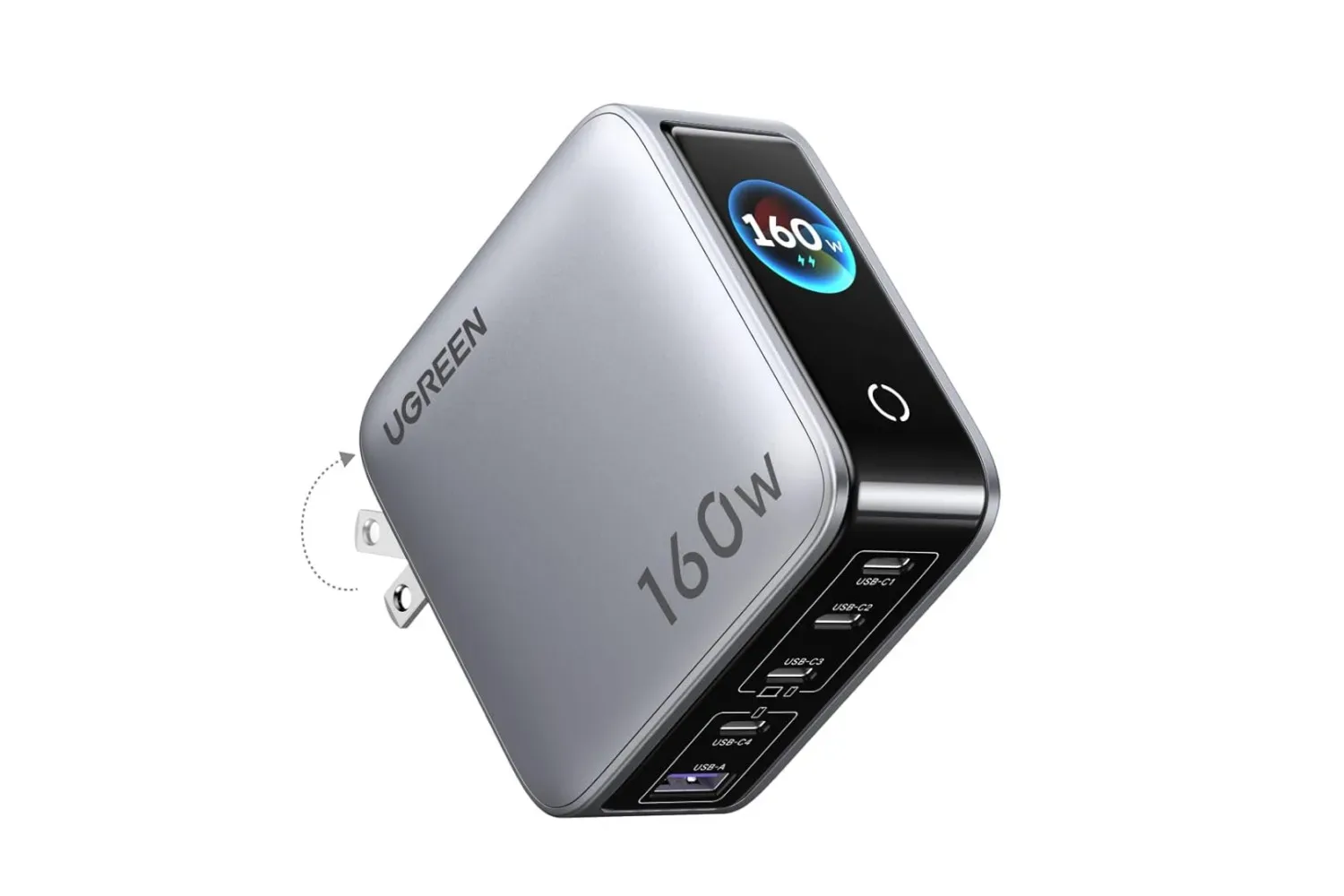
It could also be relevant to gaming-adjacent creators who need environmental footage rather than only direct capture: event coverage, cosplay clips, room tours, hardware demonstrations or setup videos where the camera placement cannot easily be adjusted during the action. For a more stationary desk-focused upgrade, other discounted gear may be more directly useful, such as this five-port charging option for a desk or gaming setup.
Buyers who never expect to reframe footage, use a wide 360 view or mount the camera for active shooting should consider whether this is more capability than they need. The key value proposition is its capture-and-edit flexibility, not merely the headline 8K number. Likewise, purchasers should avoid treating the $25 credit or music trial as guaranteed cash-equivalent savings until they have verified the offer conditions.
The direct discount is simple: $200 off the cited $500 regular price. The additional benefits may improve the package for eligible customers, but the camera’s case stands or falls on its own hardware and workflow. For anyone who has been waiting for a lower entry price into GoPro’s 360-video approach, the reported $300 listing is the figure that matters most.
Shop the products
Check current price, model and availability at the retailer.